End-of-Chapter Exercises

 You are here
End-of-Chapter Exercises
Last updated at August 14, 2026 by Teachoo
Transcript
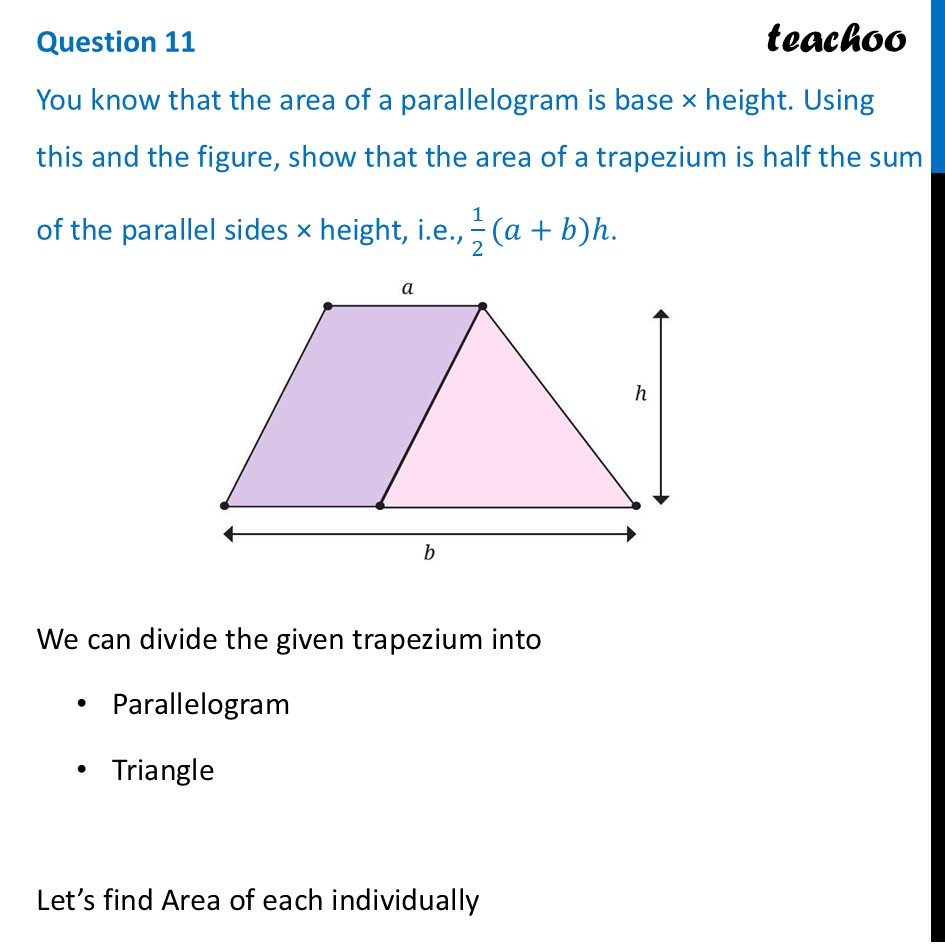
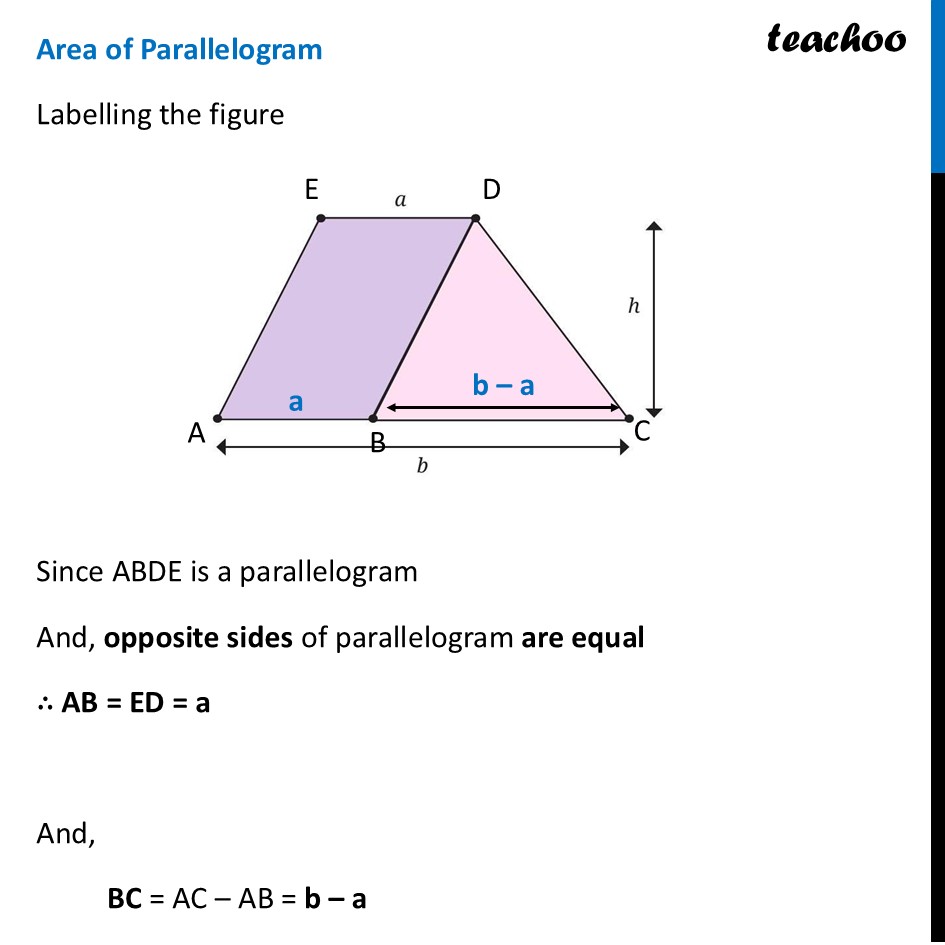
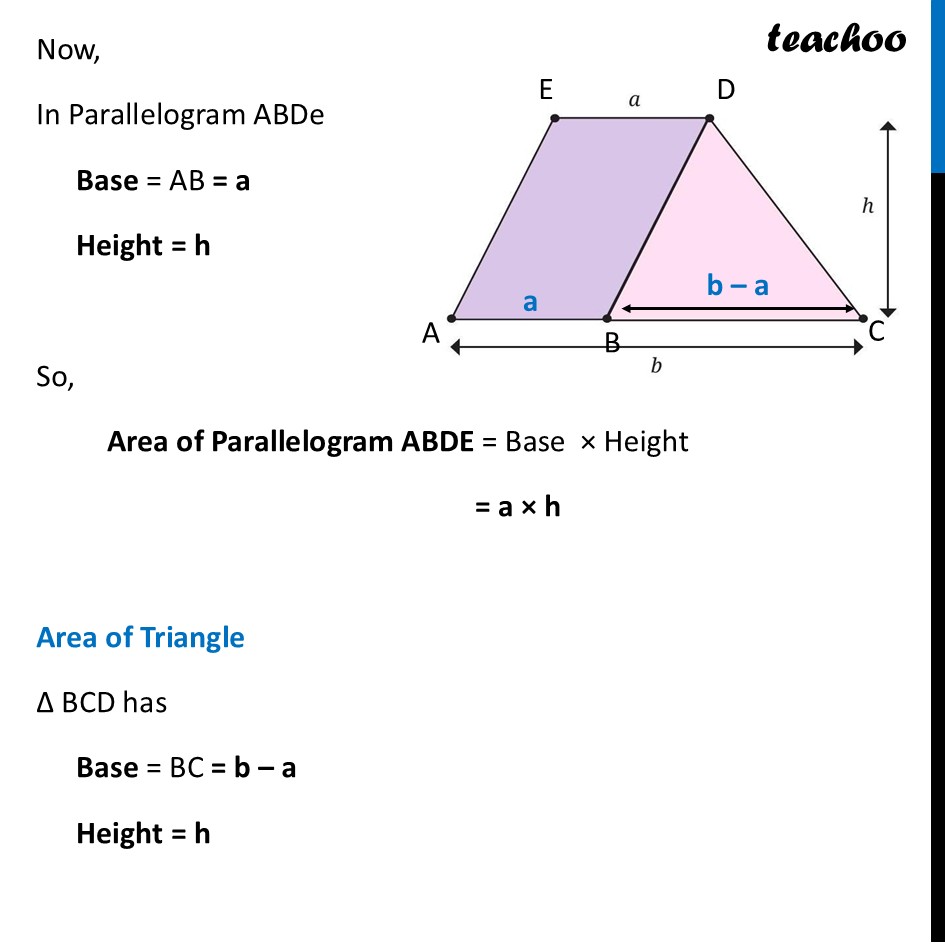
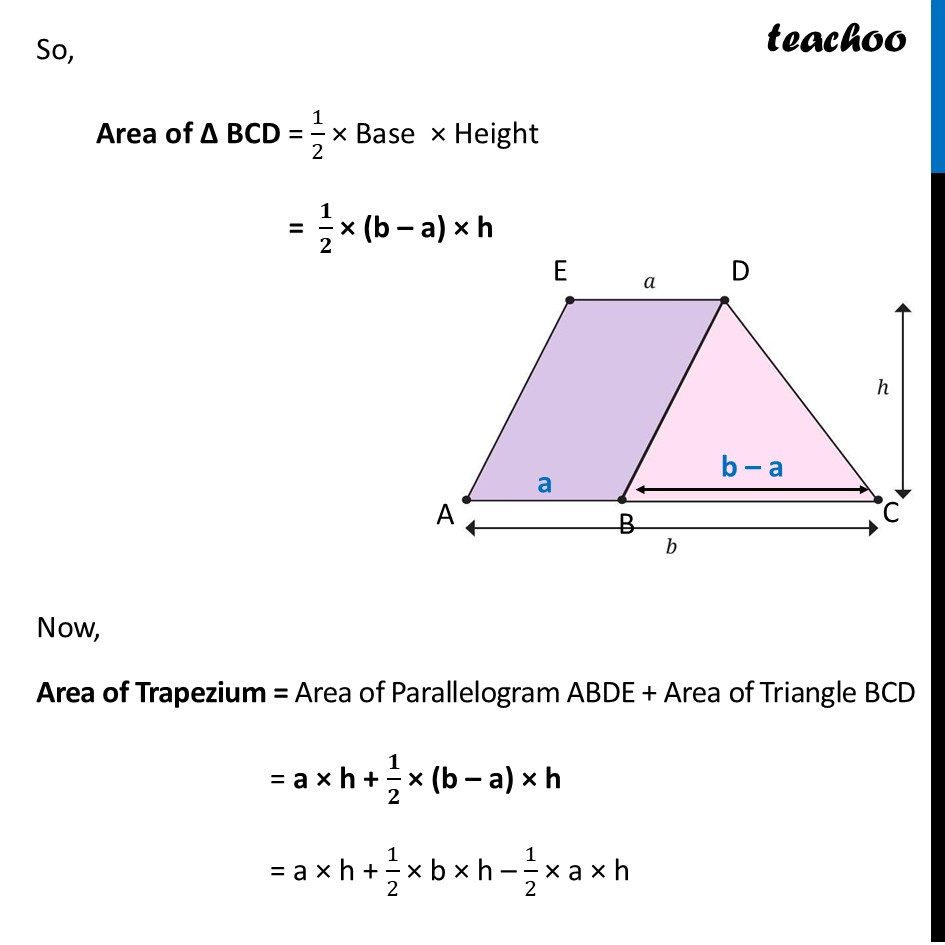
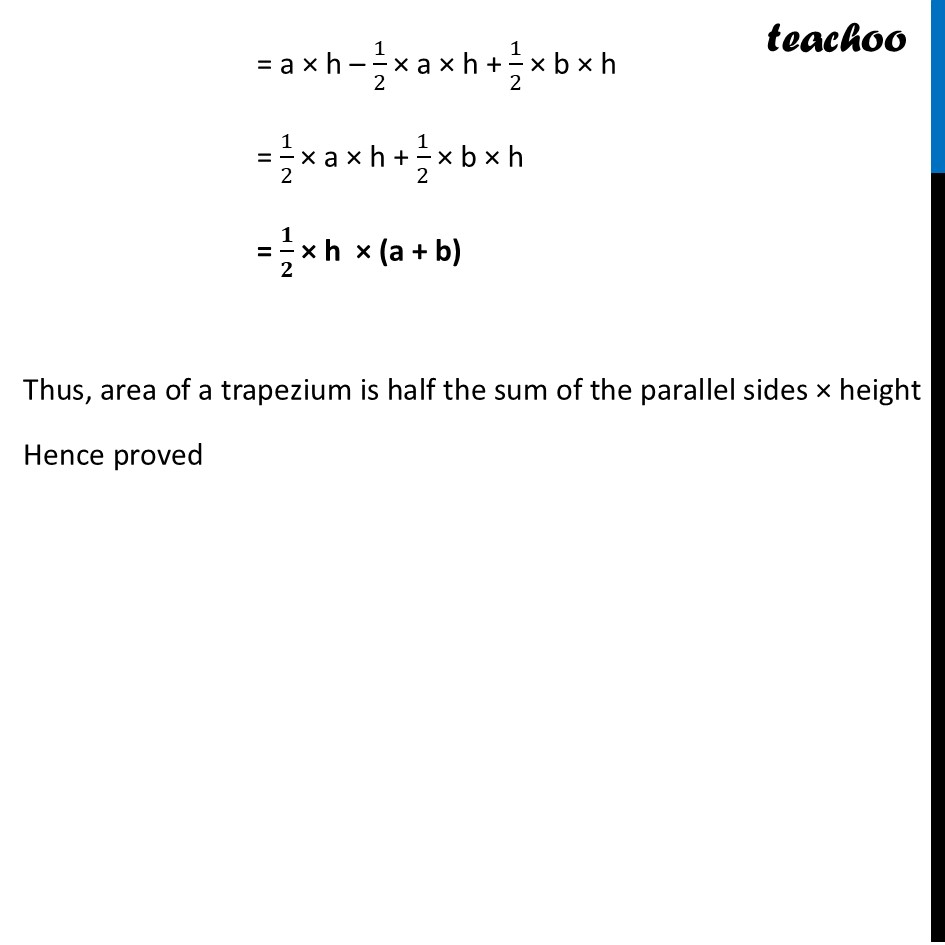
Question 11 You know that the area of a parallelogram is base × height. Using this and the figure, show that the area of a trapezium is half the sum of the parallel sides × height, i.e., 1/2(𝑎+𝑏)ℎ. We can divide the given trapezium into Parallelogram Triangle Let’s find Area of each individually Area of Parallelogram Labelling the figure Since ABDE is a parallelogram And, opposite sides of parallelogram are equal ∴ AB = ED = a And, BC = AC – AB = b – a Now, In Parallelogram ABDe Base = AB = a Height = h So, Area of Parallelogram ABDE = Base × Height = a × h Area of Triangle ∆ BCD has Base = BC = b – a Height = h So, Area of ∆ BCD = 1/2 × Base × Height = a × h And, opposite sides of parallelogram are equal ∴ AB = ED = a And, BC = AC – AB = b – a So, Area of ∆ BCD = 1/2 × Base × Height = 𝟏/𝟐 × (b – a) × h Now, Area of Trapezium = Area of Parallelogram ABDE + Area of Triangle BCD = a × h + 𝟏/𝟐 × (b – a) × h = a × h + 1/2 × b × h – 1/2 × a × h = a × h – 1/2 × a × h + 1/2 × b × h = 1/2 × a × h + 1/2 × b × h = 𝟏/𝟐 × h × (a + b) Thus, area of a trapezium is half the sum of the parallel sides × height Hence proved