CBSE Class 10 Sample Paper for 2027 Boards - Maths Standard

 You are here
CBSE Class 10 Sample Paper for 2027 Boards - Maths Standard
Last updated at October 9, 2026 by Teachoo
Transcript
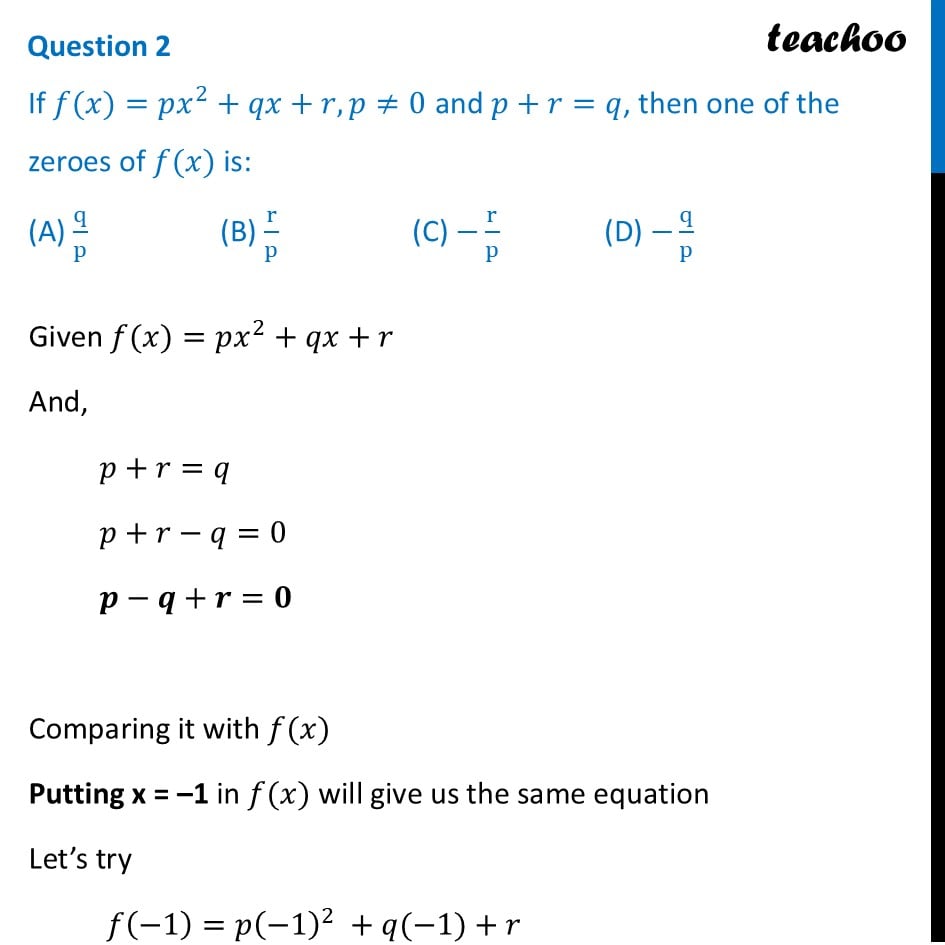
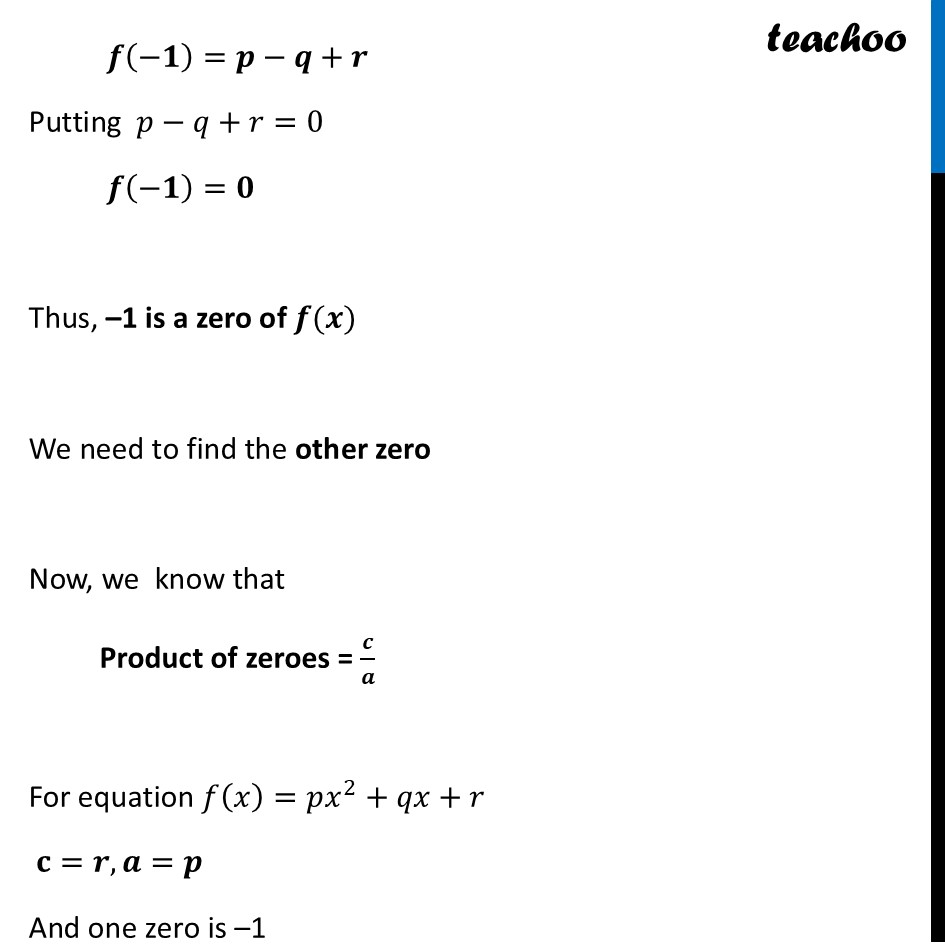
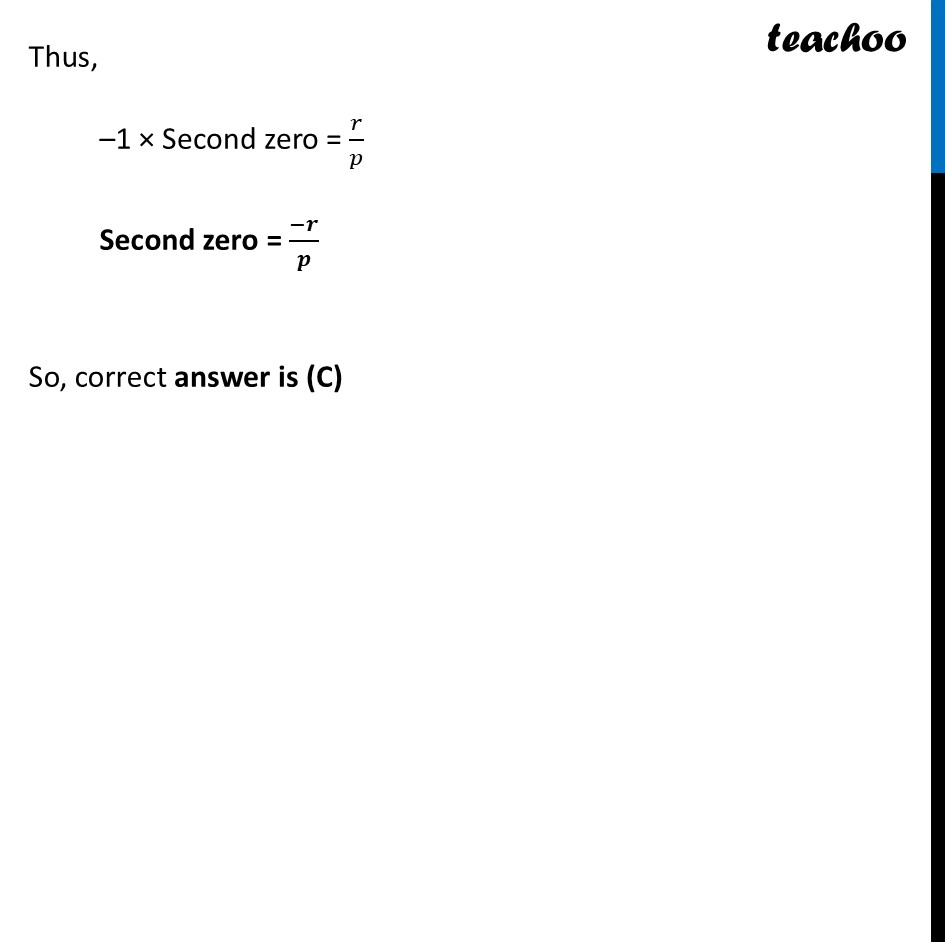
Question 2 If 𝑓(𝑥)=𝑝𝑥^(2)+𝑞𝑥+𝑟,𝑝≠0 and 𝑝+𝑟=𝑞, then one of the zeroes of 𝑓(𝑥) is: (A) (q)/(p) (B) (r)/(p) (C) −(r)/(p) (D) −(q)/(p) Given 𝑓(𝑥)=𝑝𝑥^(2)+𝑞𝑥+𝑟 And, 𝑝+𝑟=𝑞 𝑝+𝑟−𝑞=0 𝒑−𝒒+𝒓=𝟎 Comparing it with 𝑓(𝑥) Putting x = –1 in 𝑓(𝑥) will give us the same equation Let’s try 𝑓(−1)=𝑝(−1)^(2) +𝑞(−1)+𝑟 𝒇(−𝟏)=𝒑−𝒒+𝒓 Putting 𝑝−𝑞+𝑟=0 𝒇(−𝟏)=𝟎 Thus, –1 is a zero of 𝒇(𝒙) We need to find the other zero Now, we know that Product of zeroes = (𝒄)/(𝒂) For equation 𝑓(𝑥)=𝑝𝑥^(2)+𝑞𝑥+𝑟 𝐜=𝒓, 𝒂=𝒑 And one zero is –1 Thus, –1 × Second zero = (𝑟)/(𝑝) Second zero = (−𝒓)/(𝒑) So, correct answer is (C) 𝒇(−𝟏)=𝒑−𝒒+𝒓 Putting 𝑝−𝑞+𝑟=0 𝒇(−𝟏)=𝟎 Thus, –1 is a zero of 𝒇(𝒙) We need to find the other zero Now, we know that Product of zeroes = (𝒄)/(𝒂) For equation 𝑓(𝑥)=𝑝𝑥^(2)+𝑞𝑥+𝑟 𝐜=𝒓, 𝒂=𝒑 And one zero is –1 Thus, –1 × Second zero = (𝑟)/(𝑝) Second zero = (−𝒓)/(𝒑) So, correct answer is (C)
