CBSE Class 12 Sample Paper for 2026 Boards

 You are here
CBSE Class 12 Sample Paper for 2026 Boards
Last updated at August 14, 2026 by Teachoo
Transcript
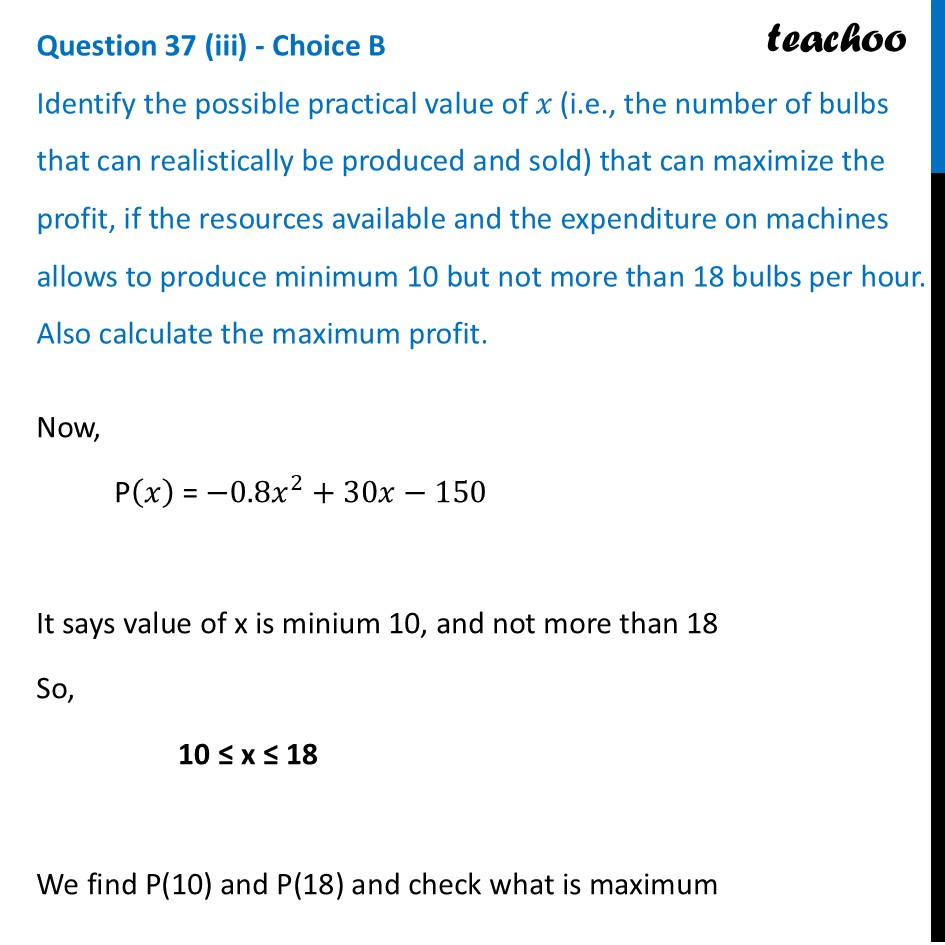
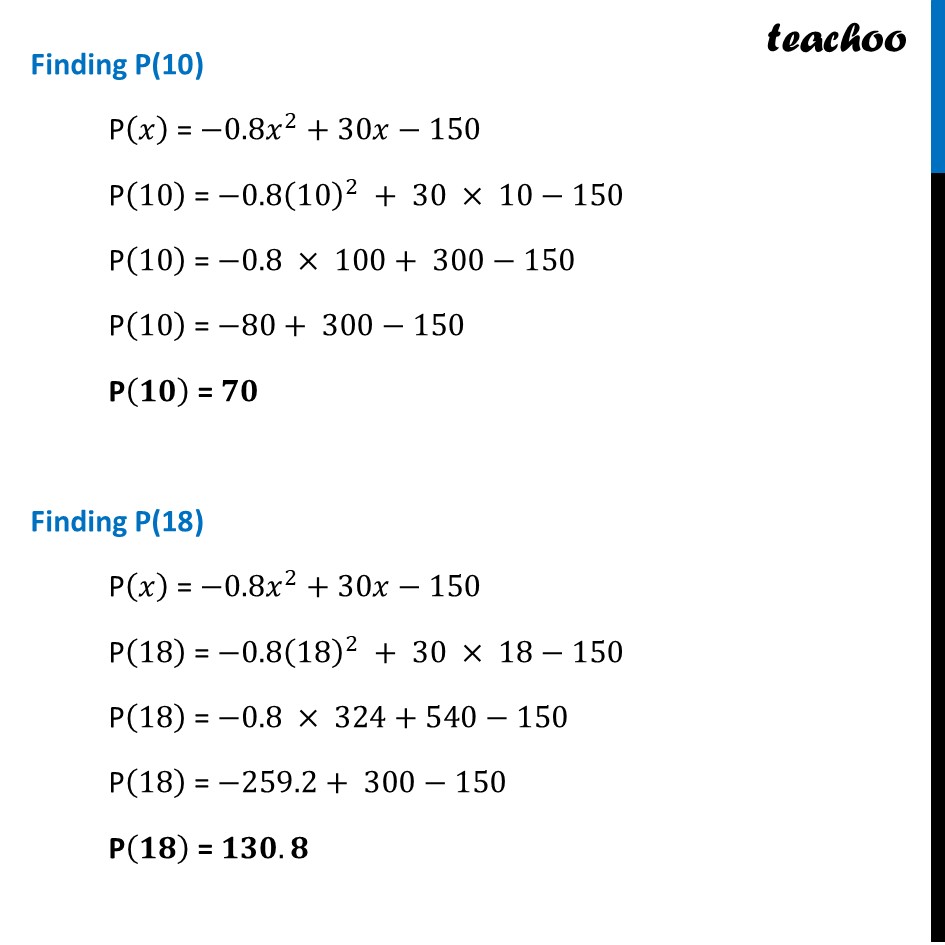
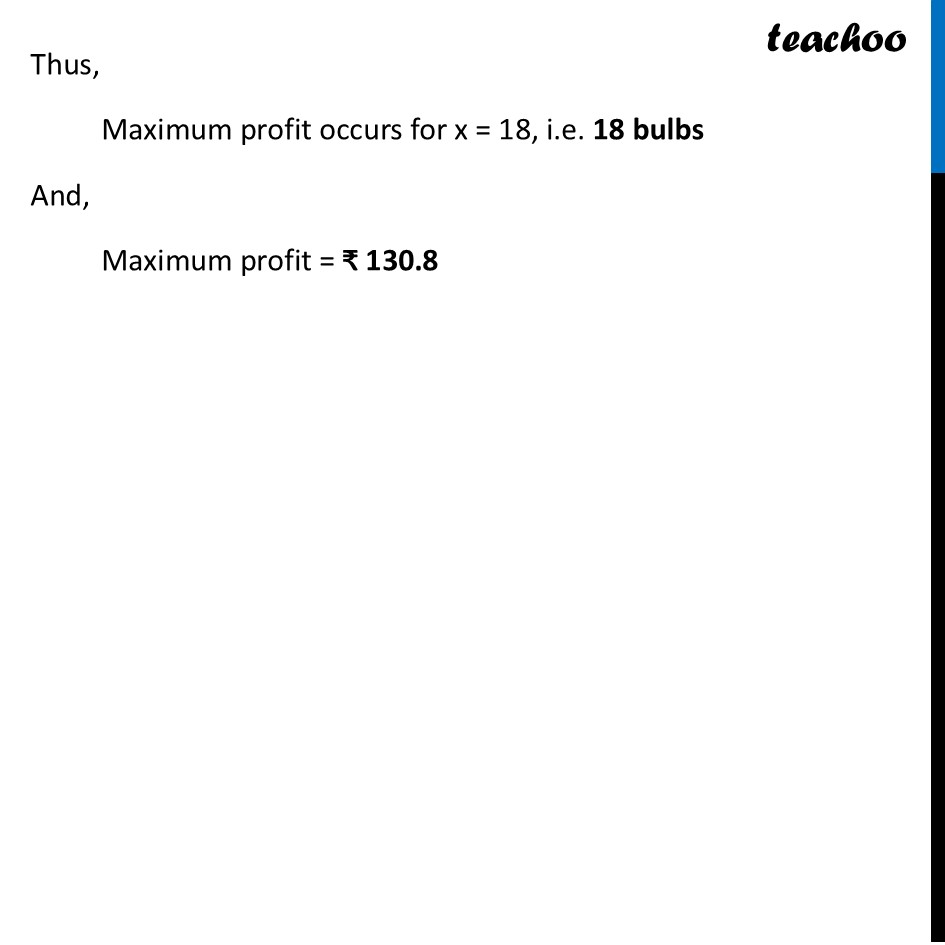
Question 37 (iii) - Choice B Identify the possible practical value of 𝑥 (i.e., the number of bulbs that can realistically be produced and sold) that can maximize the profit, if the resources available and the expenditure on machines allows to produce minimum 10 but not more than 18 bulbs per hour. Also calculate the maximum profit.Now, P(𝑥) = −0.8𝑥^2+30𝑥−150 It says value of x is minium 10, and not more than 18 So, 10 ≤ x ≤ 18 We find P(10) and P(18) and check what is maximum Finding P(10) P(𝑥) = −0.8𝑥^2+30𝑥−150 P(10) = −0.8(10)^2 + 30 × 10−150 P(10) = −0.8 × 100+ 300−150 P(10) = −80+ 300−150 P(𝟏𝟎) = 𝟕𝟎 Finding P(18) P(𝑥) = −0.8𝑥^2+30𝑥−150 P(18) = −0.8(18)^2 + 30 × 18−150 P(18) = −0.8 × 324+540−150 P(18) = −259.2+ 300−150 P(𝟏𝟖) = 𝟏𝟑𝟎.𝟖 Thus, Maximum profit occurs for x = 18, i.e. 18 bulbs And, Maximum profit = ₹ 130.8