CBSE Class 12 Sample Paper for 2026 Boards

 You are here
CBSE Class 12 Sample Paper for 2026 Boards
Last updated at August 14, 2026 by Teachoo
Transcript
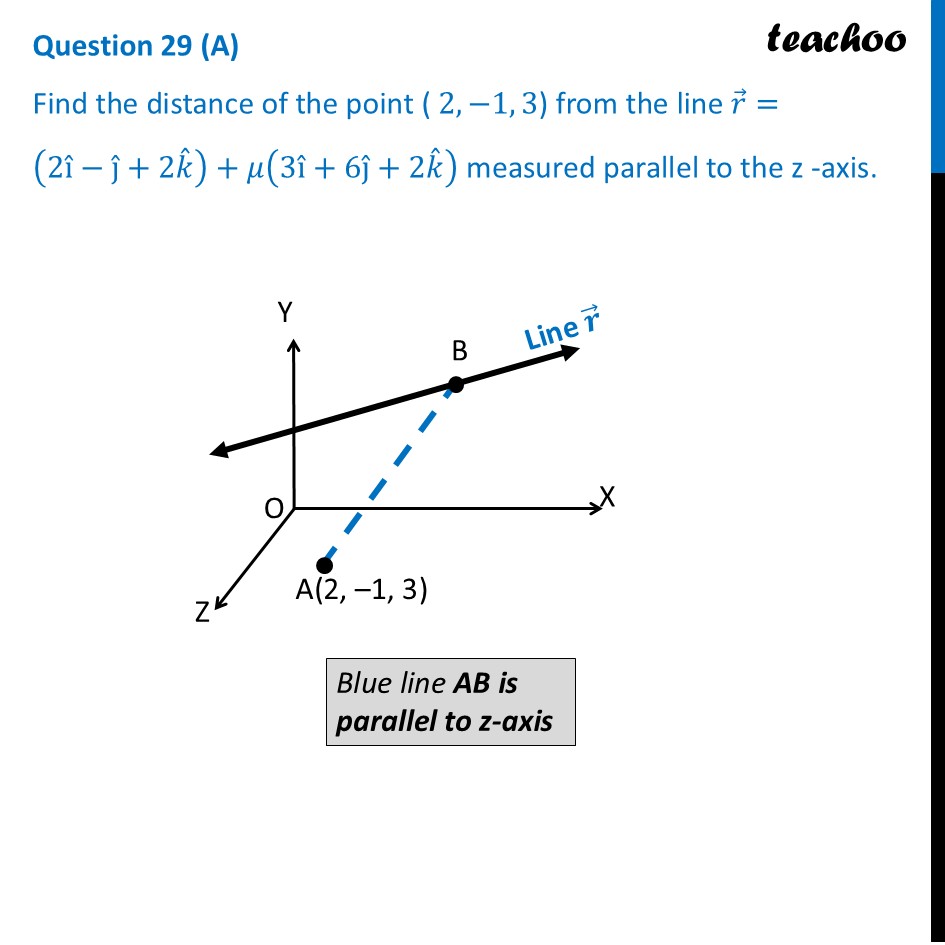
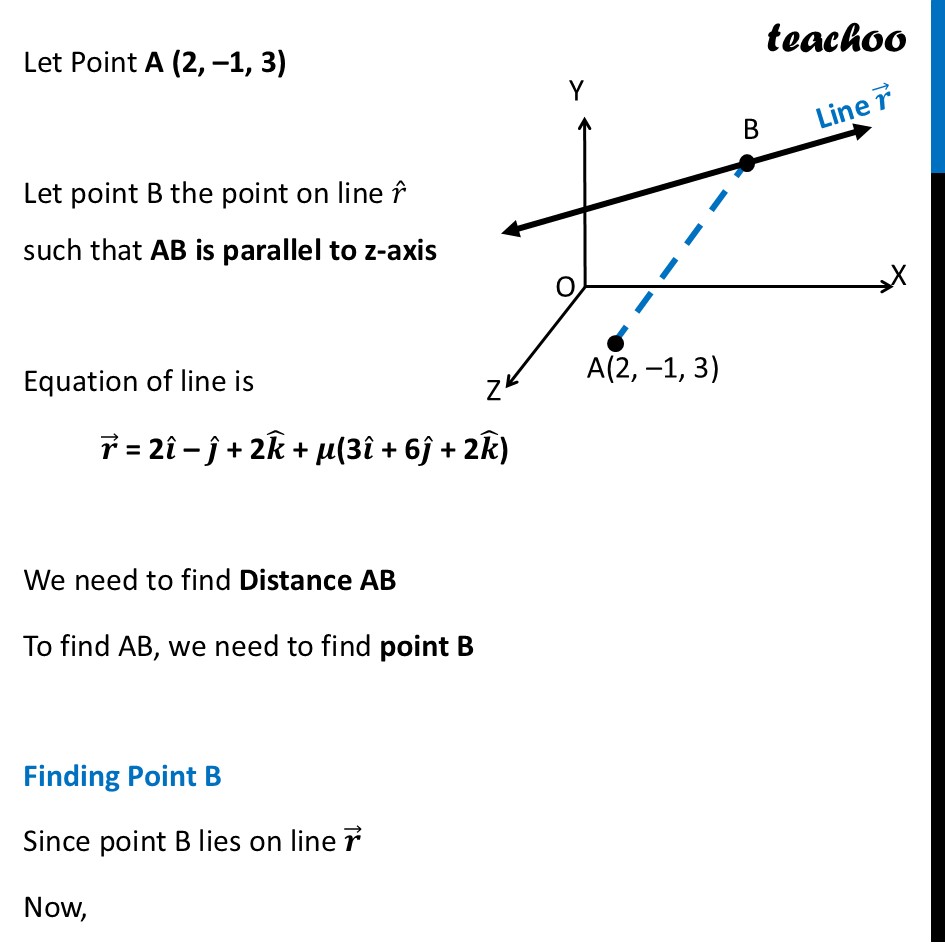
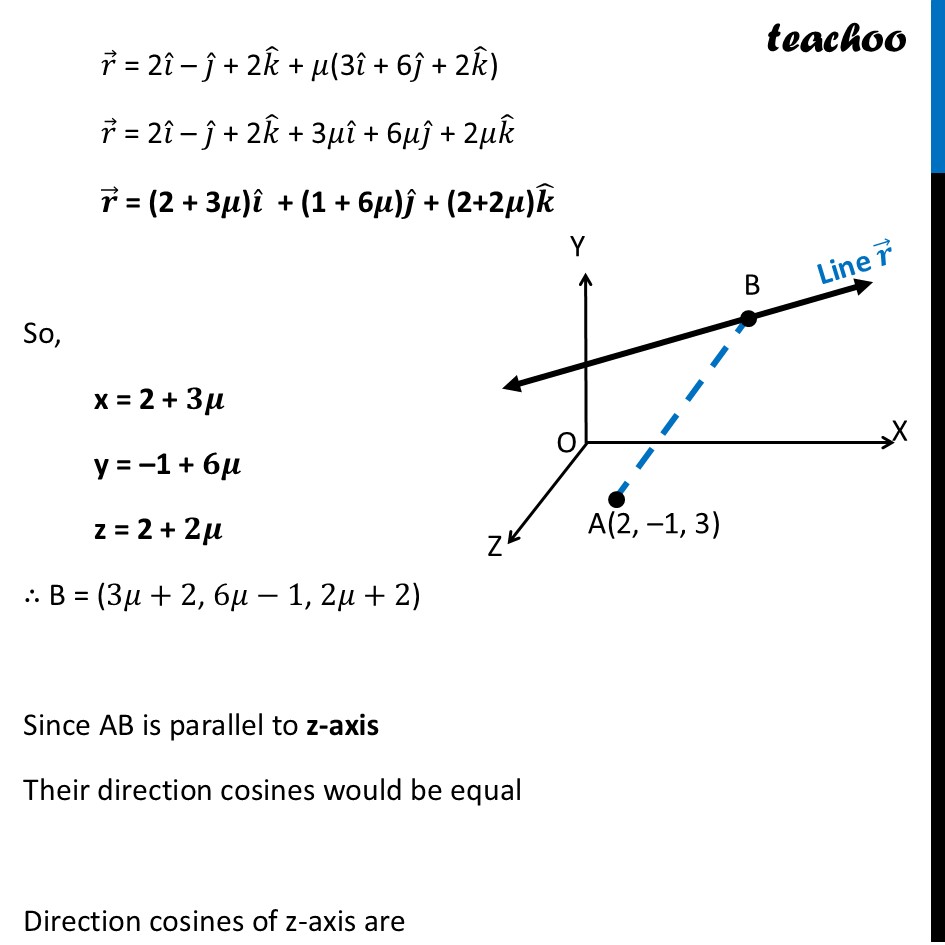
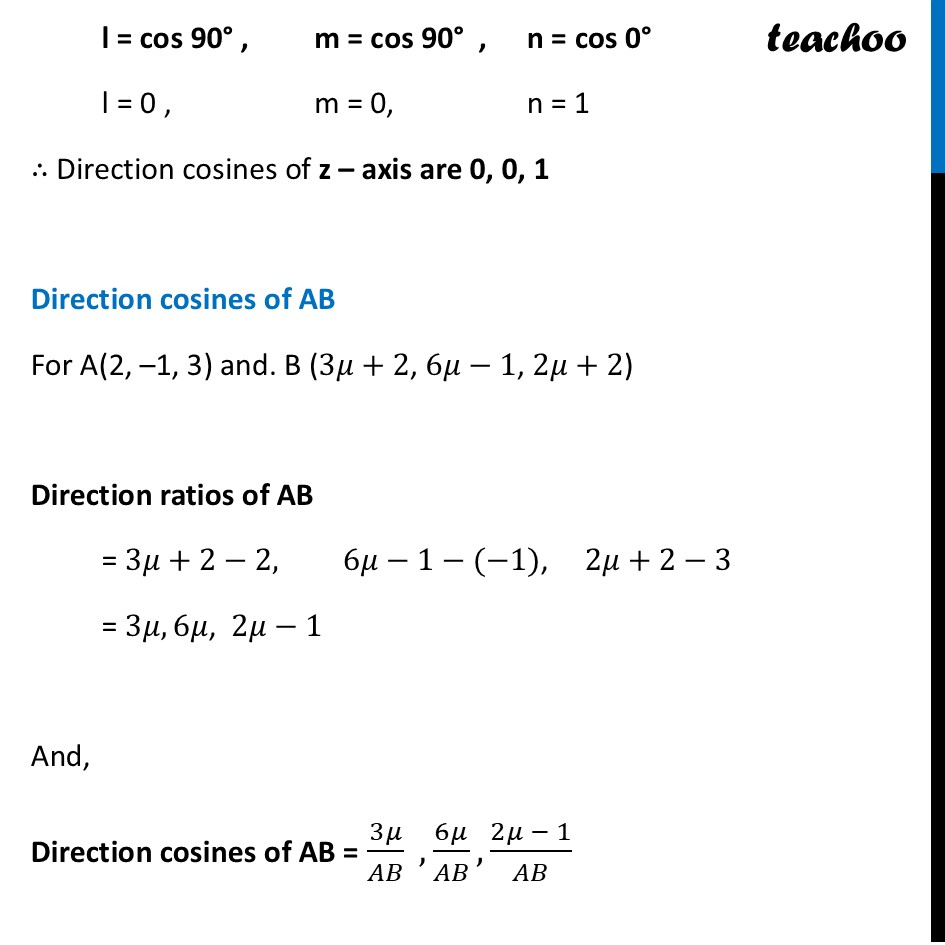
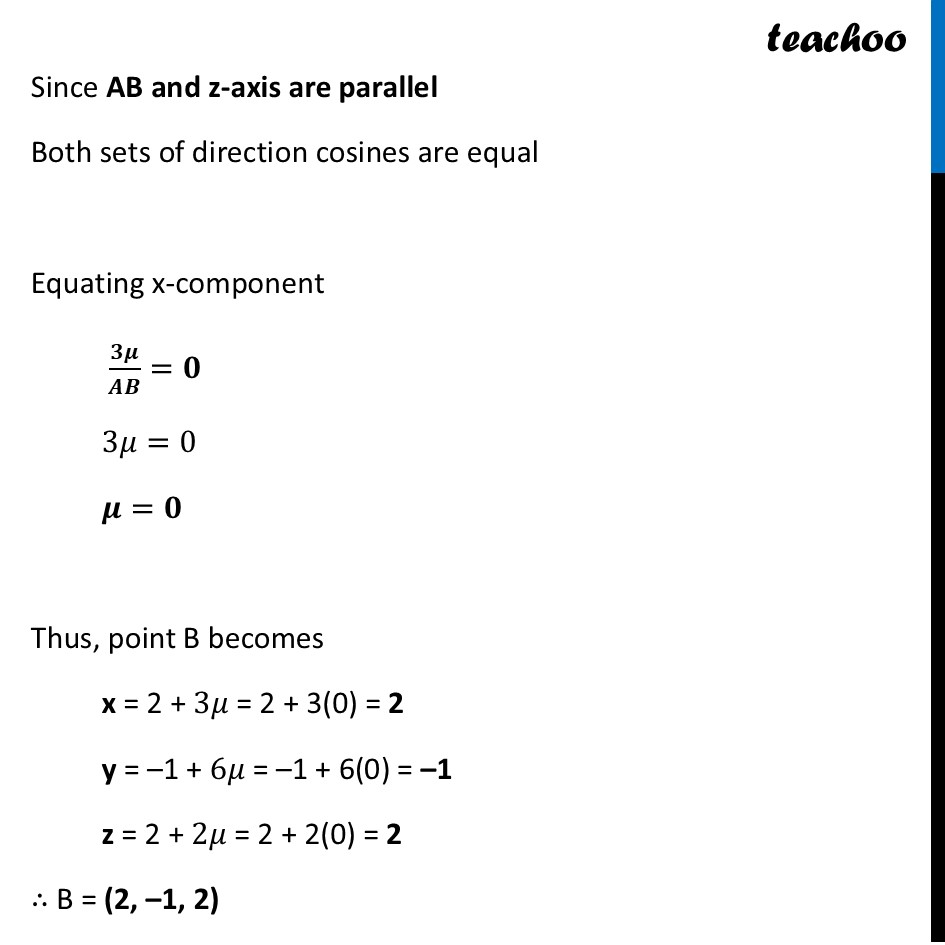
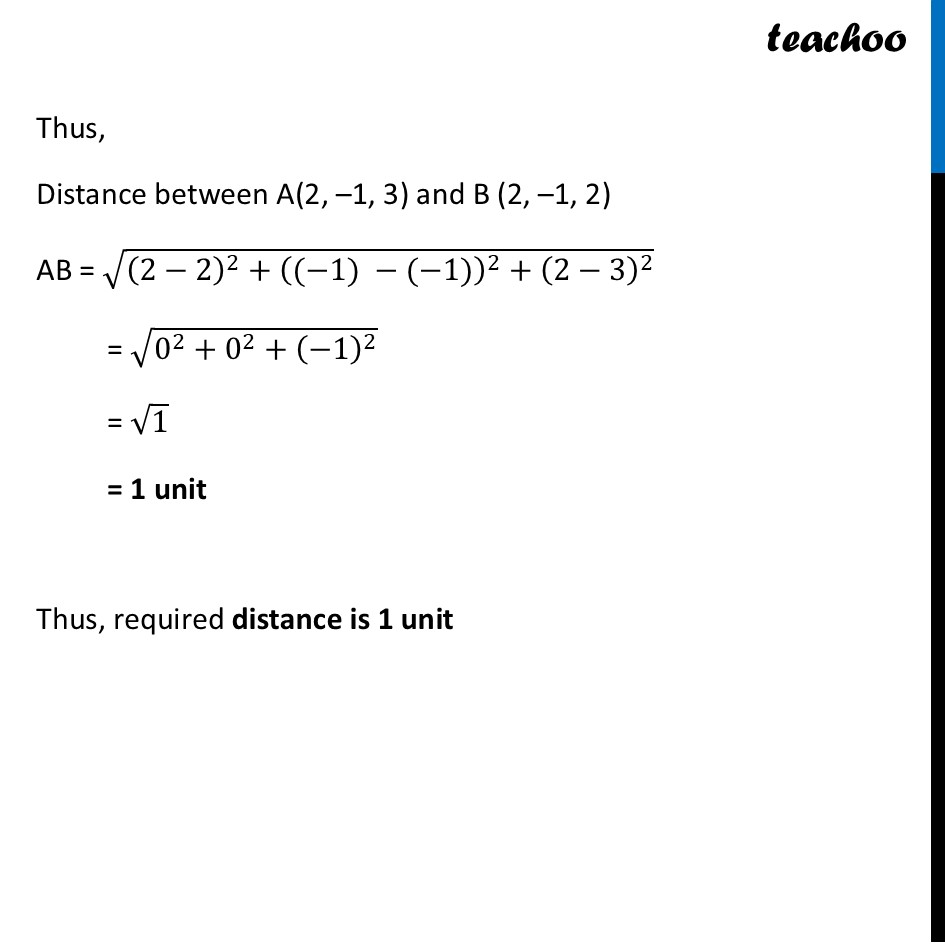
Question 29 (A) Find the distance of the point ( 2,−1, 3) from the line 𝑟 ⃗=(2ı ˆ−ȷ ˆ+2𝑘 ˆ )+𝜇(3ı ˆ+6ȷ ˆ+2𝑘 ˆ ) measured parallel to the z -axis.Blue line AB is parallel to z-axis Let Point A (2, –1, 3) Let point B the point on line 𝑟 ̂ such that AB is parallel to z-axis Equation of line is 𝒓 ⃗ = 2𝒊 ̂ – 𝒋 ̂ + 2𝒌 ̂ + 𝝁(3𝒊 ̂ + 6𝒋 ̂ + 2𝒌 ̂) We need to find Distance AB To find AB, we need to find point B Finding Point B Since point B lies on line 𝒓 ⃗ Now, 𝑟 ⃗ = 2𝑖 ̂ – 𝑗 ̂ + 2𝑘 ̂ + 𝜇(3𝑖 ̂ + 6𝑗 ̂ + 2𝑘 ̂) 𝑟 ⃗ = 2𝑖 ̂ – 𝑗 ̂ + 2𝑘 ̂ + 3𝜇𝑖 ̂ + 6𝜇𝑗 ̂ + 2𝜇𝑘 ̂ 𝒓 ⃗ = (2 + 3𝝁")" 𝒊 ̂ + (1 + 6𝝁")" 𝒋 ̂ + (2+2𝝁")" 𝒌 ̂ So, x = 2 + 𝟑𝝁 y = –1 + 𝟔𝝁 z = 2 + 𝟐𝝁 ∴ B = (3𝜇+2, 6𝜇−1, 2𝜇+2) Since AB is parallel to z-axis Direction cosines of z-axis are a = cos 90° , b = cos 90° , c = cos 0° a = 0 , b = 0, c = 1 a = 0 , b = 0, c = 1 ∴ Direction ratios of z – axis are 0, 0, 1 Note: Direction cosines and direction ratios of z-axis are same. We use Direction ratios here because finding Direction ratios of AB is easier. Direction ratio of AB For A(2, –1, 3) B (3𝜇+2, 6𝜇−1, 2𝜇+2) Direction ratios of AB = 3𝜇+2−2, 6𝜇−1−(−1), 2𝜇+2−3 = 3𝜇, 6𝜇, 2𝜇−1 Since AB and z-axis are parallel The x and y component should be zero Equating x-component 3𝜇=0 𝝁=𝟎 Note: If lines are parallel, the direction ratios are proportional. Since here x and y components are zero, we directly make them equal. z-component cannot be made equal (it should be proportional) Thus, point B becomes x = 2 + 3𝜇 = 2 + 3(0) = 2 y = –1 + 6𝜇 = –1 + 6(0) = –1 z = 2 + 2𝜇 = 2 + 2(0) = 2 ∴ B = (2, –1, 2) Thus, Distance between A(2, –1, 3) and B (2, –1, 2) AB = √((2−2)^2+((−1) −(−1))^2+(2−3)^2 ) = √(0^2+0^2+(−1)^2 ) = √1 = 1 unit Thus, required distance is 1 unit