
 You are here
Sound travels through a medium as
density oscillations
, in the form of
compressions
and
rarefactions
.
Some sounds are
loud
and some are
soft
. We use
amplitude
and
intensity
to describe this.
Basics of amplitude
We have already studied that:
- Sound is a wave .
- On a graph, it has crests and troughs .
- The graph also has an average density line in the middle. It is a straight line .
-
GIF Watch: new GIF
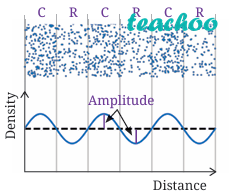
On the graph, the
amplitude
is the
distance
between the
average density line
and a
crest
(or a
trough
).
Low and high amplitude
Graph 1: Low amplitude
GIF
Watch: new GIF
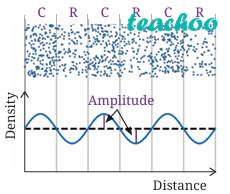
- In Graph 1, the crests and troughs are short .
- The amplitude is low .
- The density of air does not change much in compressions and rarefactions.
Graph 2: High amplitude
GIF
Watch: new GIF
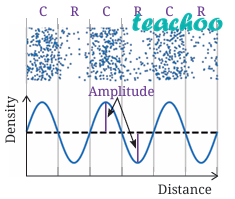
- In Graph 2, the crests and troughs are tall .
- The amplitude is high .
- The density of air changes a lot in compressions and rarefactions.
Low amplitude vs high amplitude
GIF
Watch: new GIF
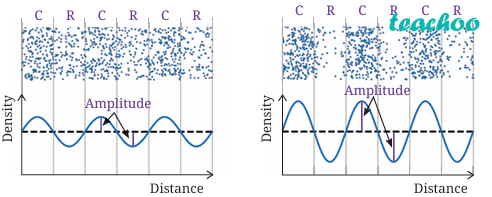
| Low amplitude | High amplitude | |
|---|---|---|
| Crests and troughs on the graph | Short | Tall |
| Change in density | Small | Large |
| Energy carried | Less | More |
What is amplitude?
The amplitude of a sound wave is the maximum change in the density of air in a compression (or a rarefaction) compared to the average density.
Breaking it down:
| Part of the definition | What it means |
|---|---|
| Maximum change in the density of air | The biggest change in how packed the air particles are |
| In a compression | Where air particles are crowded together (density goes up ) |
| (or a rarefaction) | Where air particles are spread apart (density goes down ) |
| Compared to the average density | Measured from the normal density of air, shown by the average density line on the graph |
📌 In short
Amplitude tells us how far the density of air goes
above or below
its normal value. On the graph, that is the
height of a crest
or the
depth of a trough
.
How are amplitude and energy related?
- A wave with a larger amplitude carries more energy than a wave with a smaller amplitude .
We saw this in Activity 10.6 (grains on a sheet):
- When the plate is struck harder , more energy goes to the particles of the medium around it.
- The particles move farther from their mean positions .
- So the wave has a larger amplitude .
- The sheet vibrates more , and the grains jump higher .
What is intensity of sound?
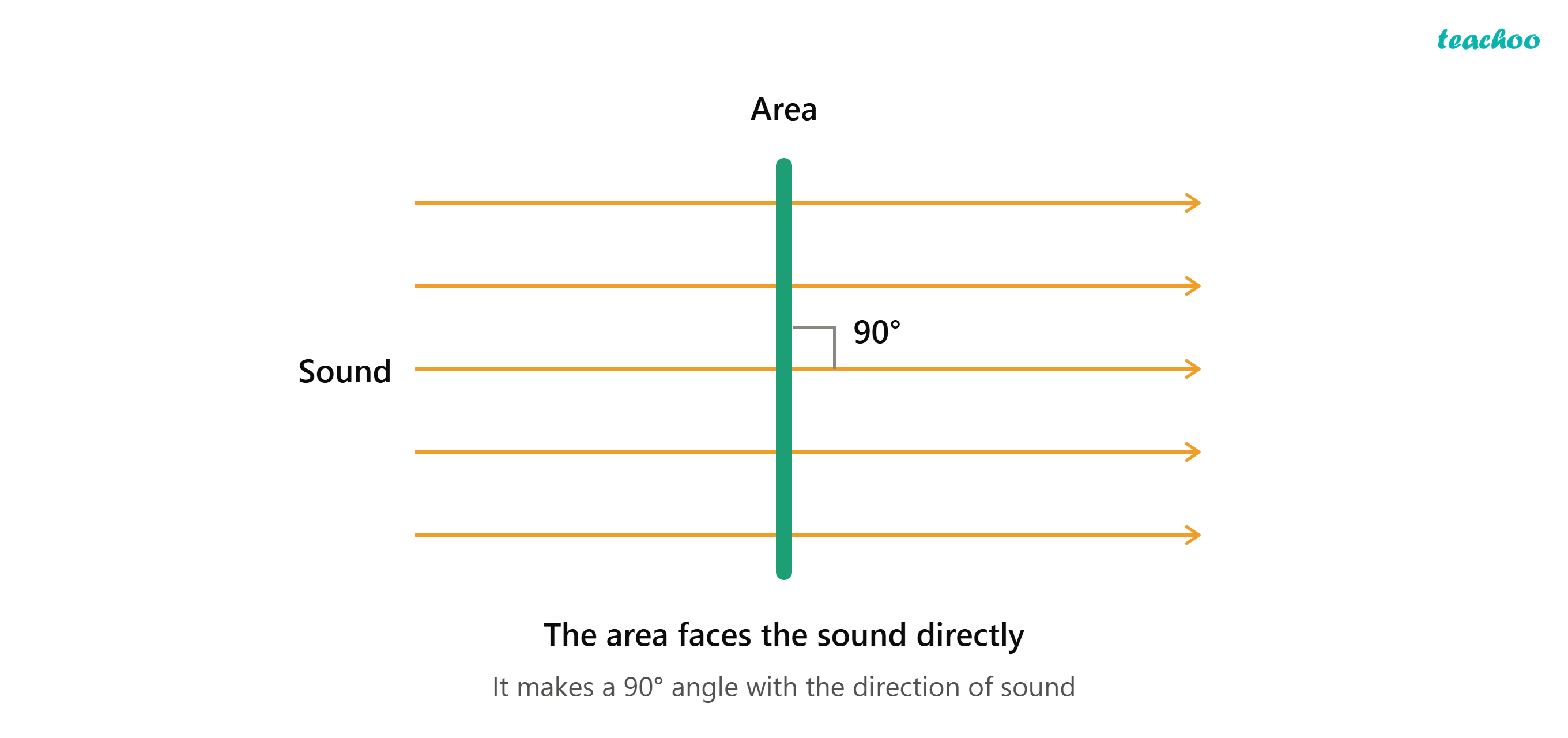
The amount of sound energy passing through a unit area perpendicular to the direction of the propagation of sound wave in a unit time is called the intensity of sound.
GIF
Watch: '
Breaking it down:
| Part of the definition | What it means |
|---|---|
| Amount of sound energy | How much energy the sound wave carries |
| Passing through a unit area | Counted through a small area of 1 unit (like 1 square metre ) |
| Perpendicular to the direction of propagation | The area faces the sound directly , so the sound passes straight through it (at 90° ) |
| In a unit time | Counted for 1 unit of time (like 1 second ) |
📌 In short
Intensity tells us
how much sound energy
passes through a
small area
in
one second
.
Why does sound become fainter as we move away from the source?
-
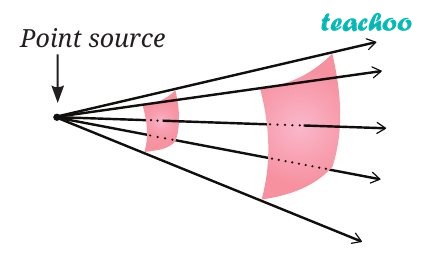
- As a sound wave moves away from its source, it spreads over a larger area .
- Energy is conserved . The total energy stays the same . It is not created or lost.
- So the same energy is now spread over a bigger area .
- Less energy passes through each unit area. So intensity decreases with distance.
Example:
A
teacher’s voice
sounds clear in the front row but
fainter
in the last row. By the time it reaches the back, the same sound energy has spread over a
bigger area
.
Near the source vs far from the source
| Near the source | Far from the source | |
|---|---|---|
| Area the sound is spread over | Small | Large |
| Energy per unit area | More | Less |
| Intensity | High | Low |
Which sounds travel farther?
- Sounds made with a larger amplitude at the start carry more energy .
- So they can travel a larger distance before their intensity drops to zero .
Example:
A
loud shout
can be heard much
farther away
than a
whisper
.
