
 You are here
How is sound produced?
- Sound is produced when an object vibrates (moves quickly to and fro).
- If the object stops vibrating , the sound stops too.
What is vibration?
- Vibration means an object moving back and forth around one place, again and again , very quickly.
Vibration refers to the periodic to and fro motion (oscillations) of an object.
Breaking it down:
| Term | Meaning |
|---|---|
| Periodic | Repeats again and again after equal intervals of time |
| To and fro motion | Moving forward and backward (or up and down) around one fixed position |
| Oscillations | Another name for this repeated to and fro motion . One full back and forth is one oscillation |
Examples:
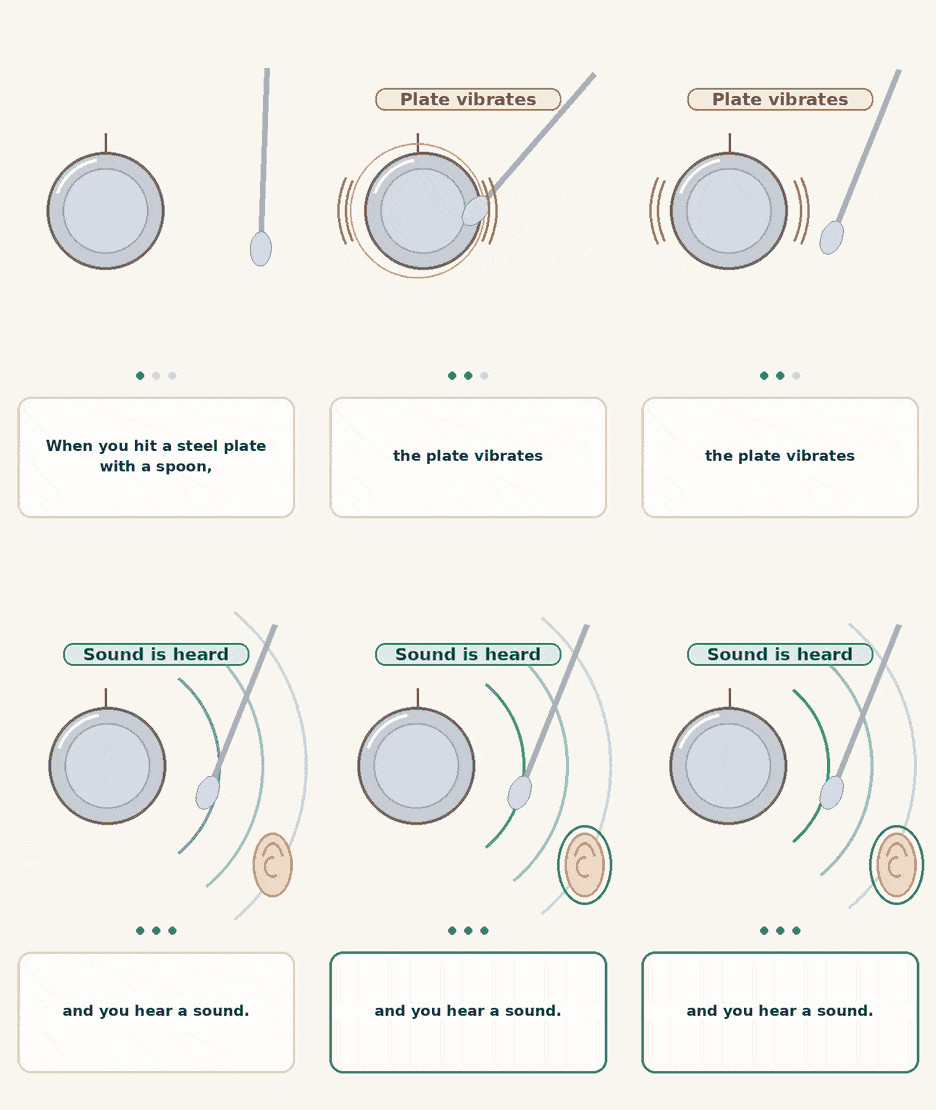
- Steel plate: When you hit a steel plate with a spoon, the plate vibrates and you hear a sound.
-
-
Musical instruments:
- In a sitar , the string vibrates when plucked.
- In a tabla , the membrane (stretched skin) vibrates when struck.
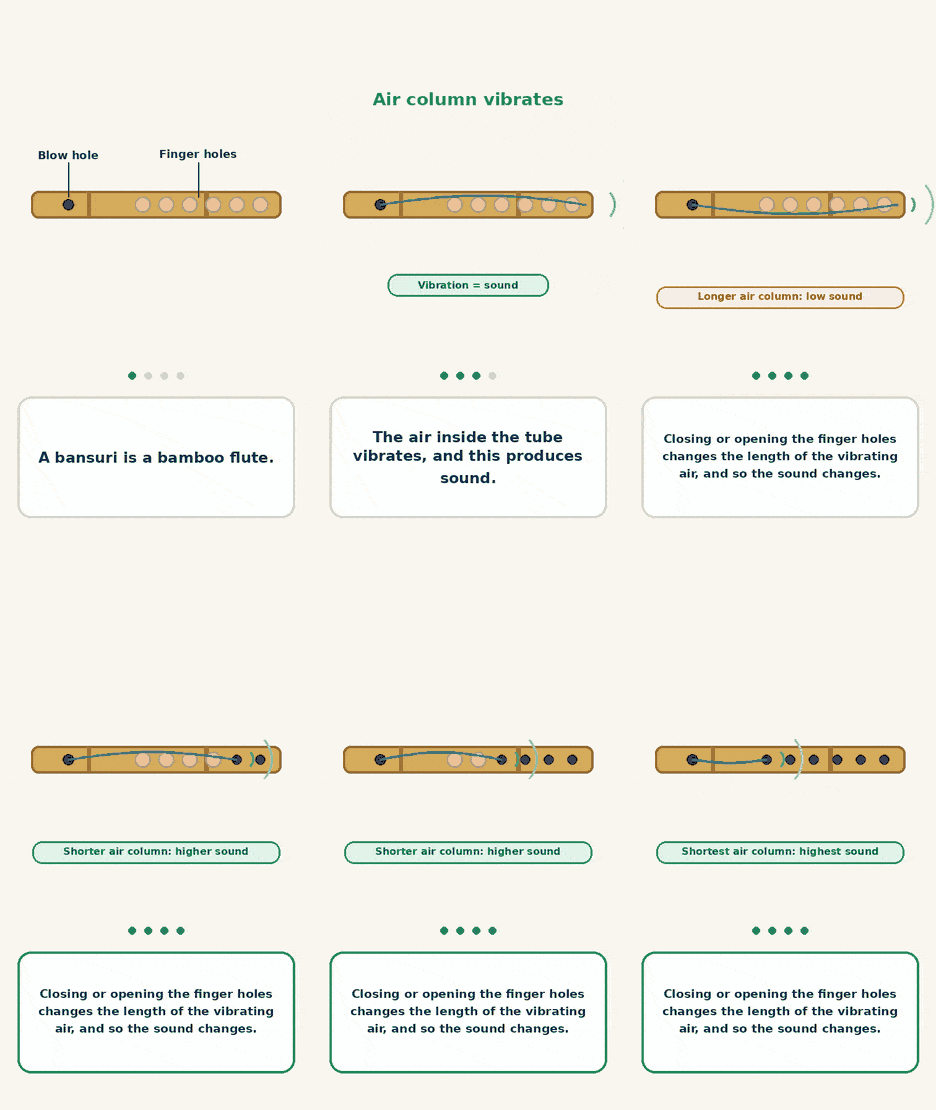
- In a bansuri (flute), the air inside the pipe vibrates when we blow.
-
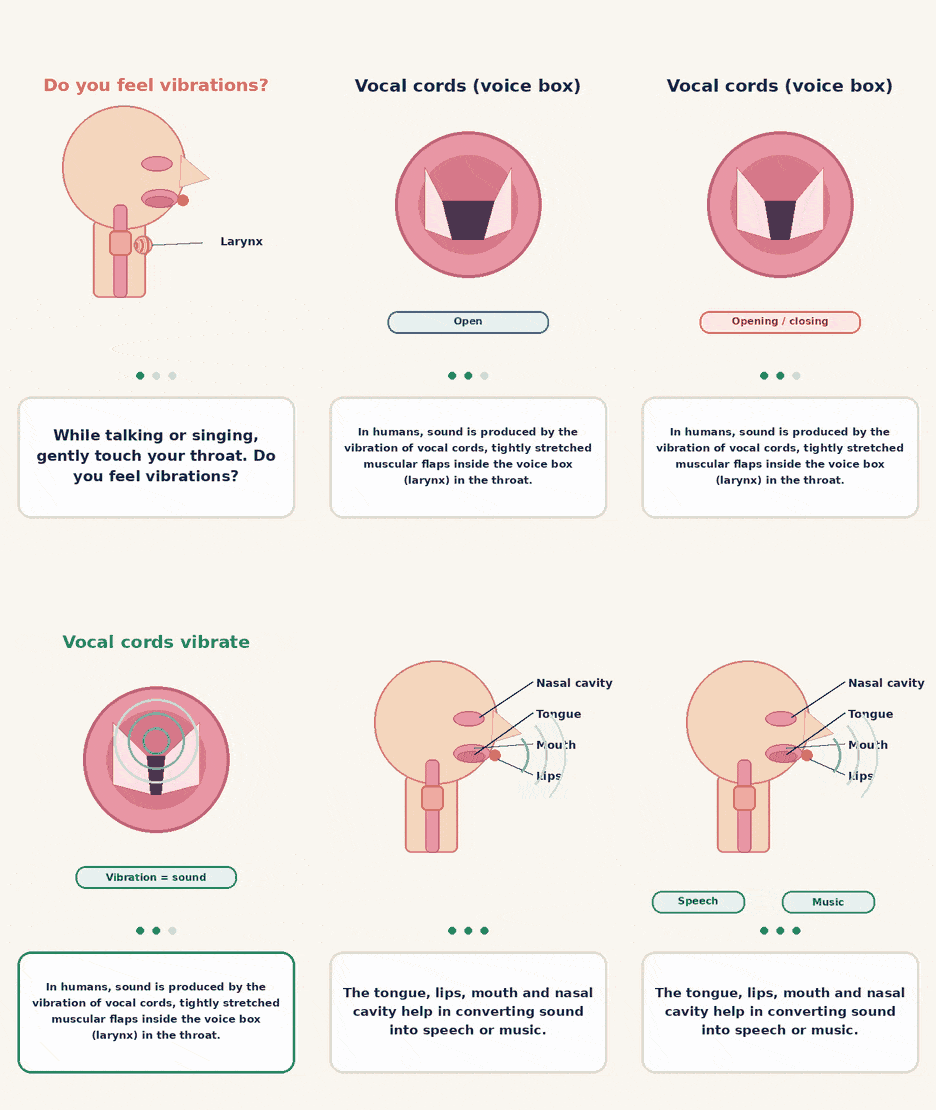
- When we speak: The vocal cords vibrate. These are tightly stretched muscular flaps inside the voice box (larynx) in the throat. Gently touch your throat while talking and you can feel the vibrations .
-
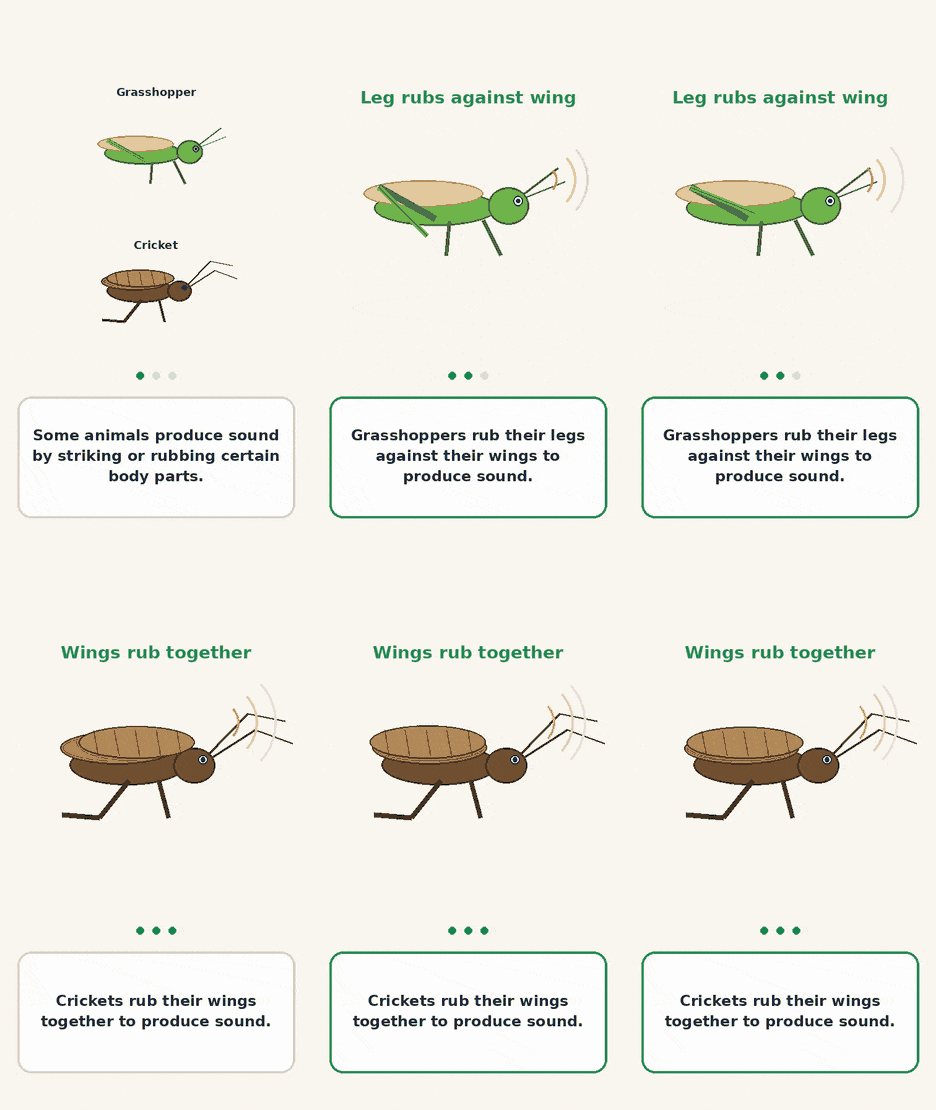
- Grasshoppers and crickets: They rub their wings or legs together. This makes them vibrate and produce sound.
-
How do we show that sound is produced by vibrations?
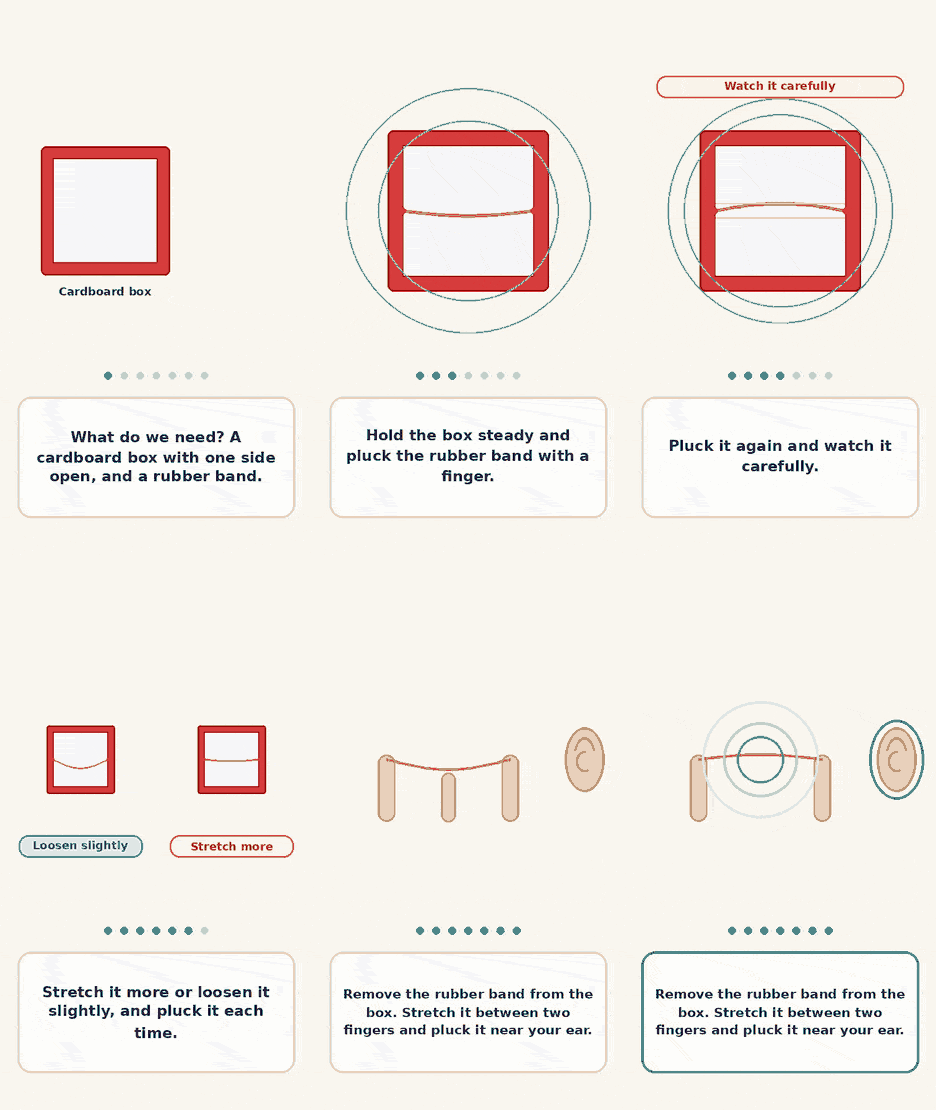
What do we need?
- A cardboard box with one side open
- A rubber band
What do we do?
- Stretch the rubber band across the open side of the box.
- Hold the box steady and pluck the rubber band with a finger.
- Pluck it again and watch it carefully .
- Wait till the rubber band stops vibrating .
- Stretch it more or loosen it slightly , and pluck it each time.
- Remove the rubber band from the box. Stretch it between two fingers and pluck it near your ear .
What do we observe?
| Book question | What we observe |
|---|---|
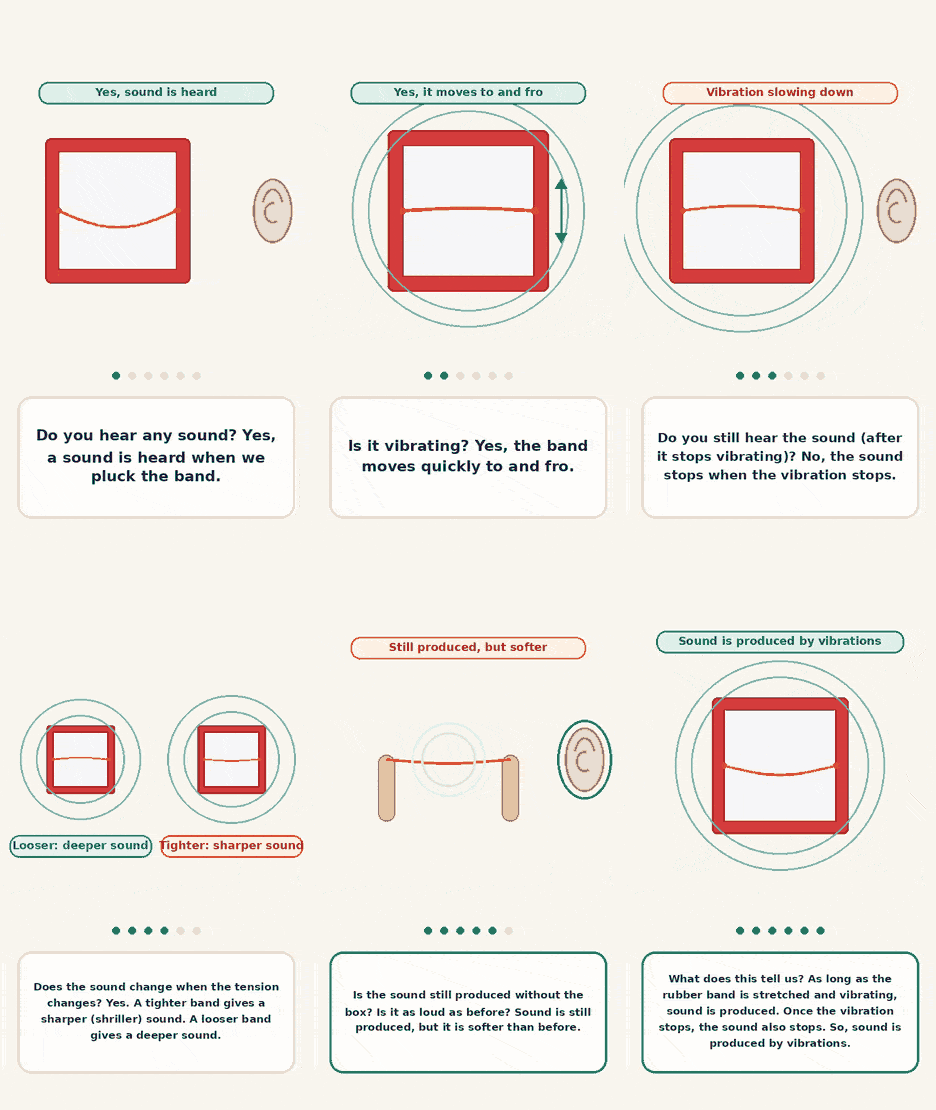
| Do you hear any sound? | Yes , a sound is heard when we pluck the band |
| Is it vibrating? | Yes , the band moves quickly to and fro |
| Do you still hear the sound (after it stops vibrating)? | No , the sound stops when the vibration stops |
| Does the sound change when the tension changes? | Yes . A tighter band gives a sharper (shriller) sound. A looser band gives a deeper sound |
| Is the sound still produced without the box? Is it as loud as before? | Sound is still produced , but it is softer than before |
GIF
Watch: observation
What does this tell us?
- As long as the rubber band is stretched and vibrating , sound is produced.
- Once the vibration stops , the sound also stops .
- So, sound is produced by vibrations .
Summary
Sound is produced by vibrations.
What is sonority?
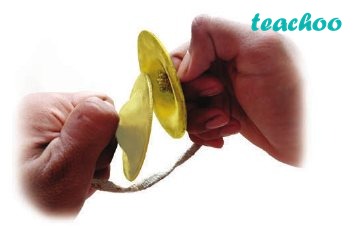
- A physical property of metals that allows them to produce a clear, ringing sound when struck with a hard object.
- This property is called sonority .
What is the source of sound?
The object that produces sound is called the ‘source’ of the sound.
Examples:
| Sound | Source |
|---|---|
| Activity 10.1 | Rubber band |
| Bansuri | Air inside the pipe |
| Tabla | Membrane (stretched skin) |
| Our voice | Vocal cords |
