
 You are here
pages 128 to 129
Why was irrigation important, and why did states invest in it?
- Agriculture depended closely on irrigation, so considerable importance was placed on building and maintaining reservoirs, canals and dams .
- The chapter says facilitating agriculture remained a major concern of the state because agriculture was one of its major sources of revenue .
What does Sudarshana Lake show?
What does Sudarshana Lake show about state involvement?
Pushyagupta
a governor appointed by Chandragupta Maurya
↓
Constructed a dam on Sudarshana Lake
near Girnar in Saurashtra / Kathiawad, Gujarat
↓
The Junagadh inscription preserves evidence of the Mauryan state's role in irrigation infrastructure
Why were irrigation works important enough to be recorded in inscriptions?
Think About It
- Why do you think irrigational structures like dams and canals were considered so important that their construction was recorded in inscriptions?
Show Answer
Suggested answer / inference:
the textbook asks an open-ended question here; the points below are a reasoned interpretation based on the chapter evidence.
- Irrigation structures were crucial because they stored and distributed water and supported agriculture and settlements.
- Agriculture was a major source of state revenue , so irrigation works had direct administrative and economic importance.
- Inscriptions preserved a public record of construction and later repairs , as the Sudarshana Lake example shows.
What irrigation structures were developed in northern and southern India?
![Irrigation - State and Society up to 1000 CE - [Teachoo] - Concepts](https://cdn.teachoo.com/5611bc15-474f-4dea-9406-834777564afb/the-grand-anicut-on-the-kaveri.jpg)
The Grand Anicut on the Kaveri
- The chapter mentions reservoirs, canals and dams as important irrigation structures.
Mauryan example — Sudarshana Lake
An ancient reservoir and dam
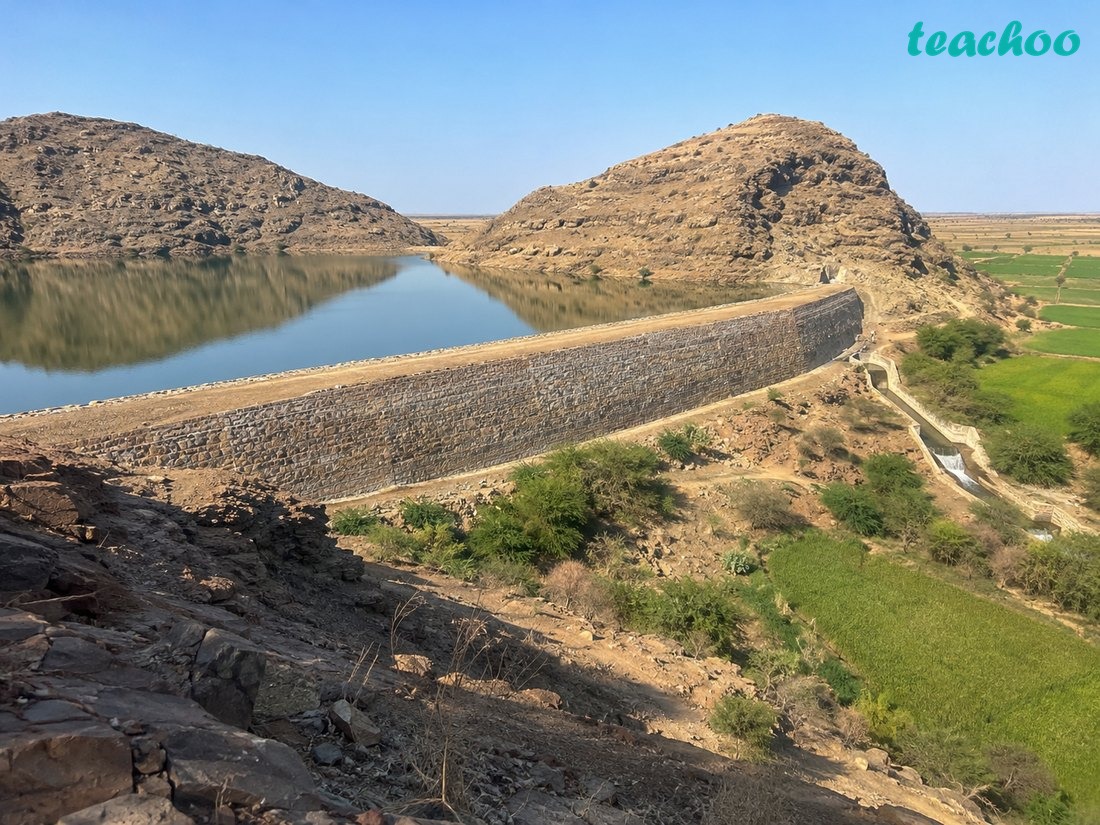
- Pushyagupta , a governor appointed by Chandragupta Maurya, constructed a dam on the Sudarshana Lake near Girnar in Saurashtra (Kathiawad, Gujarat).
- The Junagadh inscription later records this history and later repairs, showing the continuing importance of the irrigation work.
LET'S RECALL — Chola irrigation
- The Cholas built irrigation systems that included canals, lakes and tanks with connecting channels .
- The Grand Anicut (Kallanai) , built by Karikala Chola, helped store and distribute water, supported agriculture and encouraged the growth of settlements.
- The chapter notes that it continued to be used and repaired over many centuries and remains in use even today.
Across these examples, irrigation remained important because it supported agriculture, and agriculture was a major source of state revenue.
Section Summary - Irrigation
Need
Agriculture depended closely on water supply
Works
Reservoirs, canals and dams built and maintained
Evidence
Sudarshana Lake dam; the Junagadh inscription
↓
The State invested in irrigation because agriculture was its main revenue
