
 You are here
page 128
Why was agriculture the backbone of the economy, and how did it support state revenue?
![Economy: Agriculture and Land Re - State and Society up t - [Teachoo] - Concepts](https://cdn.teachoo.com/57ed108c-5ada-4bcf-94d7-7d5b204b36d5/ploughing-in-early-india.jpg)
Agriculture remained the backbone of the economy.
What did agriculture sustain?
Ploughing in early India
What it sustained
In one line
Rural livelihoods
It supported the daily life and income of people living in villages
State revenue
It was a major source of revenue for the state
How much tax was charged on agriculture?
- The basic tax on land was a fixed proportion of the produce , generally one-sixth .
- For the purpose of revenue assessment , land was classified into different categories .
How was village land classified and held?
- Agricultural land within villages was divided into individual holdings .
- Common resources such as pastures were maintained for grazing cattle, and villages also included groves on their outskirts .
- For revenue assessment, land was classified into different categories.
What types of village land did Kautilya name?
Cultivated land
Wasteland / fallow land
High and dry land
Sown fields
Groves
What crops were grown, and how did regional conditions influence cultivation?
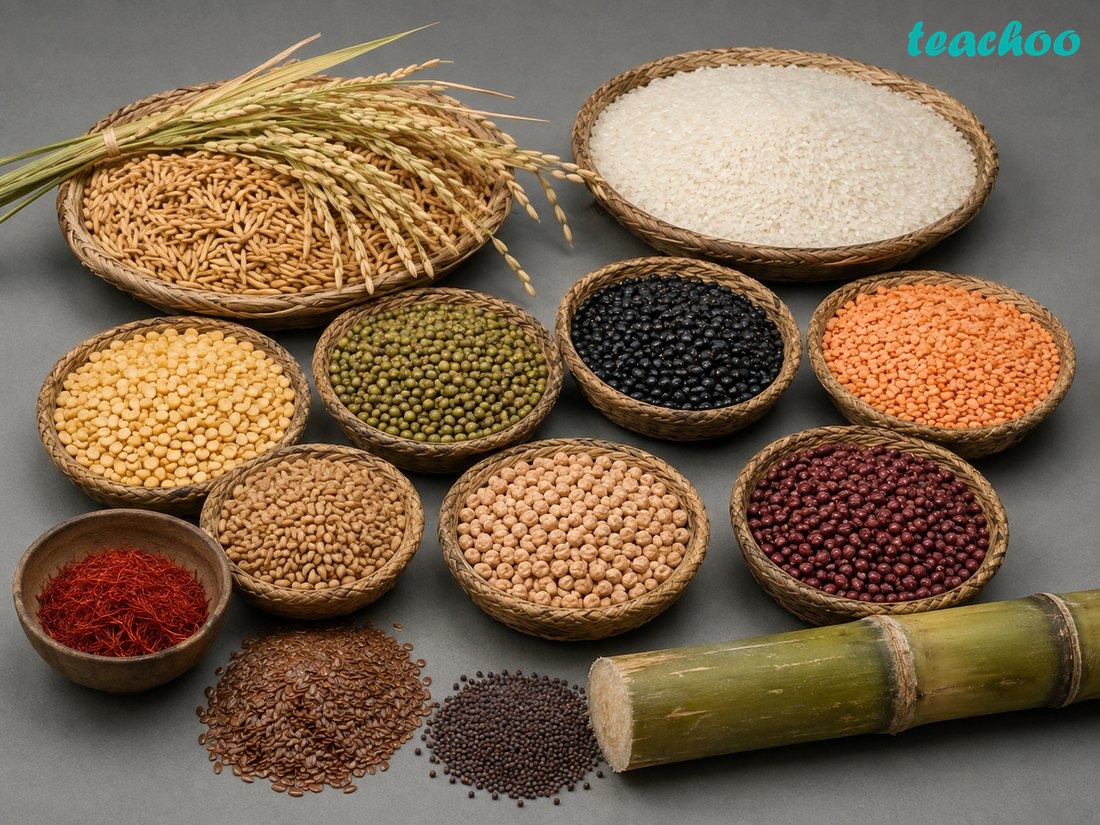
Crops of early India
| Crop |
|---|
| Several varieties of rice |
| Pulses |
| Wheat |
| Linseed |
| Mustard |
| Saffron |
| Sugarcane |
| Vegetables |
| Fruits |
How did the expansion of agriculture happen in South India (the Deccan area)?
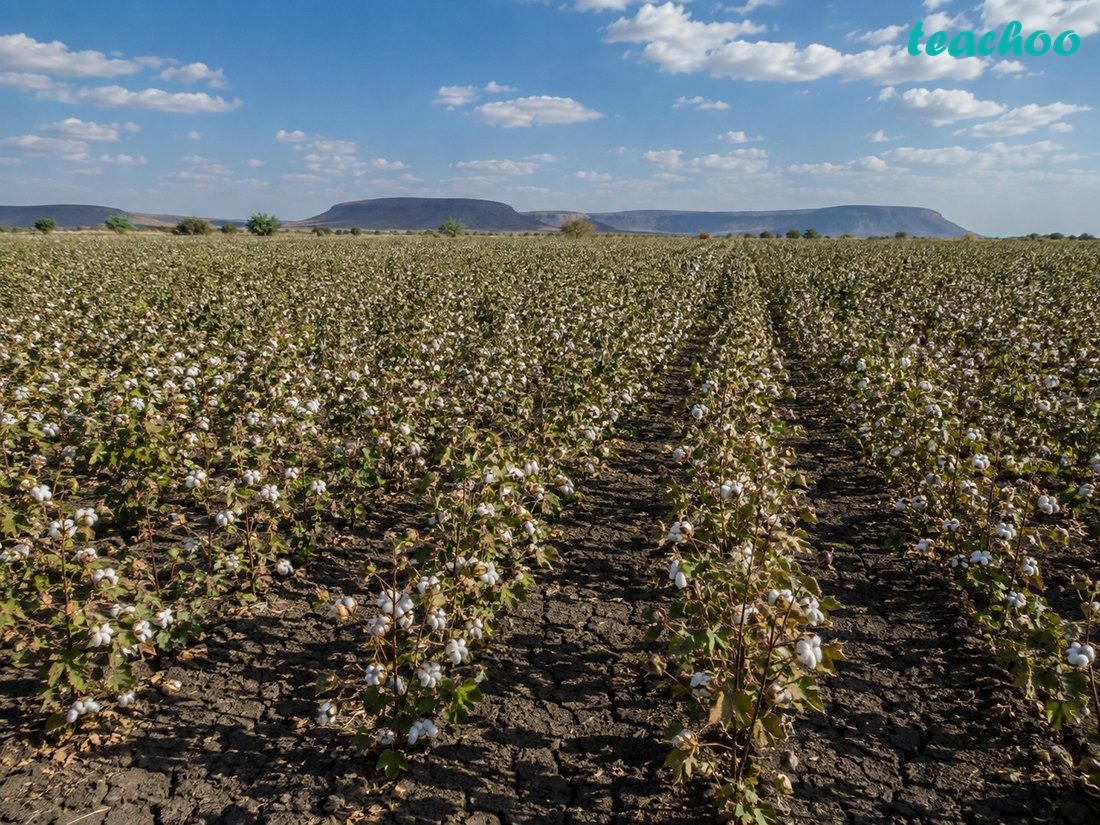
Cotton on the black soil of the Deccan
- During the post-Mauryan period , the expansion of agriculture in the Deccan likely contributed to increased cotton cultivation .
- This was because the region's black soil was particularly suitable for this crop .
How did agricultural expansion occur, and what do different texts tell us about farming?
- In the Mauryan Empire, the state encouraged this by clearing forests .
How did the Mauryan state expand agriculture?
Agricultural expansion
growing more land under cultivation
↓
State cleared forests
to bring in new farmland
↓
But — some forests were protected by law
- However, certain categories of forests were protected by law showing that forest clearing was not unrestricted
What different texts are related to agriculture during this period?
Text
Detail
Milindapanho
A Buddhist text traditionally attributed to
Nagasena
; describes
eight stages of agricultural operations
, from preparing and weeding fields to harvesting and winnowing crops
Amarakosha
A
standard Sanskrit lexicon
; includes a
special chapter on forest, crops, plants, and manure
Sangam literature
Documents
agricultural life in southern India
, highlighting the
land's fertility
and the
abundance of agricultural produce
- The economic foundations laid during the Mauryan period continued to develop in the post-Mauryan period .
- Sangam texts refer to the Chera region as rich in jackfruit, pepper, and turmeric , and vividly describe the cultivation of ragi and sugarcane .
- The Amarakosha (a dictionary) and the Milindapanho (a religious text) are very different kinds of sources, yet both give us information about agriculture , showing farming knowledge was recorded across many types of texts.
Section Summary - Economy: Agriculture and Land Revenue
Backbone
Agriculture supported rural livelihoods
Revenue
A fixed share of the produce, generally one-sixth
Land
Individual holdings, plus common pastures and groves
↓
Agriculture fed the people and funded the State
