
 You are here
pages 123 to 124
How did Vedic worship develop from nature-linked deities toward personal devotion and Bhakti?
![Religious Life and the Emergence - State and Society up t - [Teachoo] - Concepts](https://cdn.teachoo.com/8f64690a-c020-433f-a045-750f83715c7f/a-vedic-yajna.jpg)
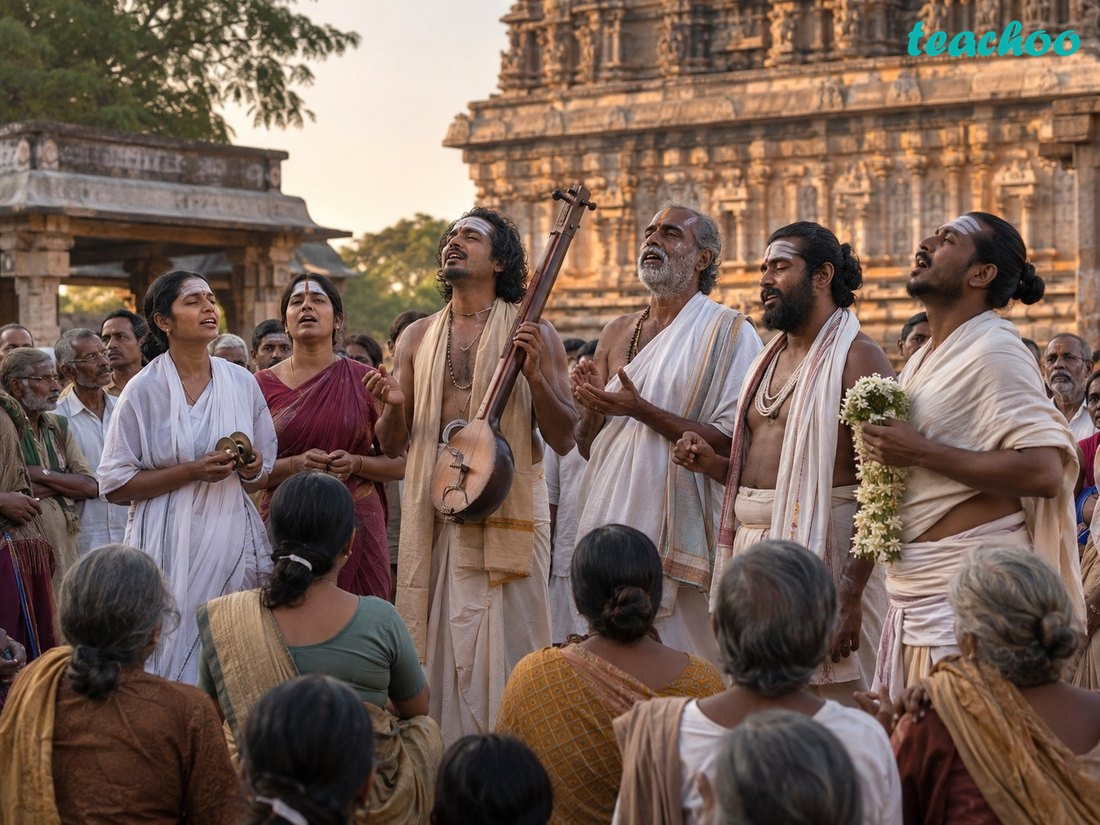
A Vedic yajna
- The Vedic pantheon did not have a rigid hierarchy; different deities are praised as supreme in different hymns.
- These deities were invoked through prayers and yajnas , with offerings most often made to the sacred fire.
- Many deities were associated with elements of nature such as the sun, rain, fire, earth and dawn .
- The chapter connects this with early societies' dependence on nature and the view of nature as sacred and powerful , not merely a resource. It gives continuing examples such as sun worship during Chhath and Makar Sankranti .
- The Vedic worldview is described as reflecting an early sense of respect for, and responsibility towards, nature .
How did devotional worship develop later?
Personal deities
Vishnu, Shiva and Shakti became important centres of worship
↓
Bhakti — a direct devotional connection with the gods, without the need for elaborate Vedic rituals, accessible regardless of class or gender
When did the organised Bhakti tradition become prominent?
Bhakti saint-poets
- Early references occur in texts such as the Mahabharata , but organised and widespread Bhakti practices gained prominence in the 6th-century Tamil region .
| Group | Who they were | Devotion |
|---|---|---|
| Alvars | Twelve saint-poets | Vishnu |
| Nayanmars | Sixty-three Shaiva saint-poets | Shiva |
What was renunciation, and where did it fit in early Indian traditions?
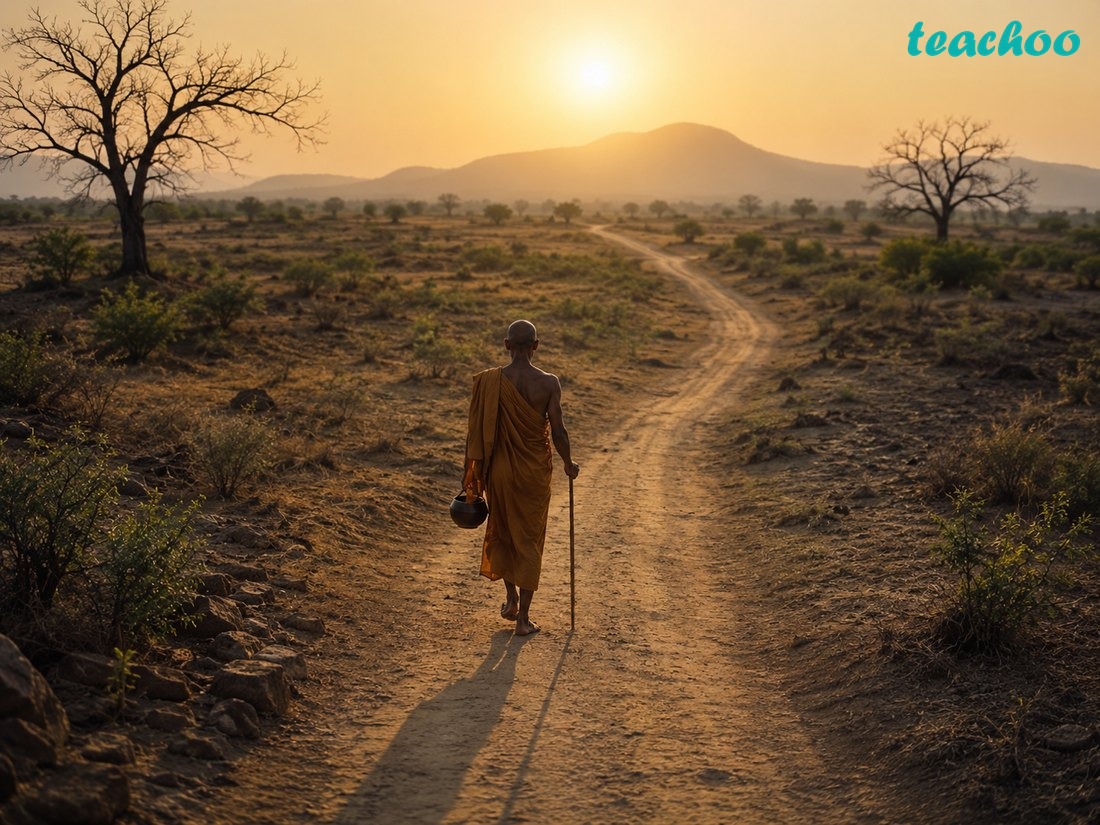
A wandering renunciant
- Around the middle of the first millennium BCE , a visible trend of renunciants emerged. They advocated non-attachment to material comforts and social relationships and chose ascetic, wandering lives rather than household life.
| Term used in sources | Meaning given in the chapter |
|---|---|
| Parivrajaka | Wanderer |
| Bhikshu | One who lives by begging alms |
| Shramana | One who strives |
- Gautama Buddha and Mahavira emerged as influential thinkers of this period.
- The idea of renunciation was already present in the Vedic tradition: among the four ashramas, vanaprastha and sannyasa clearly have a renunciatory connotation.
What different religious practices coexisted during this long period?
Religious practices of this period
Practice
What it meant
Yajnas
Fire rituals and offerings
Nature worship
Gods linked to sun, fire, rain, earth
Renunciation
Living as a wanderer, giving up comforts
Bhakti
Simple, personal devotion, open to all
Devotional hymns
Alvars and Nayanmars singing praises of Vishnu and Shiva
What Have We Learned
- Vedic gods: no fixed hierarchy, linked to nature, worshipped via yajnas.
- Later shift: personal gods (Vishnu, Shiva, Shakti), leading to Bhakti.
- Bhakti: a direct devotional connection with the gods, accessible to all regardless of class or gender, without the need for elaborate Vedic rituals.
- Bhakti organised in 6th century Tamil region: 12 Alvars (Vishnu), 63 Nayanmars (Shiva).
- Renunciants: parivrajaka, bhikshu, shramana.
- Renunciation belongs to vanaprastha and sannyasa, the last two ashramas.
- Buddha and Mahavira were key thinkers, but renunciation already existed before them.
Section Summary - Religious Life and the Emergence of Bhakti
Vedic worship
Nature-linked deities invoked through yajnas
Personal deities
Vishnu, Shiva and Shakti become centres of worship
Bhakti
Direct devotion, open to all regardless of class or gender
↓
Worship moved from elaborate ritual towards personal devotion
