
 You are here
pages 102 to 106
Think about it
First people belonged to a clan. Then they began to belong to a land. That one change turned janas into kingdoms and republics.
How did kin-based janas develop into territorial janapadas and mahajanapadas?
- Early Vedic society was organised mainly through janas — groups bound by kinship ties.
- Between about 1000 BCE and 600 BCE , political identity increasingly became connected to a territory . Such territorial units were called janapadas .
How did identity shift from kinship to territory?
JANA
people linked mainly by kinship
↓
JANAPADA
identity linked to a territory
↓
MAHAJANAPADA
a larger political unit than a janapada
↓
Some powerful states later expanded into empires
What does janapada mean?
- The textbook explains janapada literally as the place where a people ( jana ) first set its feet.
- This marks a shift from kinship-based identity to a stronger sense of belonging to land and territory . The textbook adds that some scholars view this transition as a consolidation of identity for the Vedic janas .
Why did larger territorial states develop?
- Control over land , agricultural production , and trade routes became increasingly important.
- Managing these required more complex administrative systems.
Date note:
The prose on page 103 describes the broader period from about
600 BCE to 300 CE
as witnessing new political formations, while the chapter's running timeline marks the
rise of the mahajanapadas as 600–300 BCE
. For revision, remember that the mahajanapadas emerged from about the
6th century BCE
.
Kingdoms and republics
- By about 600 BCE, northern India included both monarchical states (rajyas) and republican states (ganas or samghas) .
Why did Magadha become the most powerful mahajanapada, and how did this lead to the Mauryan Empire?
![Early Kingdoms and Republics - State and Society up t - [Teachoo] - Concepts](https://cdn.teachoo.com/5a84ceed-0f1c-457f-9416-acc1815059ae/the-sixteen-mahajanapadas.jpg)
- Historical sources usually speak of sixteen mahajanapadas .
- Among them, Magadha , in present-day Bihar, gradually emerged as the most powerful.
- The chapter gives three main reasons: its strategic location , fertile plains , and strong rulers .
- These enabled Magadha to expand its control over neighbouring regions.
- This expansion eventually led to the rise of the Mauryan Empire , one of the largest and most powerful empires in early Indian history.
How did Magadha lead to the Mauryan Empire?
Magadha
strategic location + fertile plains + strong rulers
↓
Expansion into neighbouring regions
↓
Rise of the Mauryan Empire
The chapter's running timeline marks
321 BCE
as the foundation of the Mauryan Empire by
Chandragupta Maurya
.
The sixteen mahajanapadas
What evidence shows the political and economic centre shifting toward the Ganga plains?
- Early Vedic culture was most prominent in the northwestern regions , especially the Indus and Sarasvati valleys.
- In the later Vedic period, the Ganga plains became the main centre.
- By about 600 BCE , the region showed substantial growth in agriculture, formation of larger political units, and more complex social institutions.
How did Vedic culture's centre shift geographically?
Early Vedic period
northwestern regions — Indus and Sarasvati valleys
↓
Later Vedic period
Ganga plains become the main centre
What does the archaeology of the first millennium BCE show?
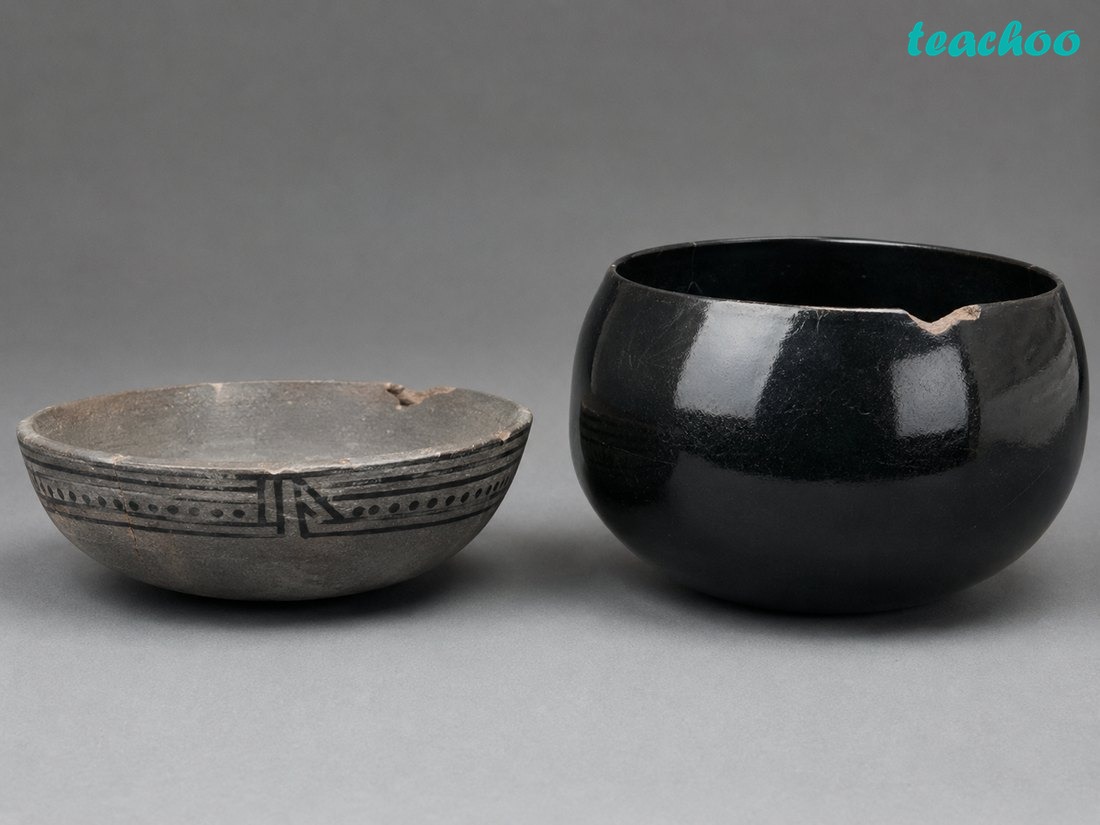
Painted Grey Ware and Northern Black Polished Ware
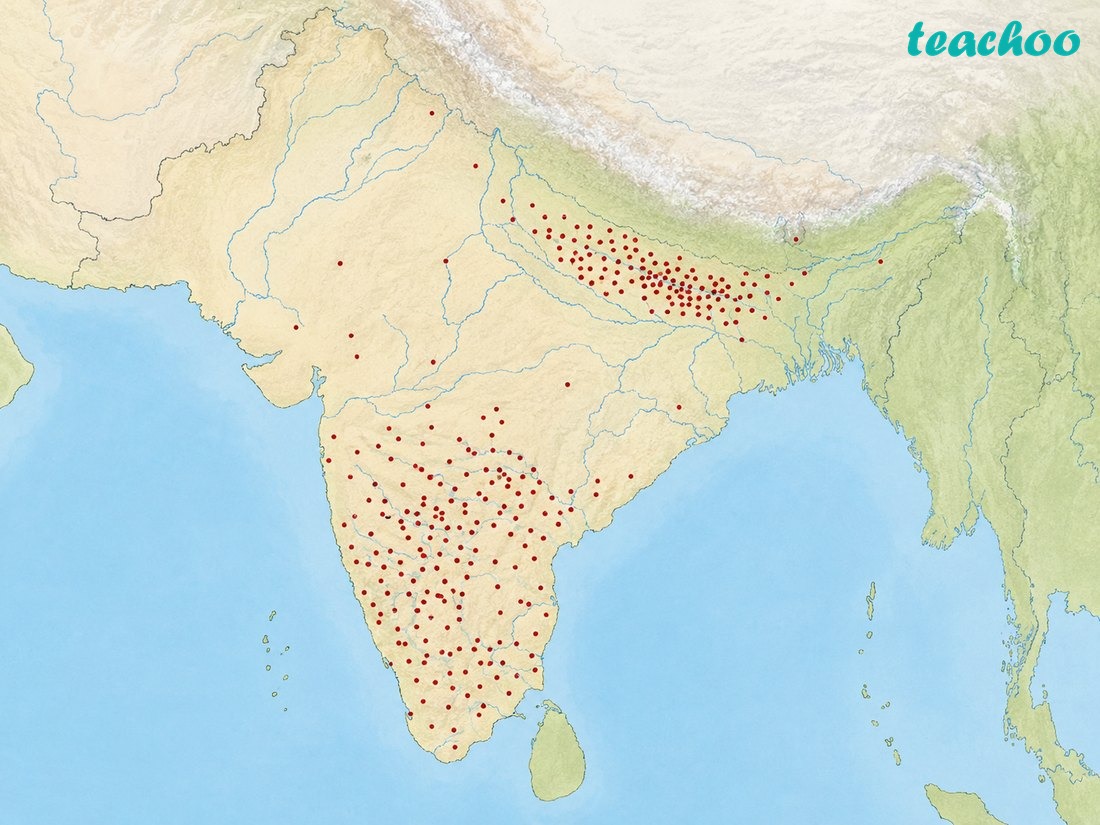
- More settlements concentrated in the Ganga region than in the earlier map.
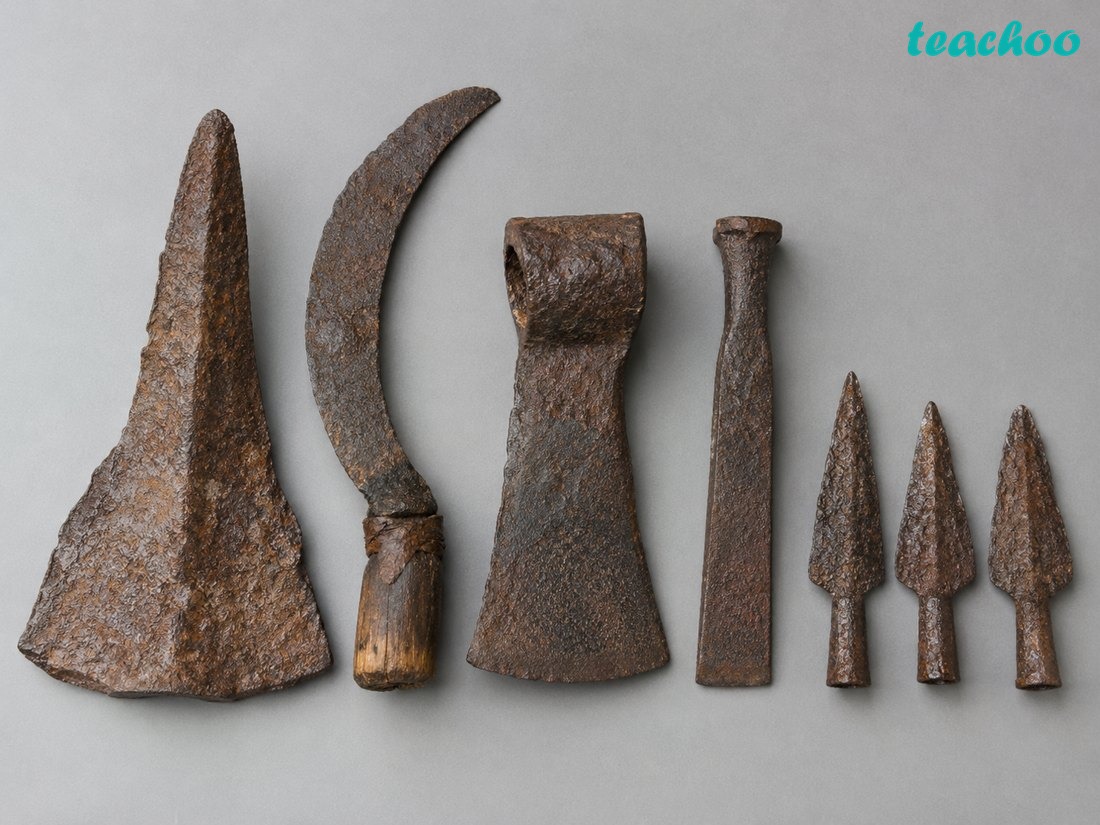
- Increasing evidence of iron implements .
- A wider variety of grain .
- The characteristic PGW pottery .
- In the second half of the first millennium BCE, especially in the middle Ganga region, a refined “deluxe ware” called NBPW appears, known for its smooth, glossy black surface .
- The textbook describes this archaeological phase as the emergence of a richer, more advanced material culture .
| Term | What the chapter says |
|---|---|
| PGW | Painted Grey Ware; mentioned as characteristic pottery in the first-millennium BCE archaeological evidence from the Ganga region. |
| NBPW | Northern Black Polished Ware; a refined “deluxe ware” with a smooth, glossy black surface, found especially in the middle Ganga region in the second half of the first millennium BCE. |
What do literary sources add?
Early iron implements
- Expanding agricultural activity.
- Increased grain output.
- Greater crop variety, especially paddy .
- Use of iron implements.
Let's Analyse
- Can you identify the crucial factors behind this change?
Show Answer
Suggested answer / inference:
the textbook gives the evidence and asks students to connect it.
- More frequent use of iron implements, expanding agriculture and greater grain output could support larger and denser settlements.
- As settlements and agricultural production grew, control over land, produce and routes became more important, helping larger political units develop.
Iron finds and megalithic sites
Did monarchy exist alone, or did republican states also develop?
- No. By about 600 BCE, northern India had different forms of political organisation.
- The chapter names monarchical states as rajyas .
- It also names republican states as ganas or samghas .
- The important point here is that both forms existed in the same broad period .
The chapter does not give a detailed internal constitution of the ganas or samghas in this passage; it simply establishes that republican states existed alongside monarchies.
Which important kingdoms developed in southern India during this period?
In the Deccan
- The Mauryan Empire was succeeded by the Satavahana Empire .
- It lasted nearly 500 years , from the 2nd century BCE to the 3rd century CE .
Further south, in peninsular India
| Kingdom | Where it was | Emblem |
|---|---|---|
| Cholas | Lower Kaveri River valley | Tiger |
| Cheras | Kerala; called Keralaputras in the sources | Bow |
| Pandyas | River valleys of the Tamraparni and Vaigai | Fish |
| Satiyaputras | Northern part of Tamil Nadu | Not given in the chapter |
- All four polities find mention in the Ashokan inscriptions .
- The Chera, Chola and Pandya rulers were called the three crowned kings, or "Vendar of Tamilakam" .
- Their kingdoms flourished in fertile rice-growing regions .
- Much of what we know comes from Sangam literature , the earliest Tamil literary tradition, dated 300 BCE to 300 CE .
- One Chera ruler earned the title adhiraja after defeating several crowned kings.
- The poems also mention Vedic yajnas and links with epic traditions.
A warning the book gives directly
Early Cholas, Cheras, Pandyas
Later imperial Cholas, Cheras, Pandyas
Early Chola, Chera and Pandya kingdoms are described in sources such as Sangam literature.
Later imperial Chola, Chera and Pandya kingdoms emerged many centuries later.
Do not confuse the two.
What Have We Learned
- Janapada = the land where a jana set its feet; identity increasingly included belonging to territory , not only kinship ties.
- Jana to janapada: about 1000 BCE to 600 BCE.
- Mahajanapadas: emerged from about the 6th century BCE ; the chapter timeline marks their rise as 600–300 BCE .
- Magadha, in present-day Bihar, was strongest, and grew into the Mauryan Empire.
- Two forms of state existed together: rajya and gana or samgha.
- Archaeological evidence includes PGW and, later in the first millennium BCE, the refined NBPW with its smooth, glossy black surface.
- Emblems: tiger for Cholas, bow for Cheras, fish for Pandyas.
Section Summary - Early Kingdoms and Republics
Jana
People linked by kinship
Janapada
Identity linked to territory
Mahajanapada
Larger states; Magadha the most powerful
↓
Identity shifted from kinship to territory, and territory grew into empires
