
 You are here
Female reproductive system
- Ovaries → produce eggs and hormones
- Oviducts (fallopian tubes) → connect each ovary to the uterus
- Uterus → bag-like organ where the foetus develops
- Cervix → narrow passage that opens into the vagina
- Vagina → the uterus opens into it through the cervix
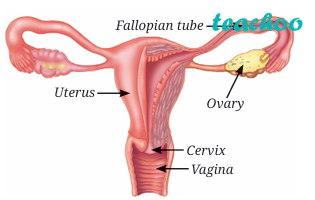
Let's study each part one by one.
What are ovaries?
- The female reproductive system has a pair of ovaries (two ovaries).
- The ovaries produce the female germ cells (female gametes), called eggs .
- They also release hormones .
- These hormones bring about the changes in girls during puberty .
What are oviducts?
- Oviducts are also called fallopian tubes .
- There are two oviducts, one for each ovary.
- They connect each ovary to the uterus .
What is the uterus?
- The uterus is a bag-like structure .
- It is the place where the foetus (the developing baby) develops .
What is the cervix?
- The cervix is a narrow passage at the lower end of the uterus.
- Through the cervix, the uterus opens into the vagina .
What is the vagina?
- The vagina is the passage into which the uterus opens through the cervix.
- It connects the uterus to the outside of the body .
What is the path of the egg?
- The egg is made in the ovary .
- It travels through the oviduct .
- It then reaches the uterus .
-
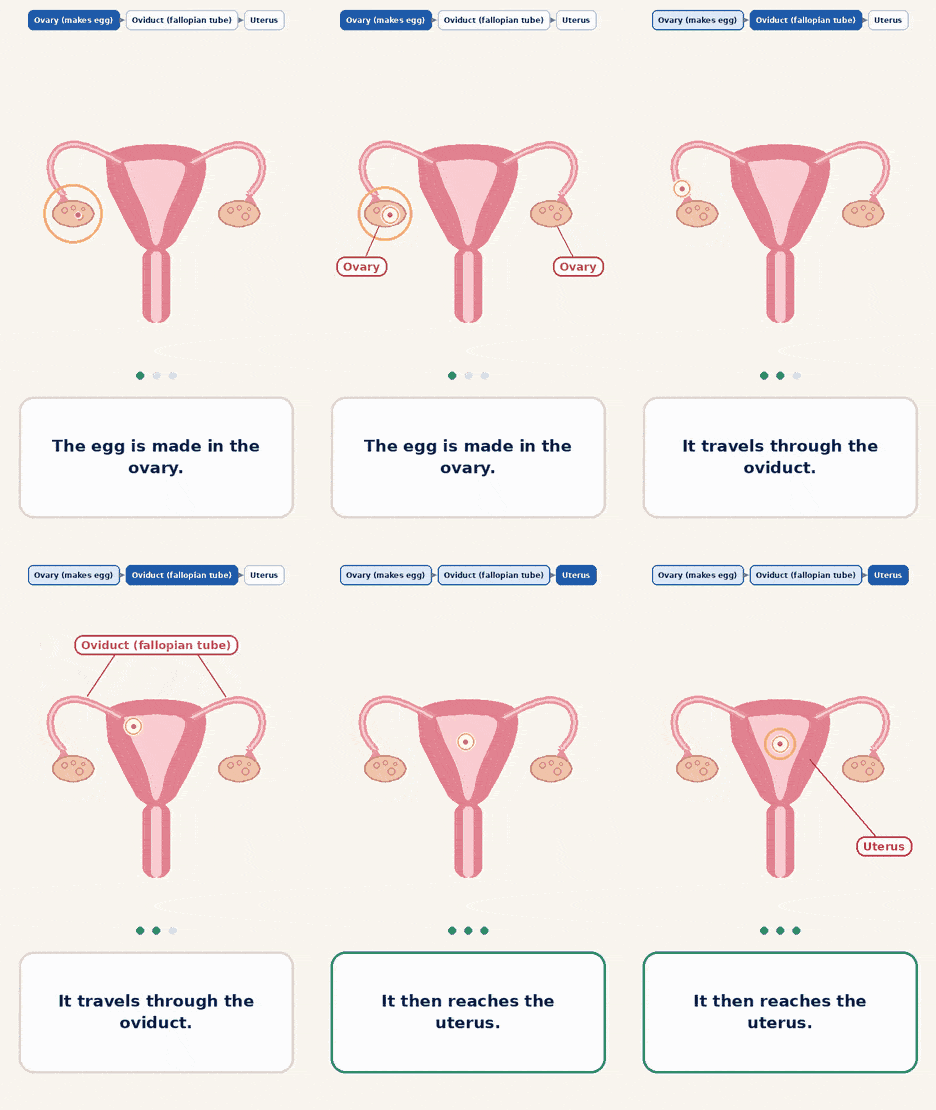
Ovary
(makes egg)
→
Oviduct
(fallopian tube)
→
Uterus
Summary
| Part | Function |
|---|---|
| Ovaries | Produce eggs and release hormones that bring about changes during puberty |
| Oviducts (fallopian tubes) | Connect each ovary to the uterus |
| Uterus | Bag-like structure where the foetus develops |
| Cervix | Narrow passage through which the uterus opens into the vagina |
| Vagina | Passage that connects the uterus to the outside of the body |
Meet a Scientist: In-vitro Fertilisation (IVF)
- In-vitro fertilisation (IVF) is a medical technique .
- In IVF, an egg and a sperm are combined outside the female's body, usually in a laboratory dish .
- The fertilised egg is then placed in the uterus to begin a possible pregnancy .
- A baby born through IVF is commonly called a "test tube baby" , although the process actually happens in a culture dish , not a test tube.
-
India
has a special place in the history of IVF.
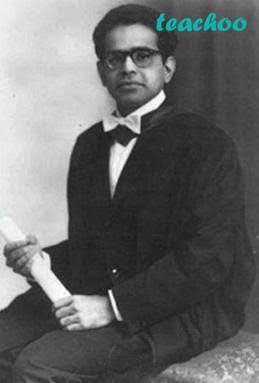
- In 1978 , Subhash Mukhopadhyay of Kolkata created India's first test tube baby .
- The baby was Kanupriya Agarwal (nicknamed Durga ).
