You are here
End-of-Chapter Exercises
Last updated at October 23, 2026 by Teachoo
Transcript
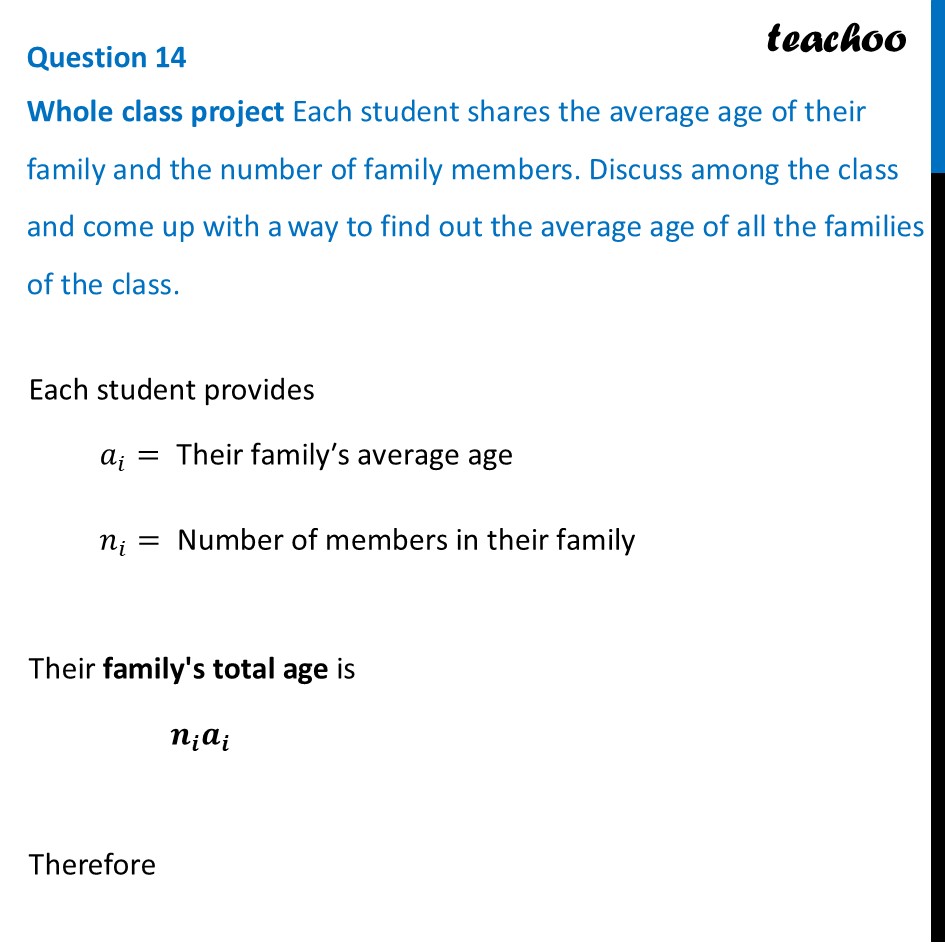
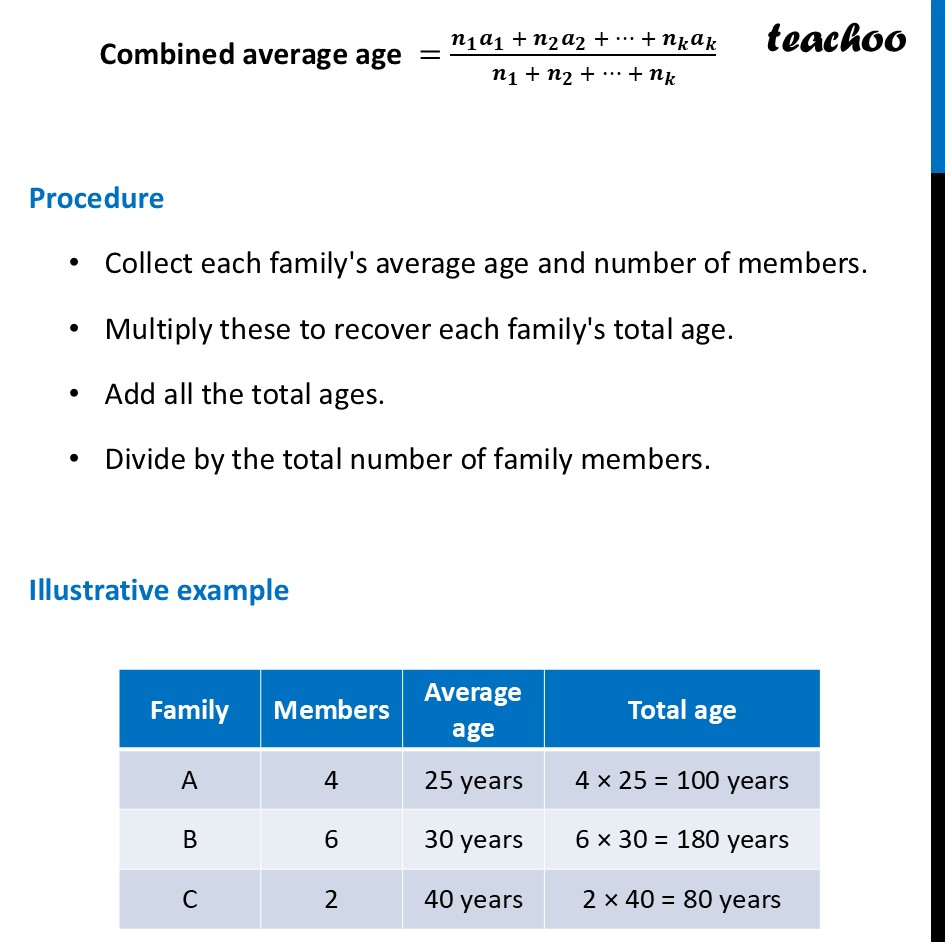
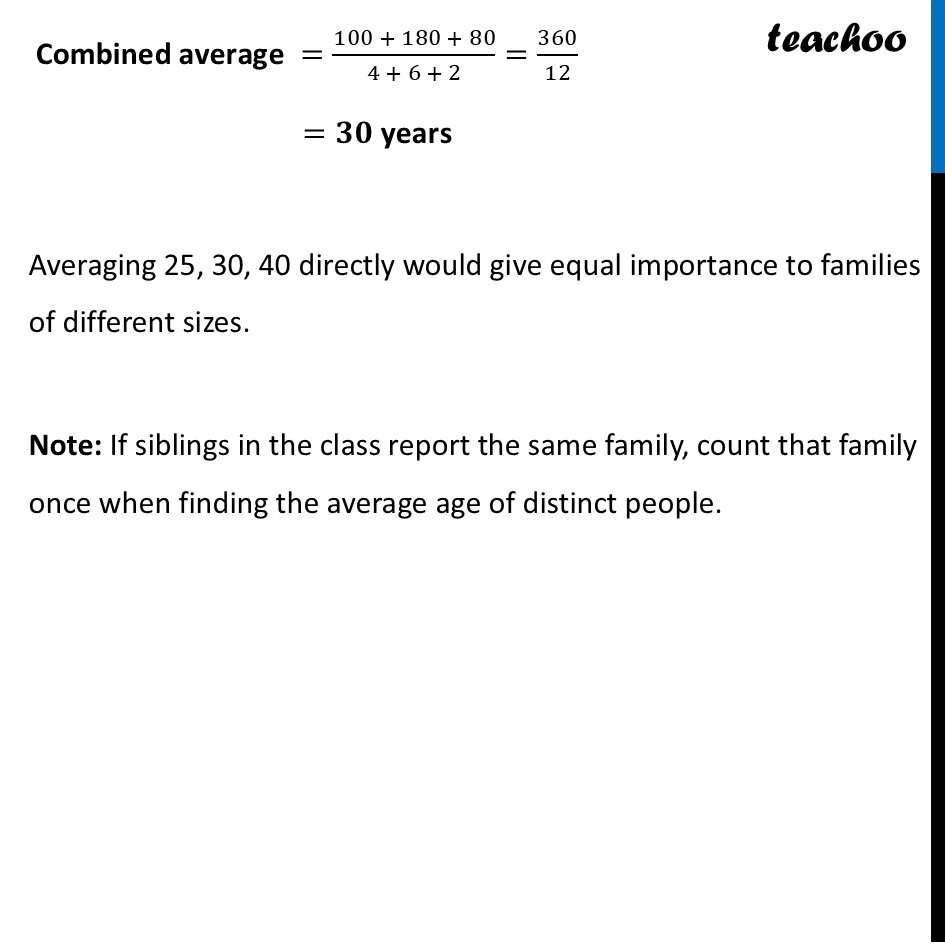
Question 14 Whole class project Each student shares the average age of their family and the number of family members. Discuss among the class and come up with a_( )way to find out the average age of all the families of the class. Each student provides 𝑎_(𝑖)= Their family′s average age [; 𝑛_(𝑖)= Number of members in their family ] Their family's total age is 𝒏_(𝒊)𝒂_(𝒊) Therefore Combined average age =(𝒏_(𝟏)𝒂_(𝟏) + 𝒏_(𝟐)𝒂_(𝟐) + ⋯ + 𝒏_(𝒌)𝒂_(𝒌))/(𝒏_(𝟏) + 𝒏_(𝟐) + ⋯ + 𝒏_(𝒌)) Procedure Collect each family's average age and number of members. Multiply these to recover each family's total age. Add all the total ages. Divide by the total number of family members. Illustrative example Family | Members | Average age | Total age A | 4 | 25 years | 4 × 25 = 100 years B | 6 | 30 years | 6 × 30 = 180 years C | 2 | 40 years | 2 × 40 = 80 years Combined average =(100 + 180 + 80)/(4 + 6 + 2)=(360)/(12) =𝟑𝟎 years [; ] Averaging 25, 30, 40 directly would give equal importance to families of different sizes. Note: If siblings in the class report the same family, count that family once when finding the average age of distinct people.