
 You are here
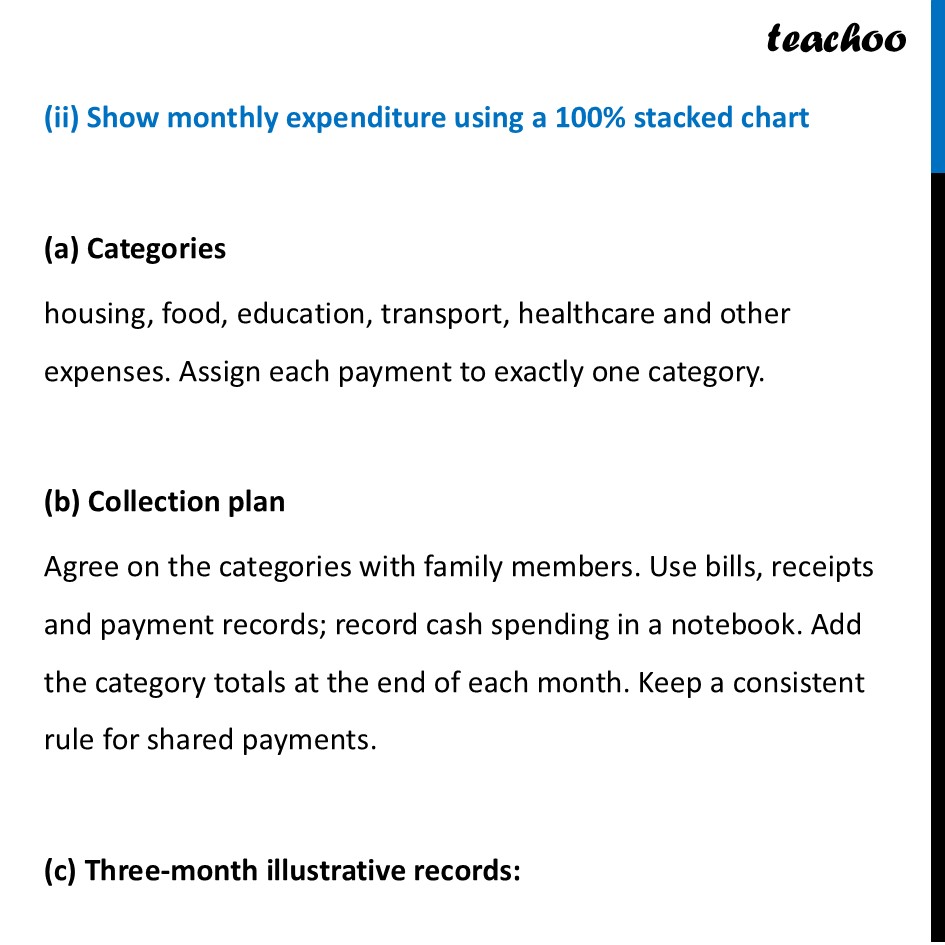
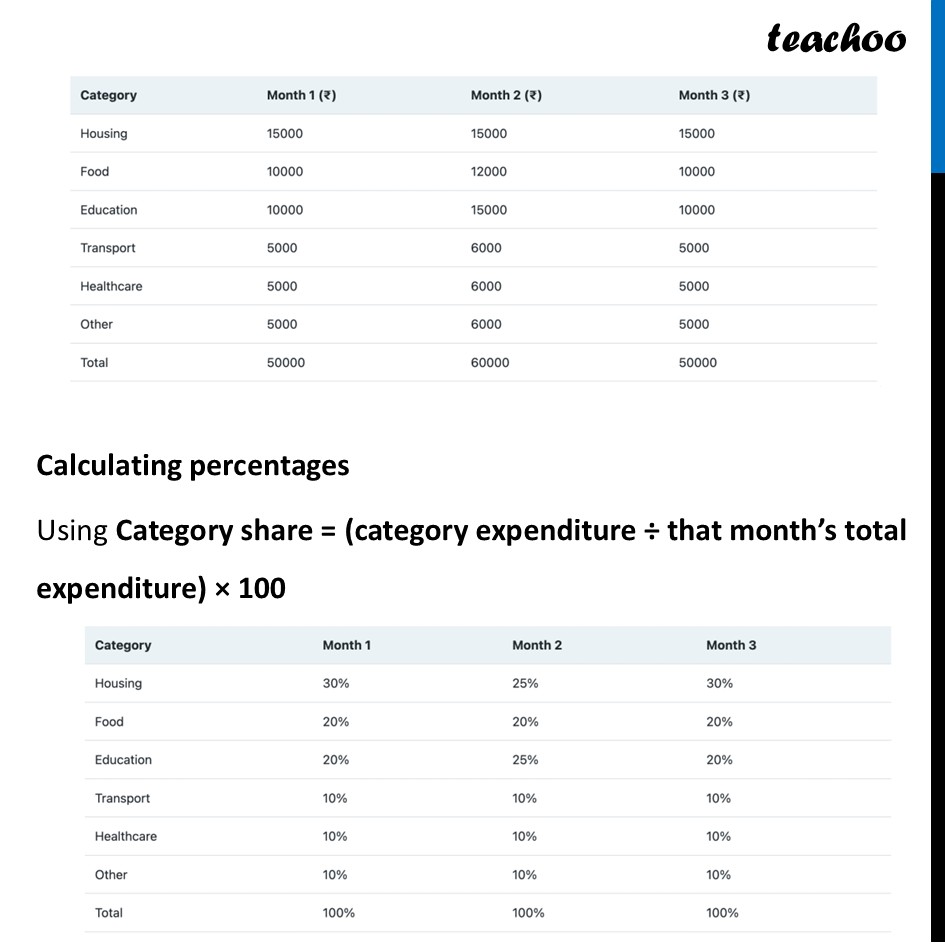
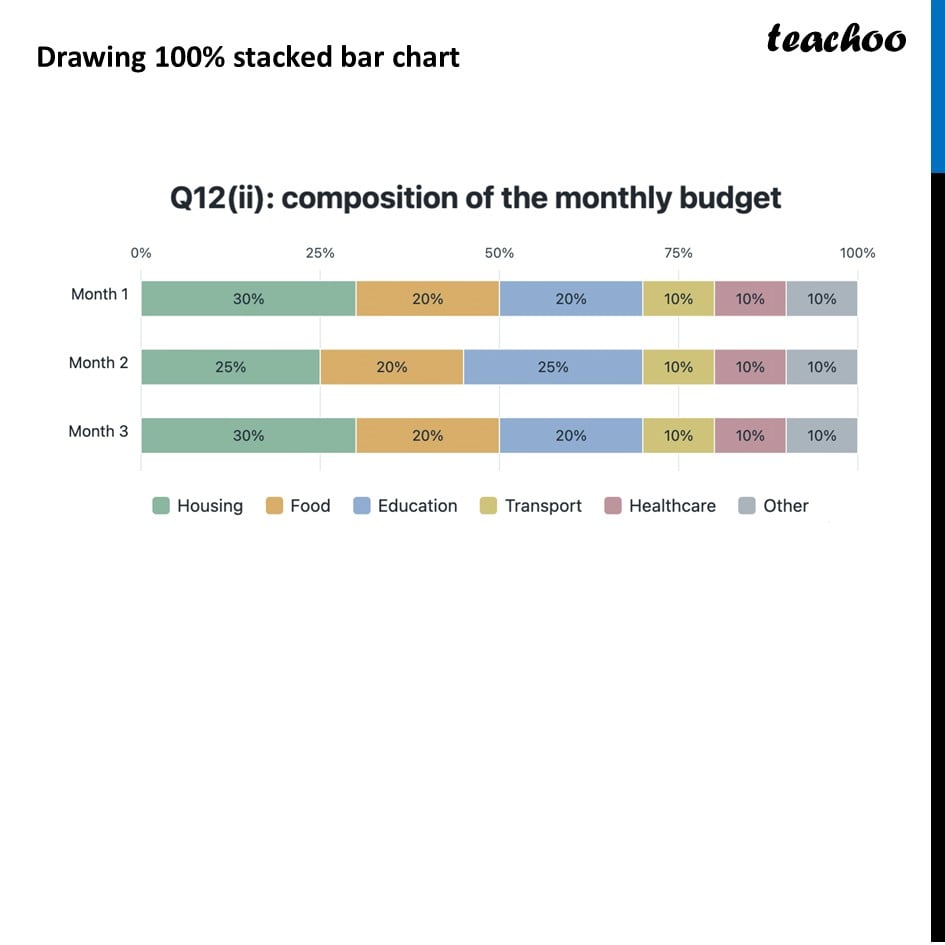
End-of-Chapter Exercises
Last updated at October 23, 2026 by Teachoo
Transcript
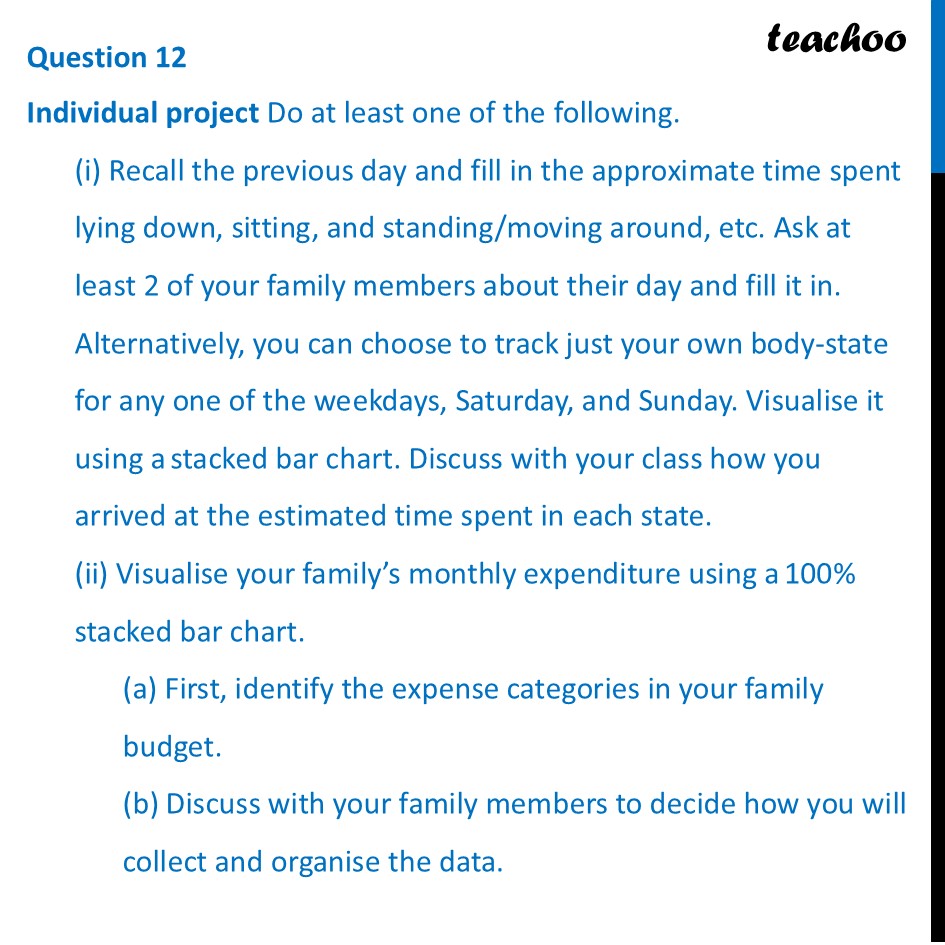
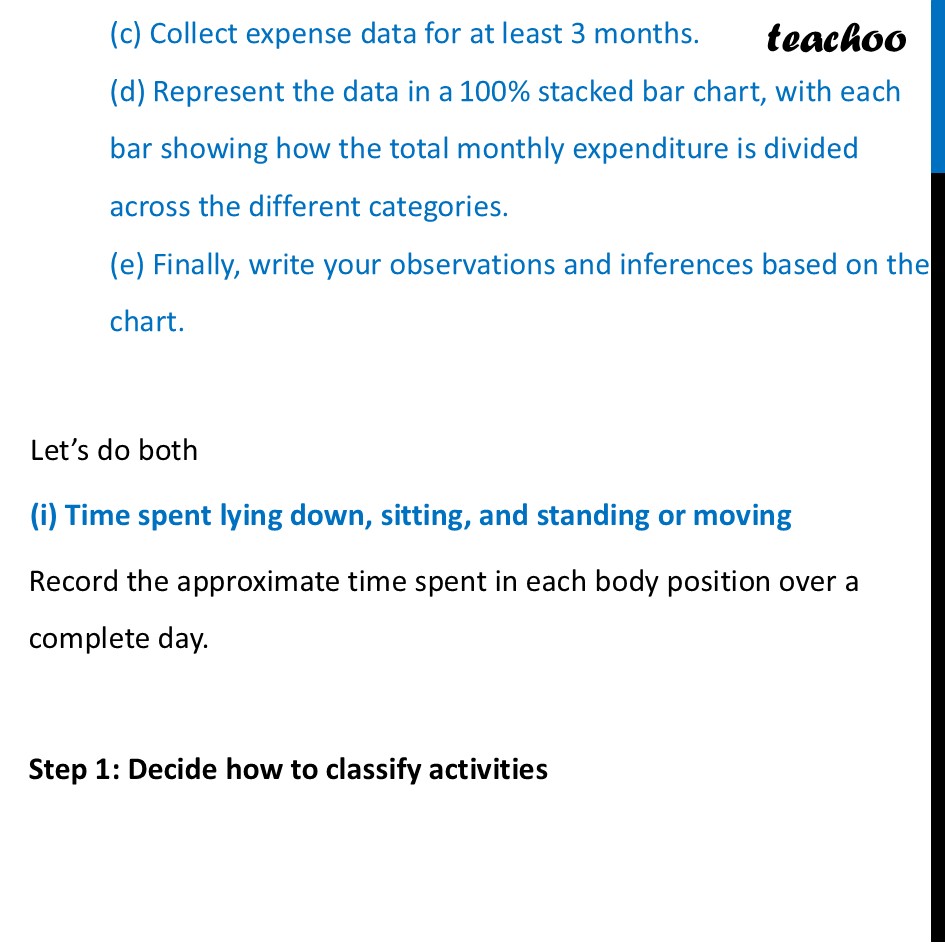
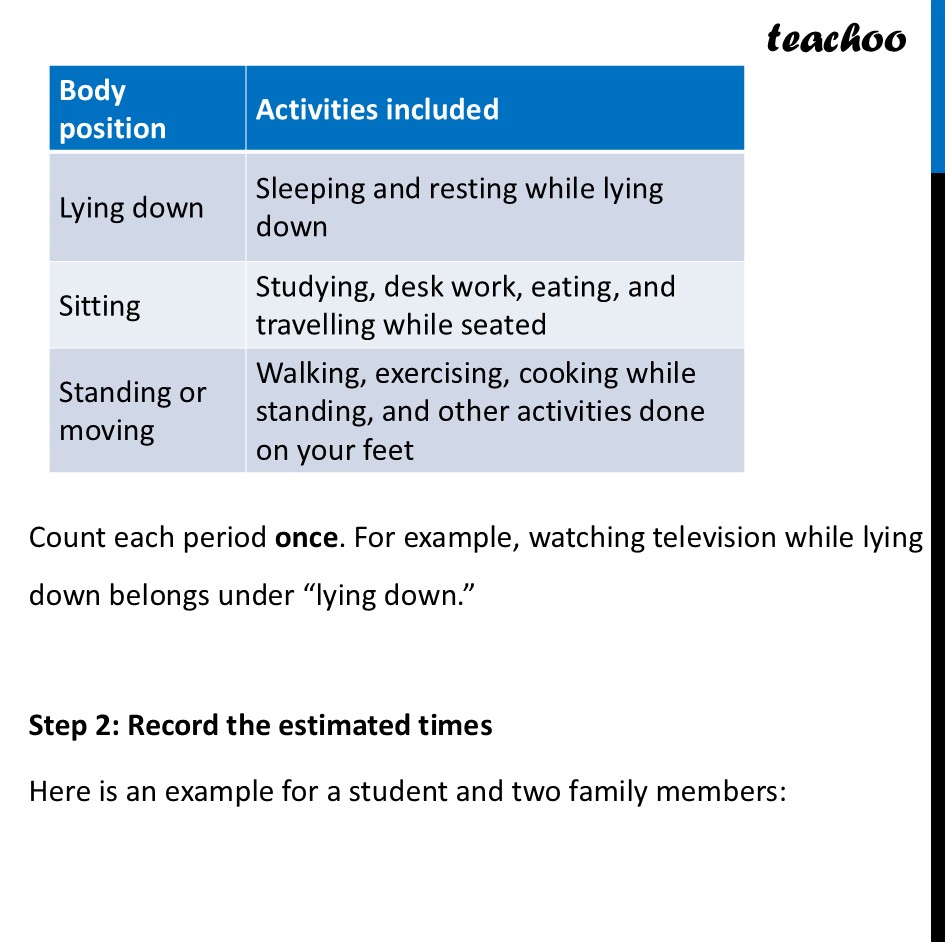
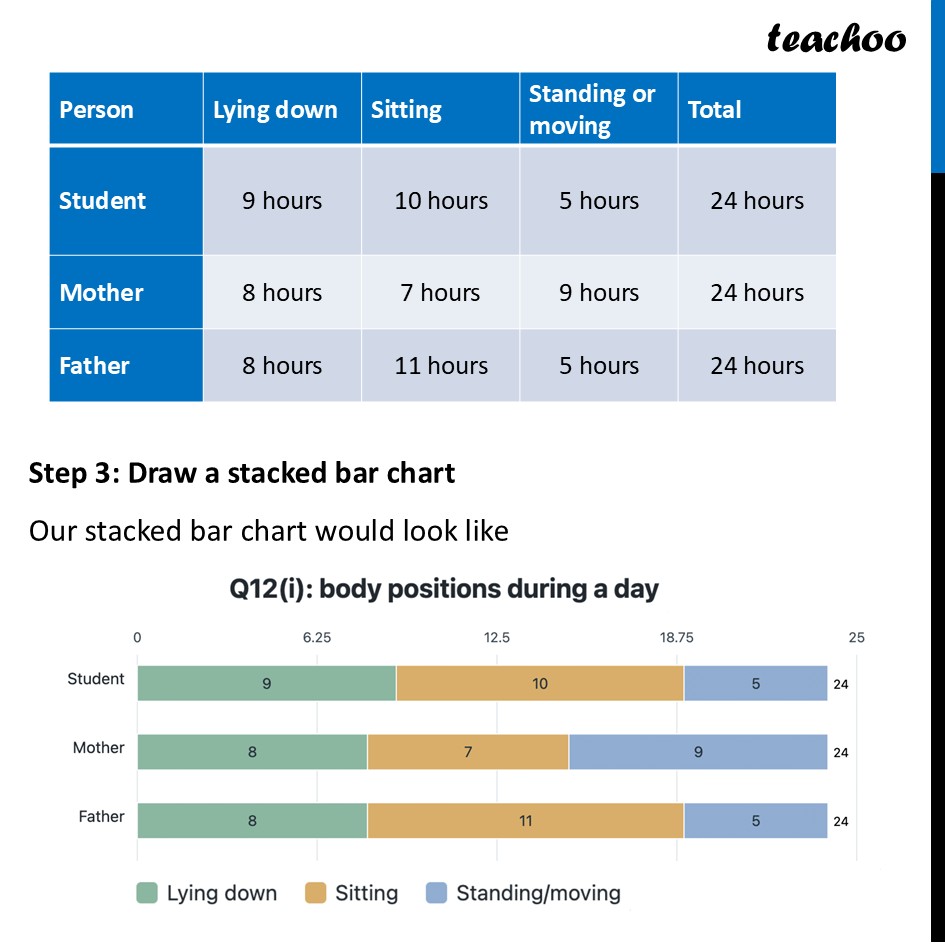
Question 12 Individual project Do at least one of the following. (i) Recall the previous day and fill in the approximate time spent lying down, sitting, and standing/moving around, etc. Ask at least 2 of your family members about their day and fill it in. Alternatively, you can choose to track just your own body-state for any one of the weekdays, Saturday, and Sunday. Visualise it using a_( )stacked bar chart. Discuss with your class how you arrived at the estimated time spent in each state. (ii) Visualise your family’s monthly expenditure using a_( )100% stacked bar chart. (a) First, identify the expense categories in your family budget. (b) Discuss with your family members to decide how you will collect and organise the data. (c) Collect expense data for at least 3 months. (d) Represent the data in a_( )100% stacked bar chart, with each bar showing how the total monthly expenditure is divided across the different categories. (e) Finally, write your observations and inferences based on the chart. Let’s do both (i) Time spent lying down, sitting, and standing or moving Record the approximate time spent in each body position over a complete day. Step 1: Decide how to classify activities Count each period once. For example, watching television while lying down belongs under “lying down.” Step 2: Record the estimated times Here is an example for a student and two family members: Body position | Activities included Lying down | Sleeping and resting while lying down Sitting | Studying, desk work, eating, and travelling while seated Standing or moving | Walking, exercising, cooking while standing, and other activities done on your feet Step 3: Draw a stacked bar chart Our stacked bar chart would look like Person | Lying down | Sitting | Standing or moving | Total Student | 9 hours | 10 hours | 5 hours | 24 hours Mother | 8 hours | 7 hours | 9 hours | 24 hours Father | 8 hours | 11 hours | 5 hours | 24 hours 0 6.25 12.5 18.75 24 25 ® Lying down § Sitting © Standing/moving Q12(i): body positions during a day (ii) Show monthly expenditure using a 100% stacked chart (a) Categories housing, food, education, transport, healthcare and other expenses. Assign each payment to exactly one category. (b) Collection plan Agree on the categories with family members. Use bills, receipts and payment records; record cash spending in a notebook. Add the category totals at the end of each month. Keep a consistent rule for shared payments. (c) Three-month illustrative records: Calculating percentages Using Category share = (category expenditure ÷ that month’s total expenditure) × 100 Category Housing Food Education Transport Healthcare Other Total Month 1 (2) 15000 10000 5000 50000 Month 2 (2) 12000 6000 60000 Month 3 (2) Month 1 30% 20% 10% 100% Month 2 25% Month 3 Drawing 100% stacked bar chart 0% 25% 50% 75% 100% Q12(ii): composition of the monthly budget ™ Housing Food () Education ©) Transport (§ Healthcare ) Other
