 You are here

Last updated at October 23, 2026 by Teachoo
Transcript
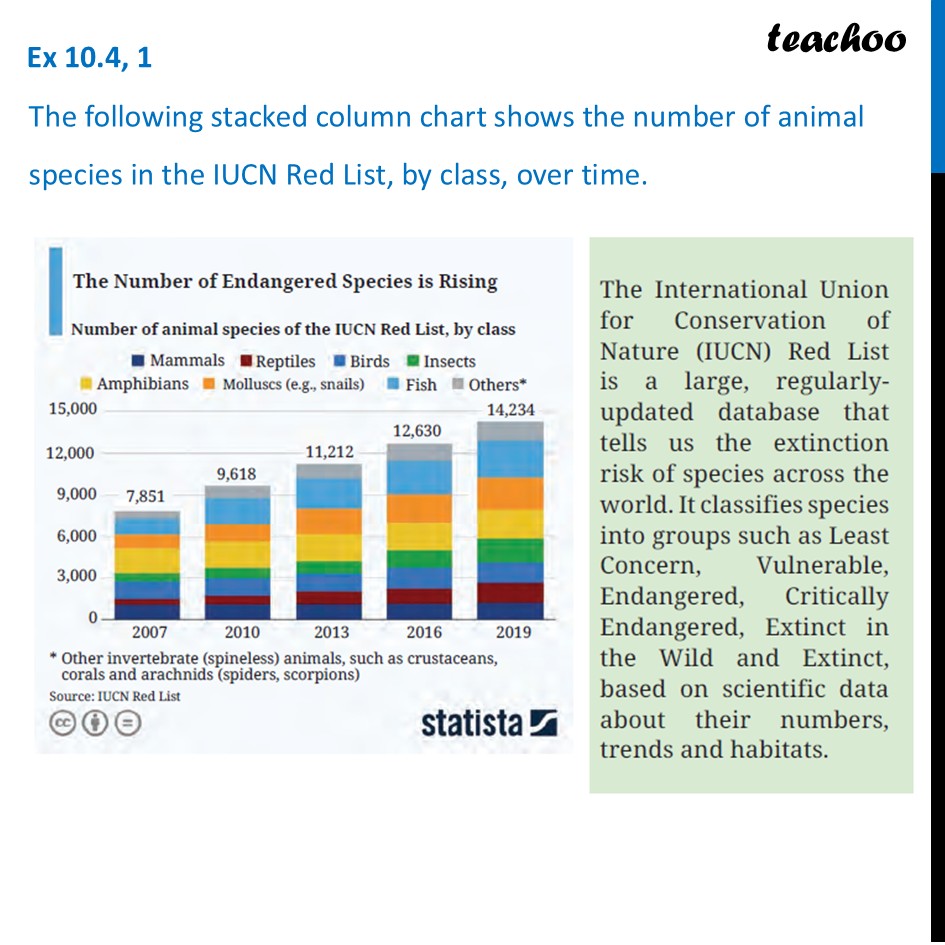
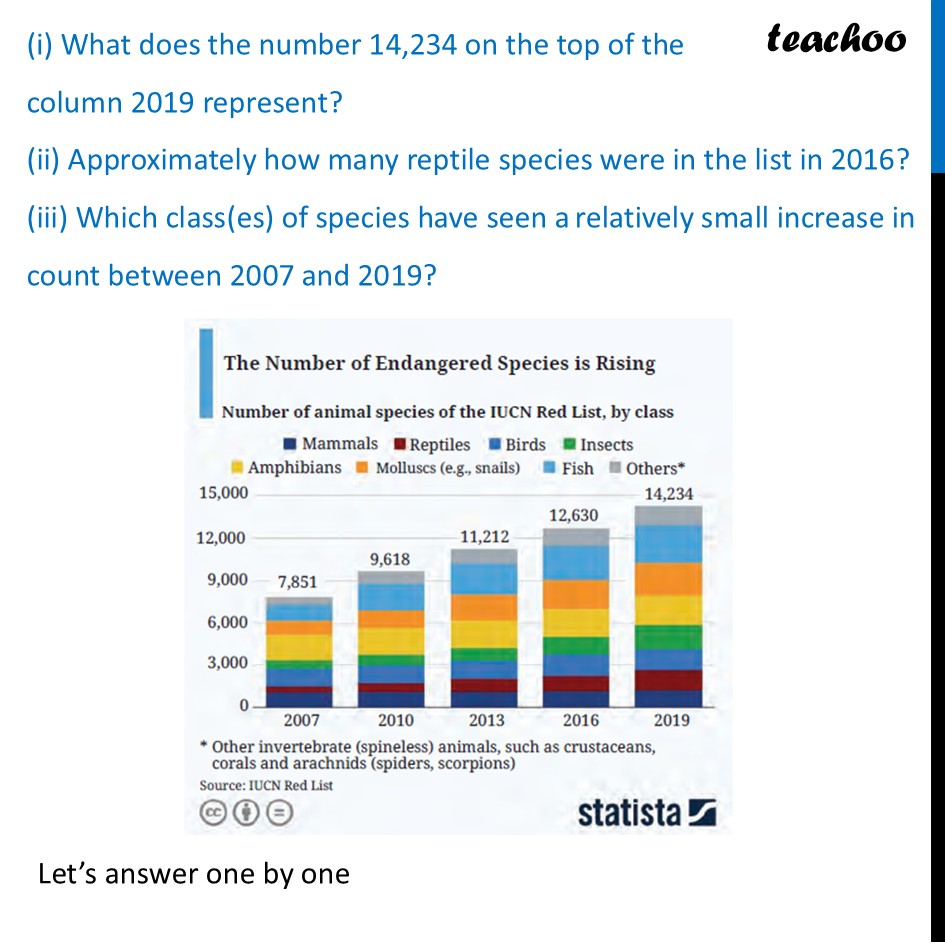
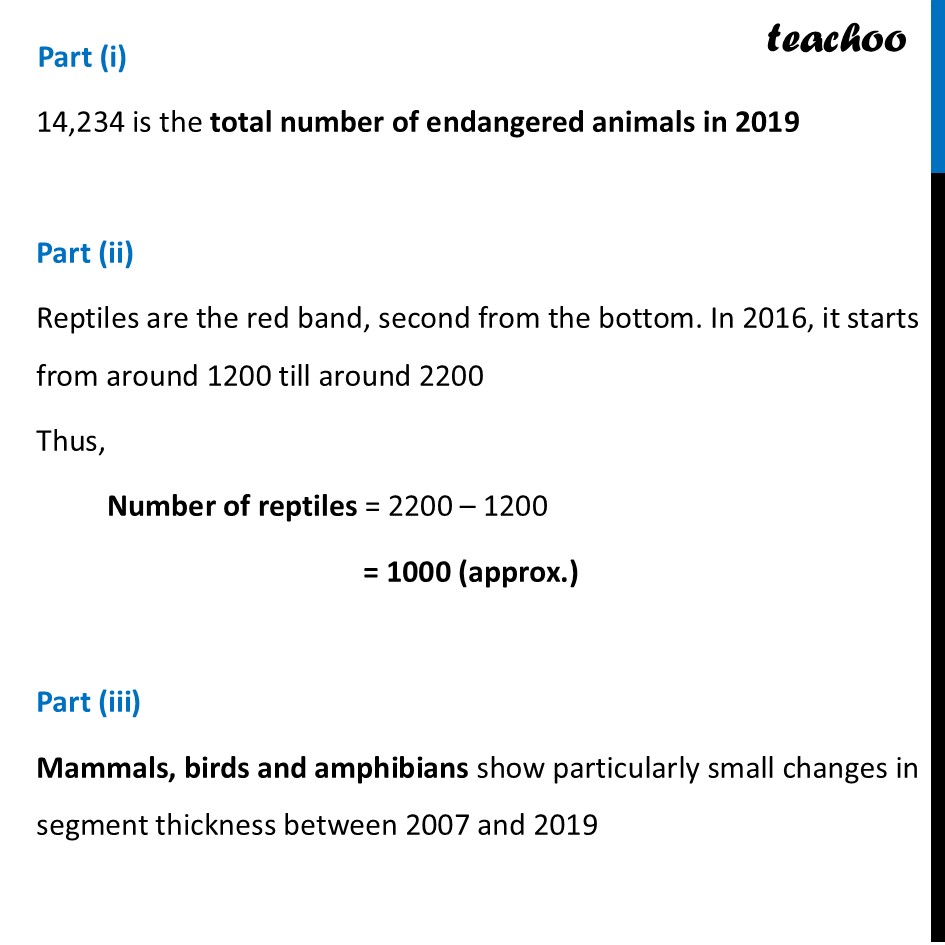
Ex 10.4, 1 The following stacked column chart shows the number of animal species in the IUCN Red List, by class, over time. The Number of Endangered Species is Rising Number of animal species of the IUCN Red List, by class, W Mammals WReptiles MBirds M Insects j@ Amphibians li Molluscs (eg. snails) Fish Others* 15,000 14,234 12,630 12,000 11,212 9,000 6,000 3,000 0 2007, 2010 2013 2016. 2019 * Other invertebrate (spineless) animals, such as crustaceans, corals and arachnids (spiders, scorpions) Source: IUCN Red List ©OO0 statista Za The International Union for Conservation of Nature (IUCN) Red List is a large, regularly- updated database that tells us the extinction risk of species across the world. It classifies species into groups such as Least Concern, Vulnerable, Endangered, Critically Endangered, Extinct in the Wild and Extinct, based on scientific data about their numbers, trends and habitats. (i) What does the number 14,234 on the top of the column 2019 represent? (ii) Approximately how many reptile species were in the list in 2016? (iii) Which class(es) of species have seen a_( )relatively small increase in count between 2007 and 2019? Let’s answer one by one The Number of Endangered Species is Rising Number of animal species of the IUCN Red List, by class, W Mammals WReptiles MBirds M Insects j@ Amphibians li Molluscs (eg. snails) Fish Others* 15,000 14,234 12,630 12,000 11,212 9,000 6,000 3,000 0 2007, 2010 2013 2016. 2019 * Other invertebrate (spineless) animals, such as crustaceans, corals and arachnids (spiders, scorpions) Source: IUCN Red List ©OO0 statista Za The International Union for Conservation of Nature (IUCN) Red List is a large, regularly- updated database that tells us the extinction risk of species across the world. It classifies species into groups such as Least Concern, Vulnerable, Endangered, Critically Endangered, Extinct in the Wild and Extinct, based on scientific data about their numbers, trends and habitats. Part (i) 14,234 is the total number of endangered animals in 2019 Part (ii) Reptiles are the red band, second from the bottom. In 2016, it starts from around 1200 till around 2200 Thus, Number of reptiles = 2200 – 1200 = 1000 (approx.) Part (iii) Mammals, birds and amphibians show particularly small changes in segment thickness between 2007 and 2019
