End-of-Chapter Exercises

 You are here
Last updated at August 14, 2026 by Teachoo
Transcript
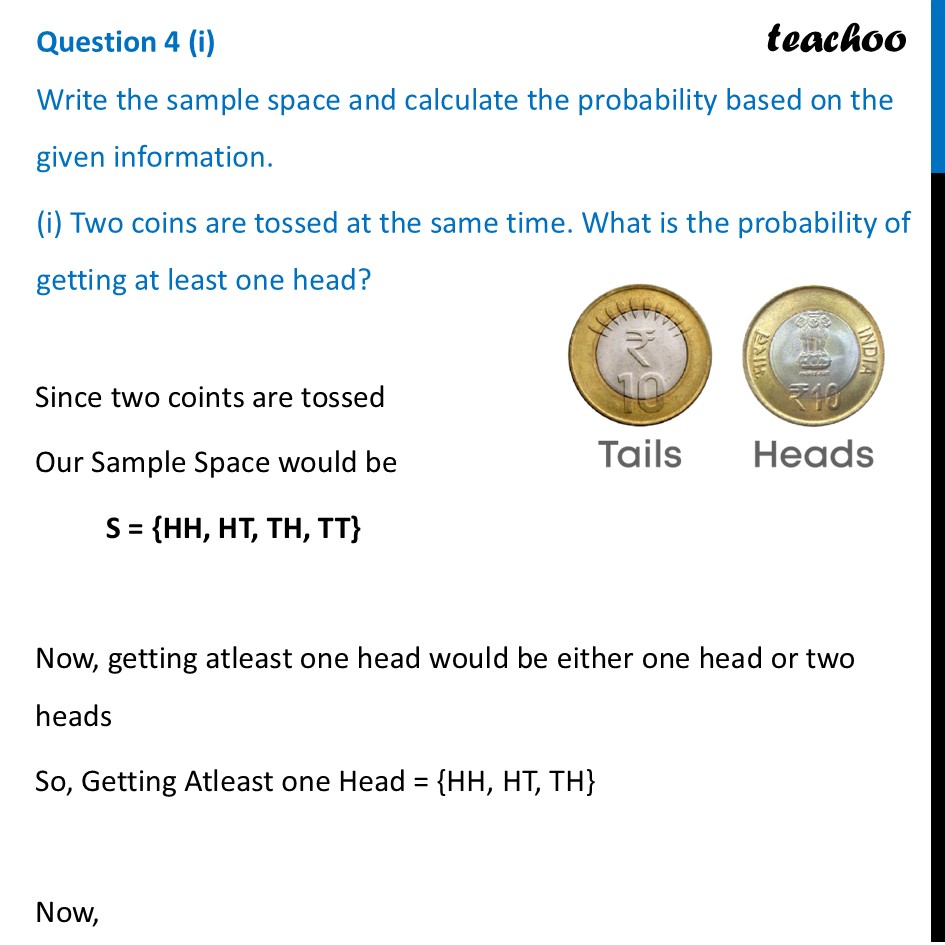
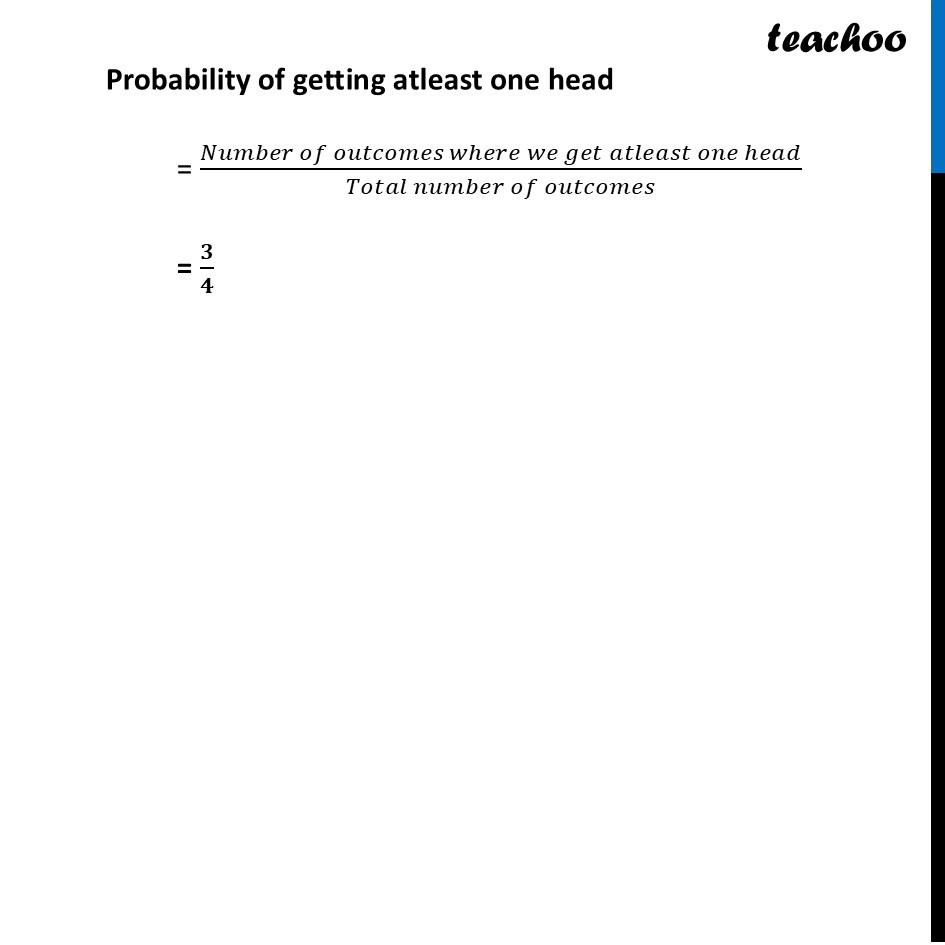
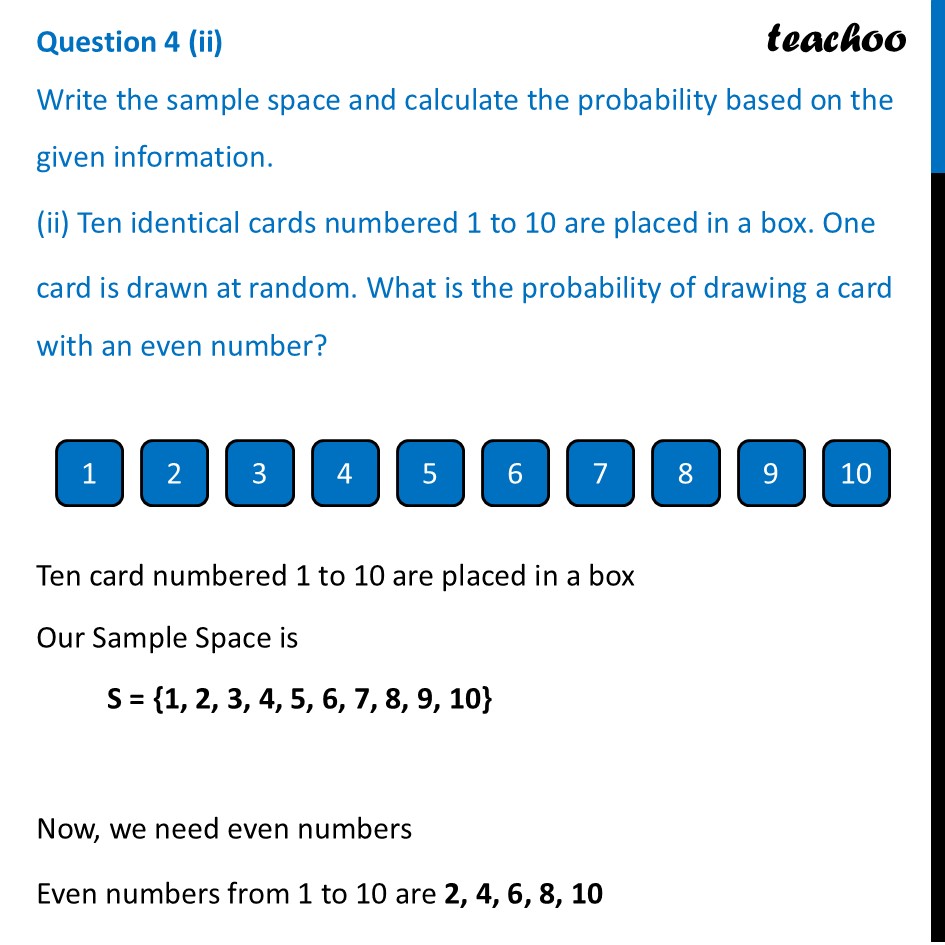
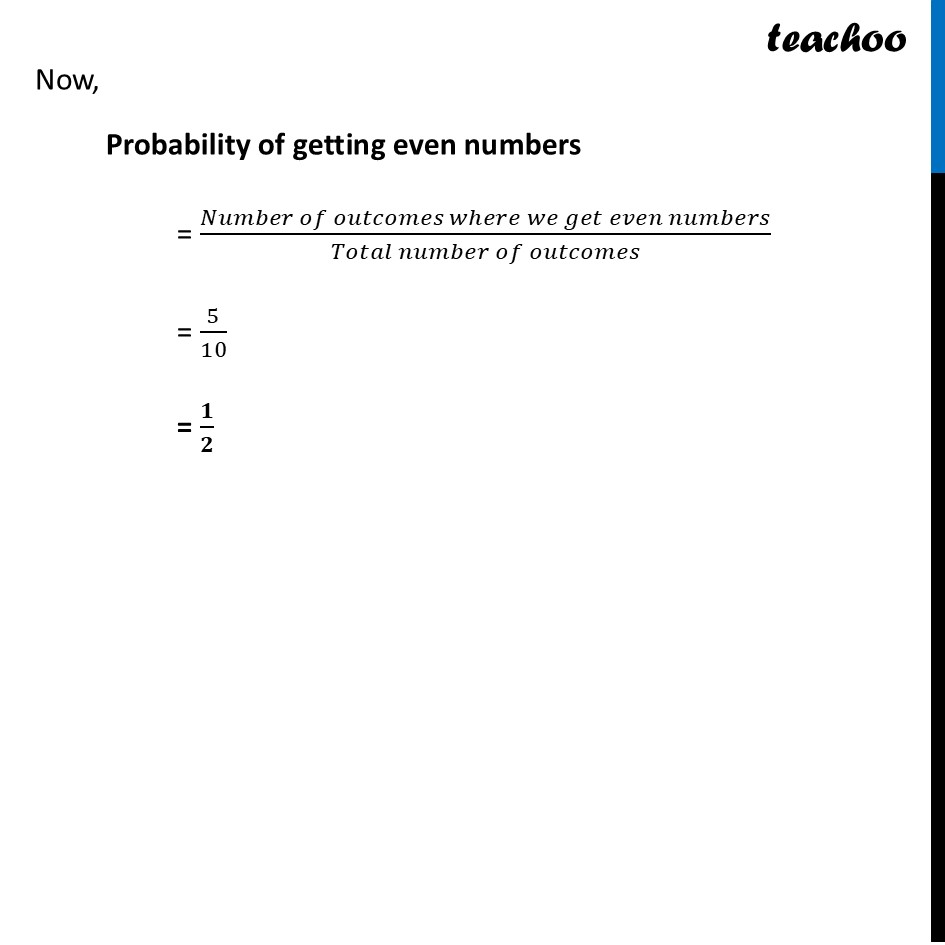
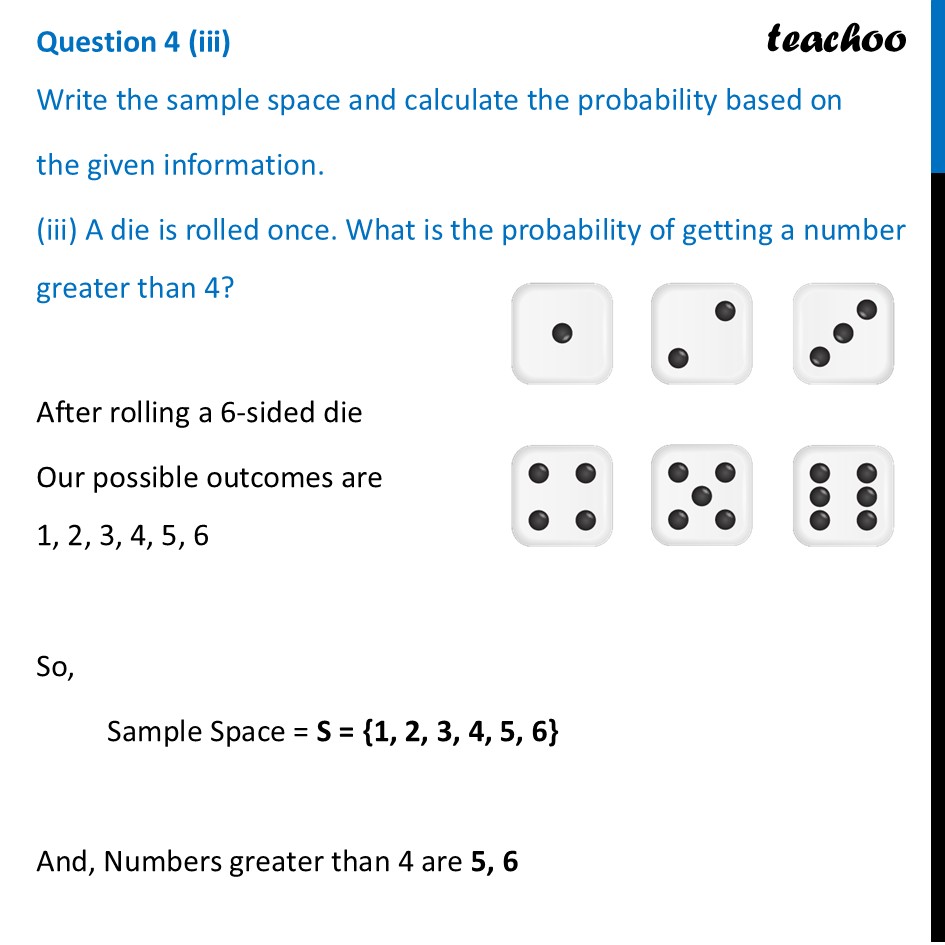
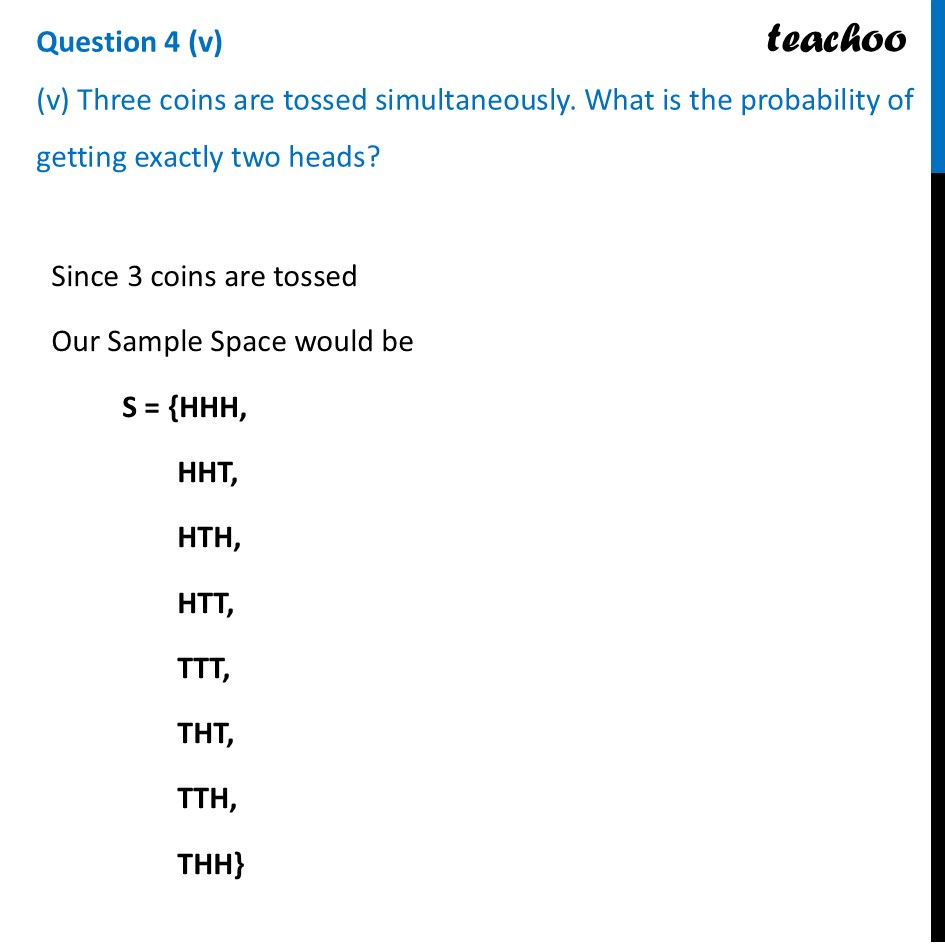
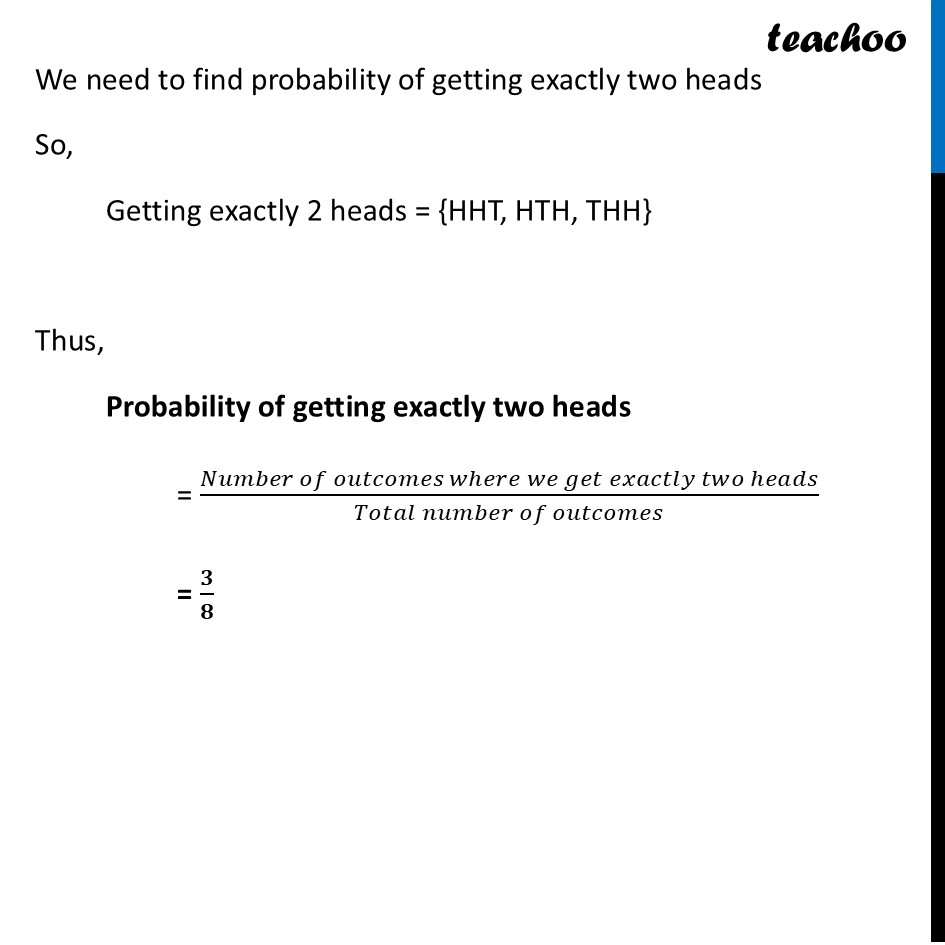
Question 4 (i) Write the sample space and calculate the probability based on the given information. (i) Two coins are tossed at the same time. What is the probability of getting at least one head? Since two coints are tossed Our Sample Space would be S = {HH, HT, TH, TT} Now, getting atleast one head would be either one head or two heads So, Getting Atleast one Head = {HH, HT, TH} Question 4 (ii) Write the sample space and calculate the probability based on the given information. (ii) Ten identical cards numbered 1 to 10 are placed in a box. One card is drawn at random. What is the probability of drawing a card with an even number? Ten card numbered 1 to 10 are placed in a box Our Sample Space is S = {1, 2, 3, 4, 5, 6, 7, 8, 9, 10} Now, we need even numbers Even numbers from 1 to 10 are 2, 4, 6, 8, 10 Now, Probability of getting even numbers = (𝑁𝑢𝑚𝑏𝑒𝑟 𝑜𝑓 𝑜𝑢𝑡𝑐𝑜𝑚𝑒𝑠 𝑤ℎ𝑒𝑟𝑒 𝑤𝑒 𝑔𝑒𝑡 𝑒𝑣𝑒𝑛 𝑛𝑢𝑚𝑏𝑒𝑟𝑠)/(𝑇𝑜𝑡𝑎𝑙 𝑛𝑢𝑚𝑏𝑒𝑟 𝑜𝑓 𝑜𝑢𝑡𝑐𝑜𝑚𝑒𝑠) = 5/10 = 𝟏/𝟐 Question 4 (iii) Write the sample space and calculate the probability based on the given information. (iii) A die is rolled once. What is the probability of getting a number greater than 4? After rolling a 6-sided die Our possible outcomes are 1, 2, 3, 4, 5, 6 So, Sample Space = S = {1, 2, 3, 4, 5, 6} And, Numbers greater than 4 are 5, 6 Now, Probability of getting number greater than 4 = (𝑁𝑢𝑚𝑏𝑒𝑟 𝑜𝑓 𝑜𝑢𝑡𝑐𝑜𝑚𝑒𝑠 𝑤ℎ𝑒𝑟𝑒 𝑤𝑒 𝑔𝑒𝑡 𝑛𝑢𝑚𝑏𝑒𝑟 𝑔𝑟𝑒𝑎𝑡𝑒𝑟 𝑡ℎ𝑎𝑛 4)/(𝑇𝑜𝑡𝑎𝑙 𝑛𝑢𝑚𝑏𝑒𝑟 𝑜𝑓 𝑜𝑢𝑡𝑐𝑜𝑚𝑒𝑠) = 2/6 = 𝟏/𝟑 Question 4 (iv) Write the sample space and calculate the probability based on the given information. (iv) A bag contains 3 red balls, 2 blue balls, and 1 green ball. One ball is picked at random. What is the probability that it is not red? If Ball is not red, it could be either blue or green Now, Total balls = 3 + 2 + 1 = 6 And, Number of Balls not red = Blue balls + green balls = 2 + 1 = 3 Now, Probability of getting a not red ball = (𝑁𝑢𝑚𝑏𝑒𝑟 𝑜𝑓 𝑏𝑎𝑙𝑙𝑠 𝑤ℎ𝑖𝑐ℎ 𝑎𝑟𝑒 𝑛𝑜𝑡 𝑟𝑒𝑑)/(𝑇𝑜𝑡𝑎𝑙 𝑛𝑢𝑚𝑏𝑒𝑟 𝑜𝑓 𝑏𝑎𝑙𝑙𝑠) = 3/6 = 𝟏/𝟐 Question 4 (v) (v) Three coins are tossed simultaneously. What is the probability of getting exactly two heads? Since 3 coins are tossed Our Sample Space would be S = {HHH, HHT, HTH, HTT, TTT, THT, TTH, THH} We need to find probability of getting exactly two heads So, Getting exactly 2 heads = {HHT, HTH, THH} Thus, Probability of getting exactly two heads = (𝑁𝑢𝑚𝑏𝑒𝑟 𝑜𝑓 𝑜𝑢𝑡𝑐𝑜𝑚𝑒𝑠 𝑤ℎ𝑒𝑟𝑒 𝑤𝑒 𝑔𝑒𝑡 𝑒𝑥𝑎𝑐𝑡𝑙𝑦 𝑡𝑤𝑜 ℎ𝑒𝑎𝑑𝑠)/(𝑇𝑜𝑡𝑎𝑙 𝑛𝑢𝑚𝑏𝑒𝑟 𝑜𝑓 𝑜𝑢𝑡𝑐𝑜𝑚𝑒𝑠) = 𝟑/𝟖 Now, Probability of getting atleast one head = (𝑁𝑢𝑚𝑏𝑒𝑟 𝑜𝑓 𝑜𝑢𝑡𝑐𝑜𝑚𝑒𝑠 𝑤ℎ𝑒𝑟𝑒 𝑤𝑒 𝑔𝑒𝑡 𝑎𝑡𝑙𝑒𝑎𝑠𝑡 𝑜𝑛𝑒 ℎ𝑒𝑎𝑑)/(𝑇𝑜𝑡𝑎𝑙 𝑛𝑢𝑚𝑏𝑒𝑟 𝑜𝑓 𝑜𝑢𝑡𝑐𝑜𝑚𝑒𝑠) = 𝟑/𝟒