You are here

![Probability: Definition, Formulas, Types [With Examples and Video] - Definition](https://cdn.teachoo.com/37208e79-5bea-484a-961b-1bafc4c4e789/slide3.jpg)
Last updated at August 14, 2026 by Teachoo
Transcript
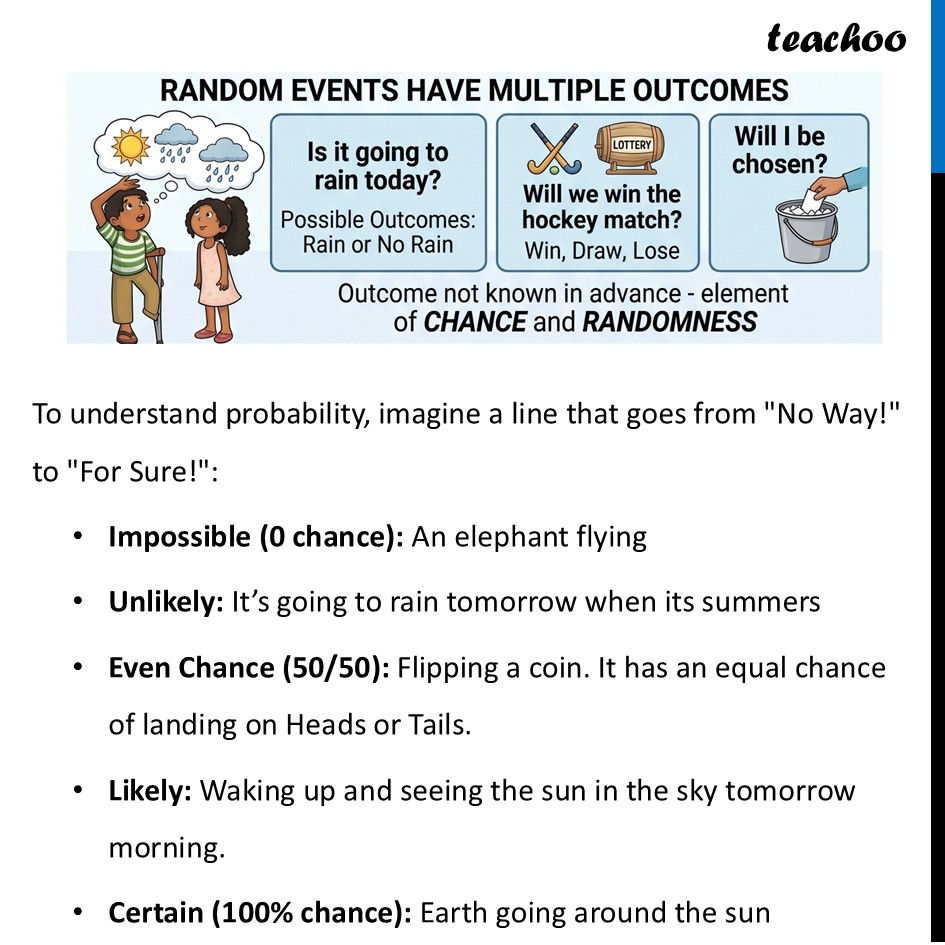
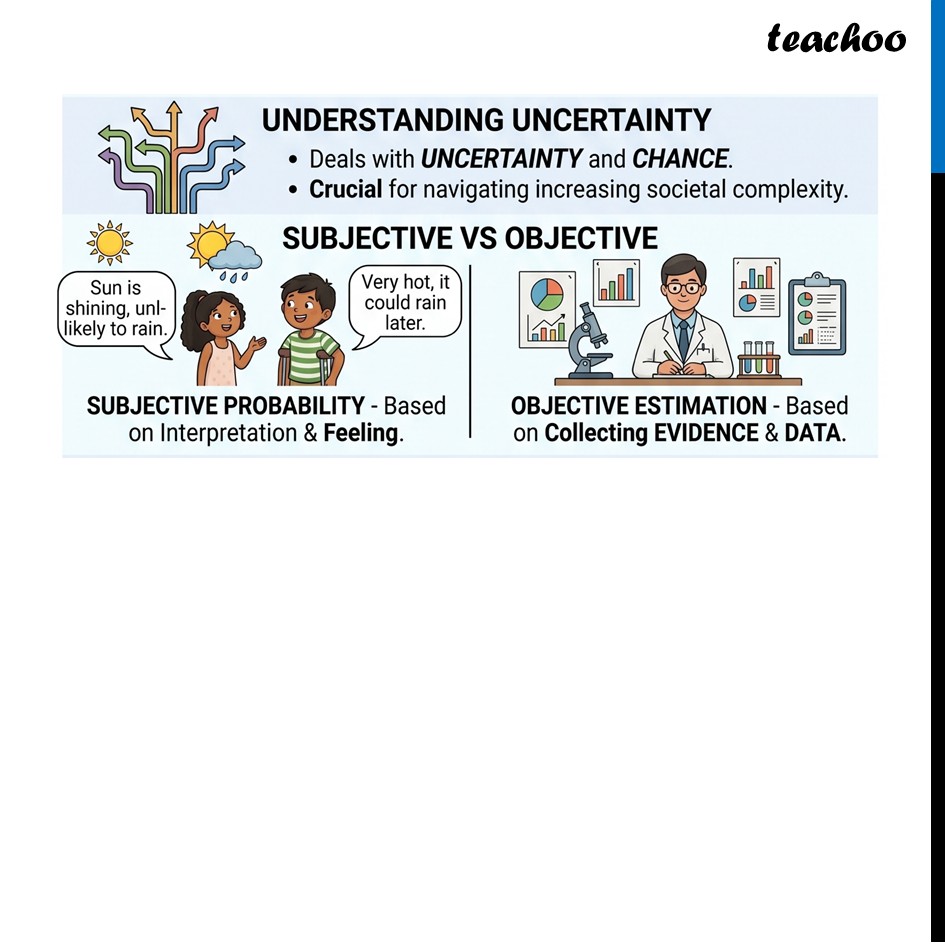
Probability Probability means How likely something is going to happen An event is considered "random" when we know all the possible outcomes, but we don't know which specific outcome will actually happen. For example, in a hockey match, we know the outcomes (win, lose, or draw), but before the game starts, there is an element of chance. PROBABILITY IS A MEASUREMENTRANDOM EVENTS HAVE MULTIPLE OUTCOMES Is it going to rain today? Possible Outcomes: Rain or No Rain Outcome not known in advance - element of CHANCE and RANDOMNESSTo understand probability, imagine a line that goes from "No Way!" to "For Sure!": Impossible (0 chance): An elephant flying Unlikely: It’s going to rain tomorrow when its summers Even Chance (50/50): Flipping a coin. It has an equal chance of landing on Heads or Tails. Likely: Waking up and seeing the sun in the sky tomorrow morning. Certain (100% chance): Earth going around the sun Subjective vs. Objective Probability We can broadly categorise probability into Subjective Probability: This is a guess based on your personal interpretation of evidence. If you look outside, see dark clouds, and say, "It's highly likely to rain," that is subjective. Someone else might look at the same clouds and think they will blow over. Objective Probability: This is what we focus on in math. It relies on collecting hard evidence, data, and mathematical rules to calculate an exact estimate of chance, removing personal opinions. UNDERSTANDING UNCERTAINTY Deals with UNCERTAINTY and CHANCE. Crucial for navigating increasing societal complexity. SUBJECTIVE VS OBJECTIVE Very hot, it could rain later.SUBJECTIVE PROBABILITY - Based on Interpretation & Feeling. OBJECTIVE ESTIMATION - Based on Collecting EVIDENCE & DATA.