You are here

Last updated at June 5, 2026 by Teachoo
Transcript
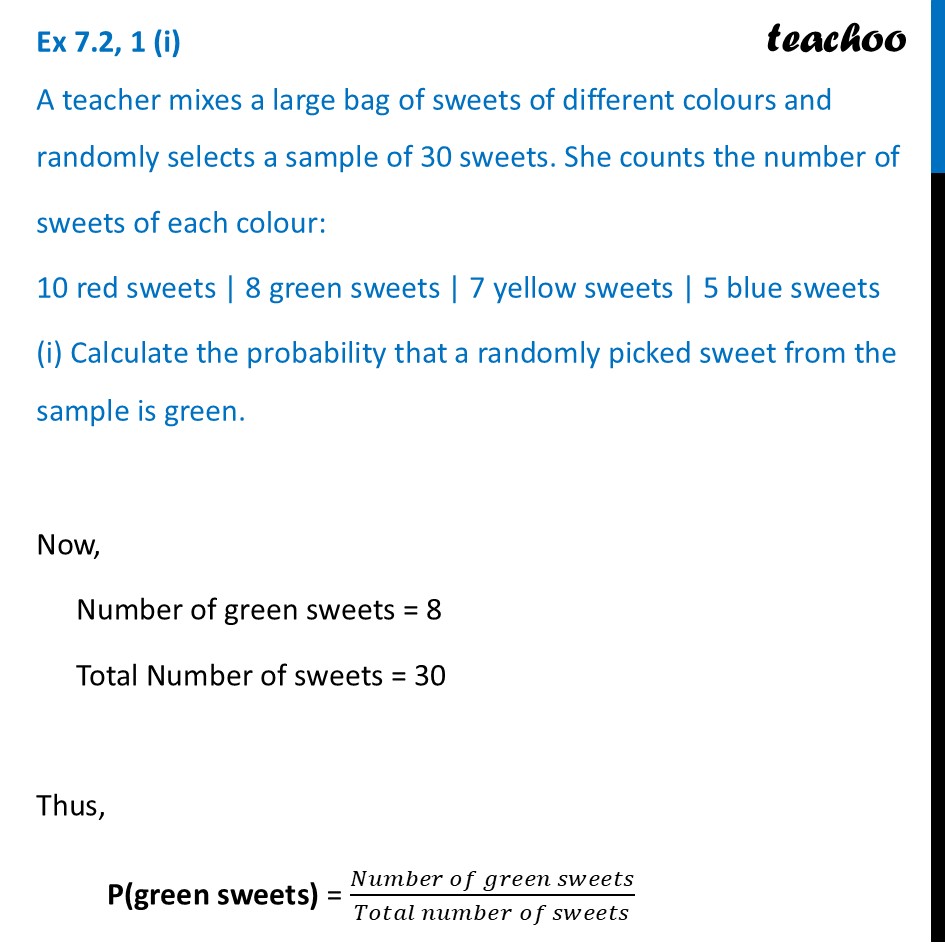
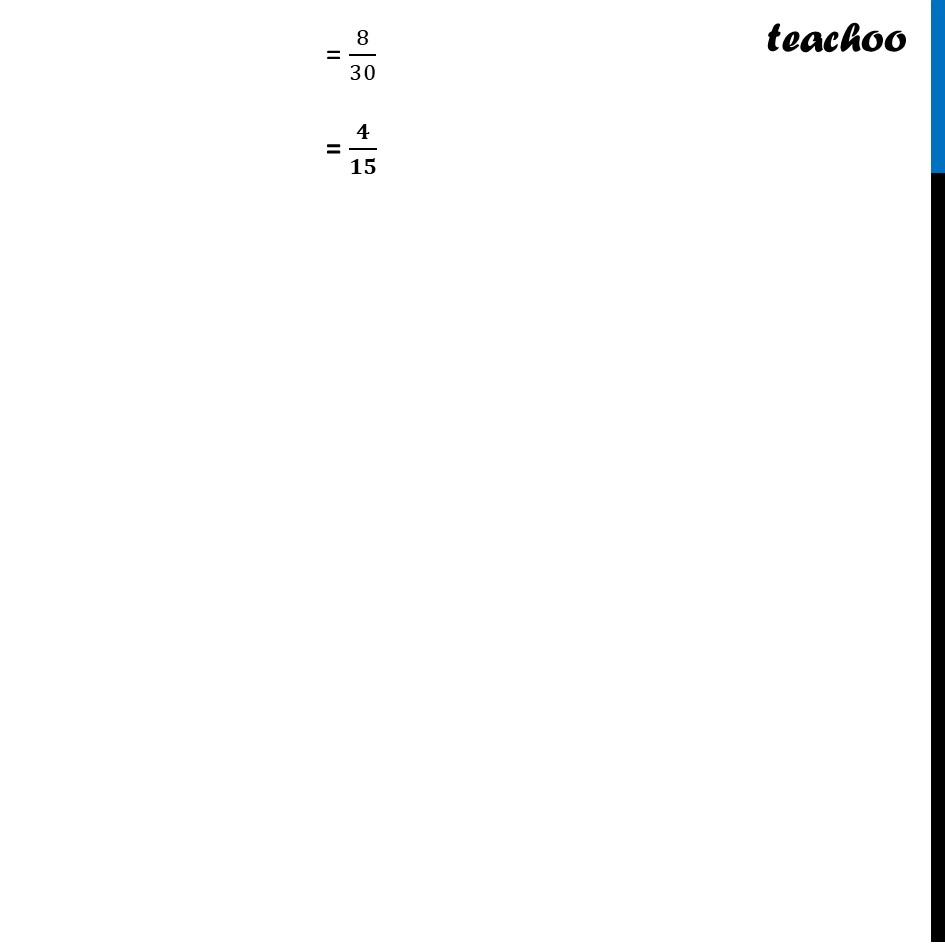
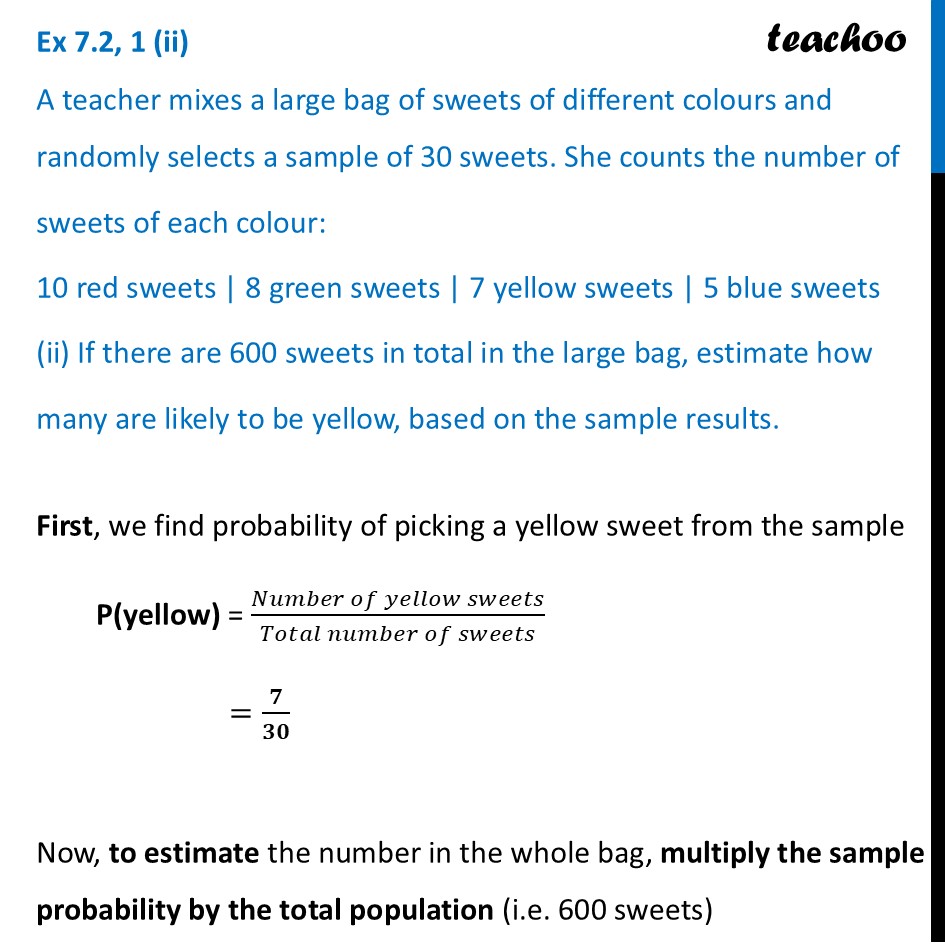
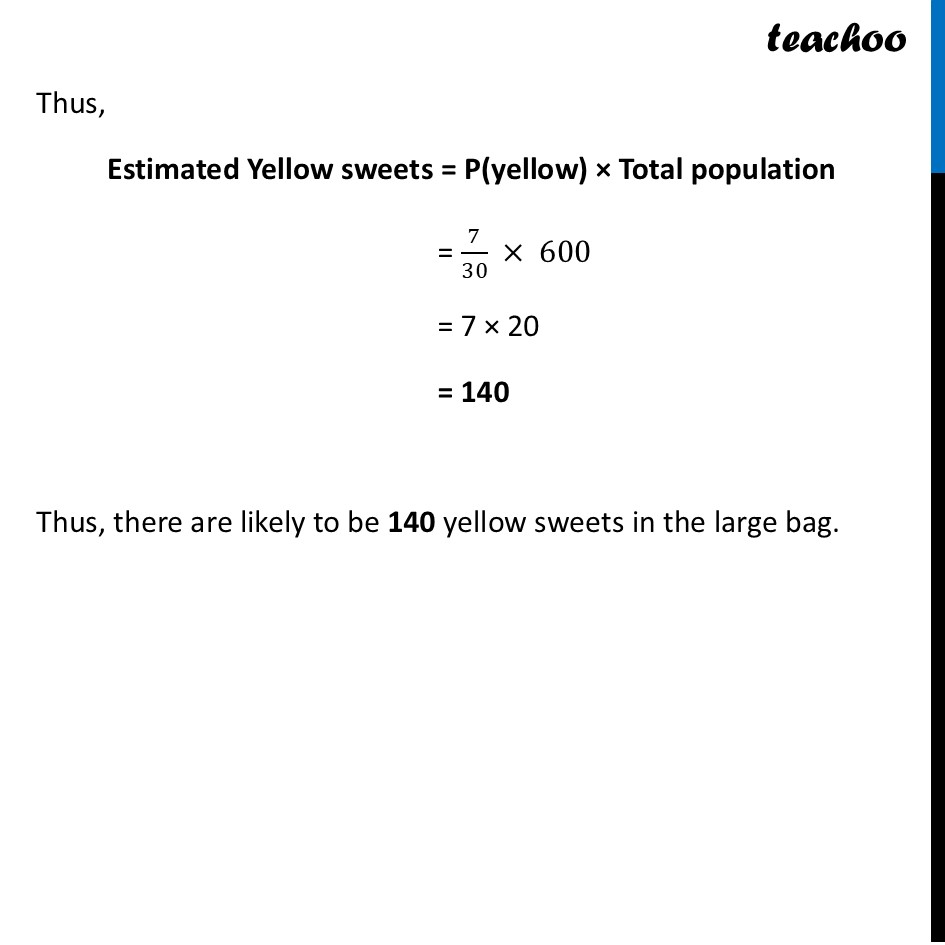
Ex 7.2, 1 (i) A teacher mixes a large bag of sweets of different colours and randomly selects a sample of 30 sweets. She counts the number of sweets of each colour: 10 red sweets | 8 green sweets | 7 yellow sweets | 5 blue sweets (i) Calculate the probability that a randomly picked sweet from the sample is green. Now, Number of green sweets = 8 Total Number of sweets = 30 Thus, P(green sweets) = (𝑁𝑢𝑚𝑏𝑒𝑟 𝑜𝑓 𝑔𝑟𝑒𝑒𝑛 𝑠𝑤𝑒𝑒𝑡𝑠)/(𝑇𝑜𝑡𝑎𝑙 𝑛𝑢𝑚𝑏𝑒𝑟 𝑜𝑓 𝑠𝑤𝑒𝑒𝑡𝑠) = 8/30 = 𝟒/𝟏𝟓 = 8/30 = 𝟒/𝟏𝟓 Ex 7.2, 1 (ii) A teacher mixes a large bag of sweets of different colours and randomly selects a sample of 30 sweets. She counts the number of sweets of each colour: 10 red sweets | 8 green sweets | 7 yellow sweets | 5 blue sweets (ii) If there are 600 sweets in total in the large bag, estimate how many are likely to be yellow, based on the sample results. First, we find probability of picking a yellow sweet from the sample P(yellow) = (𝑁𝑢𝑚𝑏𝑒𝑟 𝑜𝑓 𝑦𝑒𝑙𝑙𝑜𝑤 𝑠𝑤𝑒𝑒𝑡𝑠)/(𝑇𝑜𝑡𝑎𝑙 𝑛𝑢𝑚𝑏𝑒𝑟 𝑜𝑓 𝑠𝑤𝑒𝑒𝑡𝑠) =𝟕/𝟑𝟎 Now, to estimate the number in the whole bag, multiply the sample probability by the total population (i.e. 600 sweets) Thus, Estimated Yellow sweets = P(yellow) × Total population = 7/30 × 600 = 7 × 20 = 140 Thus, there are likely to be 140 yellow sweets in the large bag.