CBSE Class 10 Sample Paper for 2026 Boards - Maths Standard

 You are here
CBSE Class 10 Sample Paper for 2026 Boards - Maths Standard
Last updated at August 14, 2026 by Teachoo
Transcript
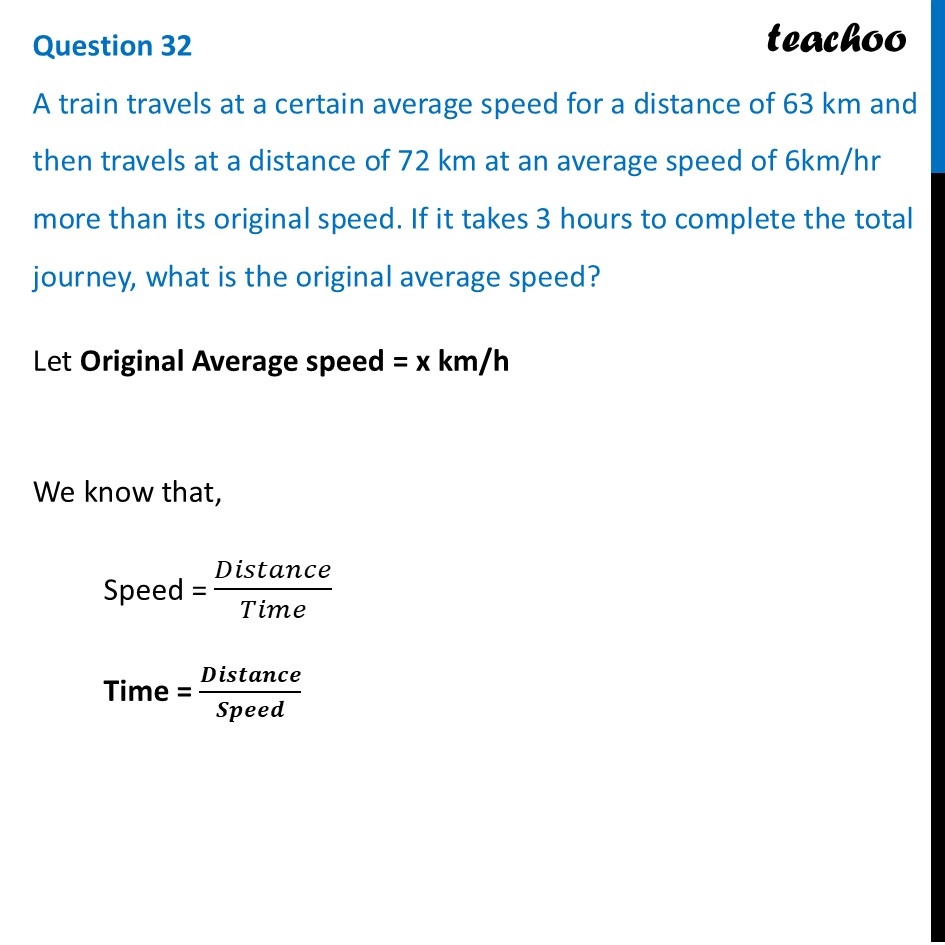
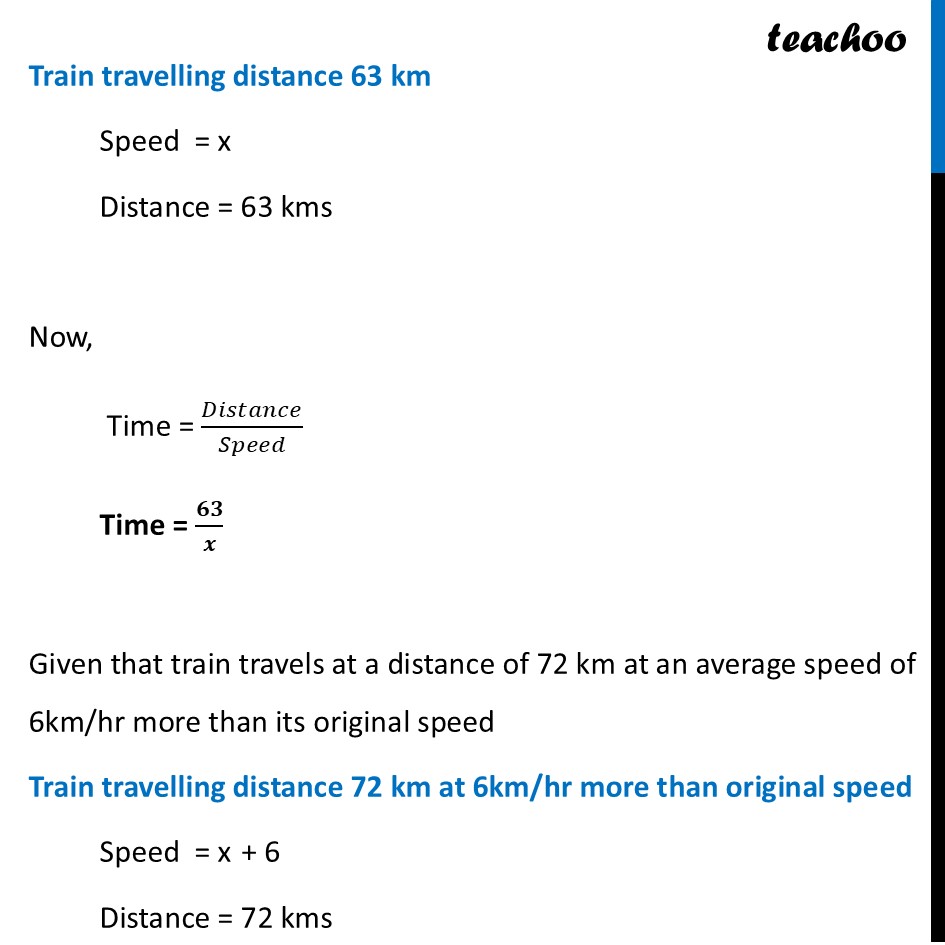
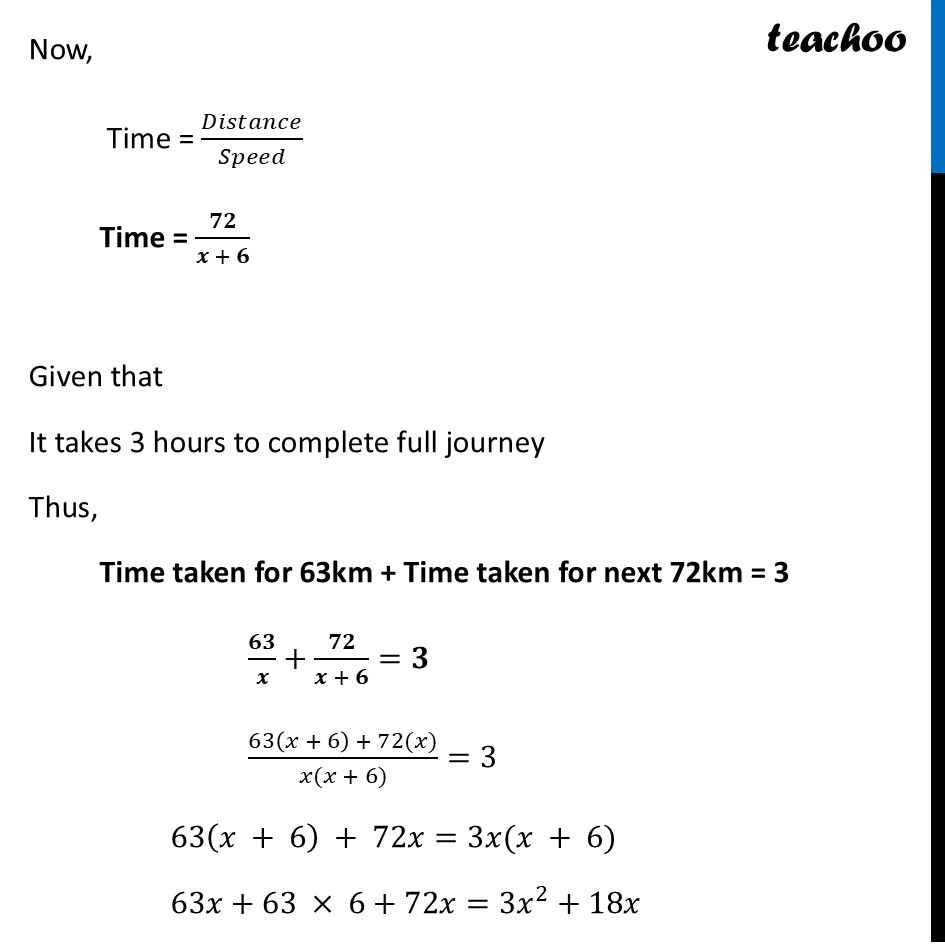
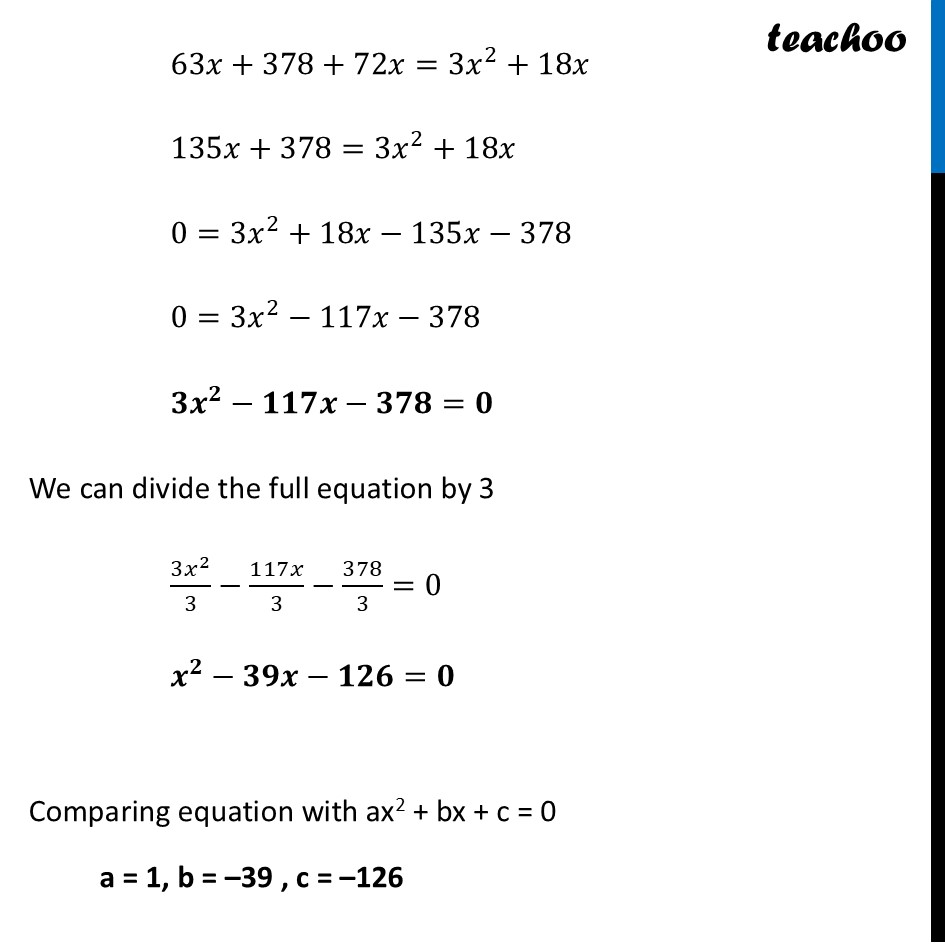
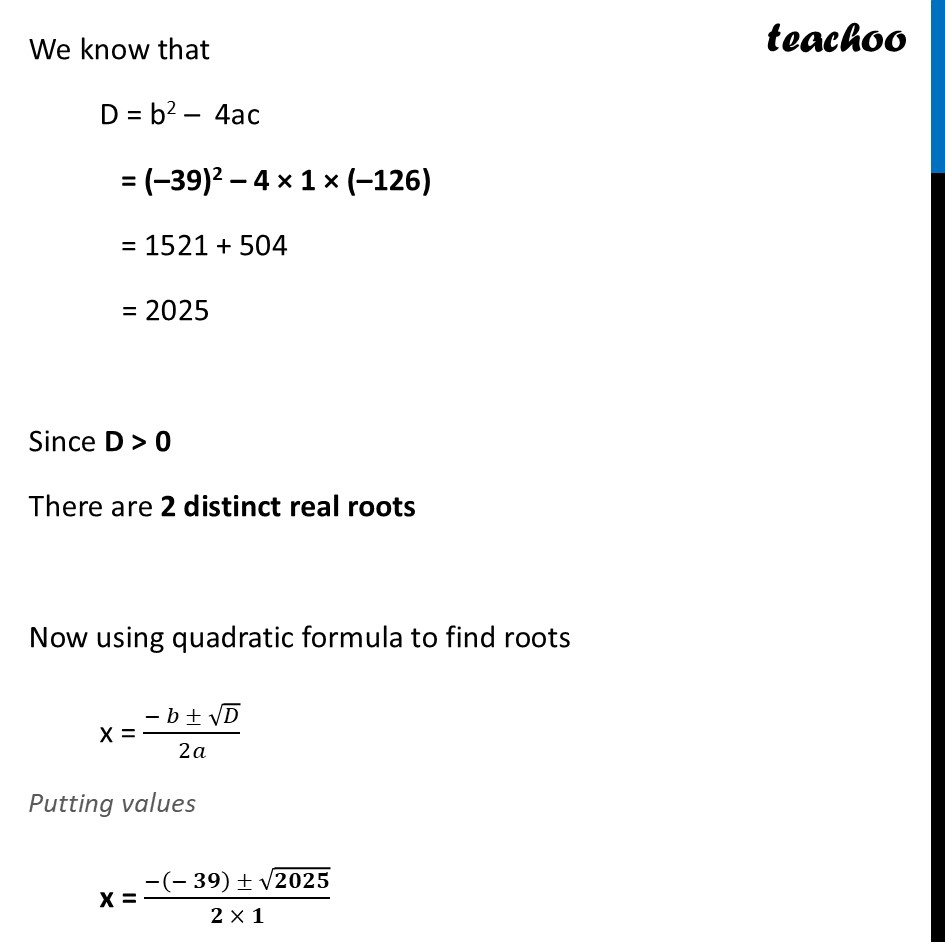
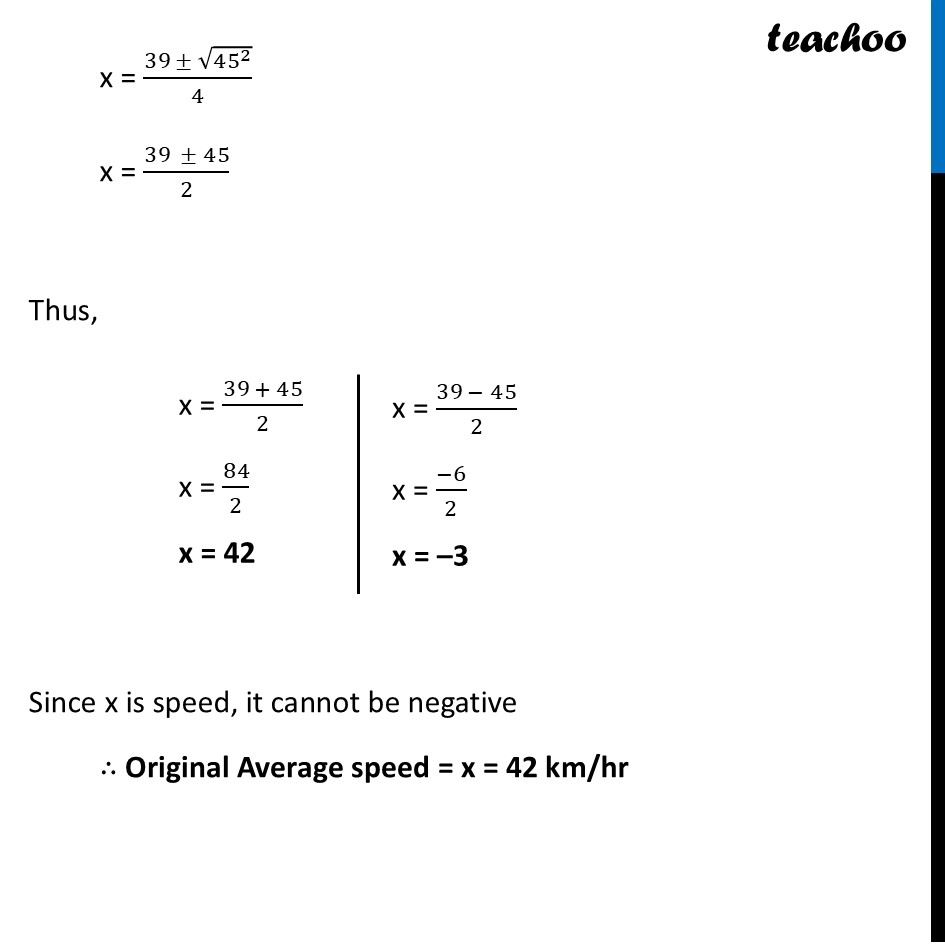
Question 32 A train travels at a certain average speed for a distance of 63 km and then travels at a distance of 72 km at an average speed of 6km/hr more than its original speed. If it takes 3 hours to complete the total journey, what is the original average speed?Let Original Average speed = x km/h We know that, Speed = 𝐷𝑖𝑠𝑡𝑎𝑛𝑐𝑒/𝑇𝑖𝑚𝑒 Time = 𝑫𝒊𝒔𝒕𝒂𝒏𝒄𝒆/𝑺𝒑𝒆𝒆𝒅 Train travelling distance 63 km Speed = x Distance = 63 kms Now, Time = 𝐷𝑖𝑠𝑡𝑎𝑛𝑐𝑒/𝑆𝑝𝑒𝑒𝑑 Time = 𝟔𝟑/𝒙 Given that train travels at a distance of 72 km at an average speed of 6km/hr more than its original speed Train travelling distance 72 km at 6km/hr more than original speed Speed = x + 6 Distance = 72 kms Now, Time = 𝐷𝑖𝑠𝑡𝑎𝑛𝑐𝑒/𝑆𝑝𝑒𝑒𝑑 Time = 𝟕𝟐/(𝒙 + 𝟔) Given that It takes 3 hours to complete full journey Thus, Time taken for 63km + Time taken for next 72km = 3 𝟔𝟑/𝒙+𝟕𝟐/(𝒙 + 𝟔)=𝟑 (63(𝑥 + 6) + 72(𝑥))/(𝑥(𝑥 + 6))=3 63(𝑥 + 6) + 72𝑥=3𝑥(𝑥 + 6) 63𝑥+63 × 6+72𝑥=3𝑥^2+18𝑥 63𝑥+378+72𝑥=3𝑥^2+18𝑥 135𝑥+378=3𝑥^2+18𝑥 0=3𝑥^2+18𝑥−135𝑥−378 0=3𝑥^2−117𝑥−378 𝟑𝒙^𝟐−𝟏𝟏𝟕𝒙−𝟑𝟕𝟖=𝟎 We can divide the full equation by 3 (3𝑥^2)/3−117𝑥/3−378/3=0 𝒙^𝟐−𝟑𝟗𝒙−𝟏𝟐𝟔=𝟎 Comparing equation with ax2 + bx + c = 0 a = 1, b = –39 , c = –126 We know that D = b2 – 4ac = (–39)2 – 4 × 1 × (–126) = 1521 + 504 = 2025 Since D > 0 There are 2 distinct real roots Now using quadratic formula to find roots x = (− 𝑏 ± √𝐷)/2𝑎 Putting values x = (−(− 𝟑𝟗) ± √𝟐𝟎𝟐𝟓)/(𝟐 × 𝟏) x = (39 ± √(45^2 ))/4 x = (39 ± 45)/2 Thus, Since x is speed, it cannot be negative ∴ Original Average speed = x = 42 km/hr Thus, Speed of train = x = 30 km/ h & Time taken by the train = y = 24 hours Now, Distance = Speed × time Distance = 30 × 24 Distance = 720 km