You are here
How are landforms and disasters linked?
| Landform | Disaster it can bring | Why it happens |
|---|---|---|
| Steep, rocky mountain slopes | Landslide | Loose, rain-soaked slopes suddenly give way |
| Snow-covered mountains | Avalanche | Unstable snow slides down the slope |
| Glaciers and glacial lakes | GLOF | A glacial lake’s ice or moraine dam bursts |
| Deserts and dry plains | Dust storm | Strong wind lifts loose, dry soil |
Which landform brings which disaster?
- The forces that build landforms can also make them dangerous .
- Each kind of landform is tied to its own disaster , as shown above.
- Steep mountains can bring landslides and avalanches .
- Glaciers bring sudden floods ( GLOFs ); deserts bring dust storms .
- Let us now look at each disaster one by one .
What causes a landslide?
How does a landslide happen?
Heavy rain soaks the slope
↓
Weight rises, friction falls
↓
The loose slope suddenly gives way and slides down
- A landslide strikes a steep, rocky mountain slope — the landform it is tied to.
- Heavy rainfall is the main natural cause.
- Earthquakes and steep, loose slopes add to the risk.
- Human acts — deforestation, mining, hillside building — make it worse.
Prone Areas
- The Himalayan states — Uttarakhand, Himachal Pradesh, Jammu & Kashmir and Sikkim.
- The Western Ghats and the hills of the North-East .
Mitigation Measures
- Plant trees on slopes and keep good drainage .
- Build retaining walls and stabilise loose slopes.
- Avoid construction on steep hillsides; use early-warning systems .
Recent Examples
- The Wayanad landslide in Kerala (2024).
- Frequent monsoon landslides in Uttarakhand and Himachal Pradesh .
![2.7 Landforms and Disasters - Shaping of the Earth’s - [Teachoo] - Concepts](https://cdn.teachoo.com/2457ba51-a653-453b-8f08-b1d85e82126a/fig.-2.27-landslide-shown-on-a-steep-slope-with-rock-mud-and-soil-sliding-downward..jpg)
Fig. 2.27 — A landslide on a steep slope
What causes an avalanche?
- An avalanche strikes a snow-covered mountain slope — the landform it is tied to.
- An avalanche is a sudden slide of snow down a steep slope.
- Heavy fresh snow adds weight to a weak snow layer.
- A rise in temperature or strong wind makes the snow unstable.
- Skiing, blasting or an earthquake can trigger it.
Prone Areas
- The high Himalayas — Jammu & Kashmir, Ladakh, Himachal Pradesh, Uttarakhand and Sikkim.
Mitigation Measures
- Build snow barriers and avalanche sheds over roads.
- Use controlled blasting to release unstable snow safely.
- Avoid steep slopes after heavy snowfall; follow avalanche warnings .
Recent Examples
- Avalanches near the Siachen and Kashmir regions.
- Snow slides along high mountain roads each winter.
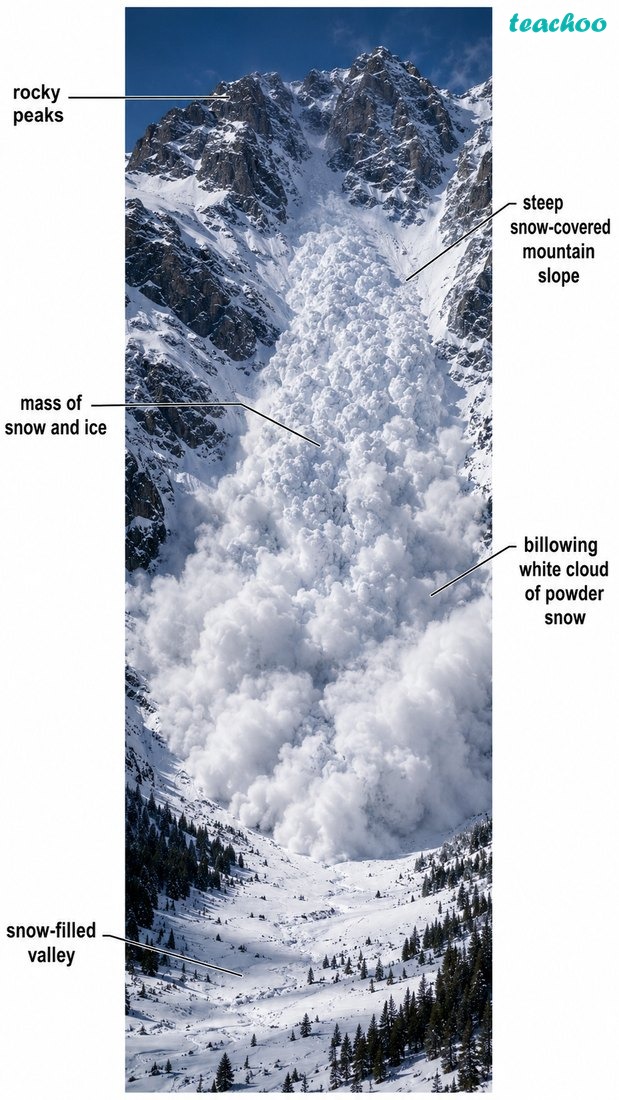
Fig. 2.28 — An avalanche rushing down a mountain slope
What is a GLOF?
What does GLOF stand for?
Glacial Lake
a lake by a glacier
Outburst Flood
it bursts out
↓
A sudden, destructive flood when a glacial lake’s natural ice or moraine dam collapses.
- A GLOF strikes at a glacier and its glacial lake — the landform it is tied to.
- Rising temperatures melt glaciers and swell glacial lakes .
- Heavy rain, an avalanche or a quake can break the weak dam.
- The stored water rushes out, flooding the valleys below (e.g. Chamoli, 2021).
Prone Areas
- Himalayan glacial regions — Uttarakhand, Sikkim, Himachal Pradesh and Arunachal Pradesh.
Mitigation Measures
- Monitor glacial lakes by satellite.
- Lower the water level of dangerous lakes; set up early-warning systems .
- Avoid building in the valleys downstream.
Recent Examples
- The Chamoli disaster in Uttarakhand (2021).
- The South Lhonak Lake GLOF in Sikkim (2023).
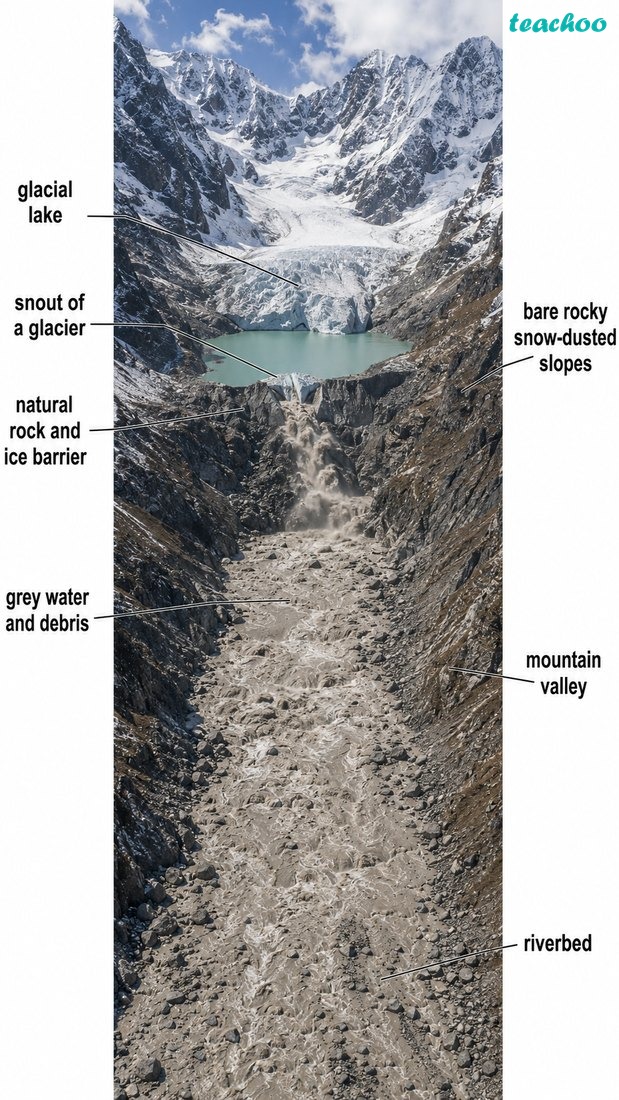
Fig. 2.29 — A GLOF — a glacial lake bursting out as a flood
What causes a dust storm?
What is a dust storm?
Dust
loose dry soil
Storm
strong winds
↓
Strong winds lifting large amounts of loose, dry soil and sand high into the air.
- A dust storm strikes a desert or dry, bare plain — the landform it is tied to.
- Drought and low rainfall dry out the loose soil.
- They are common in desert and semi-arid regions.
- Sparse plant cover leaves the land exposed to the wind.
Prone Areas
- The Thar Desert (Rajasthan) and the semi-arid north-west — parts of Gujarat, Haryana, Punjab and Delhi-NCR.
Mitigation Measures
- Grow shelter belts (rows of trees) and keep the soil covered.
- Reduce overgrazing and deforestation .
- Use dust-storm forecasts and warnings.
Recent Examples
- Severe dust storms across Rajasthan, Uttar Pradesh and Delhi in recent summers.
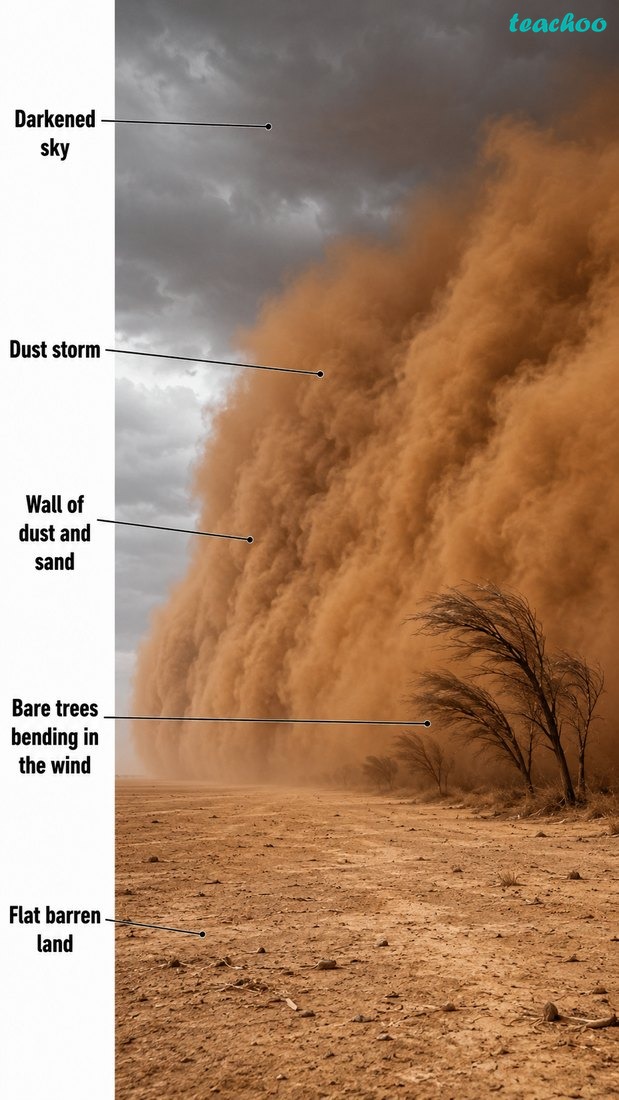
Fig. 2.30 — A dust storm sweeping across a dry region
🔎 Let’s Explore
Using newspapers, atlases and books, make a list of
disaster-prone areas
in India and the world, and note the
mitigation measures
with recent examples.
Related NCERT Questions — try them now
NCERT Question 8 — Which disasters might you experience
Which disasters do you think you might experience in your region? Discuss a mitigation plan in your classroom.
NCERT Question 11 — Prepare a map showing landform disasters
Prepare a map showing landform-associated disasters that happened in the current calendar year.
NCERT Question 13 — Document a case of a disaster
Document a case of a disaster that hit your region in the past, highlighting its effects on various human activities.
NCERT Question 14 — Translate the given poster on landslide
Translate the given poster on landslide into your native language and display it in your home.