ย  ย  Ex 6.3, 14 - Find x and y such that x + y = 60, xy3 is max - Ex 6.3

part 2 - Ex 6.3,14 - Ex 6.3 - Serial order wise - Chapter 6 Class 12 Application of Derivatives
part 3 - Ex 6.3,14 - Ex 6.3 - Serial order wise - Chapter 6 Class 12 Application of Derivatives part 4 - Ex 6.3,14 - Ex 6.3 - Serial order wise - Chapter 6 Class 12 Application of Derivatives part 5 - Ex 6.3,14 - Ex 6.3 - Serial order wise - Chapter 6 Class 12 Application of Derivatives part 6 - Ex 6.3,14 - Ex 6.3 - Serial order wise - Chapter 6 Class 12 Application of Derivatives part 7 - Ex 6.3,14 - Ex 6.3 - Serial order wise - Chapter 6 Class 12 Application of Derivatives part 8 - Ex 6.3,14 - Ex 6.3 - Serial order wise - Chapter 6 Class 12 Application of Derivatives part 9 - Ex 6.3,14 - Ex 6.3 - Serial order wise - Chapter 6 Class 12 Application of Derivatives

Take a fresh quiz. Then take another.
Every attempt is a new AI-adaptive Teachoo quiz with 2 questions, selected from your answers, mistakes, and progress.
Remove Ads
Teachoo ยท Class 12 Explore Class 12

Transcript

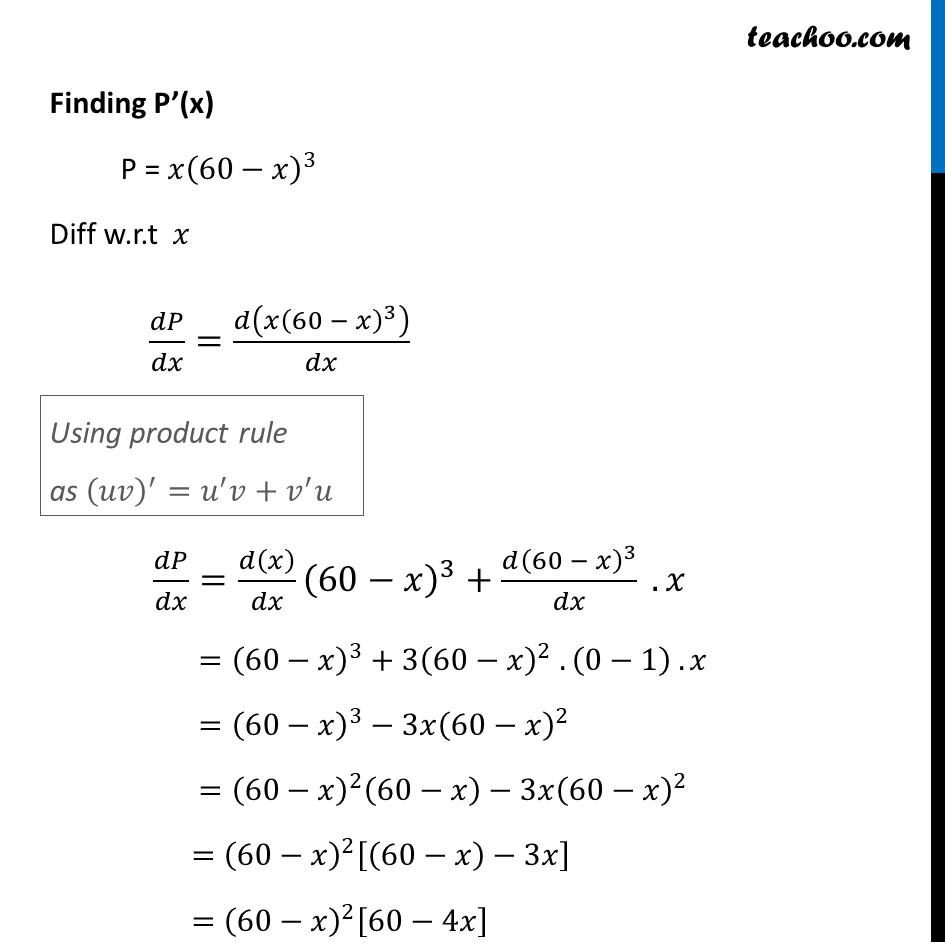
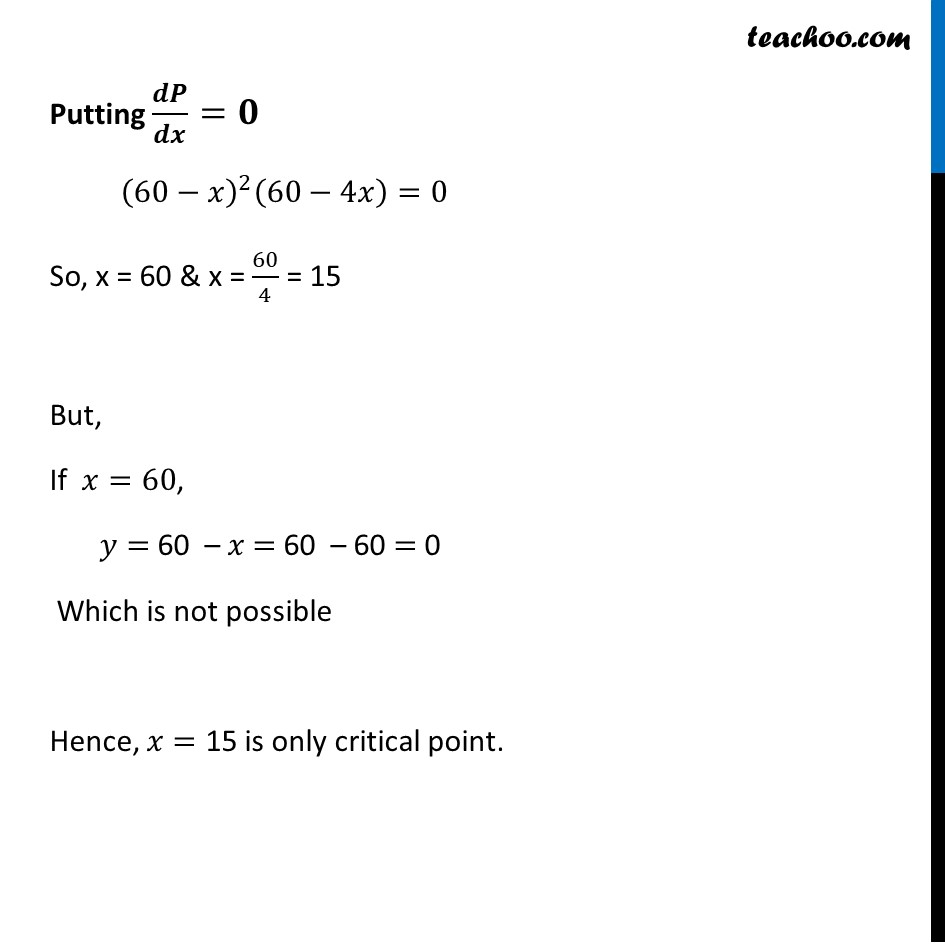
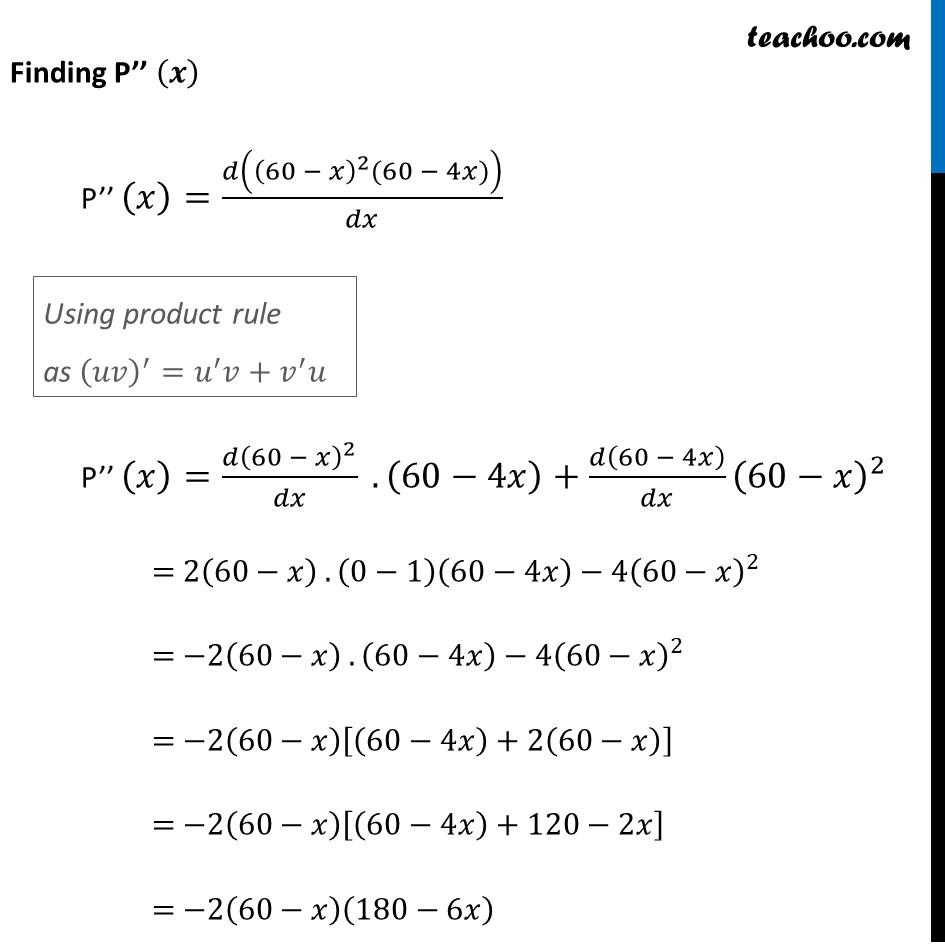
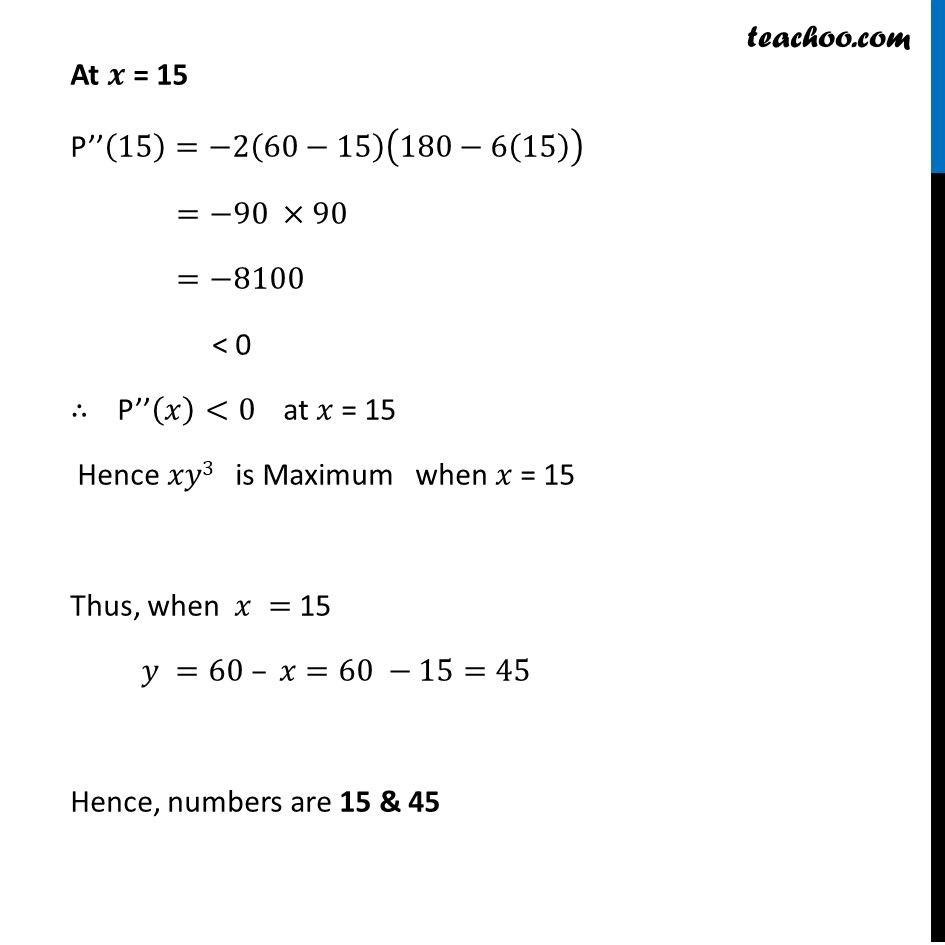
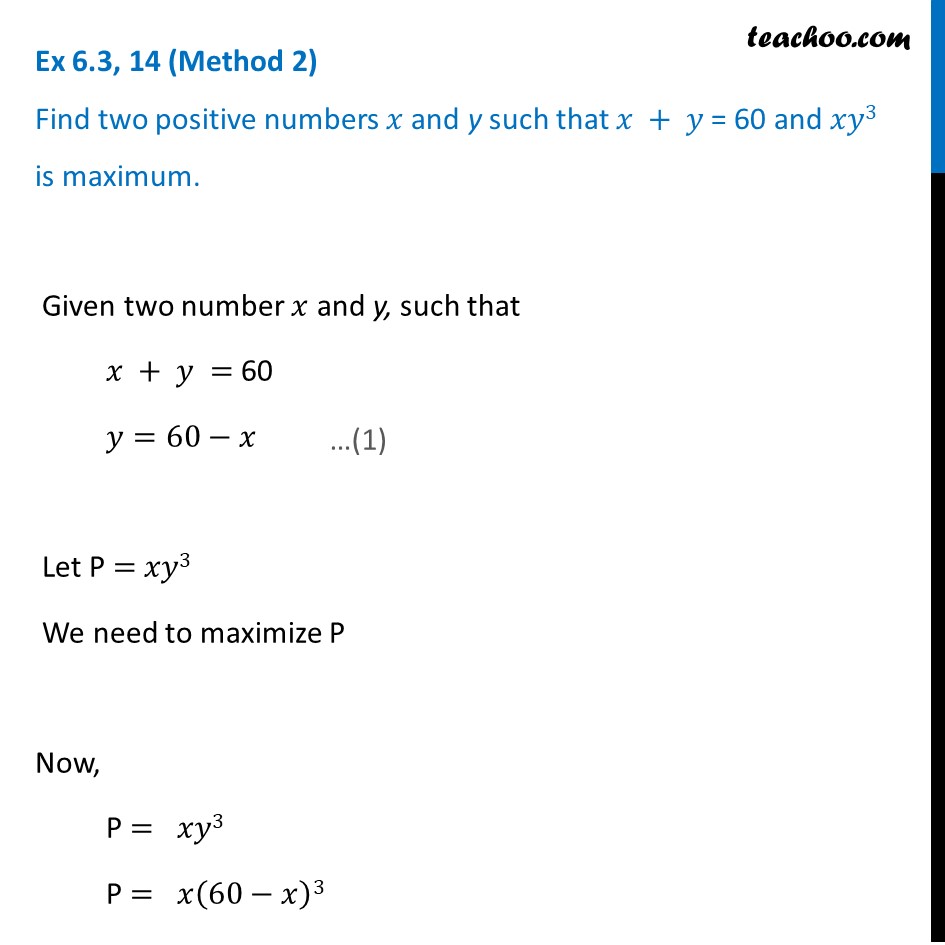
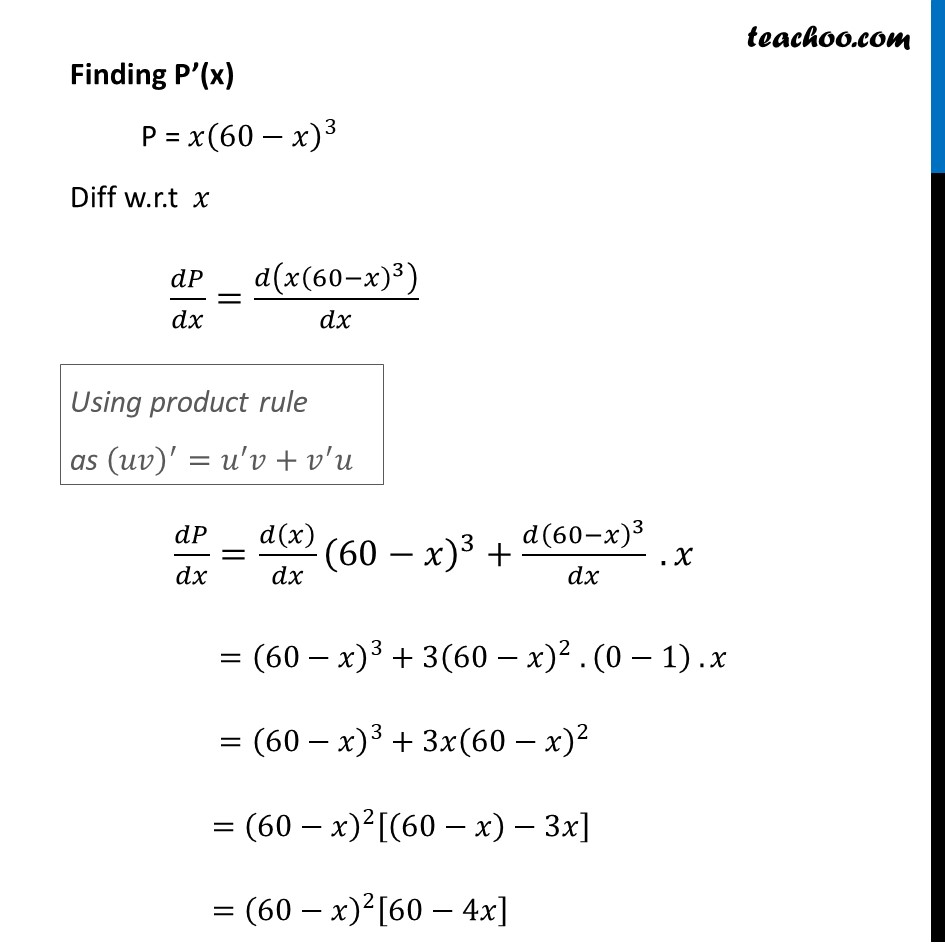
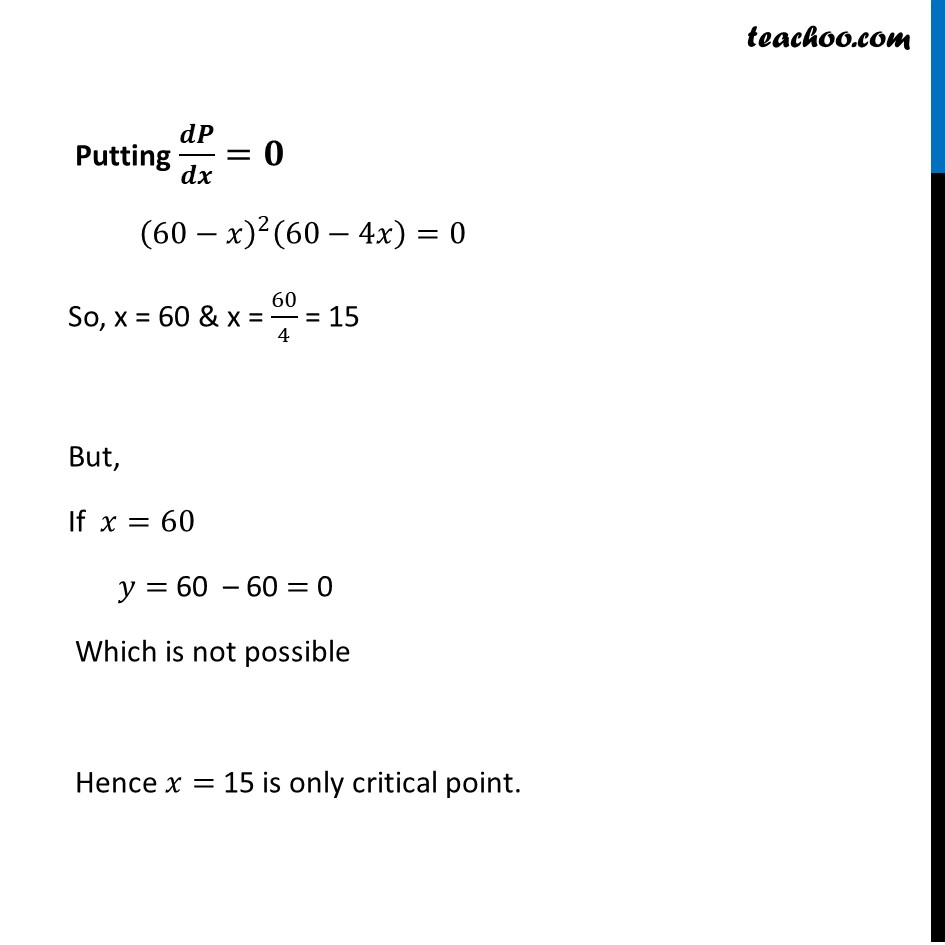
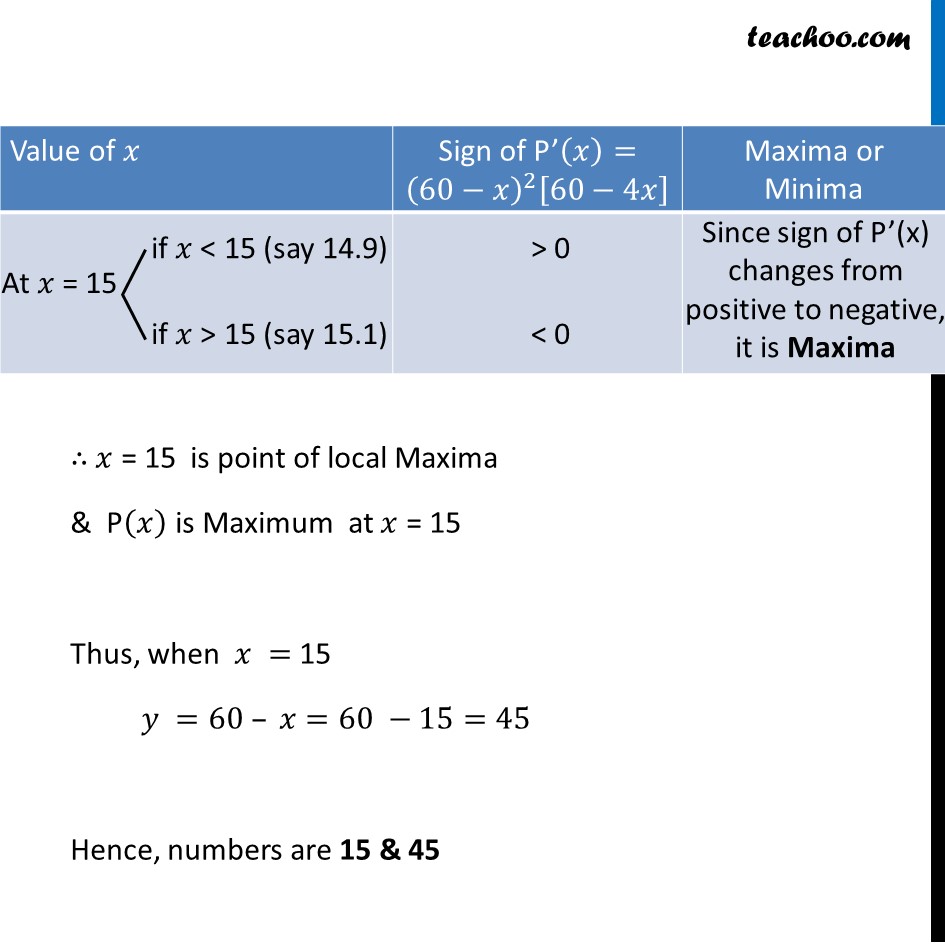
Ex 6.3, 14 (Method 1) Find two positive numbers ๐‘ฅ and y such that ๐‘ฅ + ๐‘ฆ = 60 and ๐‘ฅ๐‘ฆ3 is maximum. Given two number ๐‘ฅ and y, such that ๐‘ฅ + ๐‘ฆ = 60 ๐‘ฆ=60โˆ’๐‘ฅ Let P = ๐‘ฅ๐‘ฆ3 We need to maximize P Now, P = ๐‘ฅ๐‘ฆ3 Putting value of y from (1) P = ๐‘ฅ(60โˆ’๐‘ฅ)3 Finding Pโ€™(x) P = ๐‘ฅ(60โˆ’๐‘ฅ)^3 Diff w.r.t ๐‘ฅ ๐‘‘๐‘ƒ/๐‘‘๐‘ฅ=๐‘‘(๐‘ฅ(60 โˆ’ ๐‘ฅ)^3 )/๐‘‘๐‘ฅ ๐‘‘๐‘ƒ/๐‘‘๐‘ฅ=๐‘‘(๐‘ฅ)/๐‘‘๐‘ฅ (60โˆ’๐‘ฅ)^3+(๐‘‘(60 โˆ’ ๐‘ฅ)^3)/๐‘‘๐‘ฅ . ๐‘ฅ =(60โˆ’๐‘ฅ)^3+ใ€–3(60โˆ’๐‘ฅ)ใ€—^2 . (0โˆ’1) . ๐‘ฅ =(60โˆ’๐‘ฅ)^3โˆ’3๐‘ฅ(60โˆ’๐‘ฅ)^2 =(60โˆ’๐‘ฅ)^2 (60โˆ’๐‘ฅ)โˆ’3๐‘ฅ(60โˆ’๐‘ฅ)^2 =(60โˆ’๐‘ฅ)^2 [(60โˆ’๐‘ฅ)โˆ’3๐‘ฅ] =(60โˆ’๐‘ฅ)^2 [60โˆ’4๐‘ฅ] Putting ๐’…๐‘ท/๐’…๐’™=๐ŸŽ (60โˆ’๐‘ฅ)^2 (60โˆ’4๐‘ฅ)=0 So, x = 60 & x = 60/4 = 15 But, If ๐‘ฅ=60, ๐‘ฆ= 60 โ€“ ๐‘ฅ = 60 โ€“ 60 = 0 Which is not possible Hence, ๐‘ฅ= 15 is only critical point. Finding Pโ€™โ€™ (๐’™) Pโ€™โ€™ (๐‘ฅ)=๐‘‘((60 โˆ’ ๐‘ฅ)^2 (60 โˆ’ 4๐‘ฅ))/๐‘‘๐‘ฅ Pโ€™โ€™ (๐‘ฅ)=(๐‘‘(60 โˆ’ ๐‘ฅ)^2)/๐‘‘๐‘ฅ . (60โˆ’4๐‘ฅ)+๐‘‘(60 โˆ’ 4๐‘ฅ)/๐‘‘๐‘ฅ (60โˆ’๐‘ฅ)^2 = 2(60โˆ’๐‘ฅ) .(0โˆ’1)(60โˆ’4๐‘ฅ)โˆ’4(60โˆ’๐‘ฅ)^2 = โˆ’2(60โˆ’๐‘ฅ) . (60โˆ’4๐‘ฅ)โˆ’4(60โˆ’๐‘ฅ)^2 = โˆ’2(60โˆ’๐‘ฅ)[(60โˆ’4๐‘ฅ)+2(60โˆ’๐‘ฅ)] = โˆ’2(60โˆ’๐‘ฅ)[(60โˆ’4๐‘ฅ)+120โˆ’2๐‘ฅ] = โˆ’2(60โˆ’๐‘ฅ)(180โˆ’6๐‘ฅ) At ๐’™ = 15 Pโ€™โ€™(15)=โˆ’2(60โˆ’15)(180โˆ’6(15)) =โˆ’90 ร—90 =โˆ’8100 < 0 โˆด Pโ€™โ€™(๐‘ฅ)<0 at ๐‘ฅ = 15 Hence ๐‘ฅ๐‘ฆ3 is Maximum when ๐‘ฅ = 15 Thus, when ๐‘ฅ = 15 ๐‘ฆ =60 โ€“ ๐‘ฅ=60 โˆ’15=45 Hence, numbers are 15 & 45

Davneet Singh's photo - Co-founder, Teachoo

Made by

Davneet Singh

Davneet Singh is an IIT Kanpur graduate and has been teaching for 16+ years. At Teachoo, he breaks down Maths, Science and Computer Science into simple steps so students understand concepts deeply and score with confidence.

Many students prefer Teachoo Black for a smooth, ad-free learning experience.