
Concepts

 You are here
Last updated at October 7, 2026 by Teachoo
Transcript
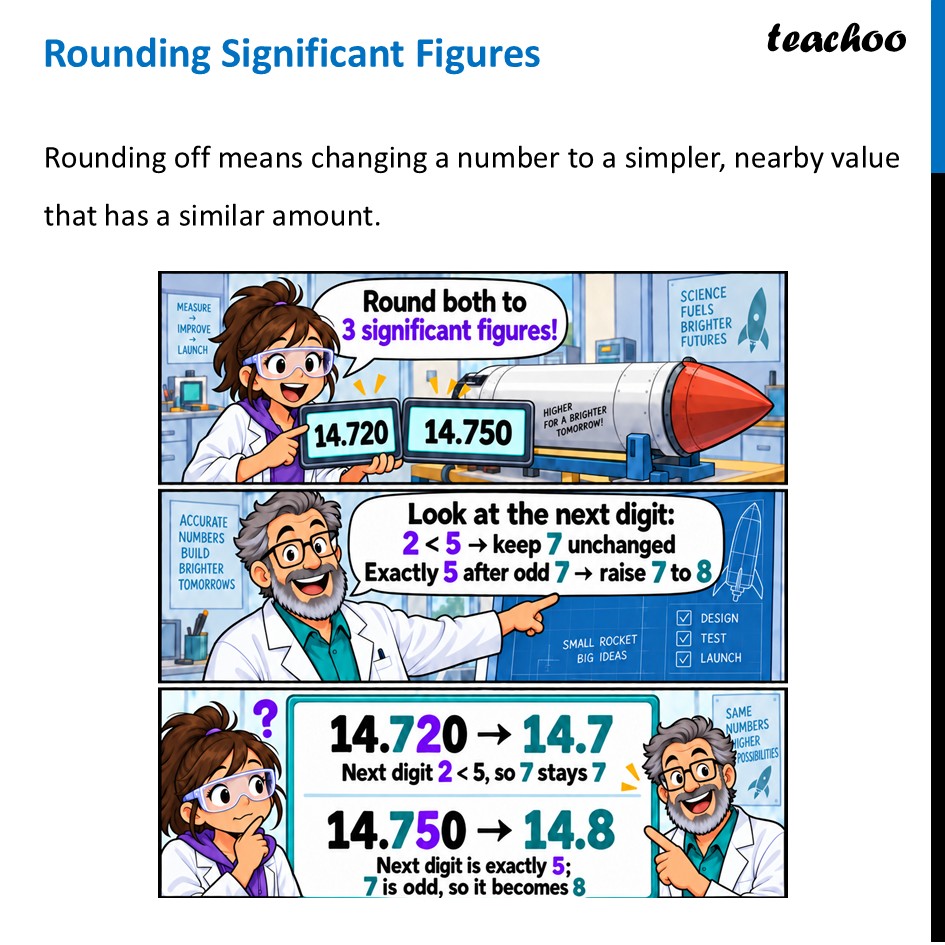
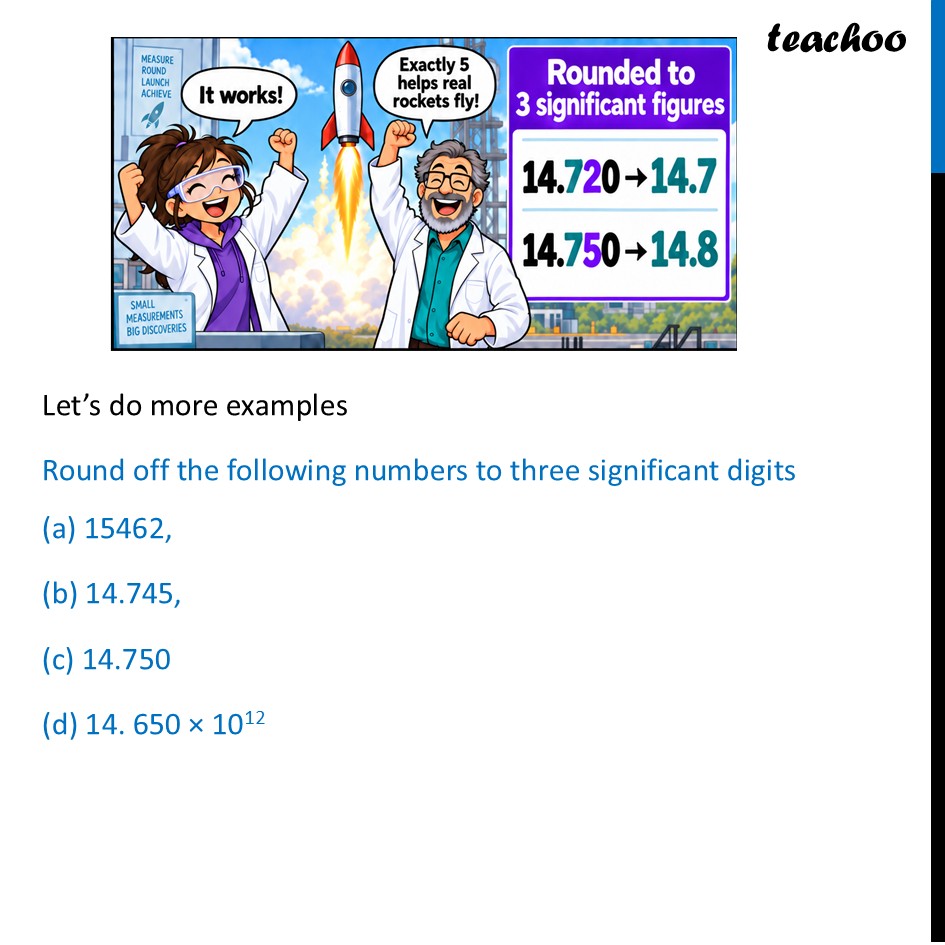
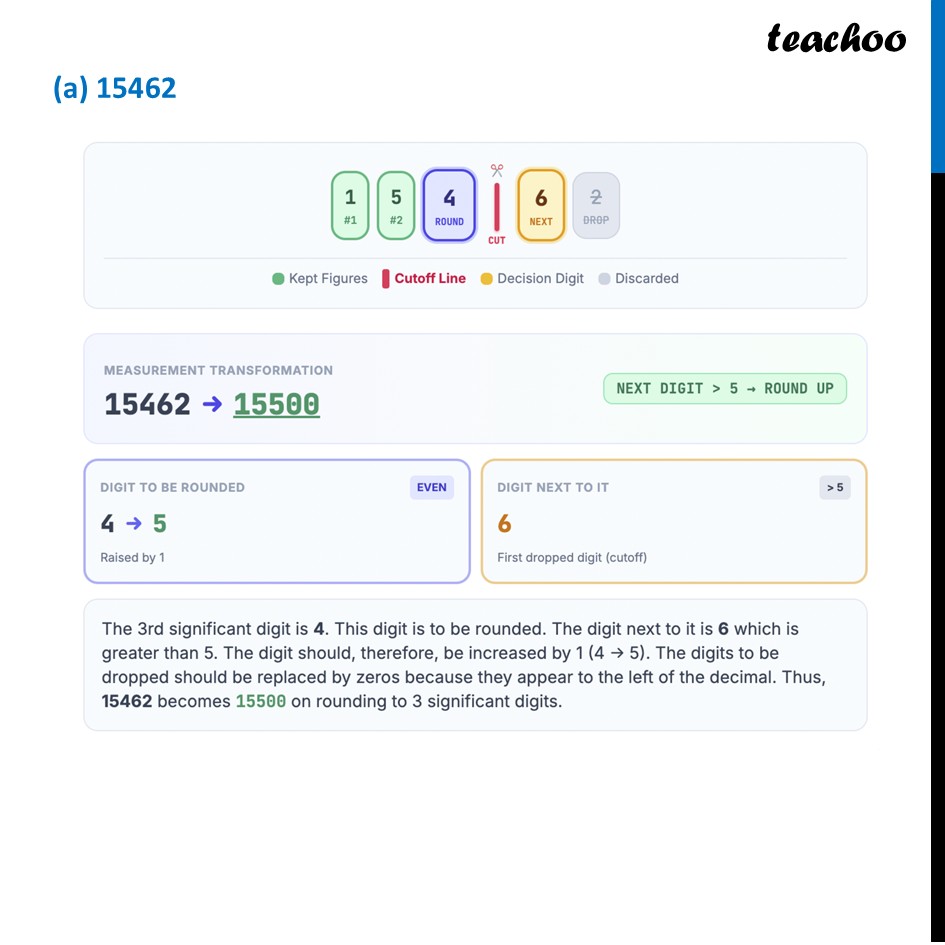
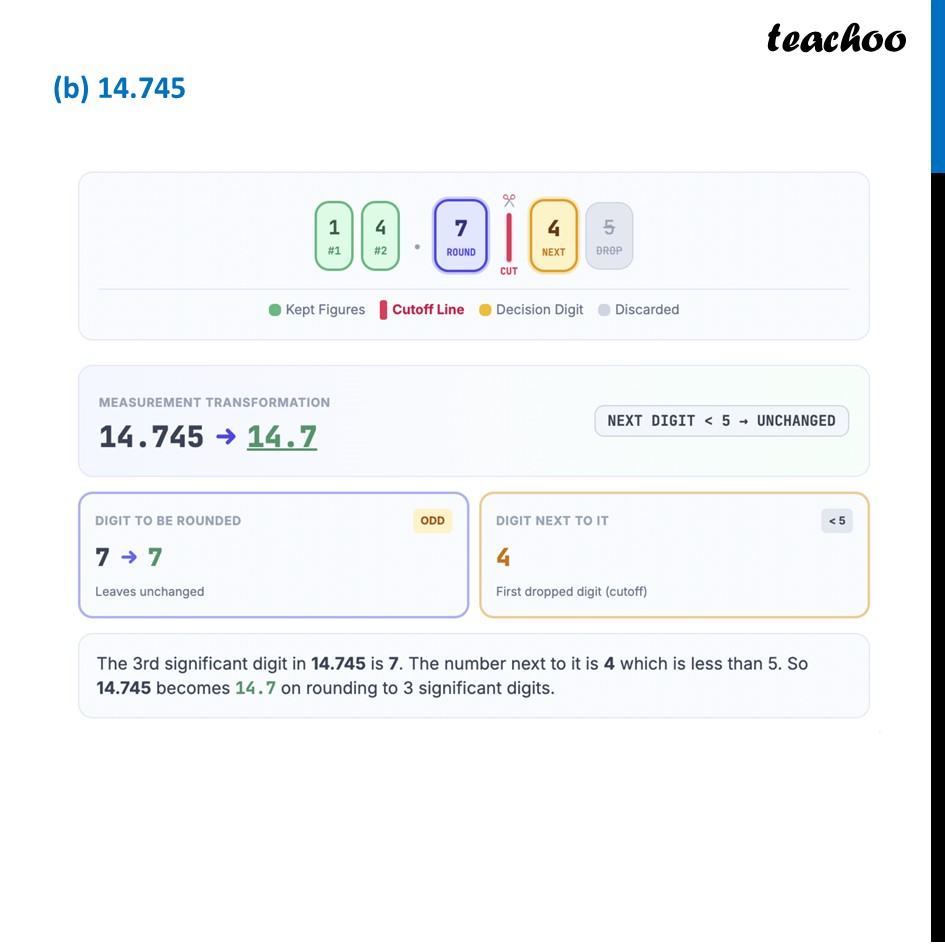
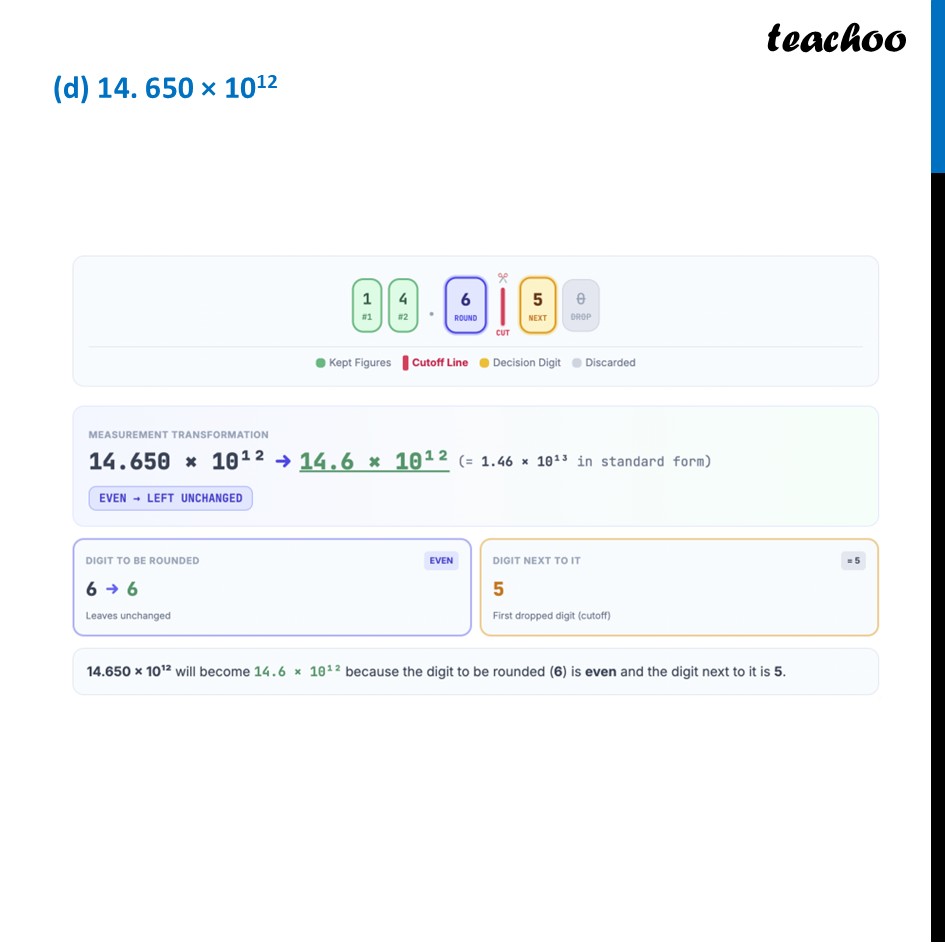
Rounding Significant Figures Rounding means replacing a number with a nearby value containing the required number of significant figures. Identify the last digit to retain, then examine the digits being discarded. ROUNDING RULES If the first discarded digit is less than 5, leave the retained digit unchanged. If the first discarded digit is greater than 5, increase the retained digit by 1. If the first discarded digit is 5 followed by any non-zero digit, increase the retained digit by 1. If the discarded part is exactly 5 followed only by zeros, use the round-to-even convention: Even retained digit — leave it unchanged. Odd retained digit — increase it by 1. EXAMPLES Round 14.720 to 3 significant figures: The retained digit is 7. The next digit is 2, which is less than 5. 14.720 → 14.7 Round 14.750 to 3 significant figures: The retained digit is 7. The discarded part is exactly 50. Since 7 is odd, increase it to 8. 14.750 → 14.8 ROUND THE FOLLOWING TO 3 SIGNIFICANT FIGURES (a) 15462 The first three significant digits are 1, 5 and 4. The next digit is 6, which is greater than 5. Increase 4 to 5 and replace the discarded whole-number digits with zeros. 15462 → 15500 = 1.55 × 10⁴ (b) 14.745 The retained digit is 7. The next digit is 4, which is less than 5. 14.745 → 14.7 (c) 14.750 The retained digit is 7. The discarded part is exactly 50. Since 7 is odd: 14.750 → 14.8 (d) 14.650 × 10¹² The retained digit is 6. The discarded part is exactly 50. Since 6 is even, leave it unchanged. 14.650 × 10¹² → 14.6 × 10¹² In standard scientific notation: 1.46 × 10¹³