
 You are here
Why does a single flood in Punjab teach us so much about monsoon, rivers and human planning together?
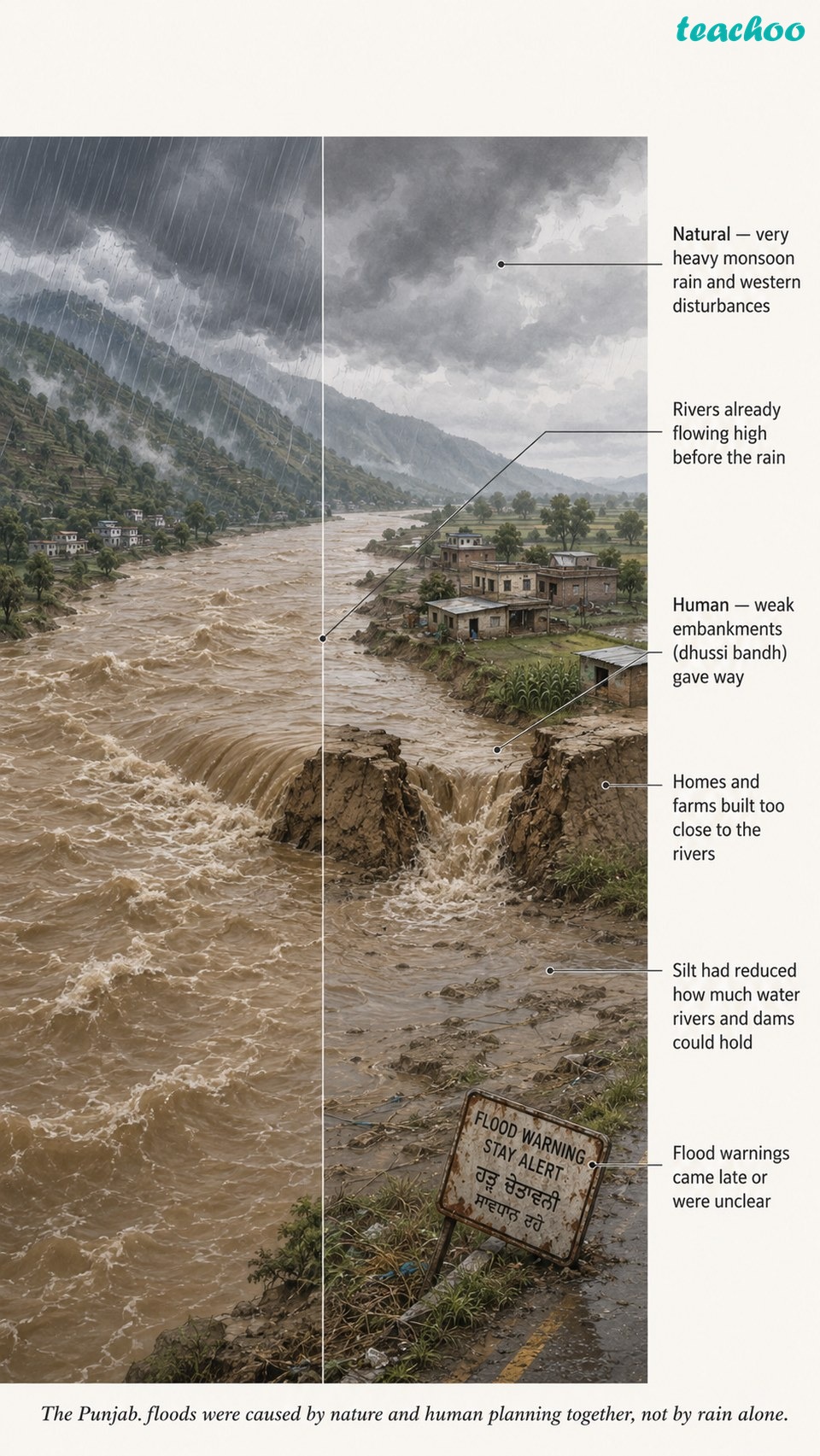
![3.8 Punjab Floods 2025 — A Case - Atmosphere and Climate - [Teachoo] - Concepts](https://cdn.teachoo.com/135b2594-6096-4f98-be65-333f037c6720/fig.-3.12.-floods-in-punjab..jpg)
- In 2025, Punjab experienced severe floods .
- They were caused by heavy monsoon rains and swelling of the rivers Satluj, Beas and Ravi .
- The floods damaged villages, farmland, houses and infrastructure .
- The state suffered heavy economic and social disruption.
So what actually caused this disaster — nature alone, or people too?
What caused the Punjab floods — nature, people, or both?
Punjab Floods 2025
Nature and planning combined
1. Natural Causes
Heavy rain and disturbances
Rivers already flowing high
Example:
Satluj, Beas, Ravi, Ghaggar rivers
2. Human-made Causes
Weak river embankments
Homes built close to rivers
Example:
Dhussi bandh embankments
- Punjab faced very heavy monsoon rain , made worse by western disturbances.
- It rained heavily in Punjab, Himachal Pradesh and Jammu & Kashmir too.
- The rivers Satluj, Beas, Ravi and Ghaggar were already flowing high.
- Weak river embankments (dhussi bandh) could not hold back the water.
- Houses and farms were built too close to rivers .
- Silt had reduced how much water rivers and dams could hold.
- Flood warnings came late or were unclear.
And what did all this actually cost the people of Punjab?
What did the Punjab floods actually cost people?
Effects
On people and the region
1. Human Toll
Many people lost their lives
Thousands sought shelter
Example:
Relief camps for the displaced
2. Economic & Health Impact
Crops and livestock lost
Roads, bridges damaged
Example:
Waterborne disease outbreaks
- Many people lost their lives in the floods.
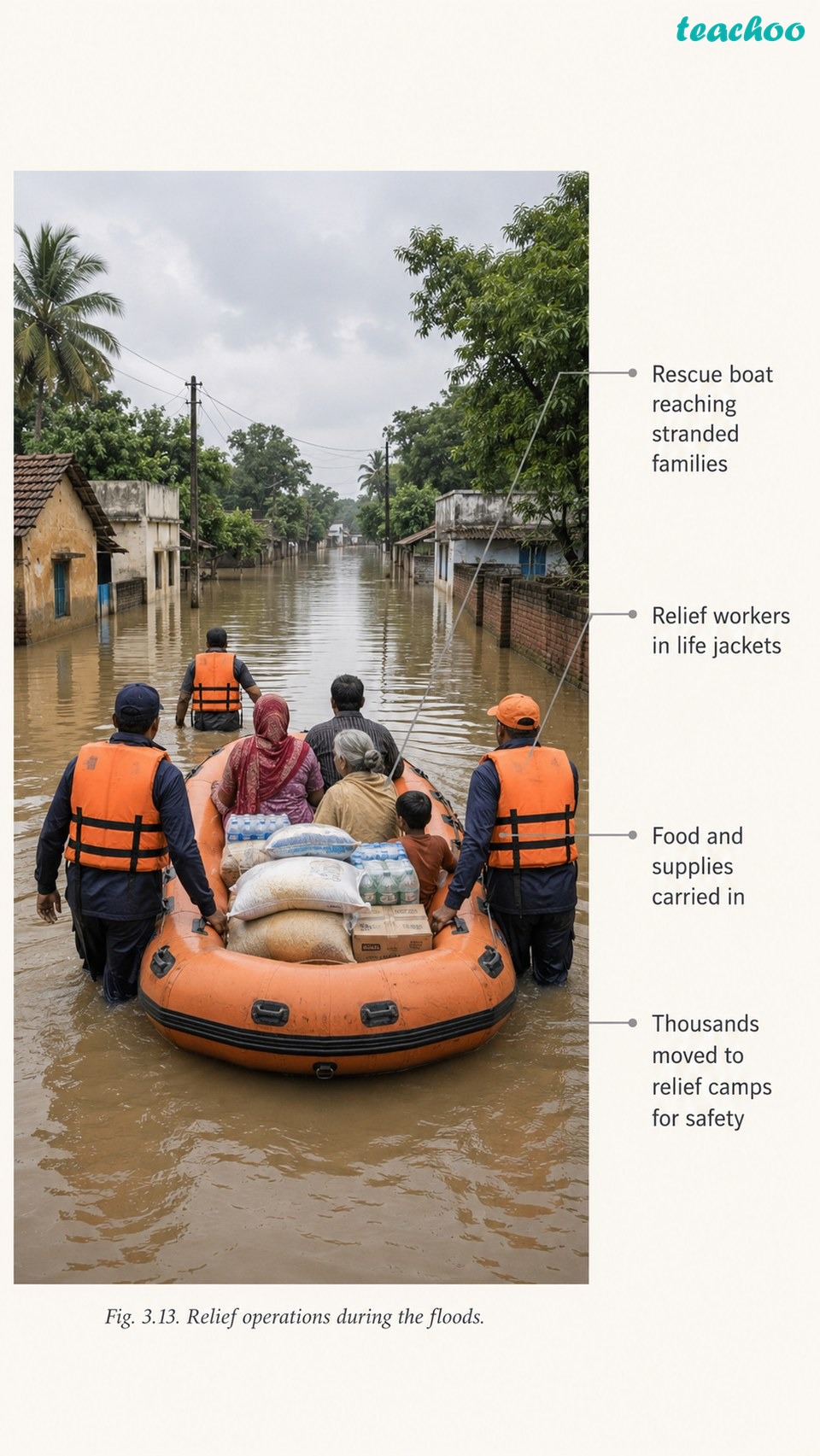
- Thousands moved to relief camps for safety.
- Farmland with crops like paddy was severely damaged.
- Poultry and dairy farms were destroyed, and many animals died.
- Roads, bridges, border fences and public buildings were damaged.
- Standing water caused waterborne diseases and sanitation concerns.
💬 CLASSROOM DISCUSSION
- To what extent did natural factors cause these floods compared to human activities?
- Do you think better planning could have reduced the damage? How?
- What are the guidelines for flood management according to the National Disaster Management Authority (NDMA)?
- What role can students/youth play in helping with disaster preparedness?
📝 What Have We Learned
- The 2025 Punjab floods combined heavy monsoon rain with human factors.
- Weak embankments and river-side construction worsened the damage.
- The floods caused deaths, displacement and crop and livestock loss.
- Roads, bridges and buildings were also damaged .
- Better planning and early warnings could reduce future damage.
💬 In Short
Earth’s gravity holds a blanket of gases around the planet, called the atmosphere. It has a composition and a layered structure, and near the surface it creates weather through temperature, humidity, precipitation, pressure and wind. In India, the most powerful expression of this system is the monsoon, which shapes farming, water supply, the economy and daily life. Human activity is now changing this climate through greenhouse gas emissions, so we must learn to reduce our carbon footprint and prepare for climate-linked disasters like floods.
