
 You are here
If weather keeps changing day to day, how do repeated patterns turn into named seasons?
- Weather fluctuates, sometimes even within a single day.
- But there are generalised monthly patterns — cool or hot, windy or calm, wet or dry.
- Based on these repeated patterns, the year is divided into seasons .
- India’s climate is broadly classified as tropical monsoon .
![3.5 Seasons in India - Atmosphere and Climate - [Teachoo] - Concepts](https://cdn.teachoo.com/2026f26c-92e4-4668-995d-e1f8d8eacaff/day-to-day-weather-is-jumbled-but-repeated-monthly-patterns-are-what-we-name-as-seasons..jpg)
🔎 LET’S EXPLORE
Note down the weather report from a local newspaper for two weeks and observe the changes occurring in the weather.
Show Answer
Even over just two weeks, you should notice small day-to-day changes in temperature, humidity and rainfall.
- Record the maximum and minimum temperature each day.
- Note whether the sky was clear, cloudy or rainy .
- Compare the start and end of your two weeks to spot a trend.
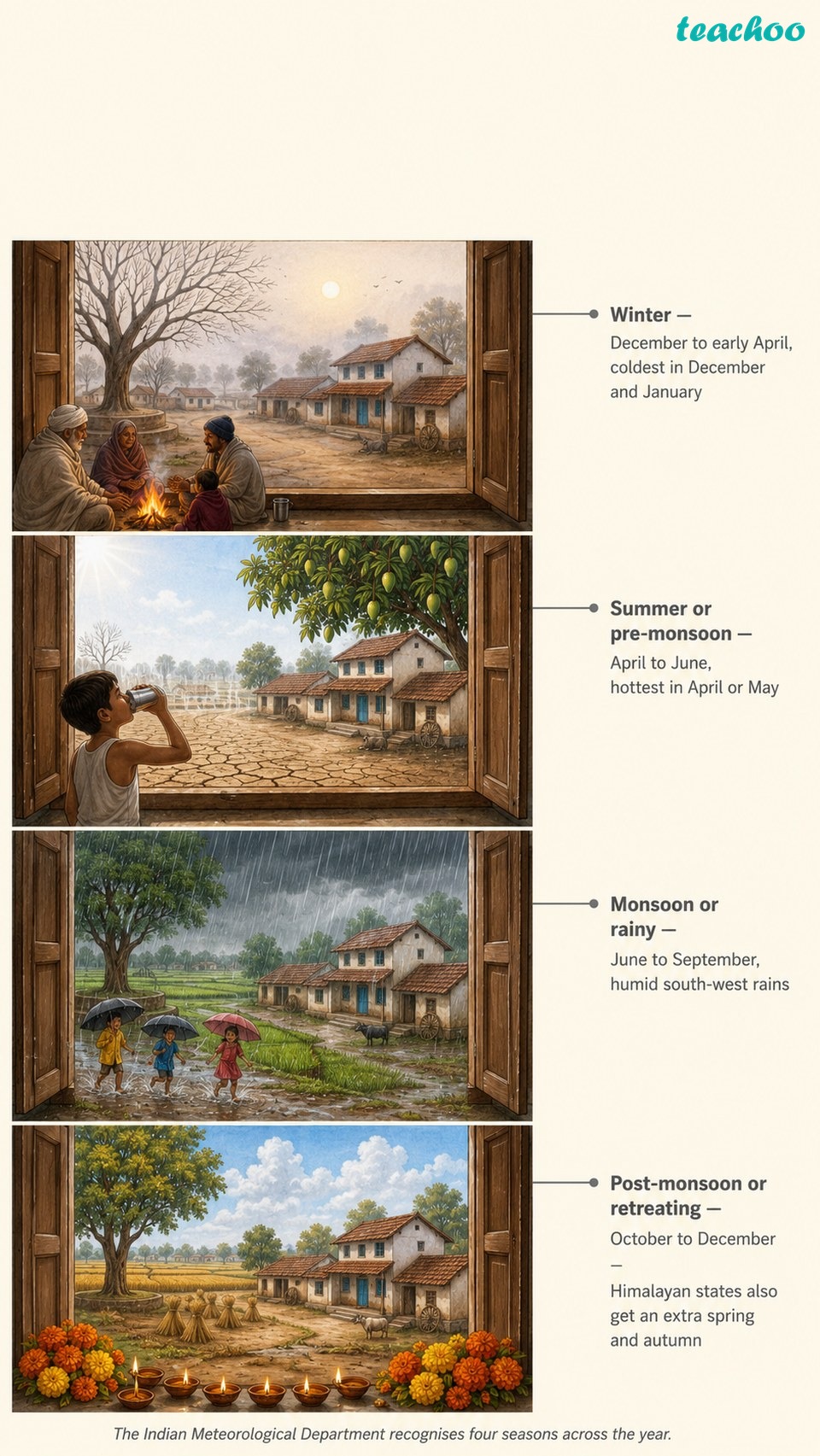
The Indian Meteorological Department recognises four seasons — what are they?
| Season | Months | Character |
|---|---|---|
| Winter | December–early April | Coldest in December-January |
| Summer / Pre-monsoon | April–June | Hottest month is April or May |
| Monsoon / Rainy | June–September | Humid south-west monsoon rains |
| Post-monsoon / Retreating | October–December | Monsoon withdraws |
- Winter : December to early April, coldest in December-January.
- Summer or pre-monsoon : April to June, hottest in April or May.
- Monsoon or rainy : June to September, humid south-west rains.
- Post-monsoon or retreating : October to December.
- Temperatures in the north-west are 10-15°C in winter, rising towards the equator.
- Himalayan states also get an extra spring and autumn.
💡 DON’T MISS OUT
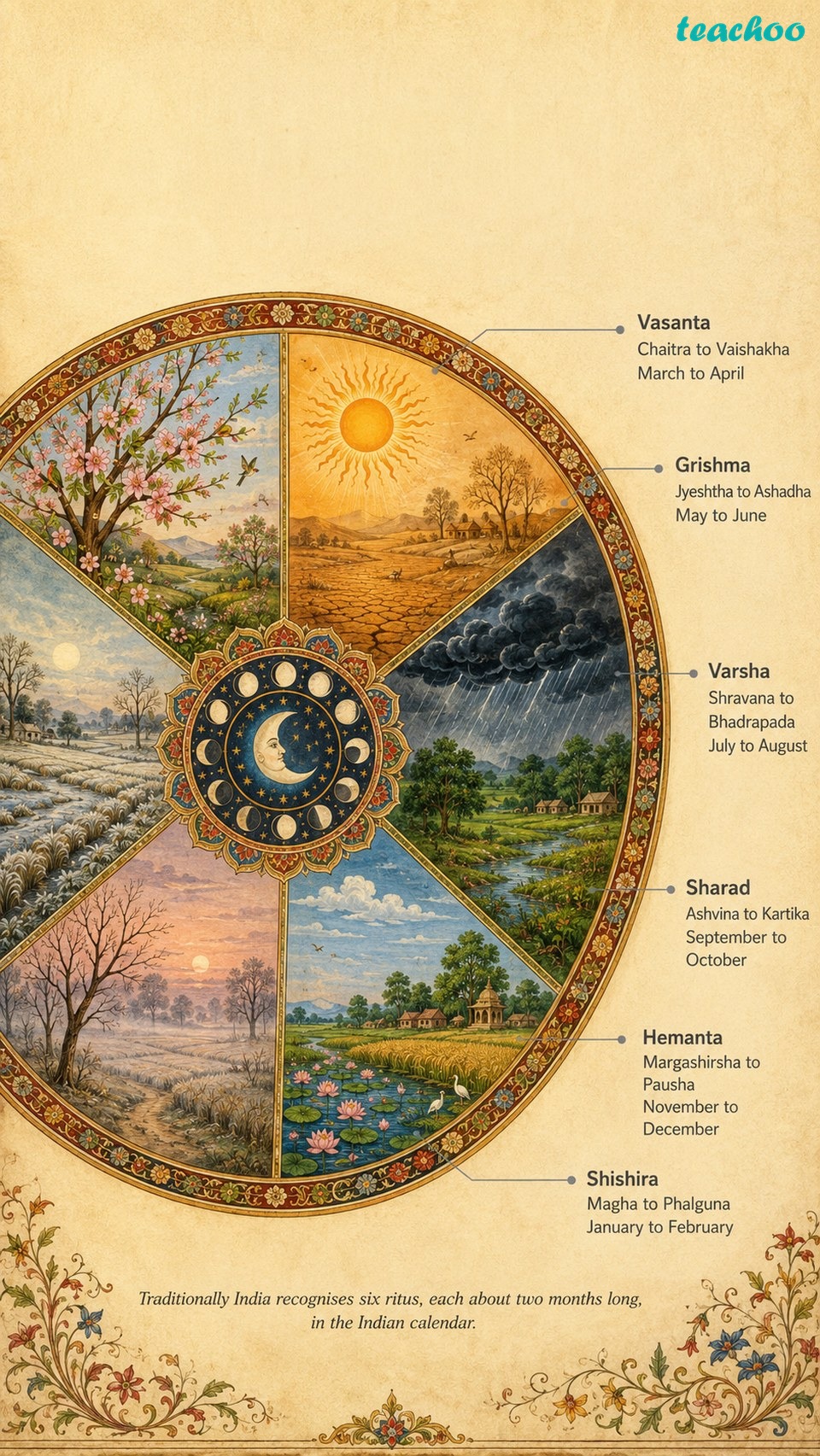
Traditionally, India experiences six seasons, each about two months long, based on the astronomical division of the twelve months into six parts. The traditional Indian calendar reflects these seasons too.
| Season (Rtu) | Indian Calendar Months | Gregorian Months |
|---|---|---|
| Vasanta | Chaitra–Vaishakha | March–April |
| Grishma | Jyeshtha–Ashadha | May–June |
| Varsha | Shravana–Bhadrapada | July–August |
| Sharad | Ashvina–Kartika | September–October |
| Hemanta | Margashirsha–Pausha | November–December |
| Shishira | Magha–Phalguna | January–February |
🤔 THINK ABOUT IT
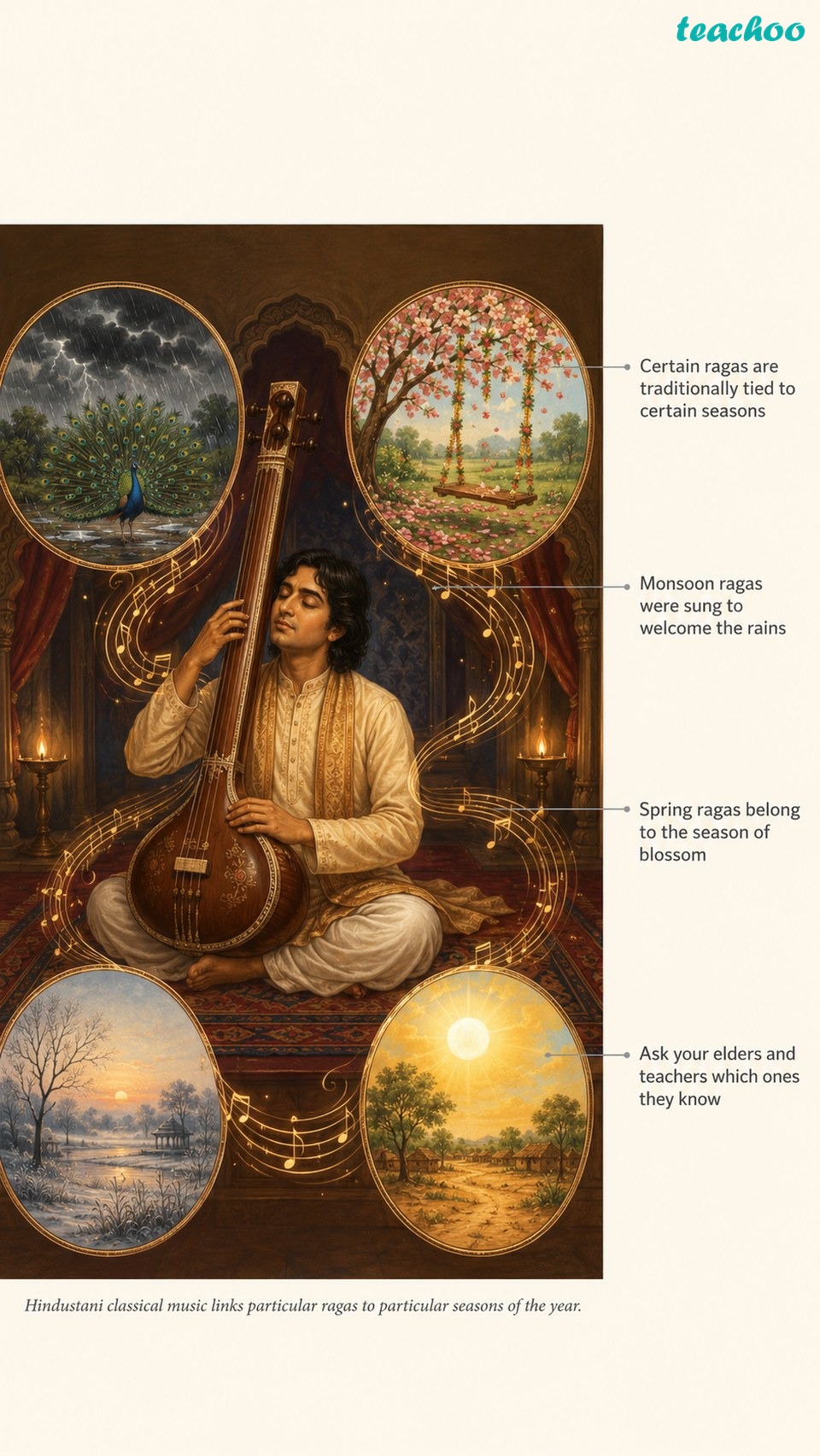
Hindustani classical music associates certain ragas with specific seasons. Find out which ragas are connected to each season with the help of your elders and teachers.
💡 DON’T MISS OUT
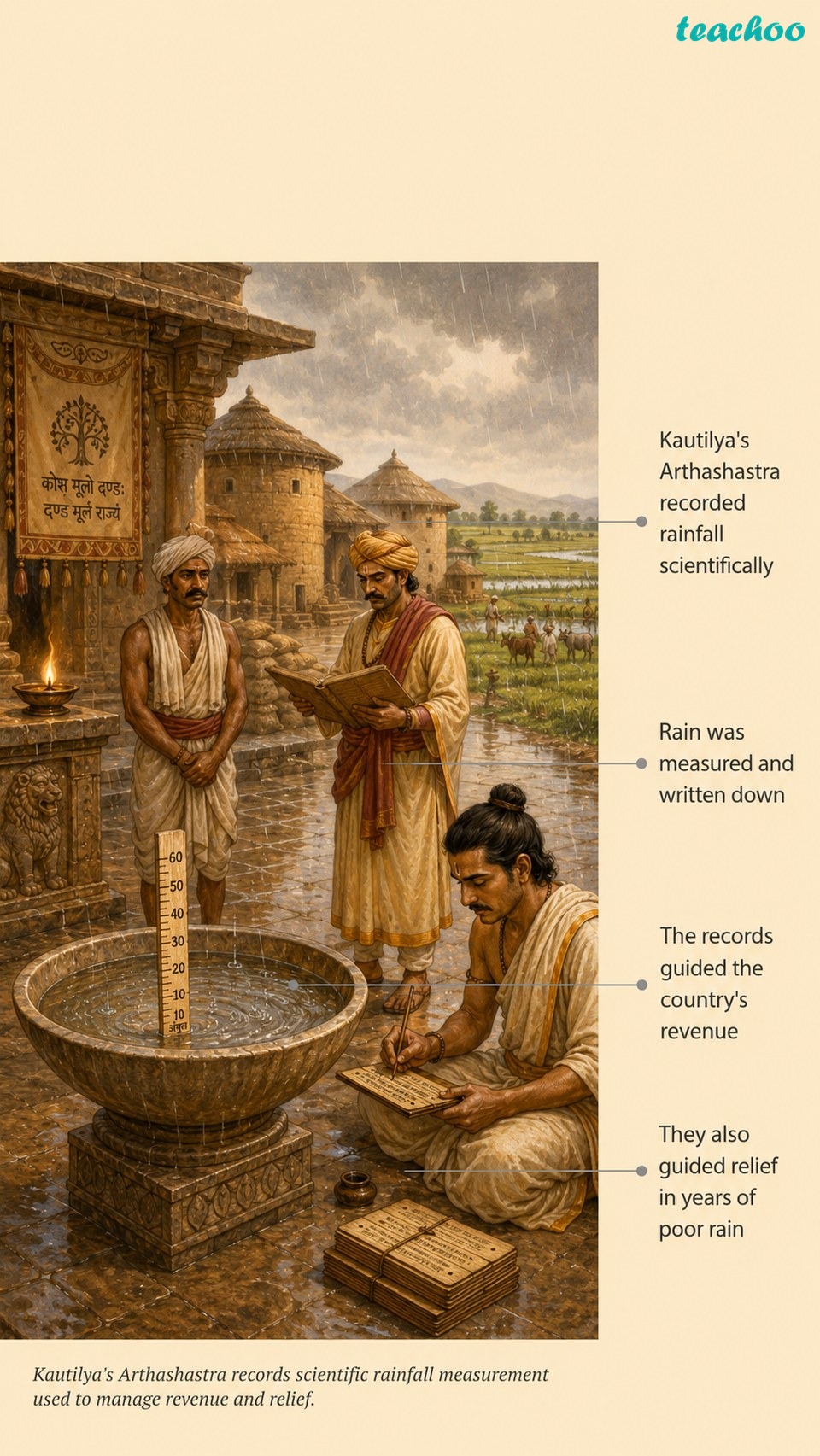
Kautilya’s
Arthashastra
contains records of scientific measurements of rainfall and their practical application in managing the country’s revenue and relief efforts.
Definition — Season
A repeated monthly pattern of temperature, cloudiness, wind and rainfall.
India has four IMD seasons: winter, summer, monsoon and post-monsoon.
India has four IMD seasons: winter, summer, monsoon and post-monsoon.
📝 What Have We Learned
- Repeated monthly weather patterns divide the year into seasons.
- India has four IMD seasons : winter, summer, monsoon, post-monsoon.
- Himalayan states get an extra spring and autumn.
- India also has a traditional six-season calendar.
- Ancient India kept careful records of rainfall and seasons .
