
 You are here
We just saw air moves from high to low pressure — what do we call this moving air?
![3.4.5 Wind, Land Breeze and Sea - Atmosphere and Climate - [Teachoo] - Concepts](https://cdn.teachoo.com/7e90e220-554d-4dd0-ac3a-a939cae723b4/fig.-3.7.-wind-is-caused-by-air-flowing-from-high-to-low-pressure..jpg)
- Wind is the movement of air from a high-pressure area to a low-pressure area.
- Wind can be gentle or very strong.
- It can blow away dust, or uproot trees in a storm.
- Winds are named after the direction they blow from .
- A wind blowing from the west is called a westerly .
Does wind speed actually matter for everyday life?
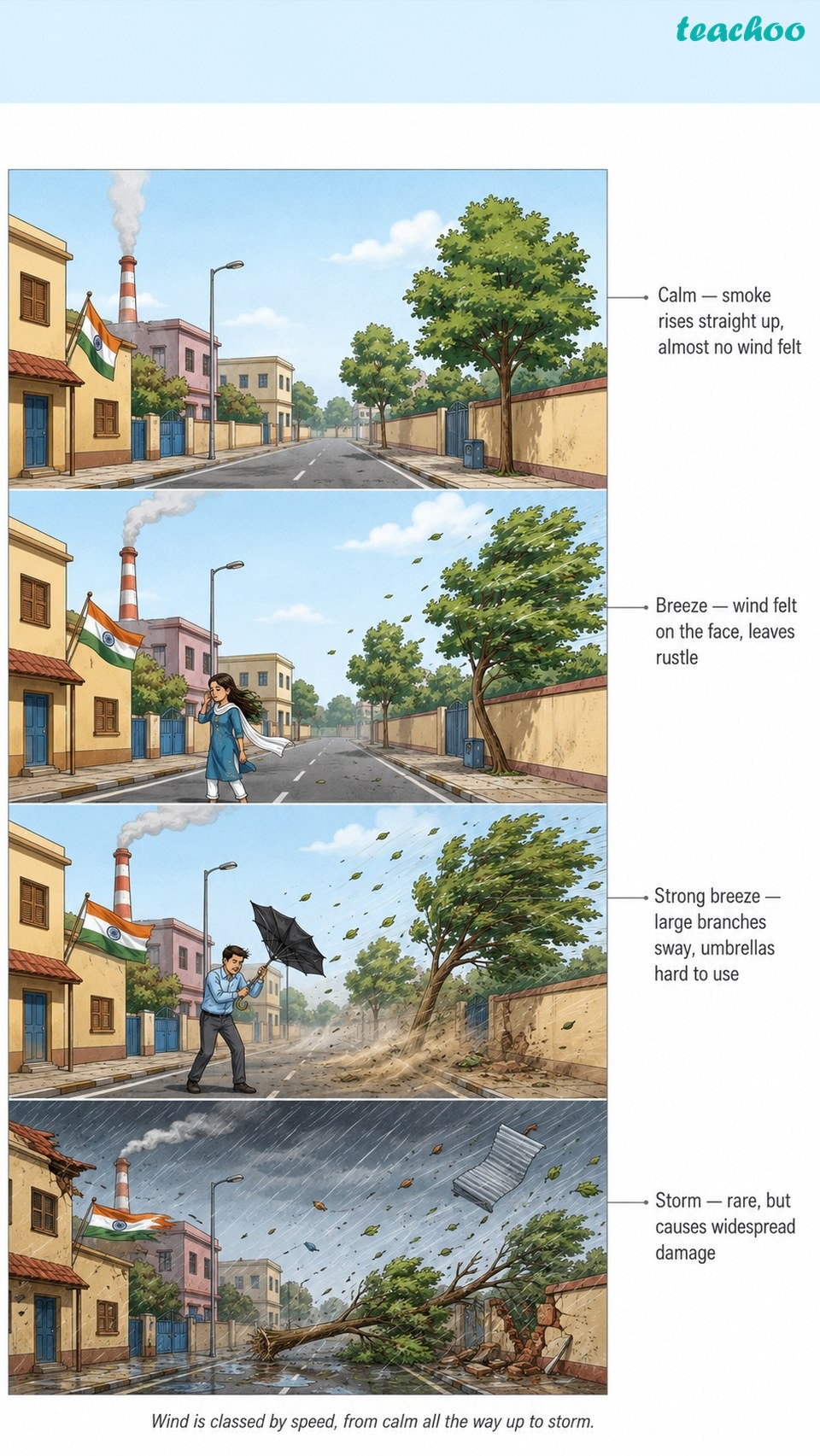
| Category | Effect |
|---|---|
| Calm | Smoke rises straight up, almost no wind felt |
| Breeze | Wind felt on the face, leaves rustle |
| Strong Breeze | Large branches sway, umbrellas are hard to use |
| Storm | Rare, but causes widespread damage |
- Wind is classed by speed — from calm to storm .
- A calm wind (0-1 km/hr) makes smoke rise straight up.
- A storm (103-117 km/hr) causes widespread damage .
🔎 LET’S EXPLORE
Find out other categories of wind based on speed and their common effects, and share your findings in class.
Show Answer
The Beaufort scale names many more categories between calm and storm.
- Gentle breeze (12-19 km/hr): leaves and twigs move constantly.
- Moderate breeze (20-28 km/hr): raises dust and loose paper.
- Fresh breeze (29-38 km/hr): small trees sway.
- Gale (63-87 km/hr): breaks twigs off trees, hard to walk against.
- Hurricane (above 117 km/hr): widespread, severe destruction.
Along a coast, why does a cool breeze often start blowing in from the sea every afternoon?
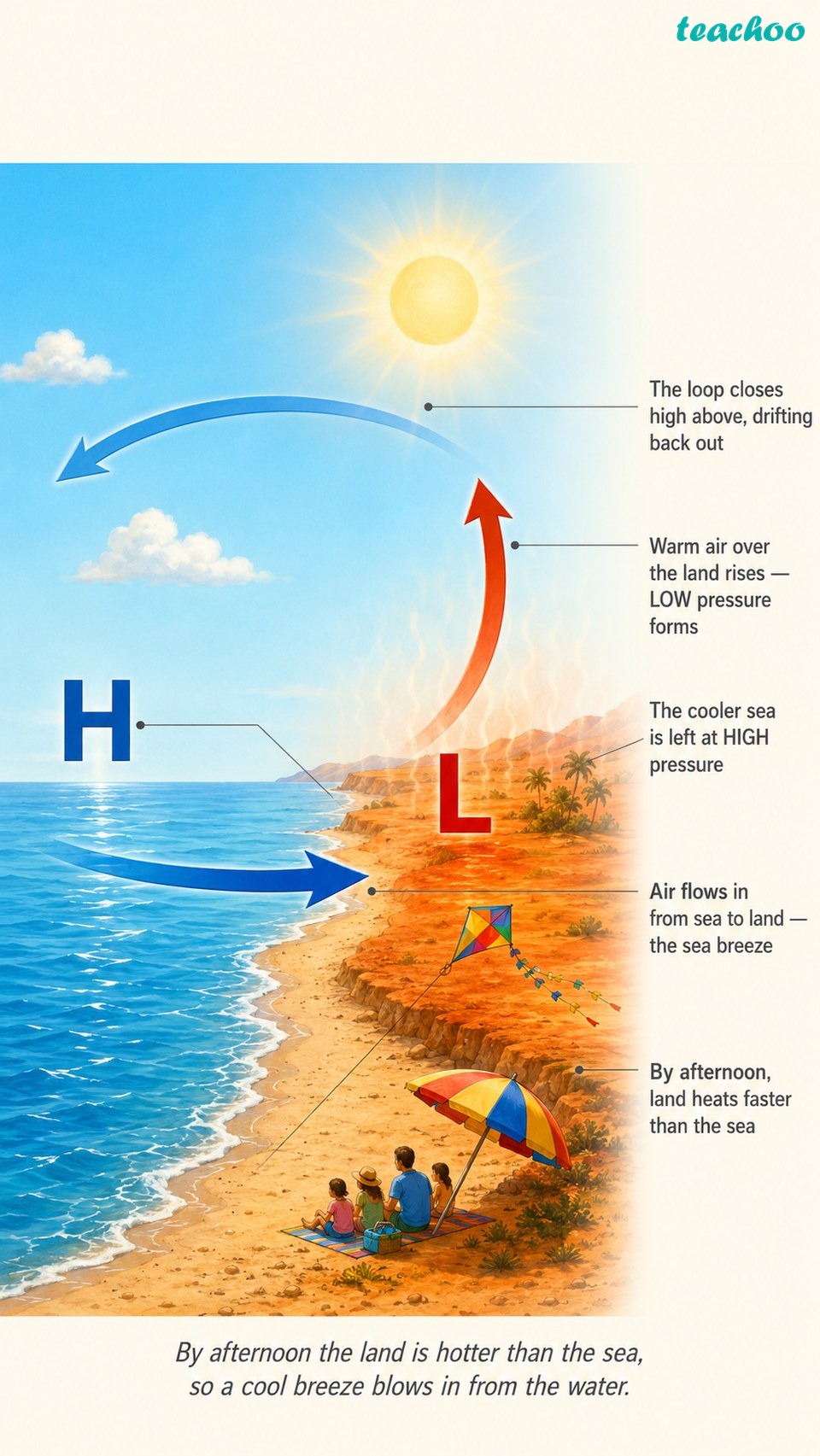
How does a sea breeze form?
Daytime heating
Land heats up faster than the sea in the afternoon.
↓
Low pressure over land
Warm air over land rises, creating low pressure.
↓
Cool wind blows from the sea towards the land.
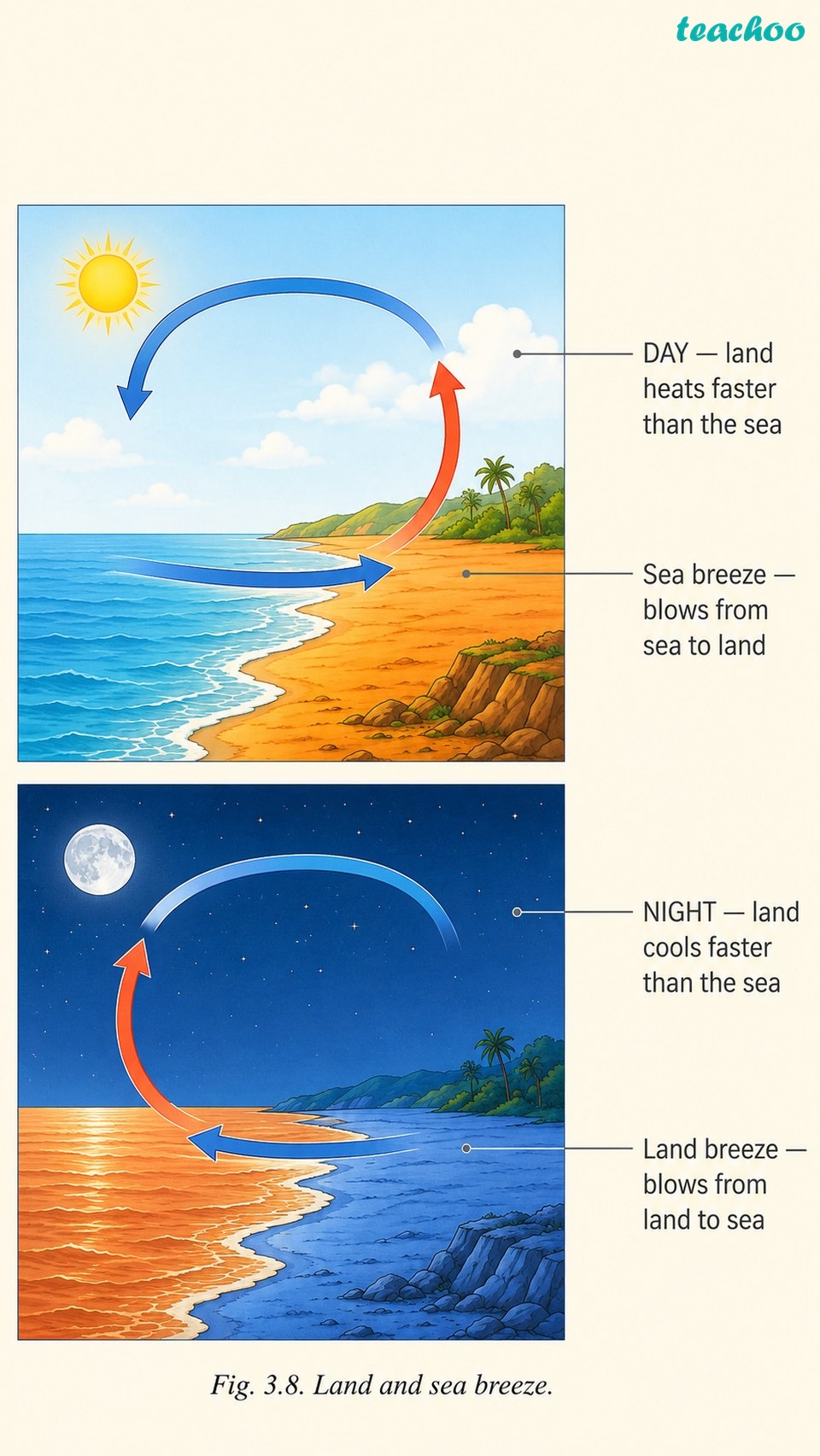
- A sea breeze blows from sea to land, mainly in the afternoon.
- The land becomes relatively warmer than the sea.
- This forms a low-pressure region over land.
- So wind starts blowing in from the sea .
And at night, why does the breeze reverse and blow back out towards the sea?
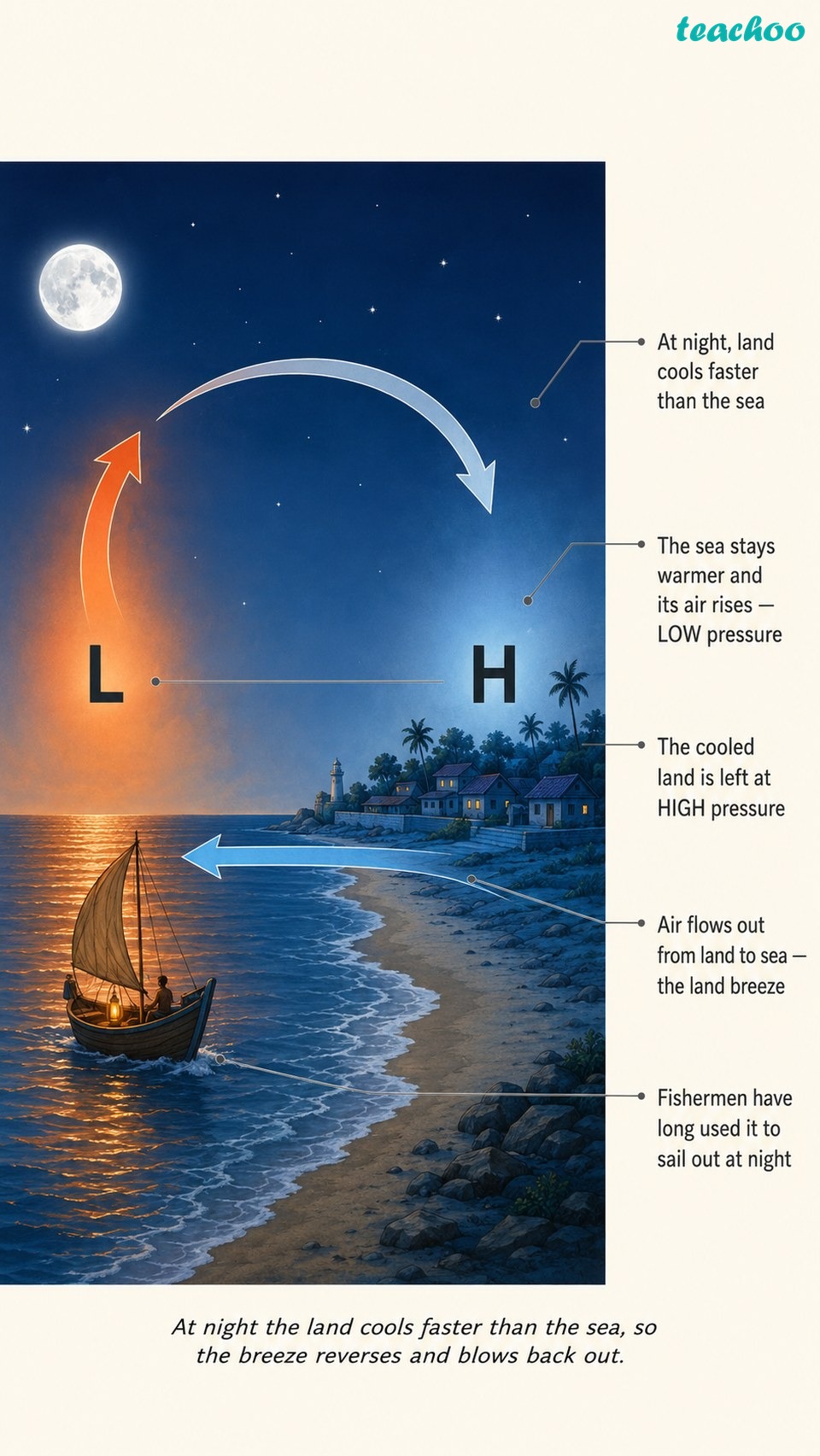
How does a land breeze form?
Night-time cooling
Land cools down faster than the sea at night.
↓
High pressure over land
Cooler, heavier air over land sinks, creating high pressure.
↓
Wind blows gently from the land out towards the sea.
- A land breeze blows from land to sea, during the night.
- It results from differential surface cooling between land and sea.
- Land cools faster than sea at night.
- Since the difference is small, wind speed is low .
- Land and sea breezes create moderate climates along coasts.
Sea Breeze
Land Breeze
Blows during the day.
Blows during the night.
From sea towards land.
From land towards sea.
Land is warmer than the sea.
Sea is warmer than the land.
📝 What Have We Learned
- Weather is short-term, climate is the long-term average.
- Insolation makes the equator hotter than the poles.
- Humidity and precipitation depend on water vapour in the air.
- Pressure differences, caused by temperature, create wind .
- Sea and land breezes reverse direction between day and night.
