
 You are here
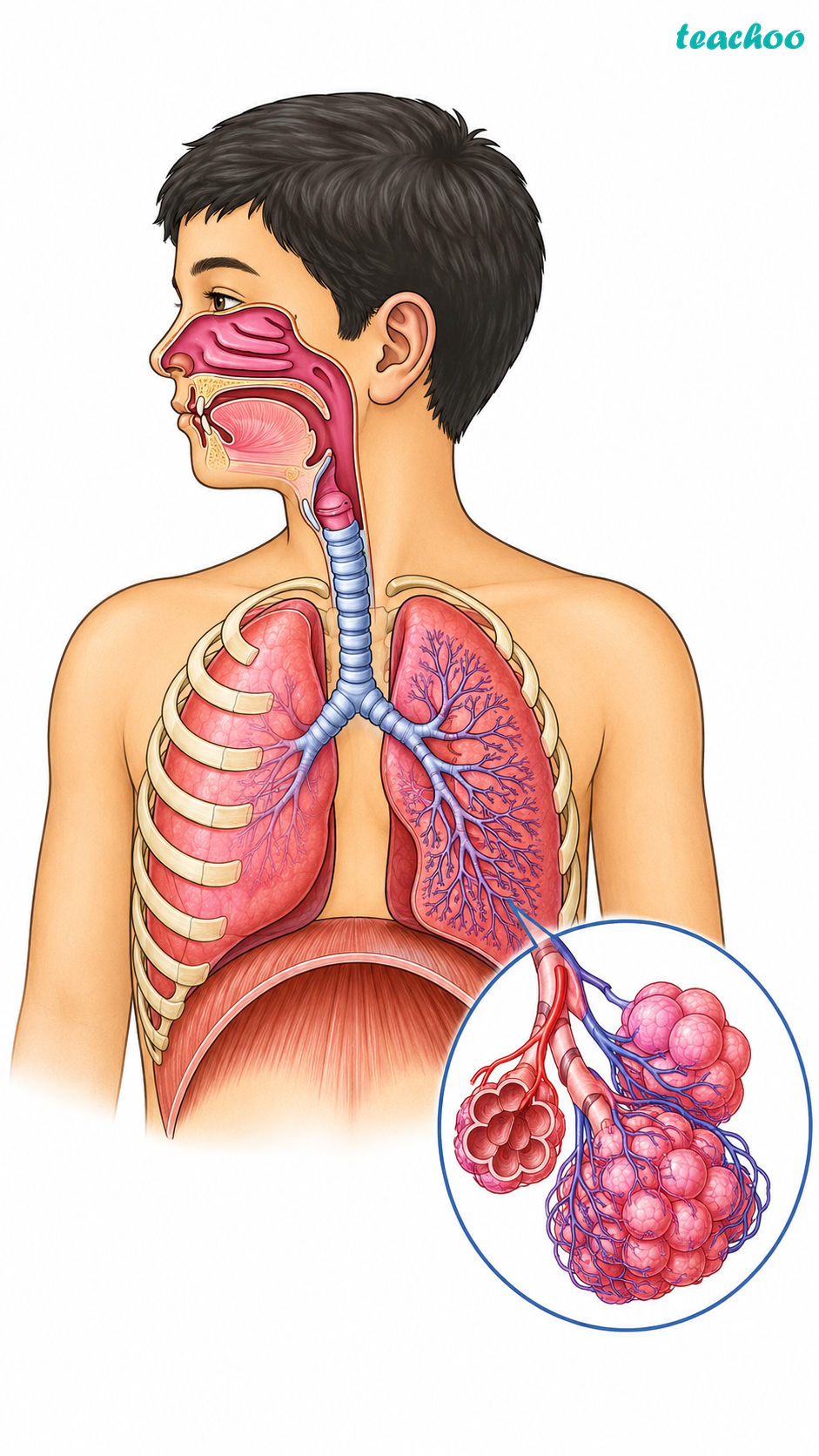
- We breathe in (inhale) and breathe out (exhale) air continuously.
- This is to obtain oxygen and release carbon dioxide.
The Breathing Process
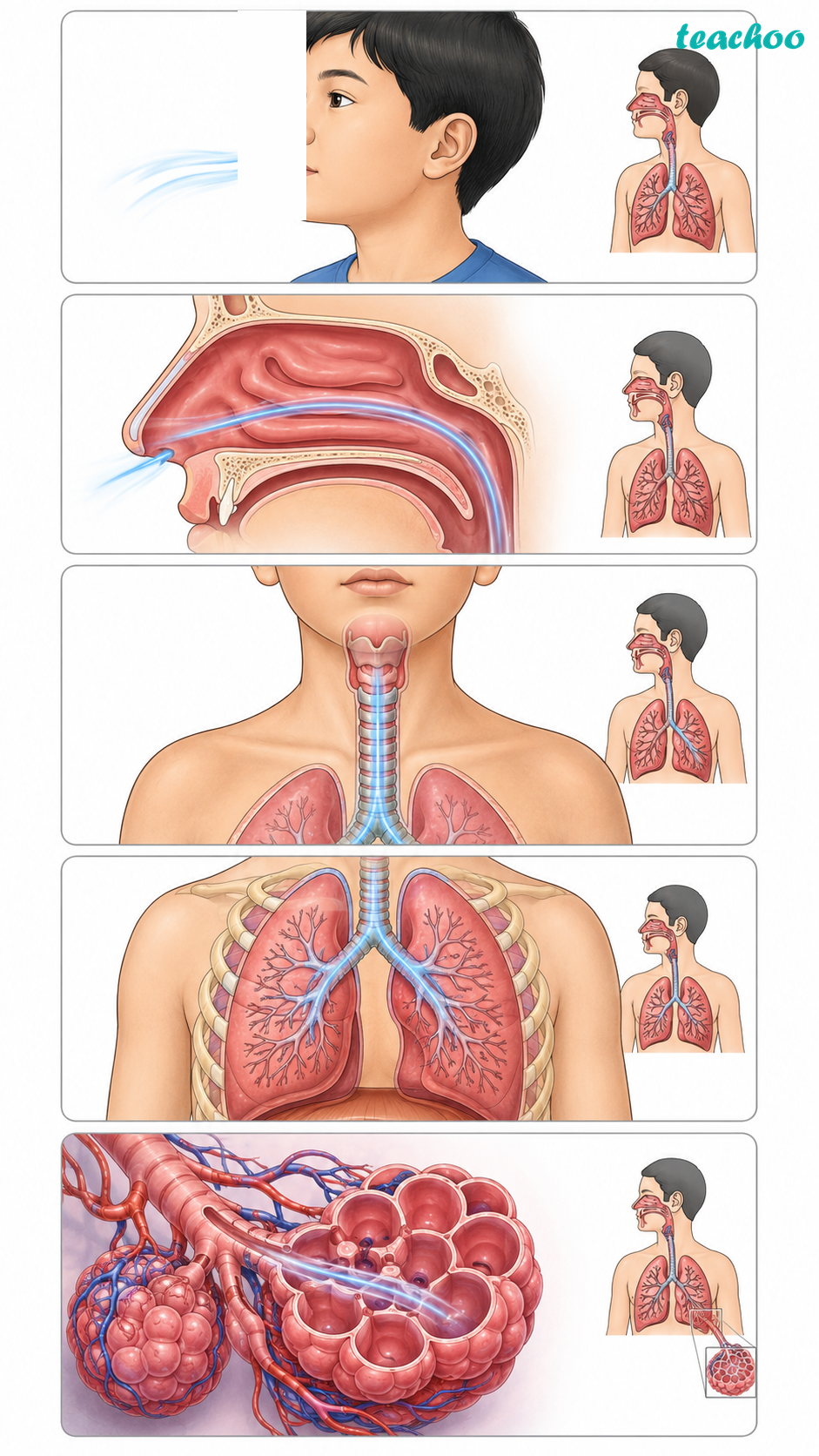
- The process of inhaling and exhaling air is called breathing .
- Our body has a specific system for this — the respiratory system .
- Air enters through nostrils → nasal passages → lungs through the windpipe .
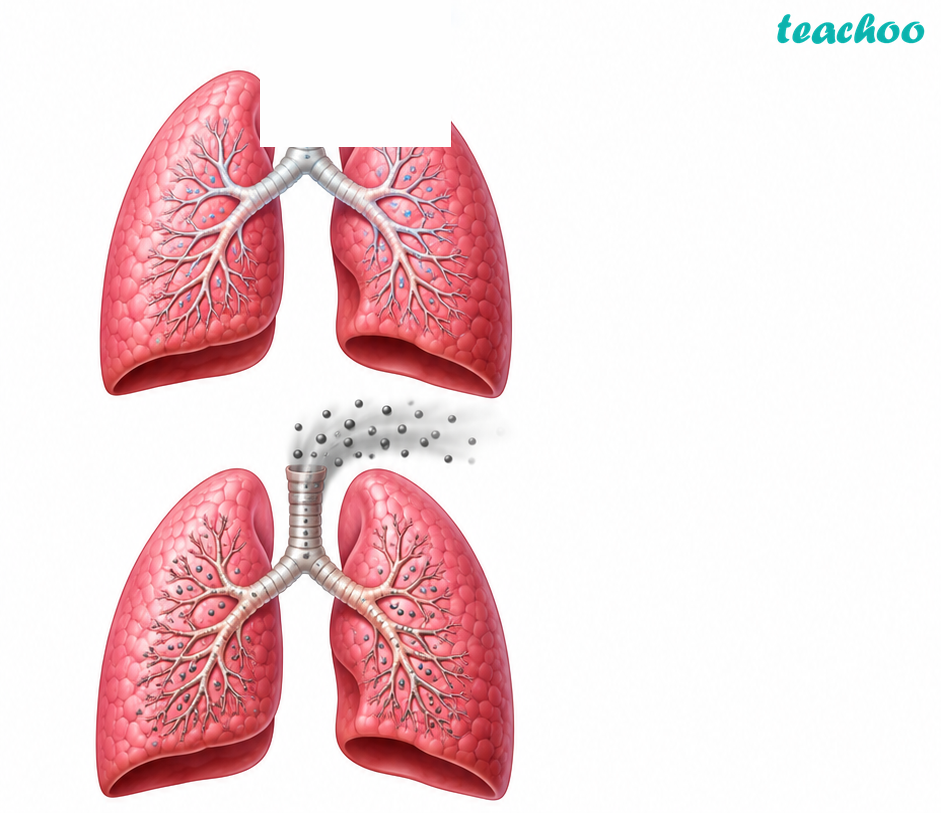
- In the lungs, the windpipe divides into branches that end in small balloon-like sacs called alveoli .
- Tiny hair and mucus in the nostrils trap dust and dirt — this is why we breathe through the nose, not the mouth.
Example 1 — Breathing After Running
- After running fast, you breathe harder and faster.
- Your muscles need more oxygen — so the respiratory system works harder.
- More air in means more oxygen reaches the muscles — breathing in action.
Example 2 — Why Nose Breathing Is Better
- Your nostrils have tiny hair and mucus that trap dust and bacteria.
- Breathing through the mouth skips this filtration.
- That is why it is healthier to breathe through the nose — it protects the lungs.
Important Points
- Breathing = process of inhaling and exhaling air.
- Respiratory system = body system for breathing and gas exchange.
- Pathway of air: nostrils → nasal passages → windpipe → lungs → alveoli.
- Nostrils filter dust and dirt using tiny hair and mucus.
Nostrils
A pair of nasal openings through which we inhale and exhale air.
Tiny hair and mucus inside trap dust and dirt from the air.
Tiny hair and mucus inside trap dust and dirt from the air.
Windpipe
The tube that carries air from the nasal passages to the lungs.
It divides into two branches — one entering each lung.
It divides into two branches — one entering each lung.
Alveoli
Small balloon-like sacs at the end of the lung branches.
Gas exchange happens here — oxygen enters the blood, carbon dioxide leaves.
Gas exchange happens here — oxygen enters the blood, carbon dioxide leaves.
Diaphragm
A dome-shaped muscle below the lungs.
It moves downward during inhalation (lungs expand) and upward during exhalation (lungs compress).
It moves downward during inhalation (lungs expand) and upward during exhalation (lungs compress).
Definition — Breathing
The process of inhaling and exhaling air.
It is a physical process — moving air in and out of the body.
It is a physical process — moving air in and out of the body.
Definition — Respiratory System
The body system that enables breathing and gas exchange.
It includes the nostrils, nasal passages, windpipe, lungs, alveoli, rib cage, and diaphragm.
It includes the nostrils, nasal passages, windpipe, lungs, alveoli, rib cage, and diaphragm.
🏥 Science and Society — COVID-19 and Respiratory Health
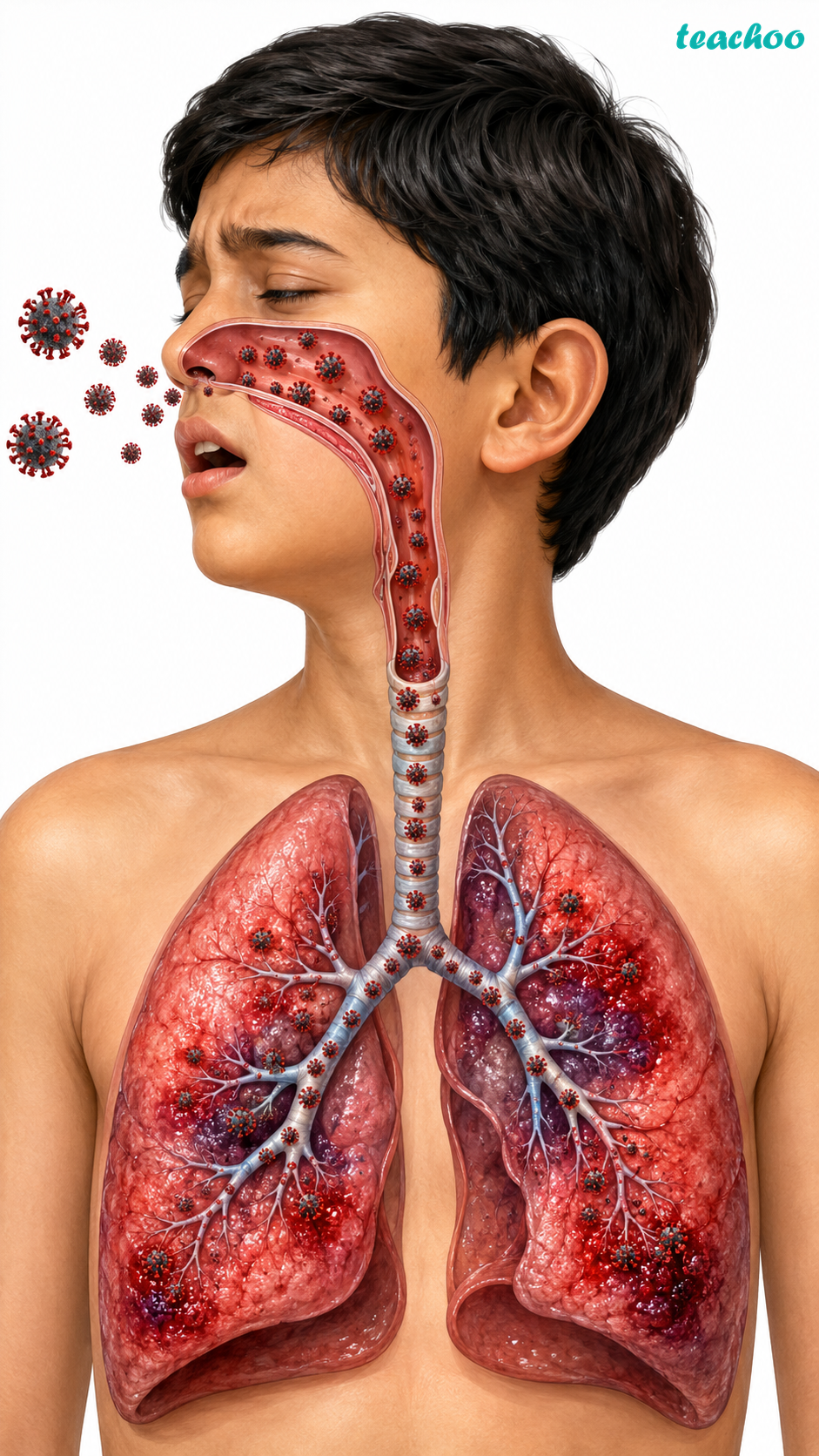
While most dust is filtered by the nostrils, tiny infectious particles can sometimes reach the lungs.
During the COVID-19 pandemic, the SARS-CoV-2 virus affected the respiratory system.
It led to breathing difficulties and serious lung problems in many people.
During the COVID-19 pandemic, the SARS-CoV-2 virus affected the respiratory system.
It led to breathing difficulties and serious lung problems in many people.
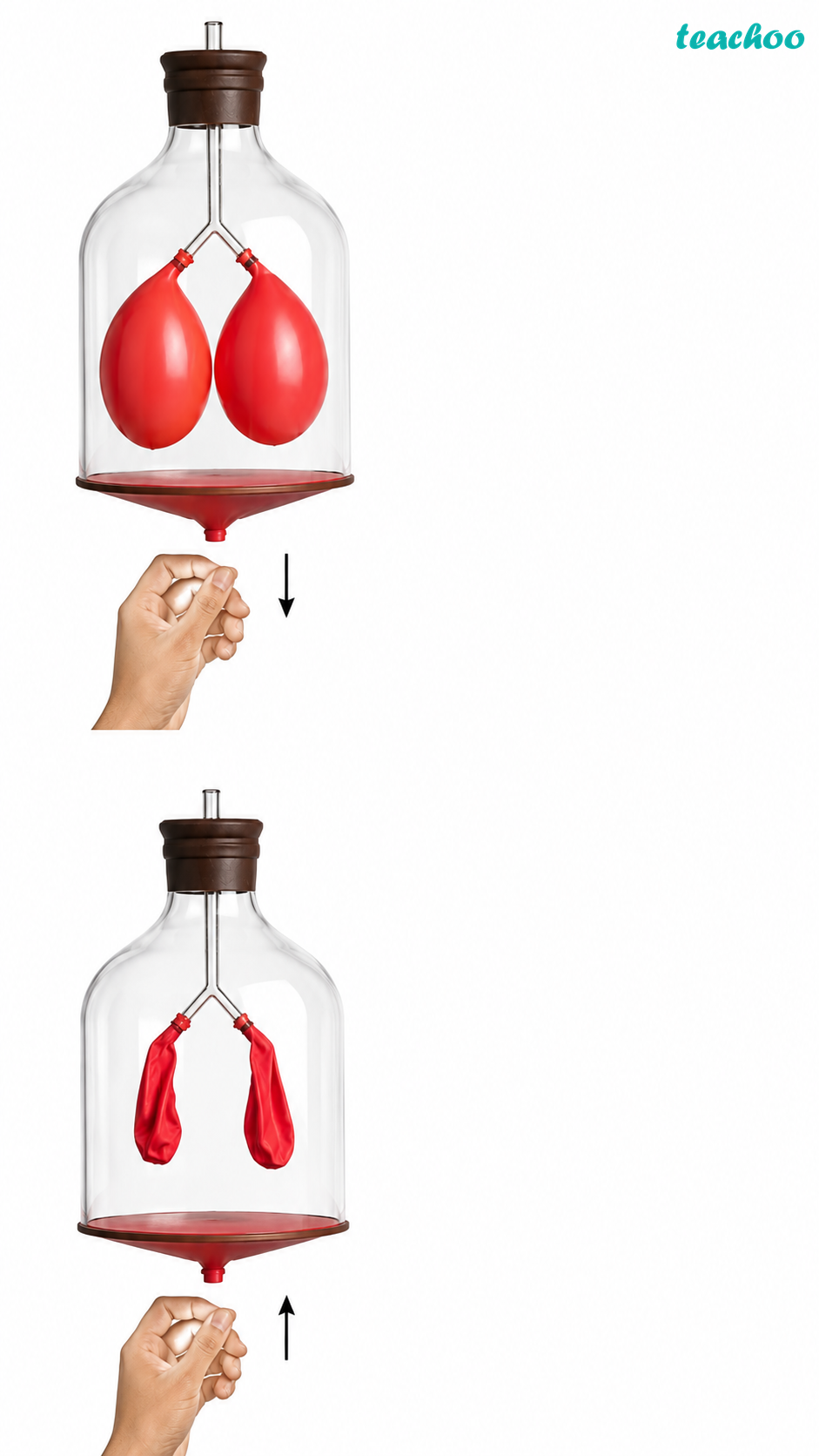
Materials needed
Wide transparent plastic bottle with a lid (bottom removed).
Y-shaped hollow tube.
Two deflated balloons and rubber bands.
Clay and a thin rubber sheet.
Y-shaped hollow tube.
Two deflated balloons and rubber bands.
Clay and a thin rubber sheet.
Procedure
Remove the bottom of the bottle. Make a hole in the lid.
Fix two deflated balloons to the forked end of the Y-tube. Secure with rubber bands to make airtight.
Insert the straight end of the tube through the lid. Seal with clay to make airtight.
Attach a thin rubber sheet tightly to the open base using a rubber band.
Pull the rubber sheet downward from the centre — observe the balloons.
Release the rubber sheet upward — observe the balloons again.
Fix two deflated balloons to the forked end of the Y-tube. Secure with rubber bands to make airtight.
Insert the straight end of the tube through the lid. Seal with clay to make airtight.
Attach a thin rubber sheet tightly to the open base using a rubber band.
Pull the rubber sheet downward from the centre — observe the balloons.
Release the rubber sheet upward — observe the balloons again.
Observation
When rubber sheet is pulled down: the balloons inflate.
When rubber sheet is released up: the balloons deflate.
When rubber sheet is released up: the balloons deflate.
Explanation
The balloons represent the lungs. The rubber sheet represents the diaphragm.
When the diaphragm moves down (inhalation): chest space increases and air enters the lungs.
When the diaphragm moves up (exhalation): chest space decreases and air is pushed out.
The ribs also move up and outward during inhalation, and down and inward during exhalation.
When the diaphragm moves down (inhalation): chest space increases and air enters the lungs.
When the diaphragm moves up (exhalation): chest space decreases and air is pushed out.
The ribs also move up and outward during inhalation, and down and inward during exhalation.
◆ Summary
- Balloons = lungs
- Rubber sheet = diaphragm
- Pull down = inhale (inflate)
- Release up = exhale (deflate)
Exhaled Air
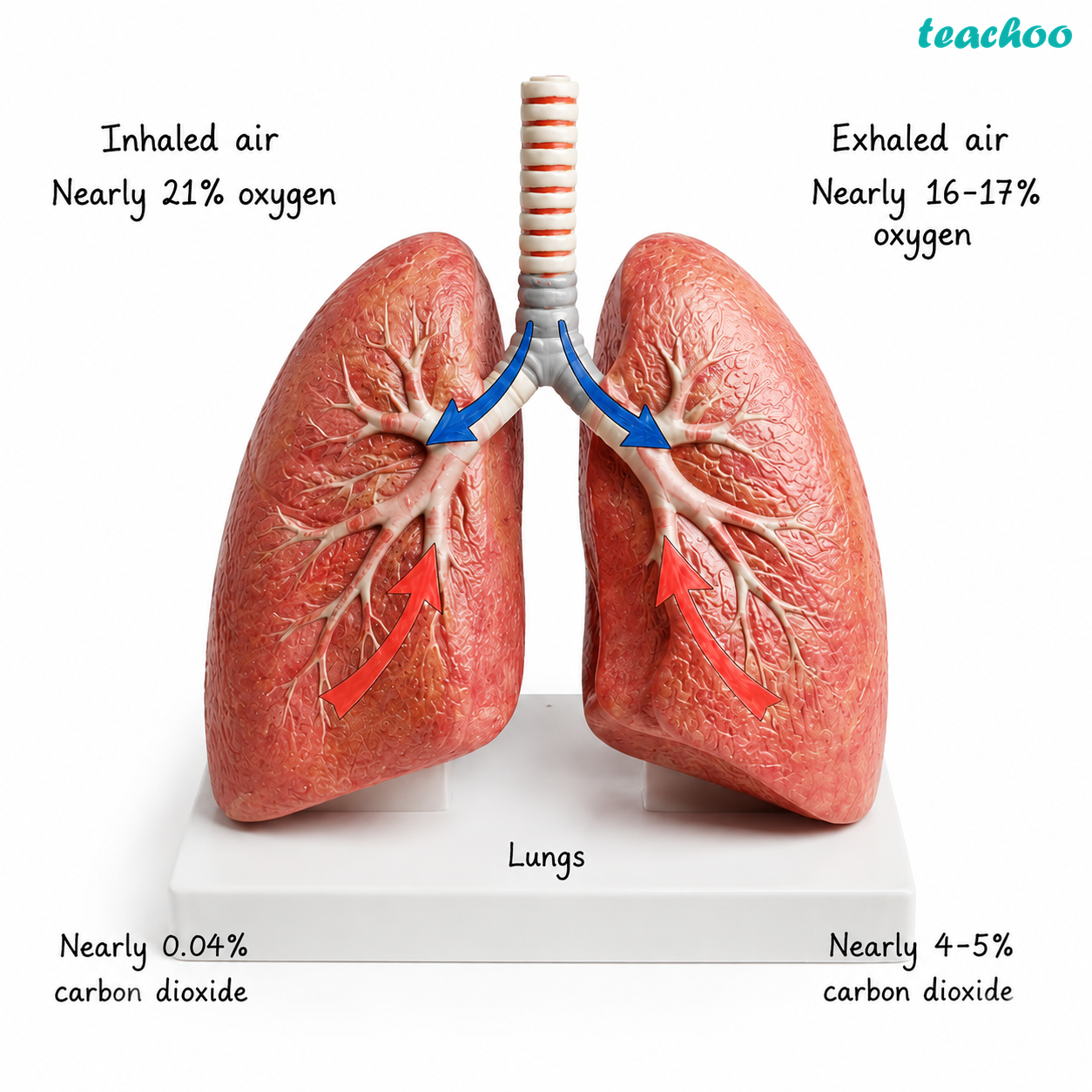
- We inhale air from our surroundings and exhale air with more carbon dioxide.
- Inhaled air has nearly 21% oxygen and 0.04% carbon dioxide.
- Exhaled air has nearly 16–17% oxygen and 4–5% carbon dioxide .
- Not all oxygen is used up — exhaled air still contains some oxygen.
Example 1 — Lime Water Turns Milky
- Blow into lime water through a straw — it turns milky.
- Lime water turns milky when it reacts with carbon dioxide.
- This shows exhaled air contains more carbon dioxide than inhaled air.
Example 2 — Inhaled vs Exhaled Air
- Inhaled air: ~21% oxygen, ~0.04% carbon dioxide.
- Exhaled air: ~16–17% oxygen, ~4–5% carbon dioxide.
- The body uses some oxygen and produces carbon dioxide — that is why exhaled air is different.
Important Points
- Exhaled air has more CO₂ and less O₂ than inhaled air.
- Lime water turns milky when it reacts with CO₂ — this is the test for carbon dioxide.
Note
To be demonstrated by the teacher.
Materials needed
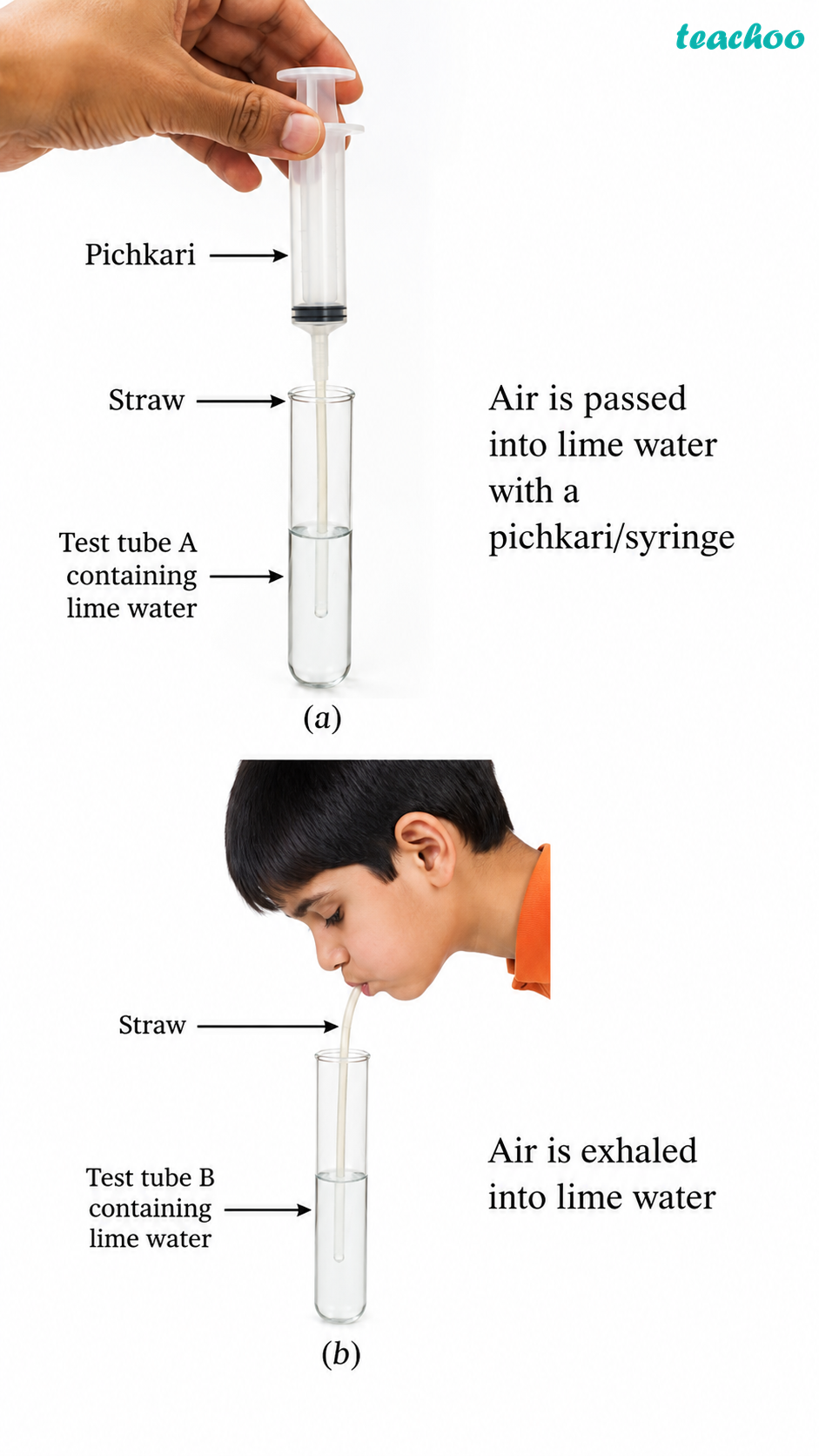
Two test tubes A and B with equal amounts of freshly prepared lime water.
A syringe or pichkari.
A straw.
A syringe or pichkari.
A straw.
Procedure
In test tube A, pass air using a syringe or pichkari (this is the air we inhale).
In test tube B, repeatedly blow exhaled air through the mouth into lime water using a straw.
Observe any changes in the colour of lime water in both test tubes.
In test tube B, repeatedly blow exhaled air through the mouth into lime water using a straw.
Observe any changes in the colour of lime water in both test tubes.
Observation
Test tube A: lime water does not change colour.
Test tube B: lime water turns milky (or cloudy).
Test tube B: lime water turns milky (or cloudy).
Explanation
Lime water turns milky when it reacts with carbon dioxide.
Test tube B turned milky — exhaled air contains more carbon dioxide than inhaled air.
Test tube A did not change — the air we inhale has very little carbon dioxide (~0.04%).
Test tube B turned milky — exhaled air contains more carbon dioxide than inhaled air.
Test tube A did not change — the air we inhale has very little carbon dioxide (~0.04%).
◆ Summary
- Tube A = no change (inhaled air)
- Tube B = milky (exhaled air)
- Lime water + CO₂ = turns milky
- Exhaled air has more CO₂
🏥 Science and Society — Breathing Practices for a Healthy Life
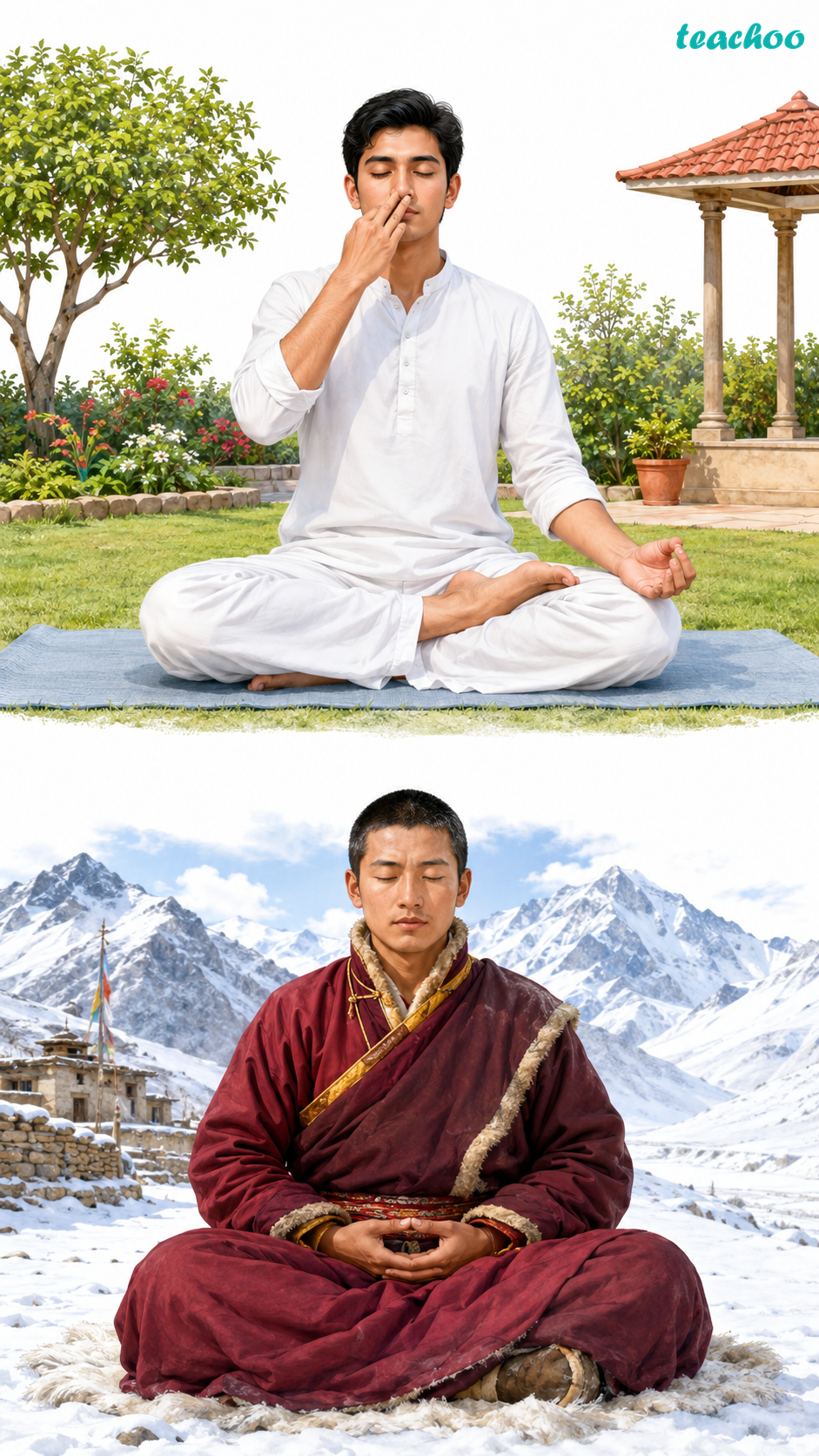
Breathing exercises have been practised across different cultures in India and worldwide for centuries.
Pranayama is well known for improving respiratory health, mind relaxation, and concentration.
In Ladakh, people practise Tummo breathing — a technique that improves lung function and keeps the body warm in cold weather.
Deep breathing techniques promote well-being. Some traditions combine deep breathing with chanting for relaxation and mental clarity.
Pranayama is well known for improving respiratory health, mind relaxation, and concentration.
In Ladakh, people practise Tummo breathing — a technique that improves lung function and keeps the body warm in cold weather.
Deep breathing techniques promote well-being. Some traditions combine deep breathing with chanting for relaxation and mental clarity.
Gas Exchange in the Alveoli
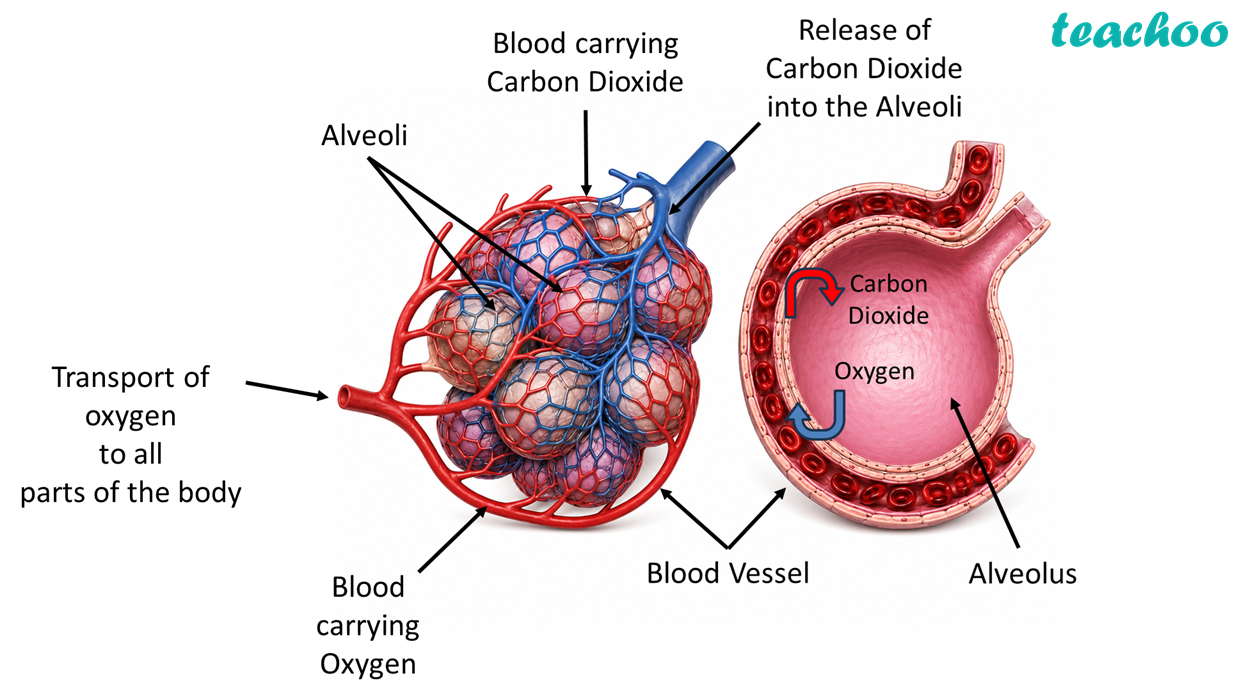
- Through breathing, fresh air fills the alveoli in the lungs.
- Alveoli have thin walls surrounded by fine tubes (blood vessels) containing blood.
- Oxygen from the alveoli passes into the blood.
- Blood carries carbon dioxide from the body to the alveoli — it is released into the air.
- Blood transports oxygen to all parts of the body.
Example 1 — Oxygen Entering the Blood
- Fresh air fills the alveoli in the lungs when you inhale.
- Oxygen passes through the thin alveolus walls into surrounding blood vessels.
- The blood carries oxygen to all body cells to release energy.
Example 2 — Carbon Dioxide Leaving the Body
- When cells use oxygen, they produce carbon dioxide as waste.
- Blood carries this carbon dioxide to the alveoli in the lungs.
- It is released into the alveoli and breathed out when you exhale.
Important Points
- Alveoli = tiny balloon-like sacs where gas exchange happens.
- Oxygen from alveoli enters the blood — blood carries it to the whole body.
- Carbon dioxide from the body enters the alveoli — breathed out during exhalation.
Definition — Alveoli
Small balloon-like sacs at the end of lung branches.
They have thin walls surrounded by blood vessels where gas exchange happens.
They have thin walls surrounded by blood vessels where gas exchange happens.
Respiration — Word Equation
Glucose
+
Oxygen
→
Carbon dioxide
+
Water
+
Energy
- When we eat food, the body breaks it down into simple substances like glucose (sugar).
- Oxygen helps break down glucose to release energy — this is respiration .
- Breathing is a physical process — moving air in and out of the body.
- Respiration is a chemical process — using oxygen to break down glucose inside the body.
Definition — Respiration
The process by which nutrients (glucose) are broken down using oxygen to release energy.
It is a chemical process that occurs inside every cell of the body.
Word equation: Glucose + Oxygen → Carbon dioxide + Water + Energy
It is a chemical process that occurs inside every cell of the body.
Word equation: Glucose + Oxygen → Carbon dioxide + Water + Energy
The Circulatory System
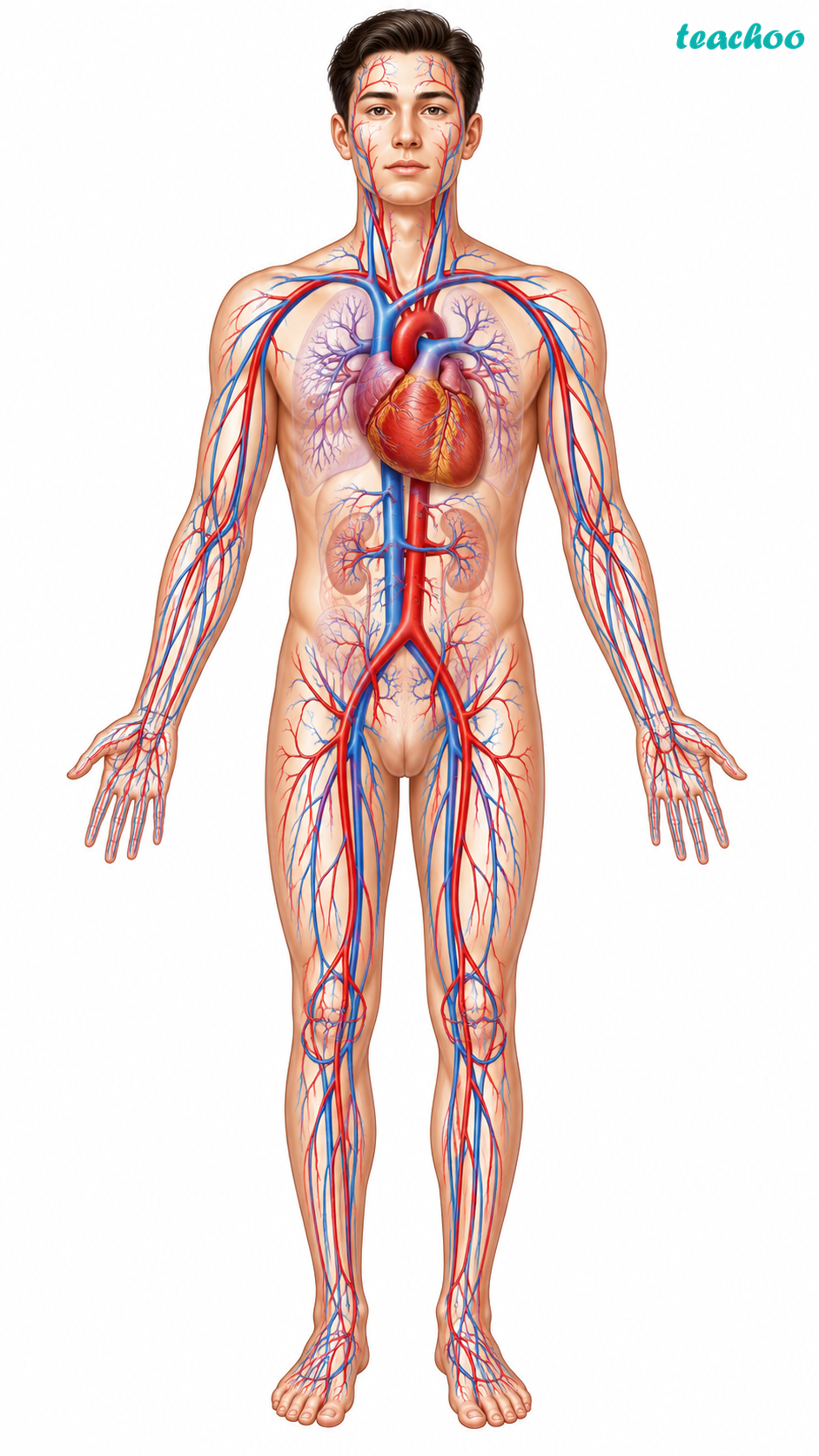
- The body has a unique system for transporting nutrients, oxygen, and other substances — the circulatory system .
- It includes the heart, blood, and blood vessels .
- The heart pumps blood through blood vessels to all parts of the body.
- Blood delivers nutrients and oxygen, and carries away waste products.
Definition — Circulatory System
The system that transports nutrients, oxygen, and other substances to all parts of the body.
It includes the heart, blood, and blood vessels.
It includes the heart, blood, and blood vessels.
🏥 Science and Society — Smoking Is Harmful
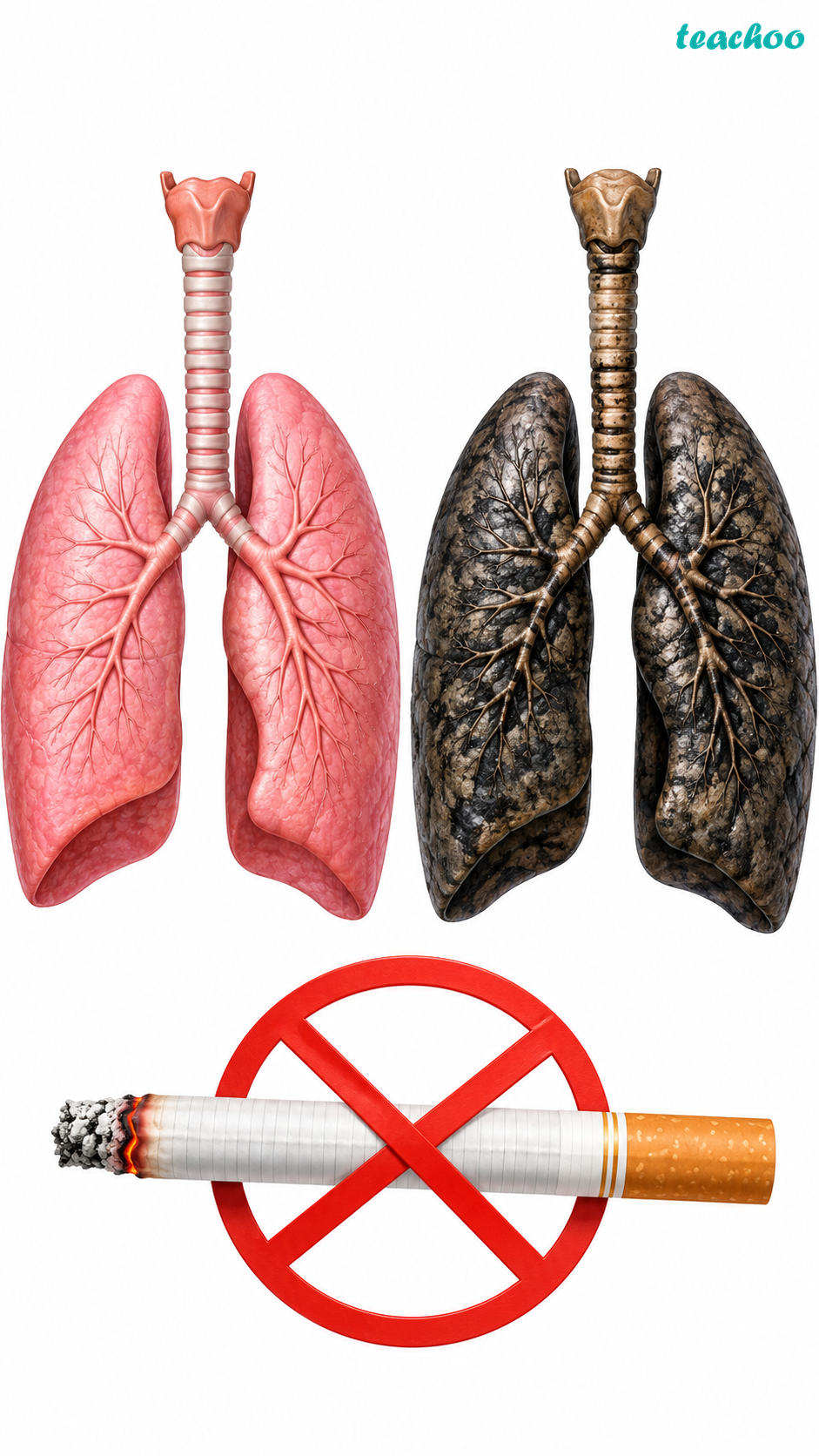
Smoking is extremely harmful to health. It damages the lungs and increases the risk of lung cancer and other respiratory illnesses.
It leads to persistent coughing and frequent infections.
Smoking also releases toxic chemicals into the air — non-smokers who breathe this experience passive smoking.
This is especially dangerous for children, pregnant women, and the elderly.
It leads to persistent coughing and frequent infections.
Smoking also releases toxic chemicals into the air — non-smokers who breathe this experience passive smoking.
This is especially dangerous for children, pregnant women, and the elderly.
✅ Test Yourself — Respiration in Humans
-
What is breathing?
View Answer
The process of inhaling and exhaling air. It is a physical process — moving air in and out of the body. -
What is the difference between breathing and respiration?
View Answer
Breathing is a physical process (moving air in and out). Respiration is a chemical process (using oxygen to break down glucose and release energy inside the body). -
What is the word equation for respiration?
View Answer
Glucose + Oxygen → Carbon dioxide + Water + Energy. -
What is the role of alveoli?
View Answer
Small balloon-like sacs in the lungs where gas exchange happens. Oxygen enters the blood and carbon dioxide leaves the blood here. -
What does exhaled air contain more of than inhaled air?
View Answer
Carbon dioxide. Exhaled air has ~4–5% CO₂ compared to ~0.04% in inhaled air.
📋 NCERT Question 3 — Role of Diaphragm in Breathing
What is the role of the diaphragm in breathing? (MCQ)
View Answer →
📋 NCERT Question 5 — Anil claims to his friend
Anil claims respiration and breathing are the same. What questions can Sanvi ask to show he is wrong?
View Answer →
📋 NCERT Question 6 — Which Statement Is Correct
Anu: We inhale air. Shanu: We inhale oxygen. Tanu: We inhale air rich in oxygen. Which is correct?
View Answer →
