
 You are here
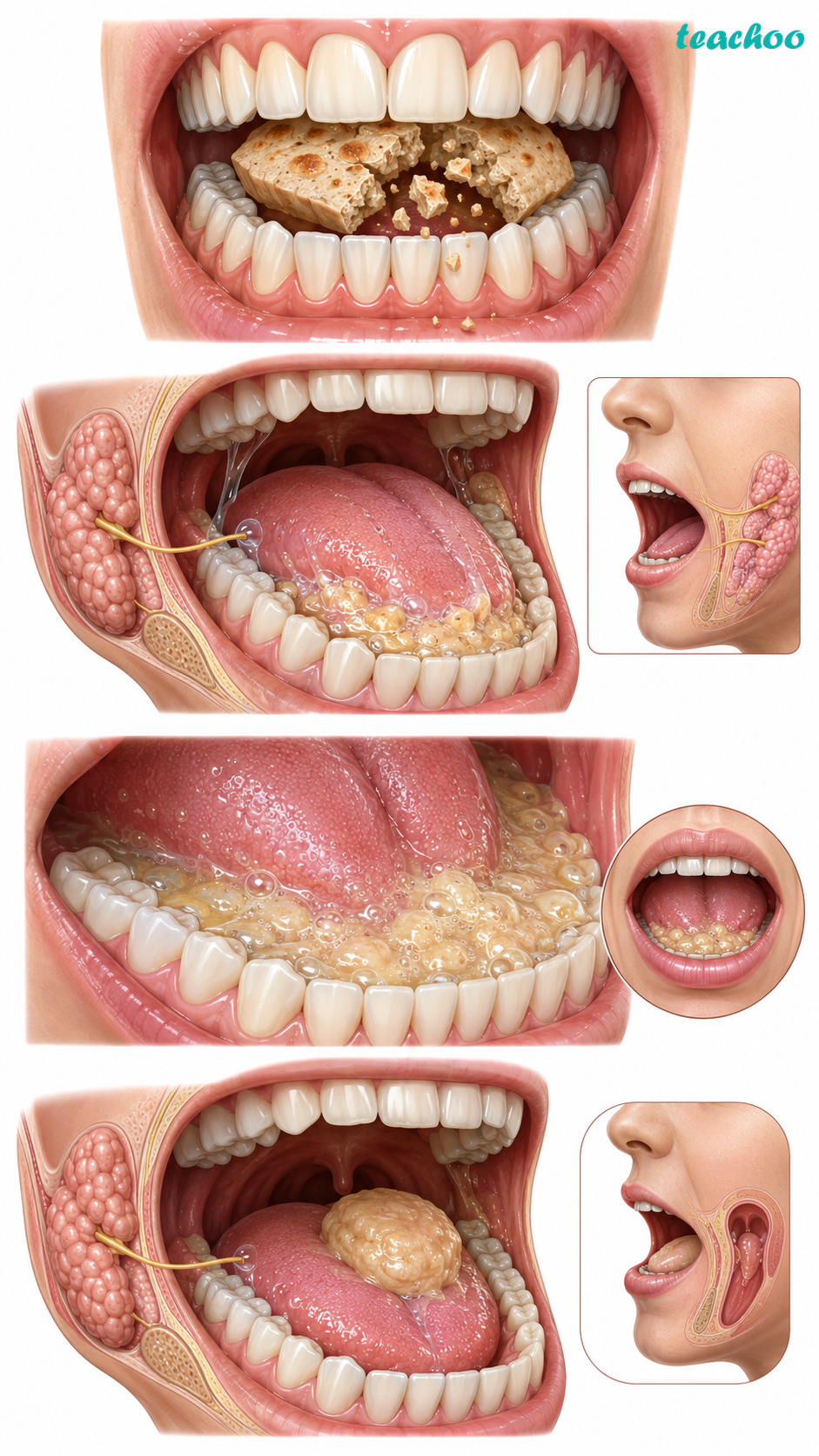
- Let us follow a piece of chapati as it travels through the body.
- Each stop has a specific job.
Stop 1 — The Mouth
- Food enters the mouth and the journey begins.
- Teeth crush and chew food into smaller pieces — this is called mechanical digestion .
- At the same time, saliva mixes with the food.
- Saliva contains a digestive juice that breaks starch into sugar .
- That is why chapati tastes sweet when you chew it for a long time!
Example 1 — Chewing Chapati
- Chew a piece of chapati for 30 seconds.
- It starts tasting sweet.
- Saliva broke the starch in the chapati into sugar — that is the sweetness you taste.
Example 2 — Chewing Boiled Rice
- Chew plain boiled rice for 30–60 seconds.
- It also starts tasting sweeter.
- Rice contains starch too — saliva converts it into sugar, just like chapati.
Important Points
- Mechanical digestion = teeth breaking food into smaller pieces.
- Saliva = digestive juice that breaks starch into sugar.
- Saliva also moistens food, making it soft and easy to swallow.
Definition — Mechanical Digestion
Breaking of food into smaller pieces by the teeth.
It is the first step of digestion and happens in the mouth.
It is the first step of digestion and happens in the mouth.
🏥 Science and Society — Oral Hygiene
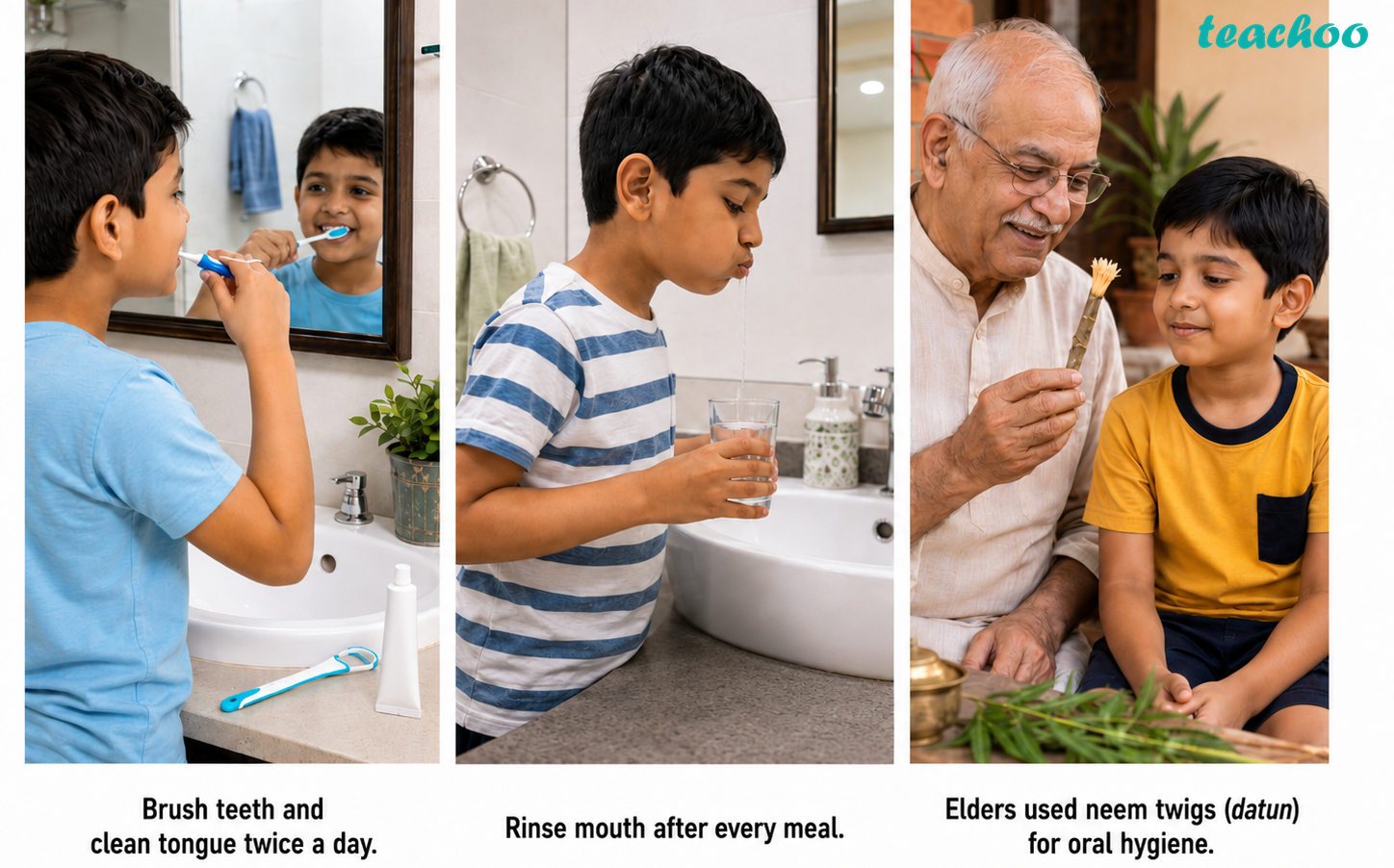
A healthy mouth needs good oral hygiene.
Brush teeth and clean tongue twice a day.
Rinse mouth with water after every meal — this prevents tooth decay and bad smell.
Find out how your elders maintained oral hygiene — they may have used neem twigs (datun)!
Brush teeth and clean tongue twice a day.
Rinse mouth with water after every meal — this prevents tooth decay and bad smell.
Find out how your elders maintained oral hygiene — they may have used neem twigs (datun)!
Materials needed
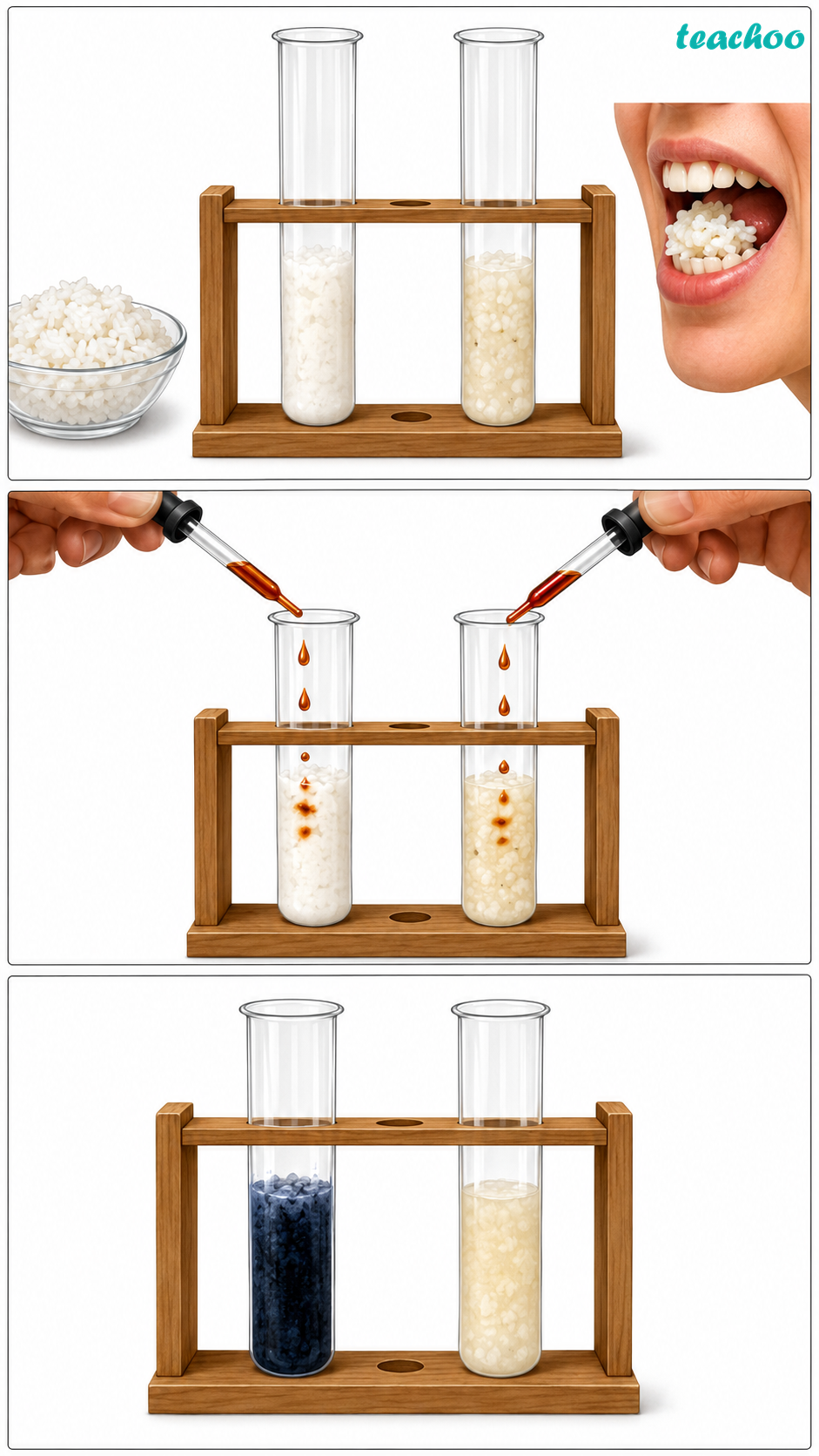
Two test tubes labelled A and B.
Boiled rice.
Water (3–4 mL for each tube).
Iodine solution.
Dropper.
Boiled rice.
Water (3–4 mL for each tube).
Iodine solution.
Dropper.
Procedure
Take one teaspoonful of boiled rice in test tube A.
Take a teaspoonful of boiled rice after chewing it for 30–60 seconds in test tube B.
Add 3–4 mL of water to both test tubes.
Note the initial colour of the rice-water mixture in Table 9.1.
Add 3–4 drops of iodine solution into each test tube using a dropper.
Mix the contents of each test tube separately and observe.
Record your observations in Table 9.1.
Take a teaspoonful of boiled rice after chewing it for 30–60 seconds in test tube B.
Add 3–4 mL of water to both test tubes.
Note the initial colour of the rice-water mixture in Table 9.1.
Add 3–4 drops of iodine solution into each test tube using a dropper.
Mix the contents of each test tube separately and observe.
Record your observations in Table 9.1.
Table 9.1 — Action of Saliva on Starch
| Test Tube | Initial Colour (Before Iodine) | Final Colour (After Iodine) | Possible Reason |
|---|---|---|---|
| A: Boiled rice (not chewed) | White/cream | Blue-black | Starch is present — iodine reacts with starch to give blue-black colour |
| B: Chewed boiled rice | White/cream | No change or very light blue-black | Starch broken down by saliva into sugar — little or no starch remains |
Observation
Test tube A turned blue-black after iodine was added.
Test tube B showed no colour change, or only a very light blue-black.
Test tube B showed no colour change, or only a very light blue-black.
Explanation
Iodine turns blue-black when starch is present.
Test tube A still has starch — no saliva acted on it — so it turns blue-black.
Test tube B: saliva broke the starch into sugar — no starch left — no colour change.
If colour still appears in test tube B, try chewing for a longer time and repeat the activity.
Test tube A still has starch — no saliva acted on it — so it turns blue-black.
Test tube B: saliva broke the starch into sugar — no starch left — no colour change.
If colour still appears in test tube B, try chewing for a longer time and repeat the activity.
◆ Summary
- Blue-black = starch present
- No colour = starch broken down
- Saliva converts starch to sugar
- Digestion begins in the mouth
Definition — Digestion
Breaking of complex food components into simpler forms in the body.
It starts in the mouth and continues through the alimentary canal.
Food is partially digested in the mouth.
It starts in the mouth and continues through the alimentary canal.
Food is partially digested in the mouth.
- Food is partially digested in the mouth.
- Let us follow this partially digested food further through the alimentary canal.
✅ Test Yourself — The Mouth
-
What is the role of teeth in digestion?
View Answer
Teeth crush and chew food into smaller pieces. This is called mechanical digestion — the first step of digestion. -
Why does chapati taste sweet after long chewing?
View Answer
Saliva contains a digestive juice that breaks starch into sugar. Chapati has starch, so it tastes sweet when chewed long enough. -
What two things start happening the moment food enters the mouth?
View Answer
Teeth begin crushing food (mechanical digestion) and saliva begins breaking starch into sugar at the same time. -
What does saliva do apart from breaking starch?
View Answer
Saliva also moistens food, making it soft and easy to swallow. -
What is mechanical digestion?
View Answer
Breaking of food into smaller pieces by the teeth. It is the first step of digestion and happens in the mouth.
Stop 2 — The Food Pipe (Oesophagus)
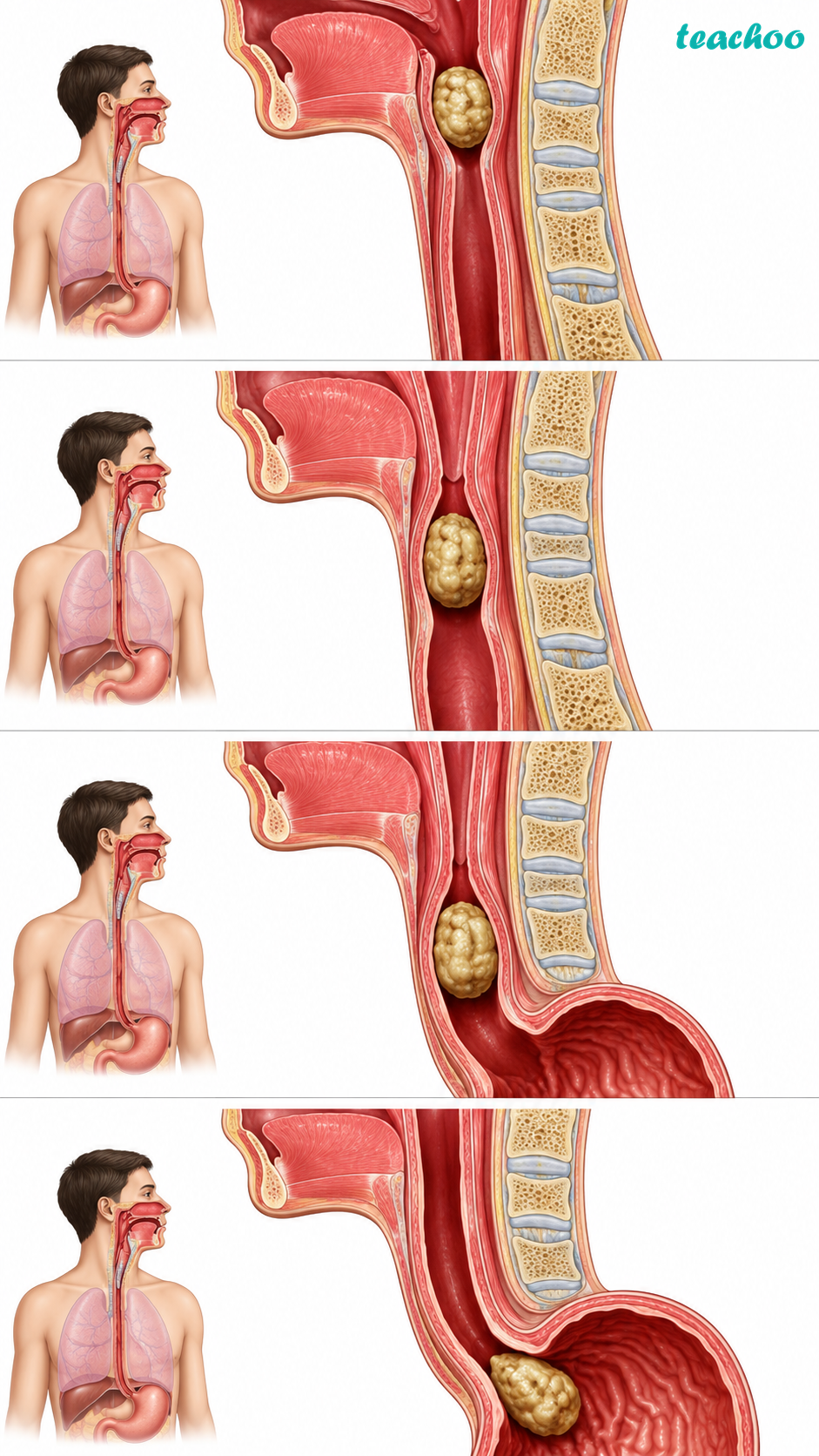
- Saliva moistens food, making it soft and easy to swallow.
- The tongue mixes chewed food with saliva and pushes it into the food pipe (oesophagus).
- The walls of the food pipe contract and relax in a wave-like motion .
- This pushes the food down into the stomach.
- This wave-like movement happens throughout the alimentary canal and pushes food forward.
Example 1 — A Piece of Chapati
- The tongue pushes chewed chapati into the food pipe.
- The walls of the food pipe squeeze and relax in waves.
- This wave-like motion carries the chapati down to the stomach.
Example 2 — Swallowing While Lying Down
- Even when you lie down, you can still swallow food.
- The wave-like motion of the food pipe walls pushes food to the stomach without gravity.
- This shows the wave-like movement works regardless of your position.
Important Points
- Oesophagus = food pipe that connects mouth to stomach.
- Wave-like motion of walls pushes food forward throughout the alimentary canal.
Definition — Oesophagus
The food pipe — a long, flexible tube connecting the mouth to the stomach.
Food moves through it by wave-like contraction and relaxation of its walls.
Food moves through it by wave-like contraction and relaxation of its walls.
Stop 3 — The Stomach
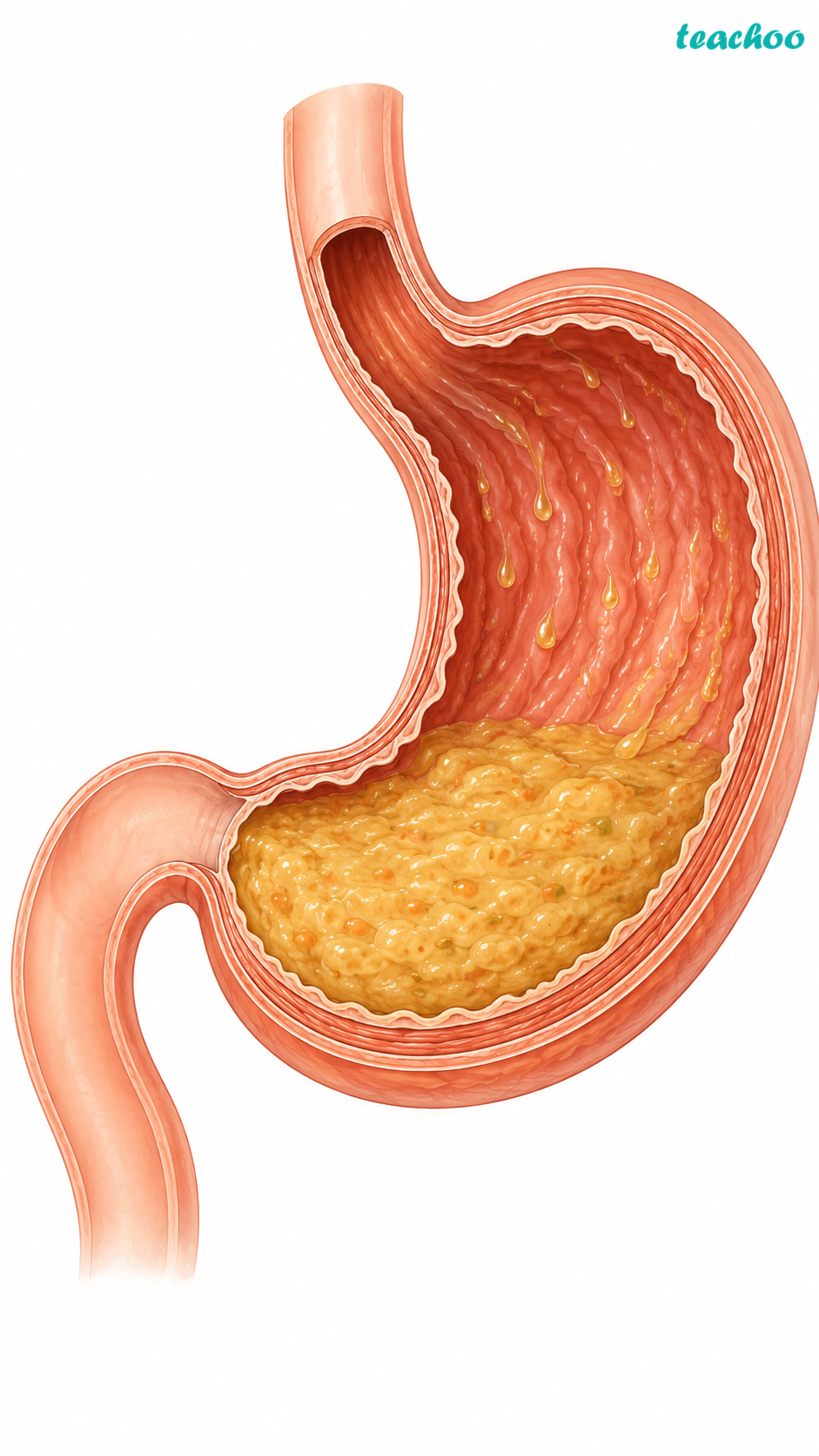
- The stomach walls contract and relax to churn the food.
- The churned food is mixed with a secretion from the inner lining of the stomach.
- This secretion contains three things: digestive juice, acid, and mucus .
- Food is partially digested here and becomes a semi-liquid mass.
Example 1 — Dal in the Stomach
- Dal (protein-rich) enters the stomach and gets churned.
- Digestive juice breaks down the proteins into simpler components.
- Acid helps further and also kills harmful bacteria in the food.
Example 2 — Why Mucus Matters
- The stomach produces acid to digest food.
- Mucus coats the stomach lining and protects it from the acid.
- Without mucus, the stomach wall would be harmed by its own acid!
Important Points
- Digestive juice = breaks down proteins in food into simpler components.
- Acid = helps break proteins and kills many harmful bacteria.
- Mucus = protects the stomach lining from the acid.
Digestive Juice
It breaks down proteins present in food into simpler components.
Acid
It helps break down proteins further.
It also kills many harmful bacteria present in the food.
It also kills many harmful bacteria present in the food.
Mucus
It protects the stomach lining from the acid.
Without it, the stomach would start digesting itself!
Without it, the stomach would start digesting itself!
🔬 Fascinating Fact — How Did Scientists Learn About Digestion?
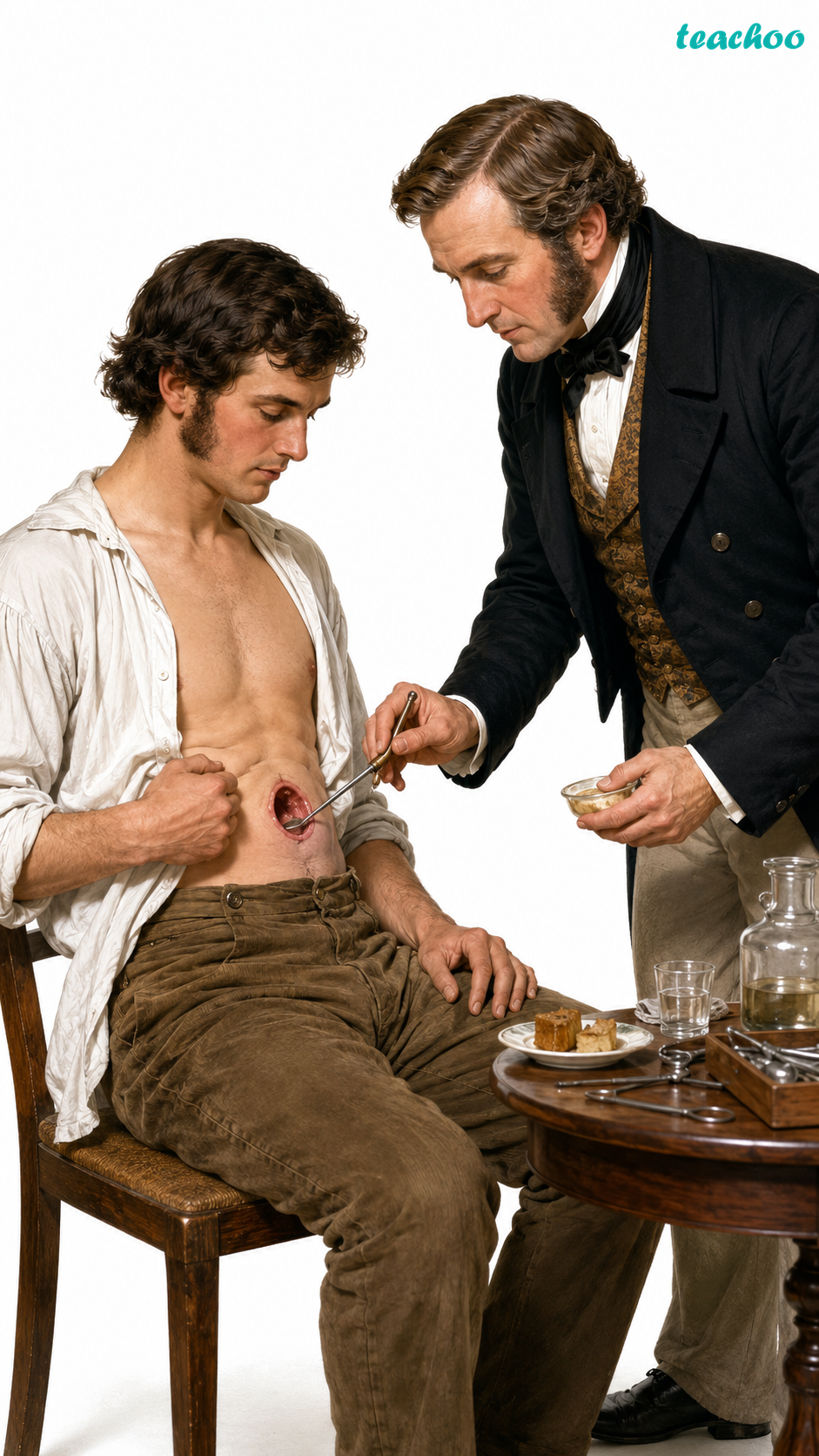
In 1822, a man named Alexis St. Martin was accidentally shot in the stomach.
He was treated by Dr. William Beaumont.
His wound never fully healed — it left a small permanent hole in his stomach.
Dr. Beaumont used this opening to observe digestion as it happened.
He studied how different foods were broken down and how emotions affect digestion.
He was treated by Dr. William Beaumont.
His wound never fully healed — it left a small permanent hole in his stomach.
Dr. Beaumont used this opening to observe digestion as it happened.
He studied how different foods were broken down and how emotions affect digestion.
Stop 4 — The Small Intestine
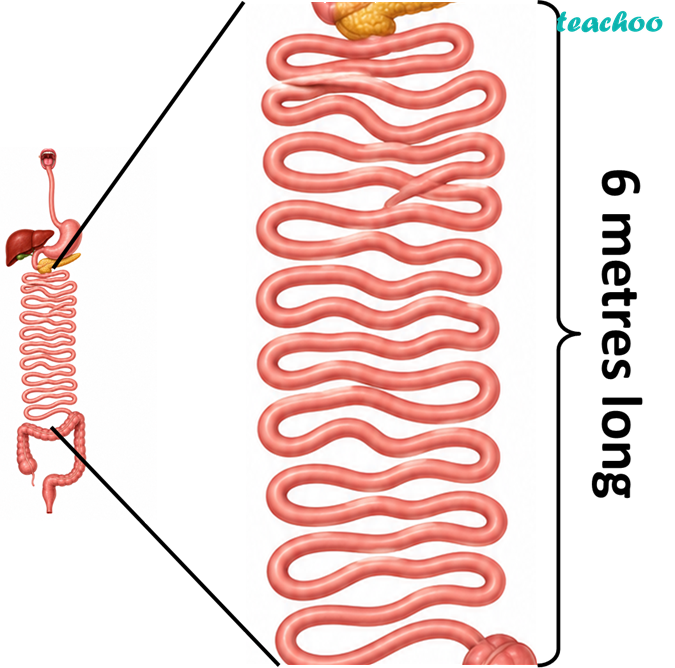
- After the stomach, partially digested food moves into the small intestine.
- The small intestine is almost 6 metres long — almost twice the height of your classroom!
- It receives digestive secretions from three sources: its own inner lining, the liver , and the pancreas .
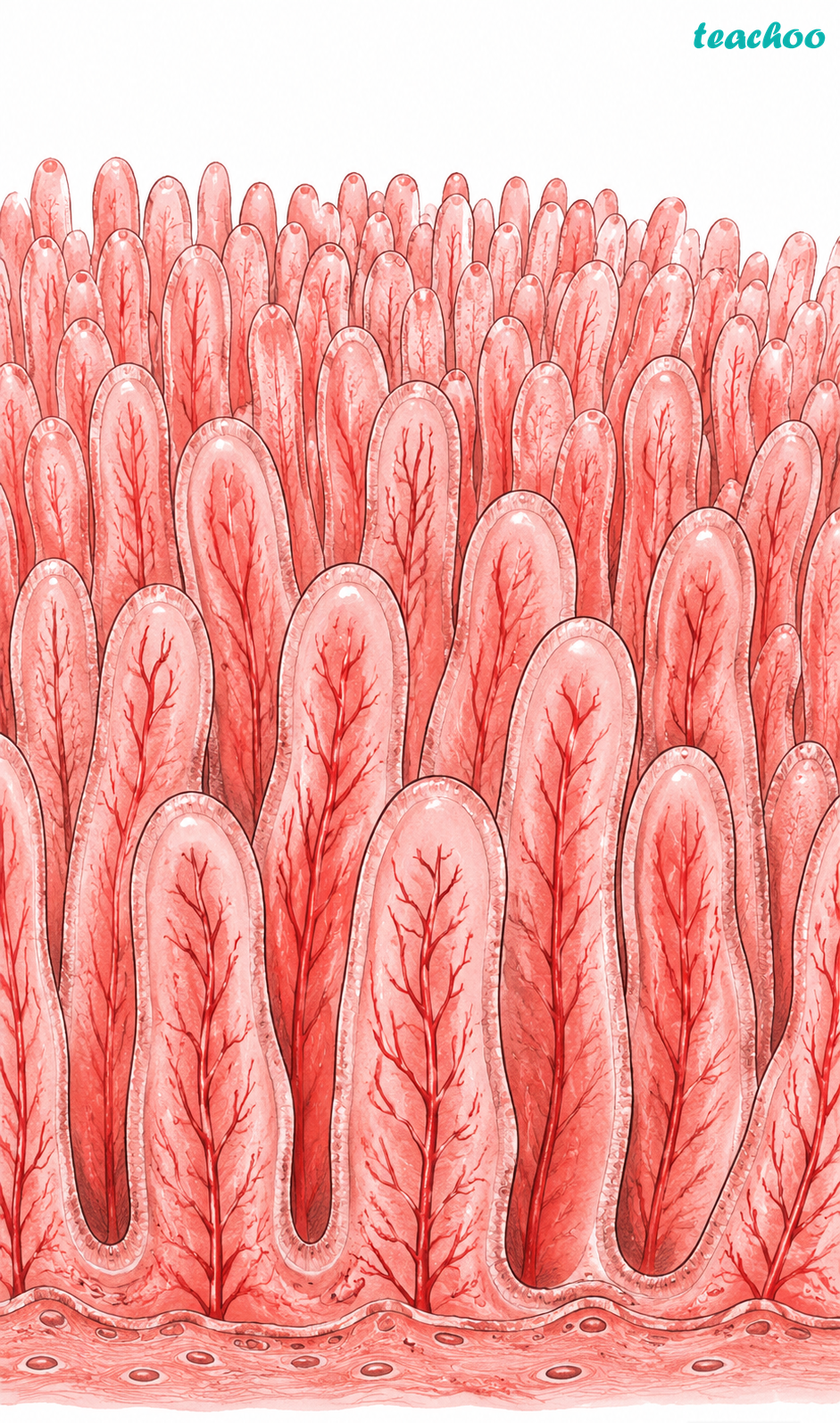
- The inner lining has thousands of finger-like projections that increase the surface area for absorption.
- Digested nutrients pass through these projections into the blood.
Example 1 — Dal (Protein) in the Small Intestine
- Dal enters the small intestine after partial digestion in the stomach.
- Pancreatic juice and digestive juice break its proteins into simple pieces.
- The simple pieces pass through the finger-like projections into the blood.
Example 2 — Ghee (Fat) in the Small Intestine
- Ghee (fat) enters the small intestine.
- Bile from the liver breaks it into tiny droplets — making it easier to digest.
- Digestive juice then breaks the droplets into simple forms that enter the blood.
Important Points
- Bile (from liver) = neutralises acids and breaks fats into tiny droplets.
- Pancreatic juice = breaks carbohydrates, proteins, and fats into simpler forms.
- Finger-like projections = increase surface area for efficient absorption.
- Absorption = digested nutrients pass into blood through the small intestine walls.
Bile
It is secreted by the liver.
It is mildly basic — it neutralises acid from the stomach.
It breaks fats into tiny droplets, making digestion easier.
It is mildly basic — it neutralises acid from the stomach.
It breaks fats into tiny droplets, making digestion easier.
Pancreatic Juice
It is secreted by the pancreas.
It is also basic and helps neutralise acids.
It breaks down carbohydrates, proteins, and fats.
It is also basic and helps neutralise acids.
It breaks down carbohydrates, proteins, and fats.
Finger-like Projections
The inner lining of the small intestine has thousands of these projections.
They increase the surface area for efficient nutrient absorption.
Digested nutrients pass through them into the blood.
Blood carries these nutrients to different parts of the body.
They increase the surface area for efficient nutrient absorption.
Digested nutrients pass through them into the blood.
Blood carries these nutrients to different parts of the body.
Definition — Absorption of Nutrients
The process by which digested nutrients pass from the small intestine into the blood.
Blood then carries nutrients to different parts of the body.
Blood then carries nutrients to different parts of the body.
🏥 Science and Society — Celiac Disease
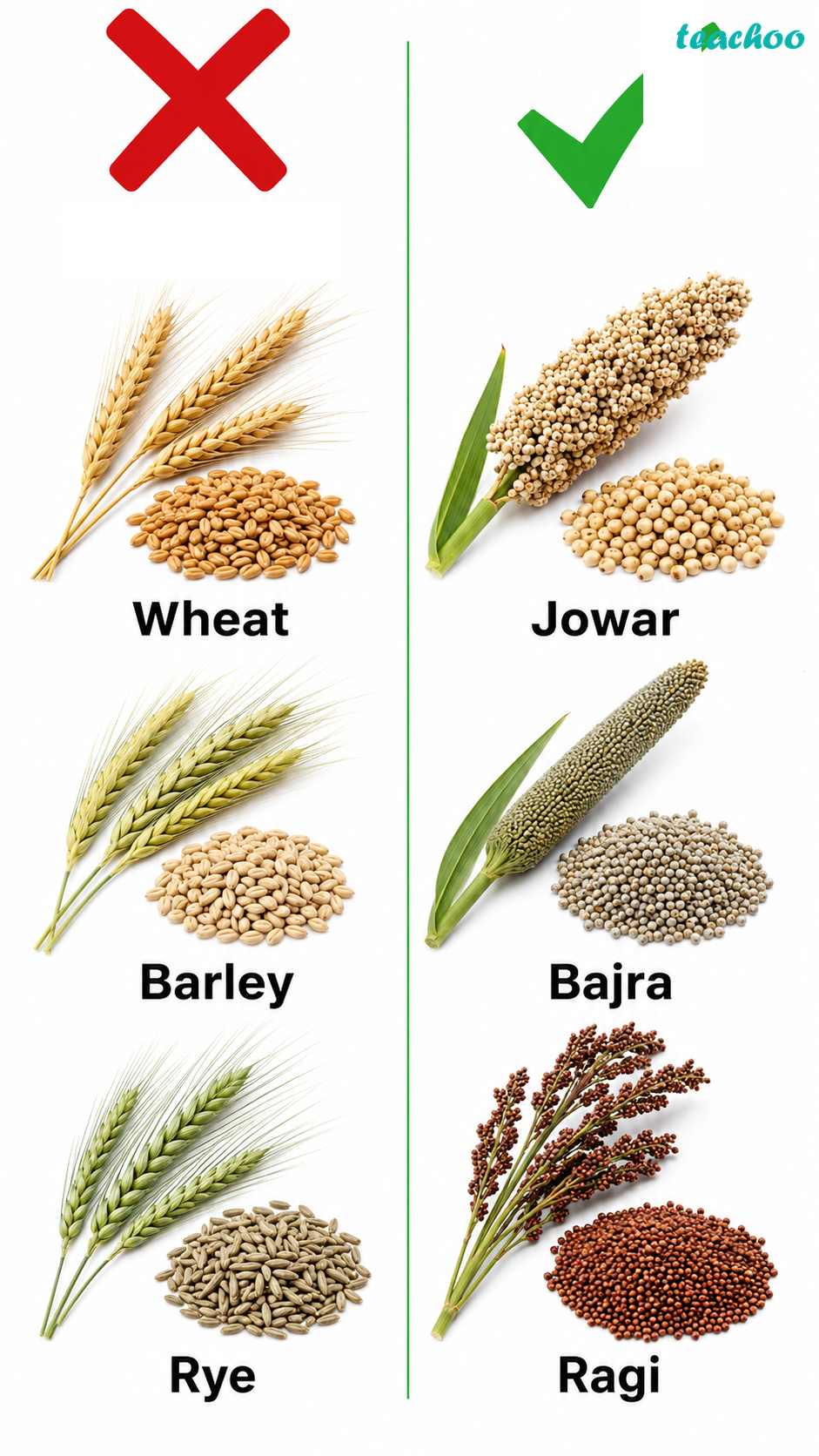
Celiac disease is a condition where the body reacts to
gluten
— a protein found in wheat, barley, and rye.
This reaction damages the inner lining of the small intestine.
As a result, the intestine cannot absorb nutrients properly.
The only way to manage it is to avoid foods with gluten.
Millets like jowar, bajra, and ragi are good alternatives — they are naturally gluten-free.
This reaction damages the inner lining of the small intestine.
As a result, the intestine cannot absorb nutrients properly.
The only way to manage it is to avoid foods with gluten.
Millets like jowar, bajra, and ragi are good alternatives — they are naturally gluten-free.
Stop 5 — The Large Intestine
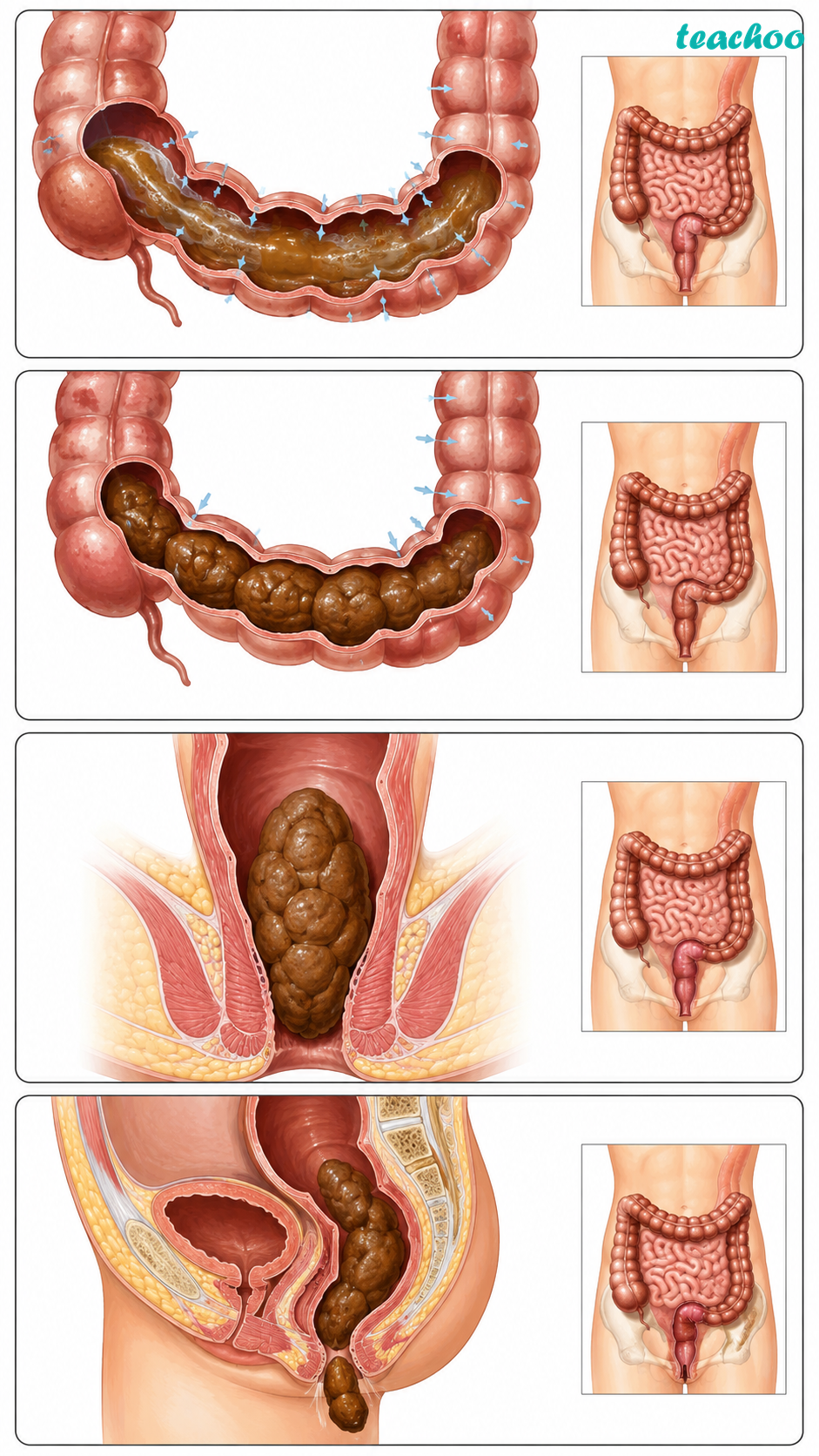
- After most nutrients are absorbed, undigested food moves into the large intestine.
- The large intestine is about 1.5 metres long — shorter but wider than the small intestine.
- It absorbs water and some salts from the undigested food.
- The remaining waste becomes semi-solid — this is called stool .
- Stool is stored in the rectum until it is expelled through the anus — called egestion .
Example 1 — Undigested Food in the Large Intestine
- Undigested food (fibre, water, salts) enters the large intestine.
- Water and salts are absorbed — the waste becomes semi-solid stool.
- Stool is stored in the rectum and expelled through the anus as egestion.
Example 2 — Why Is It Called the LARGE Intestine?
- The large intestine is only about 1.5 metres — shorter than the 6-metre small intestine.
- But it is much wider than the small intestine.
- It is called "large" because of its width, not its length!
Important Points
- Large intestine = absorbs water and salts from undigested food.
- Stool = semi-solid waste formed after water absorption.
- Rectum = lower part of large intestine where stool is stored.
- Egestion = expulsion of waste through the anus.
Definition — Egestion
The expulsion of undigested waste from the body through the anus.
It is the final step of digestion.
It is the final step of digestion.
🔬 Fascinating Fact — Gut Bacteria
The large intestine contains many tiny living organisms, including bacteria, that help in digestion.
They break down undigested food, especially fibre, and produce essential nutrients.
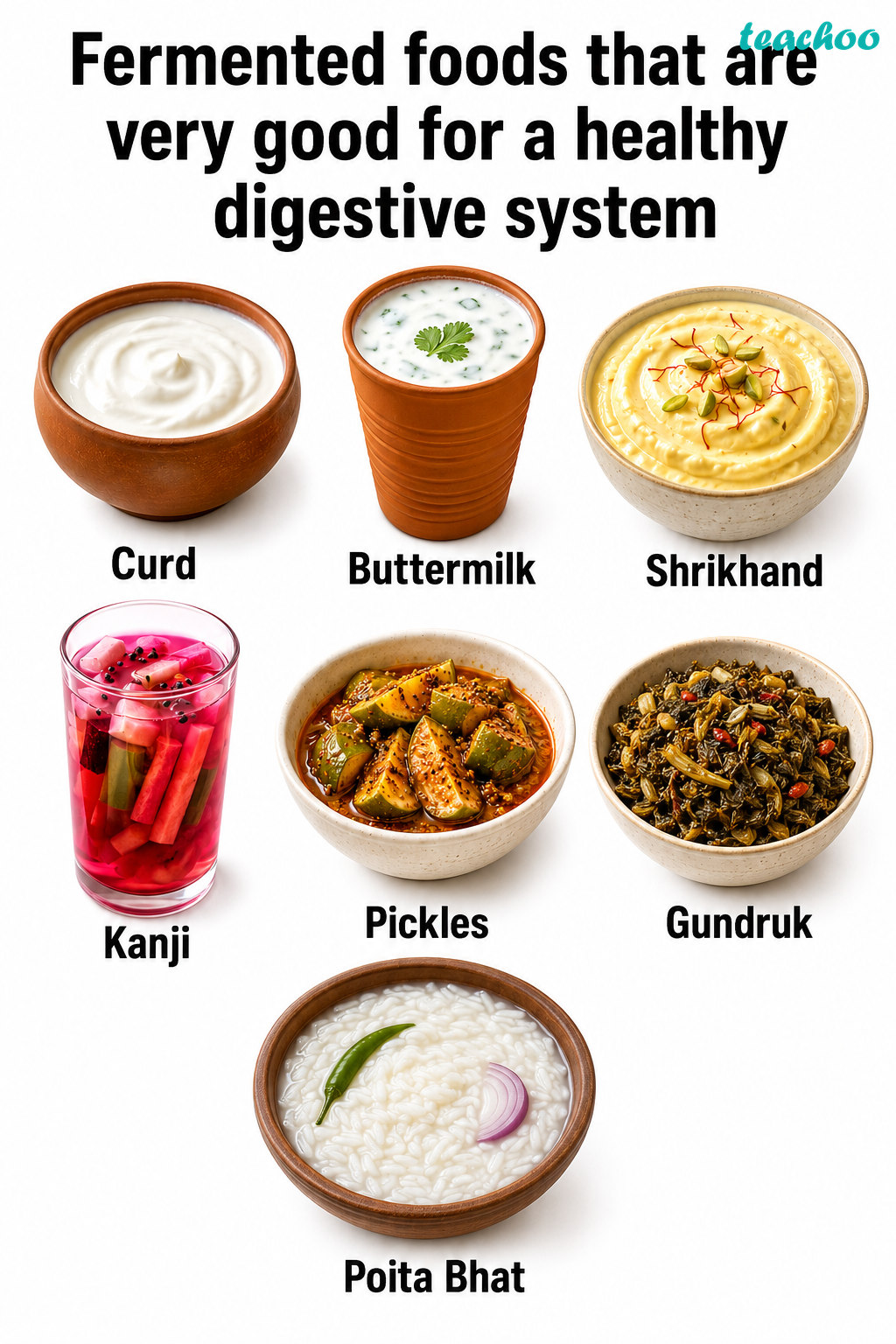
Fermented foods like curd, buttermilk, shrikhand, kanji, pickles, gundruk, and poita bhat are very good for a healthy digestive system.
They break down undigested food, especially fibre, and produce essential nutrients.
Fermented foods like curd, buttermilk, shrikhand, kanji, pickles, gundruk, and poita bhat are very good for a healthy digestive system.
🏥 Science and Society — Ancient Wisdom on Digestion
The
Charaka Samhita
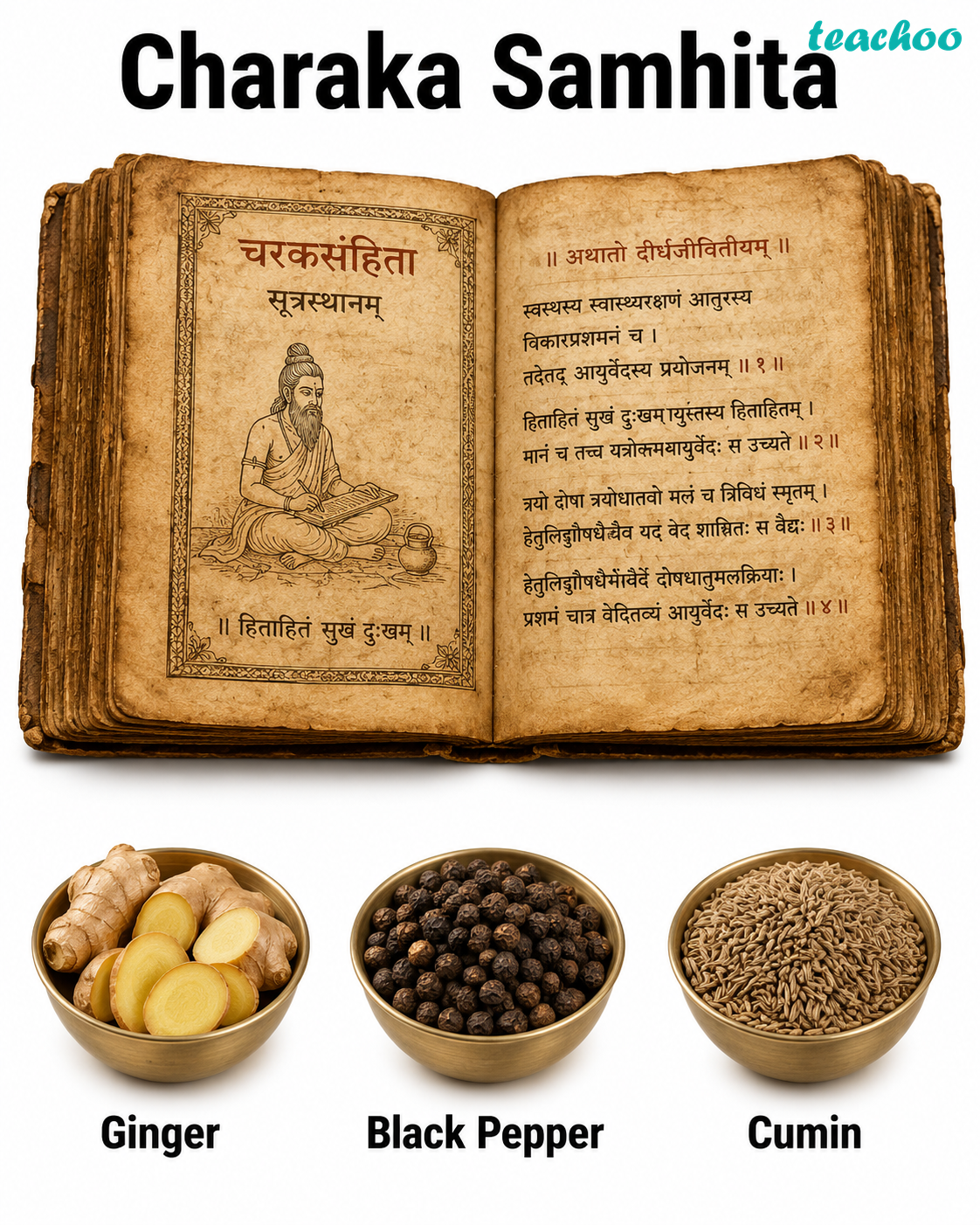
, an ancient Ayurvedic text, highlights the role of easily digestible foods.
It recommends spices like ginger, black pepper, and cumin to enhance digestion.
Modern science also emphasises eating at proper timings, mindful eating, and avoiding overeating.
Eating fibre-rich foods like fruits, vegetables, and whole grains helps the large intestine function properly.
It recommends spices like ginger, black pepper, and cumin to enhance digestion.
Modern science also emphasises eating at proper timings, mindful eating, and avoiding overeating.
Eating fibre-rich foods like fruits, vegetables, and whole grains helps the large intestine function properly.
✅ Test Yourself — Digestion in Humans
-
What is mechanical digestion?
View Answer
Breaking of food into smaller pieces by the teeth. It is the first step of digestion and happens in the mouth. -
What does saliva do in the mouth?
View Answer
It breaks starch into sugar. It also moistens food, making it soft and easy to swallow. -
Name the three things the stomach mixes with food.
View Answer
Digestive juice (breaks proteins), acid (kills bacteria, breaks proteins), and mucus (protects stomach lining). -
What are the three sources of digestive secretions in the small intestine?
View Answer
The inner lining of the small intestine itself, the liver (bile), and the pancreas (pancreatic juice). -
What is egestion?
View Answer
The expulsion of undigested waste (stool) through the anus. It is the final step of digestion.
📋 NCERT Question 1 — Complete the journey of food
Complete the journey: Food → Mouth → __ → Stomach → __ → __ → Anus
View Answer →
📋 NCERT Question 2 — Sahil placed some pieces of
What would Sahil (chapati), Neha (chewed chapati), and Santushti (boiled potato) observe after adding iodine?
View Answer →
