
 You are here
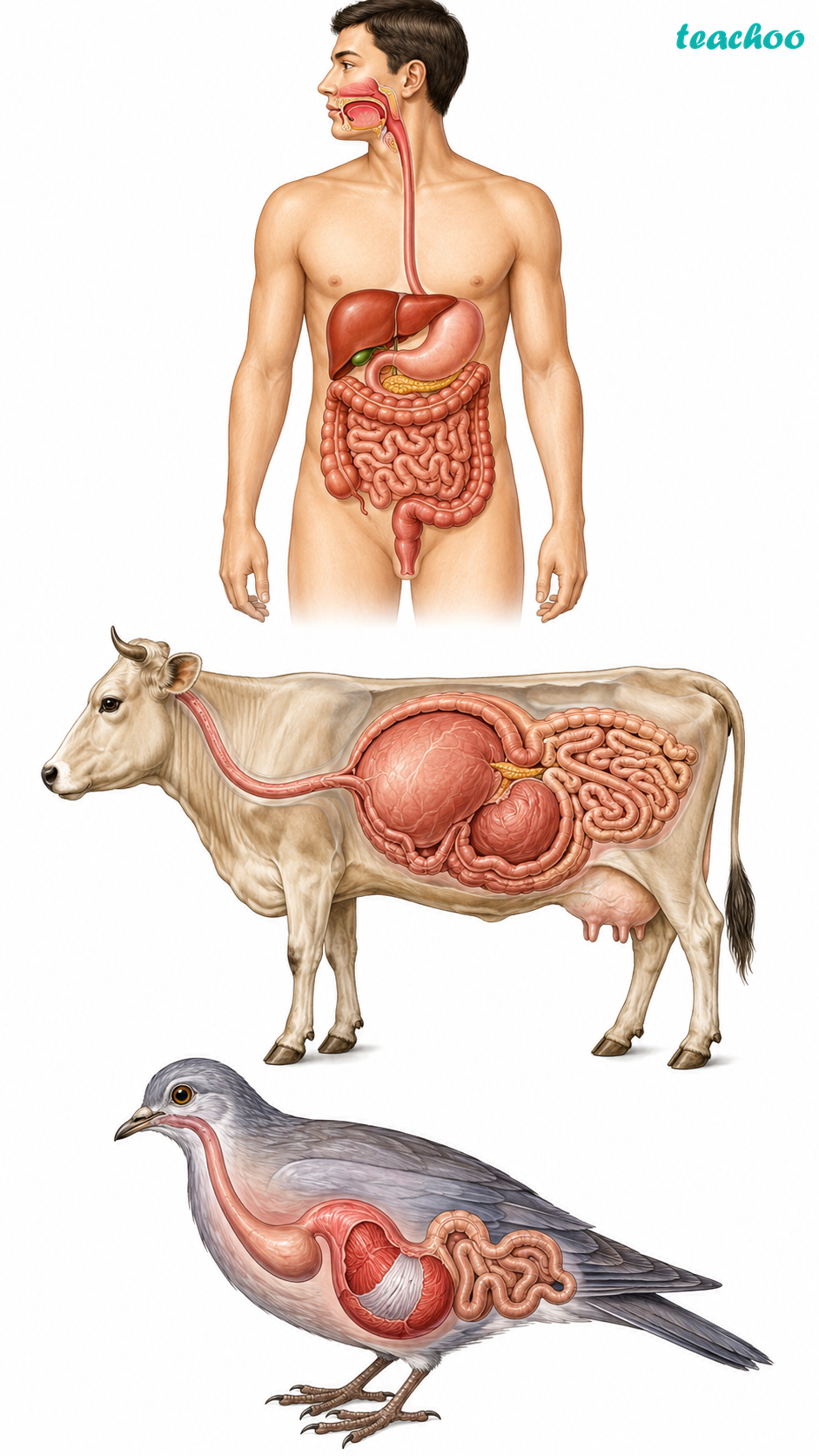
- Not all animals digest food the same way.
- Animals have variations in the structure and function of the alimentary canal.
- These adaptations help them digest different kinds of food.
Ruminants — Animals That Chew Twice
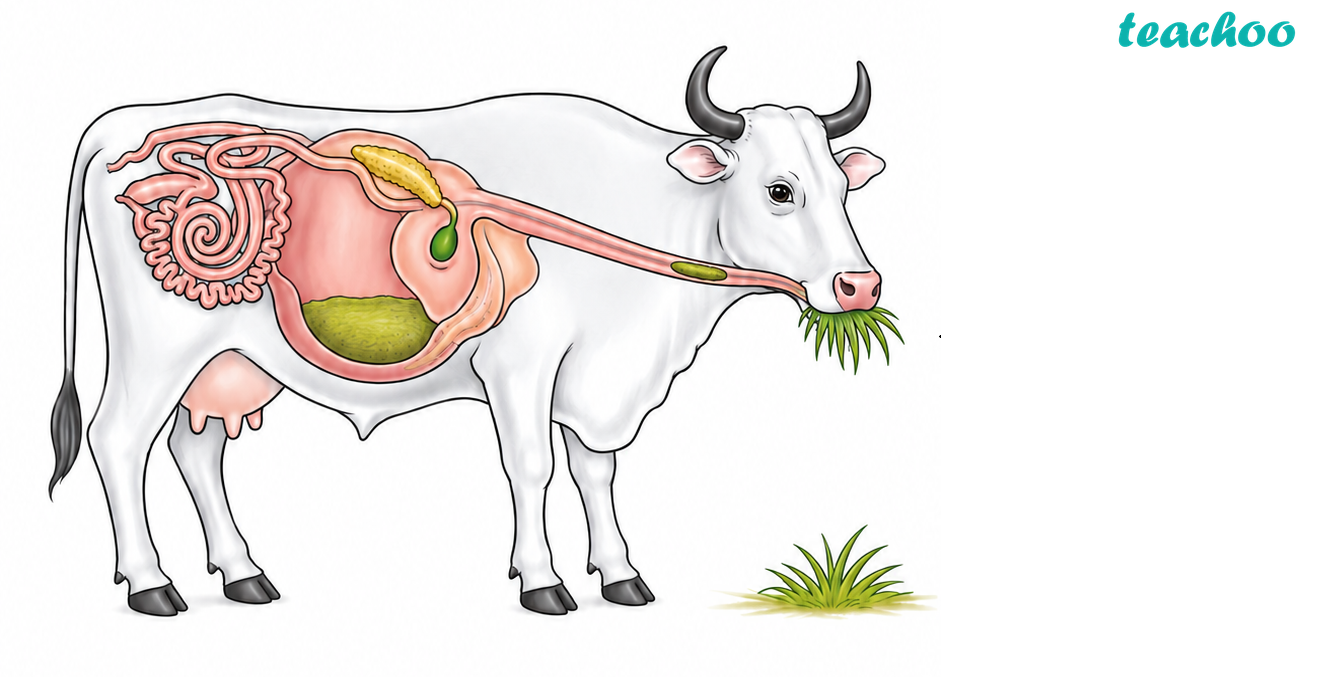
- Grass-eating animals like cows and buffaloes partially chew grass and swallow it.
- Partial digestion happens in the stomach (rumen).
- The partially digested food is brought back to the mouth for thorough chewing.
- This process is called rumination — animals that do this are called ruminants .
- A cow spends about 8 hours a day just chewing food!
Example 1 — A Cow
- A cow eats grass quickly in the field, partially chews, and swallows.
- Later, it brings the partially digested food back to the mouth to chew thoroughly.
- This is rumination — the cow is a ruminant.
Example 2 — A Buffalo
- A buffalo also eats grass quickly and swallows.
- Later, it sits quietly and brings food back to the mouth to chew again.
- This two-round chewing helps digest tough grass — the buffalo is also a ruminant.
Important Points
- Rumination = bringing partially digested food back to the mouth for thorough chewing.
- Ruminants = grass-eating animals that do rumination (cows, buffaloes, goats).
Definition — Rumination
The process of bringing partially digested food back to the mouth for thorough chewing.
After chewing, the food passes back down for further digestion.
After chewing, the food passes back down for further digestion.
Birds — Digestion with a Gizzard
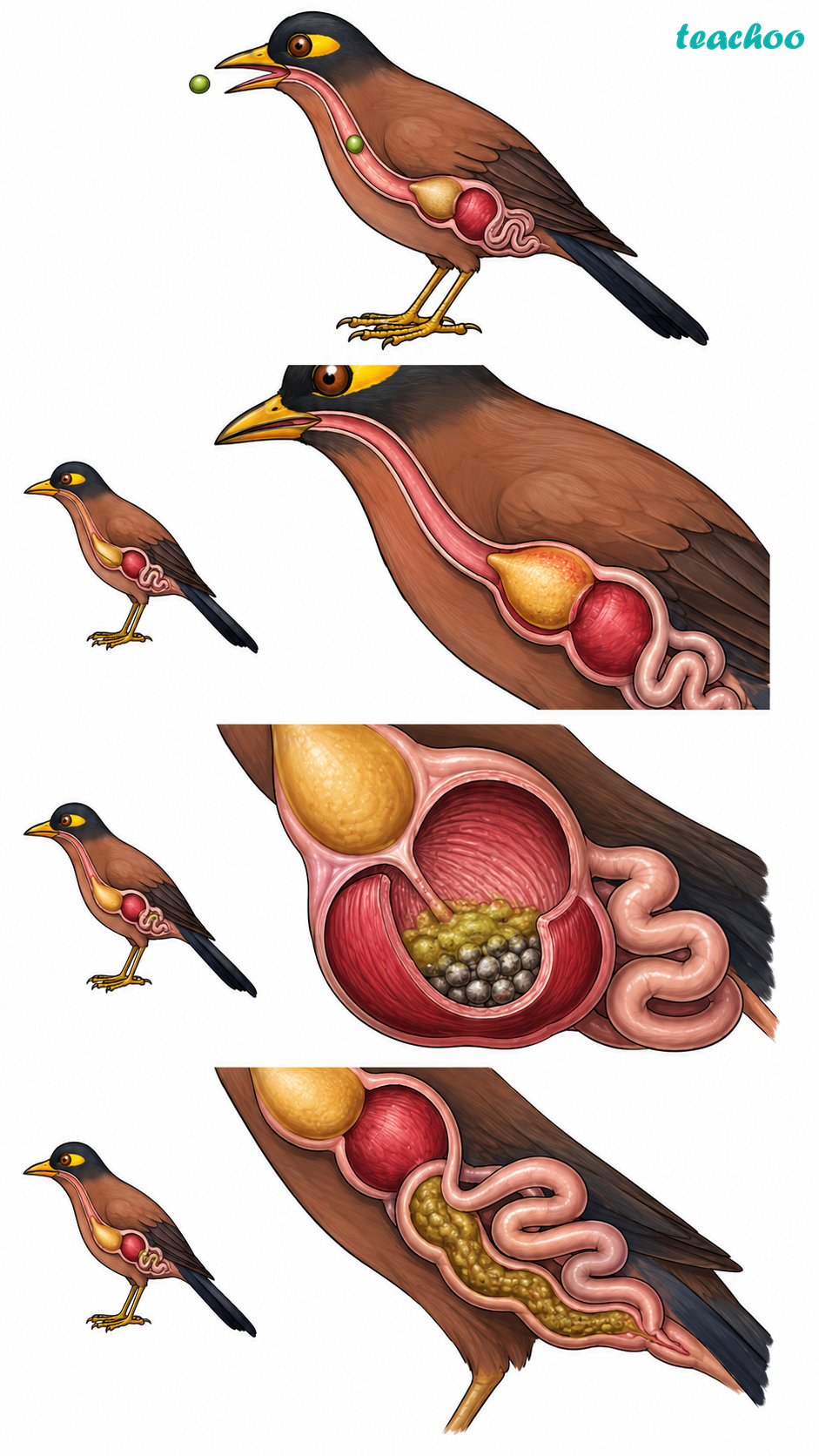
- Birds do not have teeth.
- Instead, they have a special chamber called a gizzard .
- Food is broken down by the contraction and relaxation of the gizzard walls.
- Birds also swallow grit (small stones) — the grit helps grind food inside the gizzard.
Example 1 — A Pigeon
- A pigeon swallows grain — it has no teeth to chew.
- The grain reaches the gizzard, where strong walls crush and grind it.
- This is how a pigeon digests grain without teeth — using its gizzard.
Example 2 — A Hen Swallowing Grit
- A hen pecks at and swallows tiny stones (grit) from the ground.
- Inside the gizzard, the grit helps grind food into smaller pieces.
- This replaces the role that teeth play in other animals.
Important Points
- Gizzard = muscular chamber in birds that grinds food by contracting and relaxing.
- Grit = small stones swallowed by birds to help grind food in the gizzard.
Definition — Gizzard
A muscular chamber in birds that grinds food by contraction and relaxation of its walls.
Birds swallow grit (small stones) to help with grinding, as they have no teeth.
Birds swallow grit (small stones) to help with grinding, as they have no teeth.
✅ Test Yourself — Other Animals
-
What is rumination?
View Answer
Bringing partially digested food back to the mouth for thorough chewing. Animals that do this are ruminants. -
Name two ruminants.
View Answer
(Any two) Cow, buffalo, goat. -
How do birds grind food without teeth?
View Answer
Using the gizzard — a muscular chamber that grinds food. Birds also swallow grit (small stones) to help. -
What is a gizzard?
View Answer
A muscular chamber in birds that grinds food by contraction and relaxation of its walls. -
How does the alimentary canal differ between humans and birds?
View Answer
Birds have a gizzard (for grinding) and no teeth. Humans have teeth and no gizzard. Both show adaptations to their food.
- Nutrients from digested food are carried to different parts of the body.
- Some nutrients help build and repair the body; others, like sugar, are broken down to release energy.
- The process of converting nutrients into usable energy is called respiration .
