 You are here

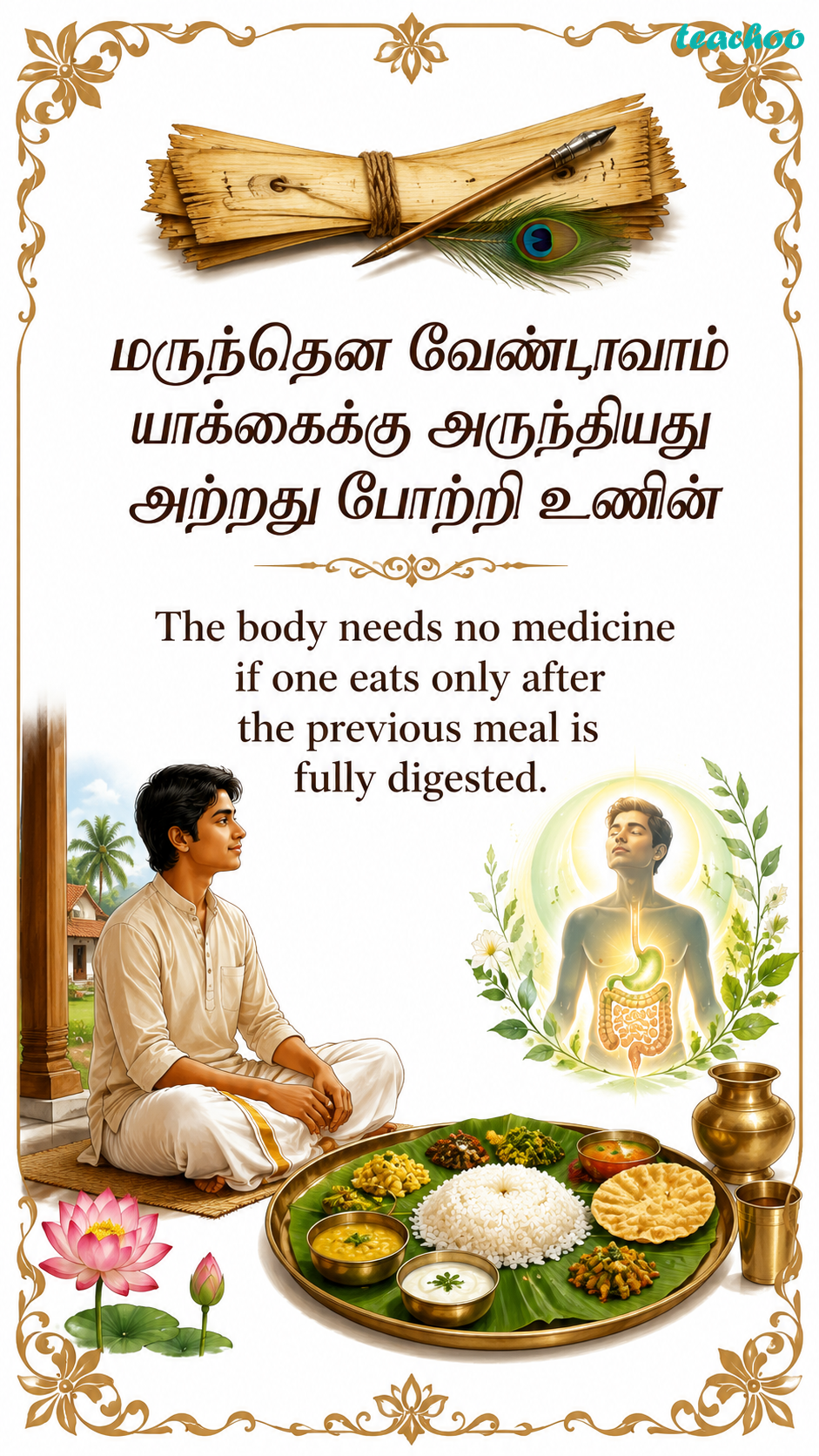
📜 Thirukkural 942
"If your food is fully digested before you eat again, you won't need medicine for pain."
This verse is over 2,000 years old — and still very good advice today.
This verse is over 2,000 years old — and still very good advice today.
In this chapter, we look closely at two life processes: how food is digested and how energy is released from food.
Understanding the Name of the Chapter
Life
Being alive — growing, moving, responding to surroundings
Processes
Actions that happen inside the body to keep it going
Animals
Living beings that eat food and move around
- In this chapter we focus on two life processes: nutrition and respiration .
- We will understand how food is digested and how energy is released from food.
Topics We Will Study in This Chapter
Topics We Will Study
9.1
Nutrition in Animals
9.2
Respiration in Animals
Nutrition in Animals
- All animals eat food to survive.
- Using food for energy, growth, and repair is called nutrition .
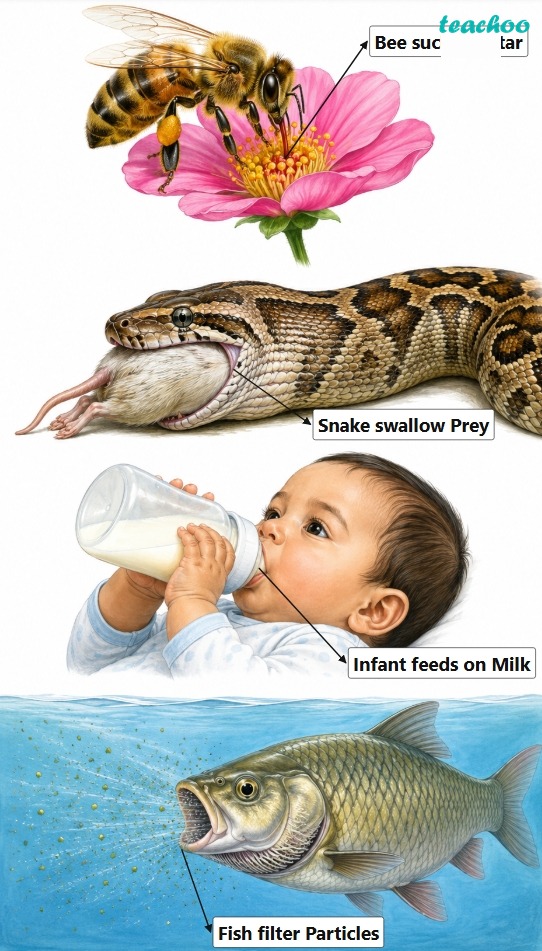
- Different animals get food differently — bees suck nectar, snakes swallow prey, fish filter particles.
- Animals get energy from food to carry out all life processes.
Example 1 — A Bee
- A bee sucks nectar from flowers.
- The nectar gives it energy to fly.
- This is how a bee gets nutrition.
Example 2 — A Python
- A python swallows a rat whole.
- It uses the rat for energy and growth.
- This is how a python gets nutrition.
Important Points
- Nutrition = eating food and using it for energy, growth, and repair.
- All animals get nutrition — but in different ways.
Definition — Nutrition
Process of taking in food and using it for energy, growth, and repair.
The Alimentary Canal
- Food contains complex components — carbohydrates, proteins, and fats .
- These are too big for the body to use directly.
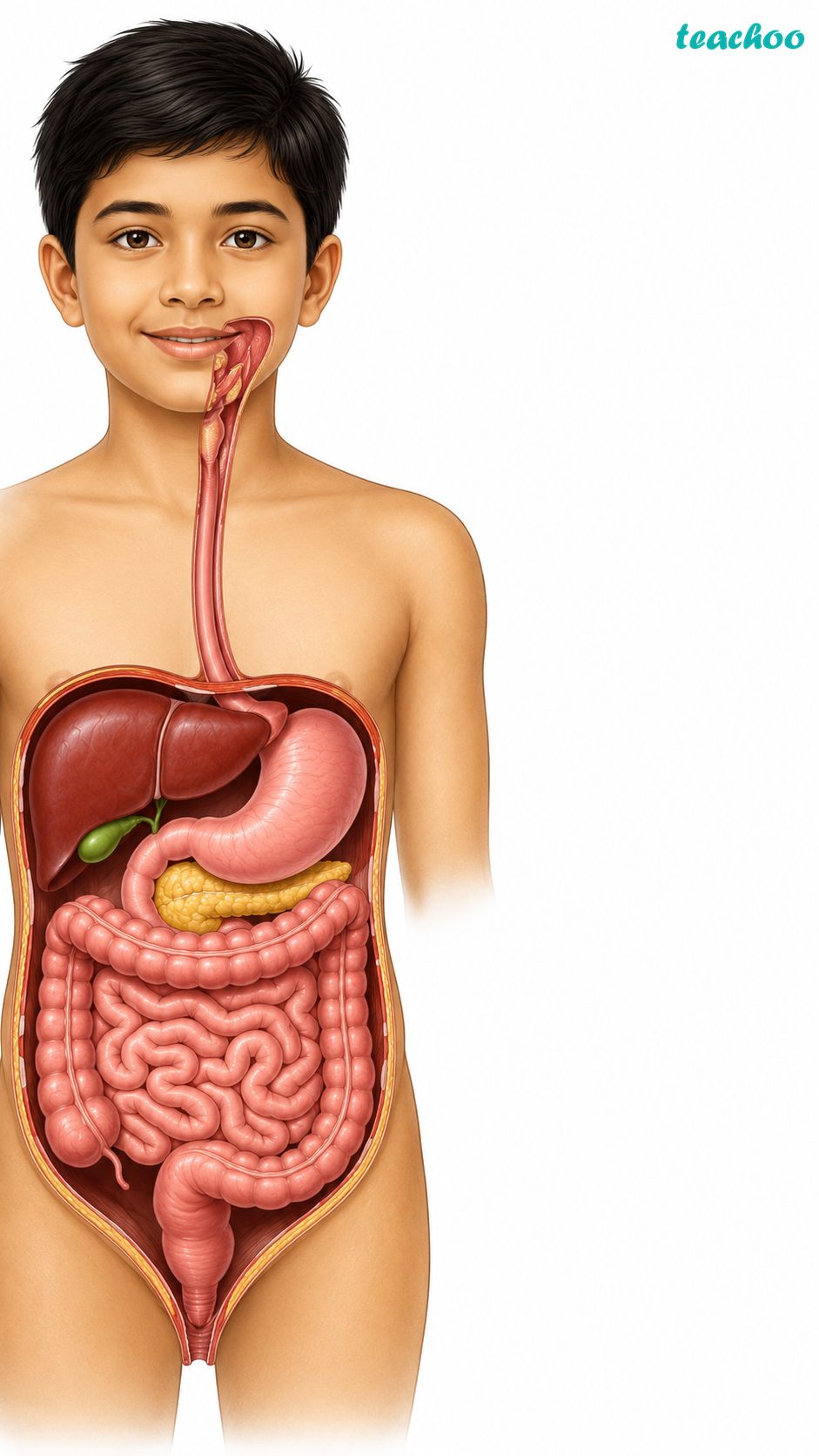
- They break down inside a long tube called the alimentary canal — from mouth to anus.
- Digestive juices break food into simple forms.
- Simple forms are absorbed into blood and reach all body parts.
Example 1 — Roti
- Roti travels through the alimentary canal from mouth to anus.
- Digestive juices break the starch into simple sugar along the way.
- The sugar enters the blood and gives energy to the body.
Example 2 — Paneer
- Paneer travels through the alimentary canal.
- Digestive juices break the protein into simple pieces.
- These simple pieces reach the muscles through blood.
Important Points
- Alimentary canal = long tube, mouth to anus, where digestion happens.
- Digestive juices = secreted at different parts, break complex food into simple forms.
- Simple food = absorbed into blood, reaches whole body.
Definition — Alimentary Canal
Long tube from mouth to anus where food is digested and absorbed.
It includes the mouth, oesophagus, stomach, small intestine, large intestine, rectum, and anus.
It includes the mouth, oesophagus, stomach, small intestine, large intestine, rectum, and anus.
