
 You are here
What do we already know about the atom?
-
We have already studied that an atom contains three particles:
- Protons
- Neutrons
- Electrons
-
We have also studied that in an atom:
- Number of protons = Number of electrons
- Now we will see where these particles stay and which of them gives the atom its mass .
Where are the protons, neutrons and electrons in an atom?
- The atom has two parts - the nucleus and the space around it .
- Protons and neutrons stay inside the nucleus .
- Electrons move around the nucleus in fixed shells.
| Particle | Where it stays |
|---|---|
| Proton | Inside the nucleus |
| Neutron | Inside the nucleus |
| Electron | Outside the nucleus, in shells |
- Protons and neutrons together are packed tightly in the nucleus.
What are the different parts of an atom and their charges?
| S.No. | Subatomic particle | Symbol | Relative charge |
|---|---|---|---|
| 1 | Electron | e⁻ | −1 |
| 2 | Proton | p⁺ | +1 |
| 3 | Neutron | n⁰ | 0 |
(Table 8.1, page 147)
- These three are called subatomic particles , because they are found inside an atom.
- The nucleus has protons (+) and neutrons (0), so the nucleus is positive .
Which is heavier and which is lighter?
- A proton and a neutron have almost the same mass . Both are heavy .
- An electron is extremely light compared to them.
| Particle | Mass |
|---|---|
| Proton | Heavy (take it as 1 unit ) |
| Neutron | Heavy, nearly equal to a proton ( 1 unit ) |
| Electron | So light that its mass is ignored |
- So the heaviest particles of an atom are the proton and the neutron .
Why is it said that the mass of an atom is concentrated in the nucleus?
- The two heavy particles - proton and neutron - both stay inside the nucleus .
- The only particle outside the nucleus is the electron , and it is too light to count.
- So almost the whole mass of the atom comes from the nucleus.
- This is why we say that the mass of an atom is concentrated in its nucleus .
- Mass of an atom = mass of protons + mass of neutrons
Do all atoms contain neutrons?
- No.
- Neutrons are present in the nucleus of all atoms except hydrogen .
- The nucleus of a hydrogen atom has only 1 proton and no neutron .
Why is a helium atom about four times heavier than a hydrogen atom, and not double?
- Hydrogen has 1 proton . Helium has 2 protons .
- If protons alone gave the mass, helium would be only 2 times heavier. But it is about 4 times heavier.
- The reason is the neutron .
- A helium nucleus also has 2 neutrons , and a neutron is as heavy as a proton.
| Atom | Protons | Neutrons | Total heavy particles | Mass compared to hydrogen |
|---|---|---|---|---|
| Hydrogen | 1 | 0 | 1 | 1 time |
| Helium | 2 | 2 | 4 | About 4 times |
- So helium has 4 heavy particles against hydrogen's 1 .
- This makes it about 4 times heavier.
- This also explains why every atom is heavier than the total mass of its protons alone.
Are protons, neutrons and electrons equal in number in an atom?
- Protons and electrons are always equal in number. This is why an atom is neutral.
- Neutrons are not always equal to protons. Their number changes from atom to atom.
| Type of atom | Protons and neutrons | Examples |
|---|---|---|
| Lighter atoms | Usually equal | Carbon - 6 protons, 6 neutrons; Oxygen - 8 protons, 8 neutrons |
| Heavier atoms | Neutrons are many more | Iron - 26 protons, 30 neutrons; Uranium - 92 protons, 146 neutrons |
🧵 Threads of Curiosity
(Page 147)
Why do heavier atoms need more neutrons?
- All protons carry a positive charge.
- So every proton pushes away every other proton inside the nucleus.
- In a heavy nucleus there are many protons, so this pushing becomes very strong.
-
Neutrons
help in two ways:
- They are neutral , so they come in between the protons and increase the distance between them. This makes the pushing less .
- They make the nuclear force stronger. This is the force that binds all the particles of the nucleus together.
- So a heavier atom needs many more neutrons to hold its nucleus tightly together .
Who discovered the neutron?
- In 1932 , James Chadwick discovered the neutron.
- He was a student of Ernest Rutherford .
-
The particle he found had:
- mass nearly equal to that of a proton, and
- no charge at all.
- Because it carries no charge, it was named the neutron .
- Its symbol is n (also written as n⁰ ).
🚀 Ready to Go Beyond
(Page 147)
What were the scientific breakthroughs after the discovery of the neutron?
- A neutron has no charge , so the positive nucleus does not push it away .
- Because of this, a neutron can enter a nucleus easily .
-
Using neutrons, scientists could:
- make artificial radioactive elements , and
- split uranium atoms.
- This gave birth to the atomic age .
- From it came both nuclear power and nuclear weapons .
🇮🇳 India's Scientific Contributions
(Page 148)
- The Bhabha Atomic Research Centre (BARC) , Mumbai , leads advanced neutron-scattering experiments.
-
IMAGE Photo: James Chadwick
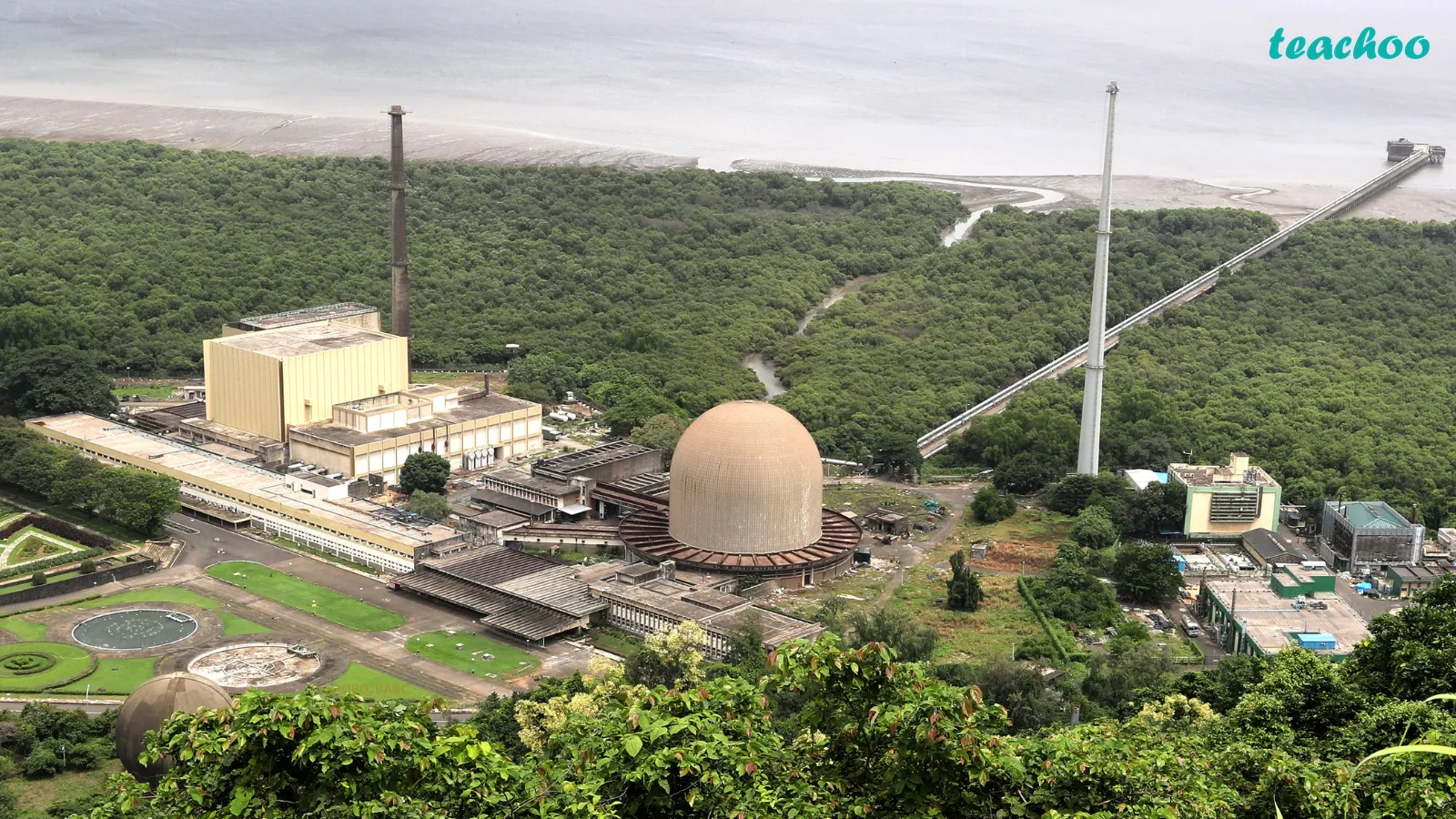
- It uses reactors such as Dhruva .
-
These experiments have given important knowledge about materials like
- superconductors
- battery electrodes
- drug molecules
- This helps India make better medicines , energy storage and industrial alloys .
NCERT Questions
-
💭 What if ... (Page 147)
What if an atom had no empty space? How would this have affected the size of various objects?View answer
Answer- Almost the whole atom is empty space , and the nucleus is extremely small.
- If this empty space were removed, only the nuclei would be left.
- Then every atom would become much, much smaller .
- So every object around us would shrink to a very tiny size.
- But the mass would not change , because the mass comes from the nucleus.
- So matter would become unbelievably dense and heavy - a small piece of it would weigh in tonnes.
📝 Important points — 8.3 What Components contribute to the Mass of an Atom? and 8.3.1 Discovery of the Neutron
| Point | What to remember |
|---|---|
| Inside the nucleus | Protons and neutrons |
| Outside the nucleus | Electrons, in shells |
| Charges | Electron −1 , Proton +1 , Neutron 0 |
| Heaviest particles | Proton and neutron (nearly equal mass) |
| Lightest particle | Electron, its mass is ignored |
| Mass of an atom | Protons + neutrons, so it is concentrated in the nucleus |
| Neutron | Found by James Chadwick in 1932 |
| Atom with no neutron | Hydrogen |
| Nuclear force | The force that binds the particles of the nucleus together |
👩🔬 Meet a Scientist — James Chadwick
(Page 147)
IMAGE
Photo: James Chadwick
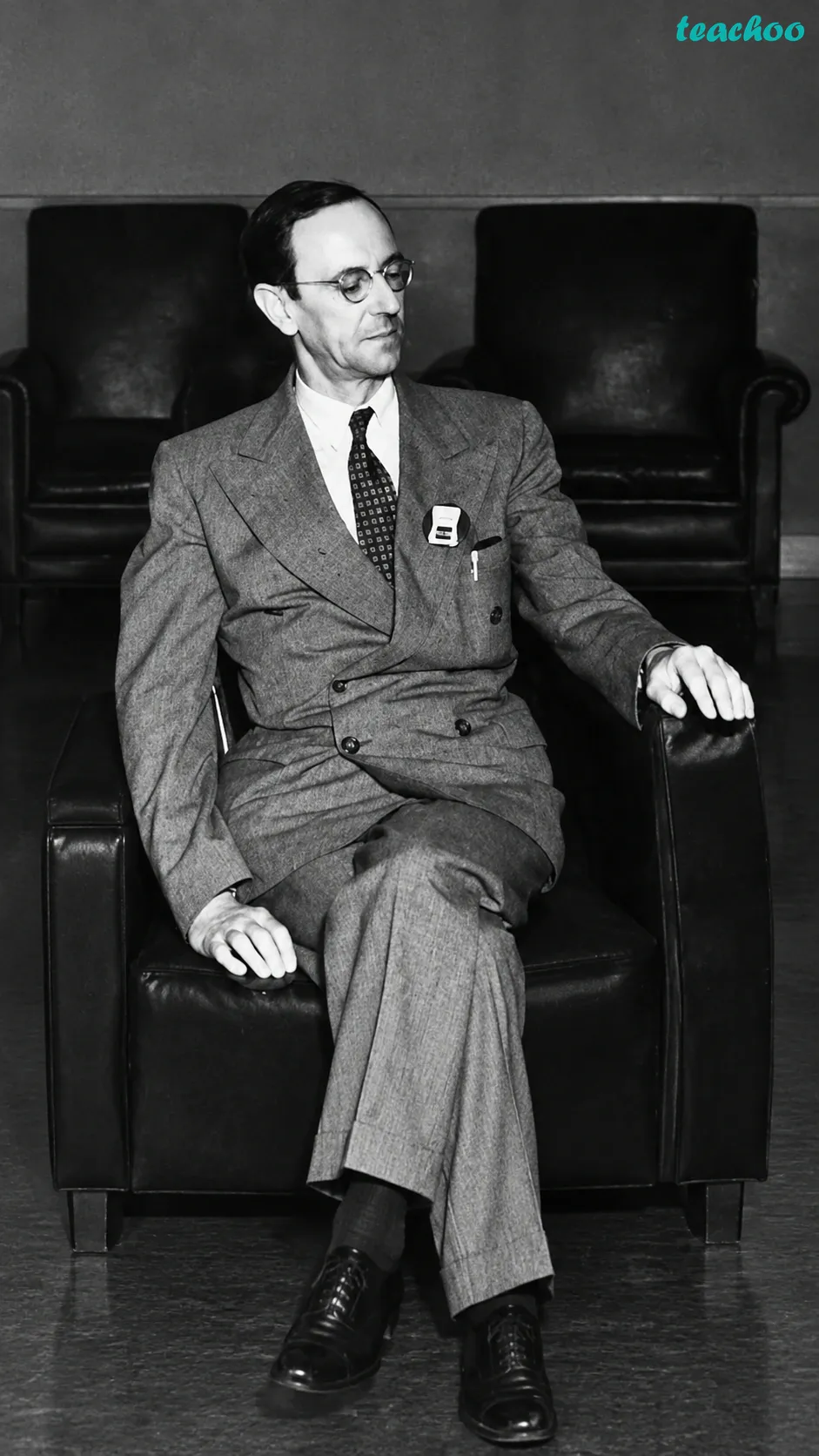
- He worked under Rutherford at the famous Cavendish Laboratory , University of Cambridge .
- In 1932 he solved a key puzzle by discovering the neutron .
- This discovery explained the mass of an atom .
- He won the Nobel Prize in Physics in 1935 .
- The neutron changed research completely and led to a chain of discoveries about atomic energy .
💡 Worth remembering
- Protons + neutrons are in the nucleus; electrons are outside it.
- Proton and neutron are heavy ; the electron's mass is ignored .
- So mass of atom = protons + neutrons , all inside the nucleus.
- Hydrogen is the only atom with no neutron .
- Light atoms have equal protons and neutrons; heavy atoms have more neutrons .
- Neutrons reduce the repulsion between protons and strengthen the nuclear force .
✅ Quick self-check
-
Which particles of an atom are present inside the nucleus?
View Answer
- Protons and neutrons .
- Electrons stay outside the nucleus, in shells.
-
Why is the mass of an electron not counted in the mass of an atom?
View Answer
- An electron is extremely light .
- Its mass is so small compared to a proton or a neutron that it can be ignored .
-
Who discovered the neutron, and in which year?
View Answer
- James Chadwick , in 1932 .
- He was a student of Rutherford .
-
Which atom has no neutron?
View Answer
- The hydrogen atom.
- Its nucleus has only 1 proton .
-
Iron has 26 protons but 30 neutrons. Why are the neutrons more?
View Answer
- Iron is a heavy atom, so its nucleus has many protons pushing each other away.
- Extra neutrons come in between them and make the nuclear force stronger.
- This keeps the nucleus tightly bound .
Key terms
| Term | Meaning |
|---|---|
| Neutron | A particle of the nucleus with no charge and mass nearly equal to a proton |
| Subatomic particle | A particle present inside an atom - electron, proton or neutron |
| Nuclear force | The strong force that binds protons and neutrons together in the nucleus |
| Neutron scattering | An experiment in which neutrons are used to study the inside of materials |
| Atomic age | The period that began after the neutron was discovered, when nuclear energy started being used |
