
 You are here
The chapter opens with a picture of canoes and two questions. We can answer both of them now.
Why does a canoe move forward when the canoeist pushes water backwards with their paddle, and why does it move faster when they push harder?
![Think It Over — the box at the s - How Forces Affect Moti - [Teachoo] - Concepts](https://cdn.teachoo.com/3331f611-ec3b-41f8-bd05-ae3dd45a3054/animation-for-why-does-a-canoe-move-forward-when-the-canoeist-pushes-water-backwards-with-their-paddle-and-why-does-it.gif) GIF
Watch: the paddle pushes the water backwards
GIF
Watch: the paddle pushes the water backwards
- The paddle pushes the water backwards.
- By Newton's third law, the water pushes the paddle forwards with an equal force.
- The two forces act on two different objects, the water and the paddle, so they do not cancel each other.
- The force on the paddle carries the paddle and the canoe forward.
- When the canoeist pushes harder, the forward force on the paddle is larger.
- A larger force gives a larger acceleration, so the canoe picks up a greater velocity.
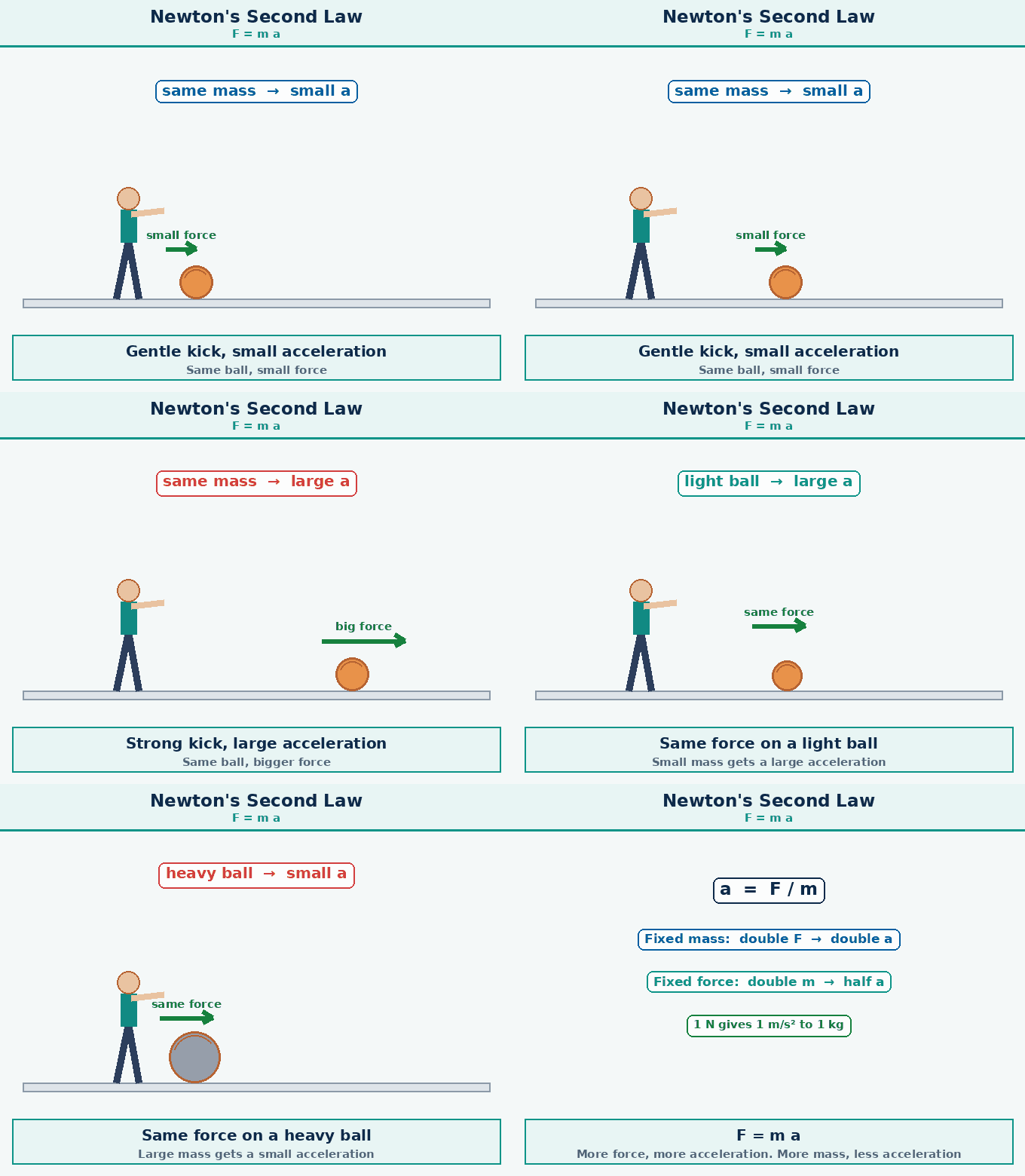
The same paddle force is used in two canoes, one empty and one carrying another passenger. In which case will the canoe move faster?
 GIF
Watch: the empty canoe will move faster
GIF
Watch: the empty canoe will move faster
- The empty canoe will move faster.
- The force applied is the same in both cases, but the empty canoe has a smaller mass.
- By Newton's second law, a = F / m, so a smaller mass gets a larger acceleration.
- A larger acceleration means the empty canoe picks up speed faster.
- Suggested answer. The book does not print an answer for this question.
