
 You are here
How do you move forward on a bicycle without pedalling?
GIF
Watch: you push the ground backwards with your feet
![6.6 Newton's Third Law of Motion - How Forces Affect Moti - [Teachoo] - Concepts](https://cdn.teachoo.com/f80c69ba-e59d-4d09-9822-327cf9d079a0/animation-for-how-do-you-move-forward-on-a-bicycle-without-pedalling-.-a-short-looping-gif-three-or-four-beats-drawn-in-the-flat-classroo.gif)
- You push the ground backwards with your feet.
- The ground pushes your feet forwards with an equal force.
- This makes you and the bicycle move forward together.
Main Idea:
You applied a force on the ground, and the ground applied a force back on you. The force did not go one way only.
What is Newton's third law of motion?
- The book states it as: "Whenever one object is exerting a force on a second object, the second object is simultaneously exerting an equal and opposite force on the first object."
- In easy words — if you push something, that something pushes you back with the same strength, in the opposite direction.
What are the important points of this law?
- A force always needs two objects. (In our bicycle example, the two objects are your feet and the ground.)
- The two forces are in opposite directions. (In our bicycle example, your feet push backwards and the ground pushes forwards.)
- The two forces act simultaneously. (In our bicycle example, the ground pushes your feet the very moment your feet push the ground.)
- The two forces are equal in magnitude. (In our bicycle example, the force applied by your feet on the ground is equal to the force applied by the ground on your feet.)
- The two forces act on two different objects, so they do not cancel each other. (In our bicycle example, one force acts on the ground and the other acts on your feet, so the bicycle actually moves.)
- Equal forces do not mean equal accelerations. (In our bicycle example, why does only you move forward and not the Earth backward, when both forces are equal?)
What happens the moment you push something?
You apply a force on the second object
your feet push the ground backwards
↓
The second object applies a force back on you
the ground pushes your feet forwards
↓
The two forces are equal in magnitude, opposite in direction, and act at the same time
They act on two different objects, so they never cancel each other.
Explanation of Each Important Point
Point 1 — Why does a force always need two objects?
- Here the two objects are your feet and the ground.
- Your feet apply the force, and the ground receives it.
- Remove the ground, and there is no force at all.
Point 2 — Why is the second force in the opposite direction?
- Your feet push the ground backwards.
- The ground pushes your feet forwards.
- This opposite push is the reason you move ahead.
🔧
Activity 6.5: Let us explore
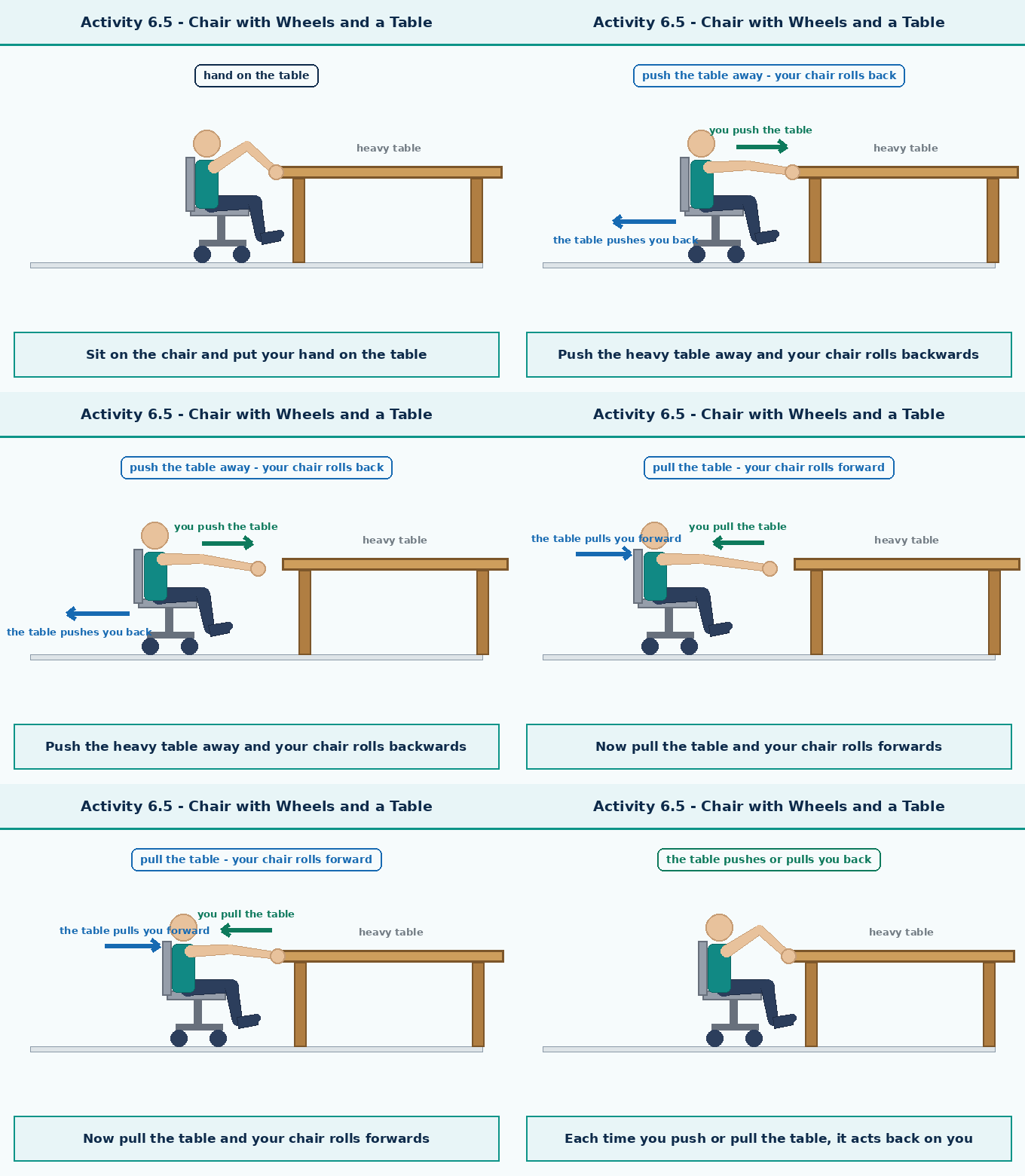
What do we need?
- A chair with wheels
- A large heavy table
What do we do?
- Sit on the chair and raise your legs above the floor.
- Push the table away from you with both hands.
- Then pull the table towards you.
What do we observe?
- On pushing the table, your chair moves backward.
- On pulling the table, your chair moves towards the table.
What does this tell us?
- The table always applied a force back on you, in the opposite direction.
Point 3 — What does "simultaneously" mean here?
- The moment your feet push the ground, the ground is already pushing back.
- Both forces start together and stop together.
- One is not the "reply" of the other after some time.
Point 4 — Are the two forces really equal in magnitude?
- The push of your feet on the ground is exactly as big as the push of the ground on your feet.
- This was found experimentally.
- We can check it with spring balances, because a spring balance measures the magnitude of a force.
🔧
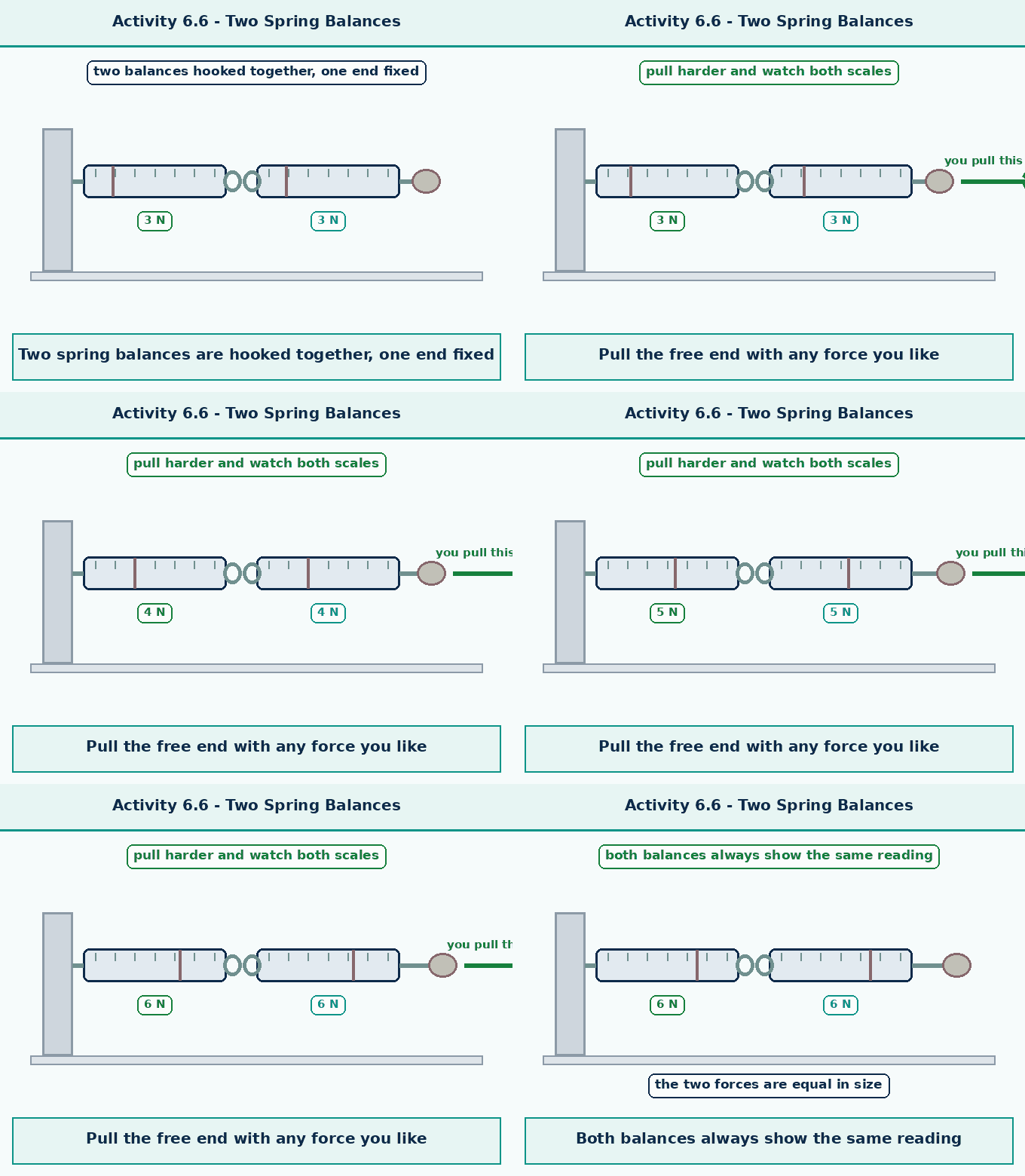
Activity 6.6: Let us verify
 GIF
Watch: two identical spring balances
GIF
Watch: two identical spring balances
What do we need?
- Two identical spring balances
What do we do?
- Place both balances horizontally on a table and join them by their hooks.
- Fix the free end of one balance, or hold it in your hand.
- Predict the two readings, then pull the free end of the other balance.
- Repeat many times with different amounts of pull.
What do we observe?
- Both spring balances show the same reading every time.
What does this tell us?
- The forces the two balances apply on each other are equal in magnitude.
Point 5 — Why do these two equal and opposite forces not cancel each other?
- Forces cancel only when they act on the same object.
- Here one force acts on the ground and the other on your feet.
- Two different objects, so no cancelling. That is why the bicycle moves.
| Situation | Do the forces balance? |
|---|---|
| Equal and opposite forces on two different objects (third-law pair) | No |
| Equal and opposite forces on the same object | Yes |
Point 6 — If the forces are equal, why do the two objects not move in the same way?
- Acceleration depends on mass also, because a = F/m.
- You are light, so the force moves you easily.
- The Earth is very heavy, so the same force gives it an acceleration too small to notice.
Main Idea:
Equal forces do not mean equal accelerations.
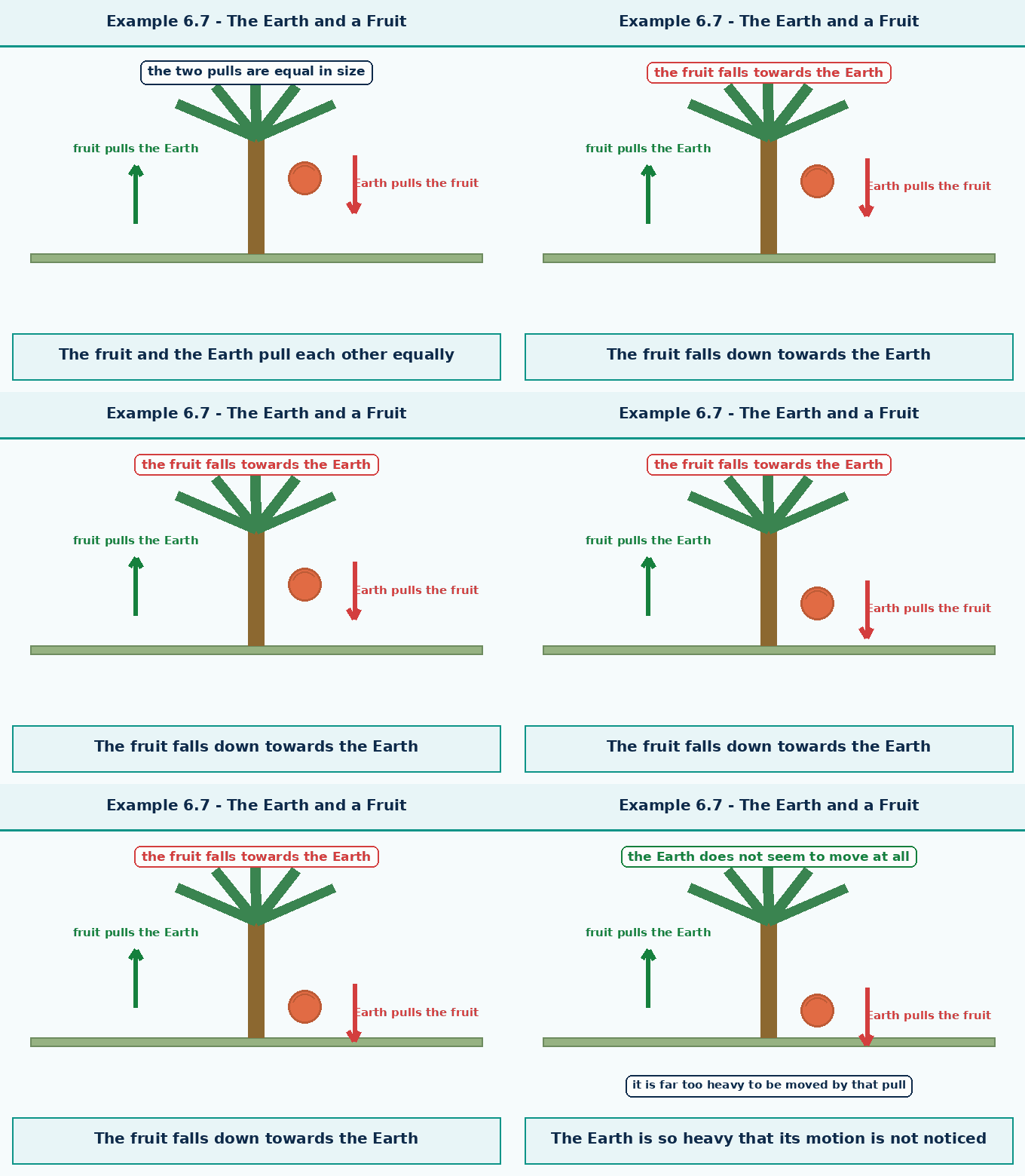
Example 6.7 (page 110)
The Earth and a fruit apply equal and opposite gravitational forces on each other. Then why does the fruit move towards the Earth, while the Earth does not seem to move towards the fruit?
 GIF
Watch: the Earth and a fruit apply equal and opposite gravitational forces on each
GIF
Watch: the Earth and a fruit apply equal and opposite gravitational forces on each
- Both forces are equal in magnitude.
- But the mass of the Earth is huge compared to the fruit.
- Using a = F/m, the acceleration of the Earth is extremely small.
- So its movement is too small to be noticed.
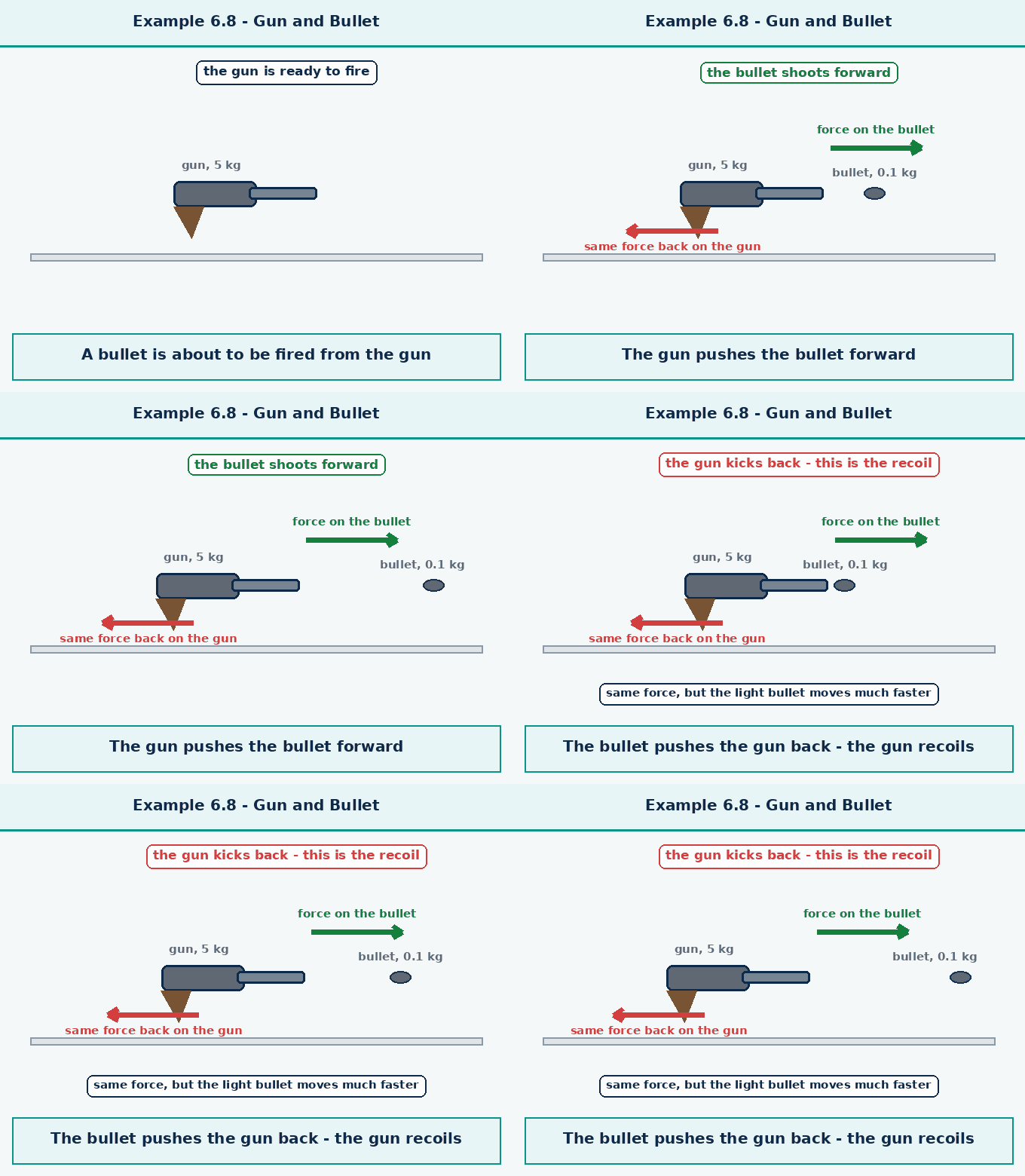
Example 6.8 (page 110)
A 0.1 kg bullet is fired from a 5 kg gun with a force of 2 N, and the gun recoils. Find the magnitudes of the initial accelerations of the bullet and the gun.
 GIF
Watch: a 0.1 kg bullet is fired from a 5 kg gun with a force of 2 N, and the gun
GIF
Watch: a 0.1 kg bullet is fired from a 5 kg gun with a force of 2 N, and the gun
- By the third law, the recoil force on the gun is also 2 N.
- Acceleration of gun = force / mass of gun
- = 2 N / 5 kg
- = 0.4 m s⁻²
- Acceleration of bullet = force / mass of bullet
- = 2 N / 0.1 kg
- = 20 m s⁻²
- Forces equal, accelerations different, because the masses are different.
Practical Uses of Newton's Third Law
How do we walk or run?
- Your foot pushes the ground backwards.
- The ground pushes your foot forwards with an equal force.
- This forward push makes you move ahead, just like on the bicycle.
- The force applied by the ground here is the force of friction.
Main Idea:
Here friction helps you move forward, it does not oppose you.
- If there were no friction, your foot would slip backwards and you would fall.
Example
- Grooves are made on the soles of shoes to increase friction between the sole and the floor.
Example
- Treads are made on tyres to increase friction between the tyre and the road.
Example
- Walking on a wet polished floor or on ice is difficult, and driving on a road covered with water or snow is risky, because friction there is very low.
How does a person climb a coconut tree?
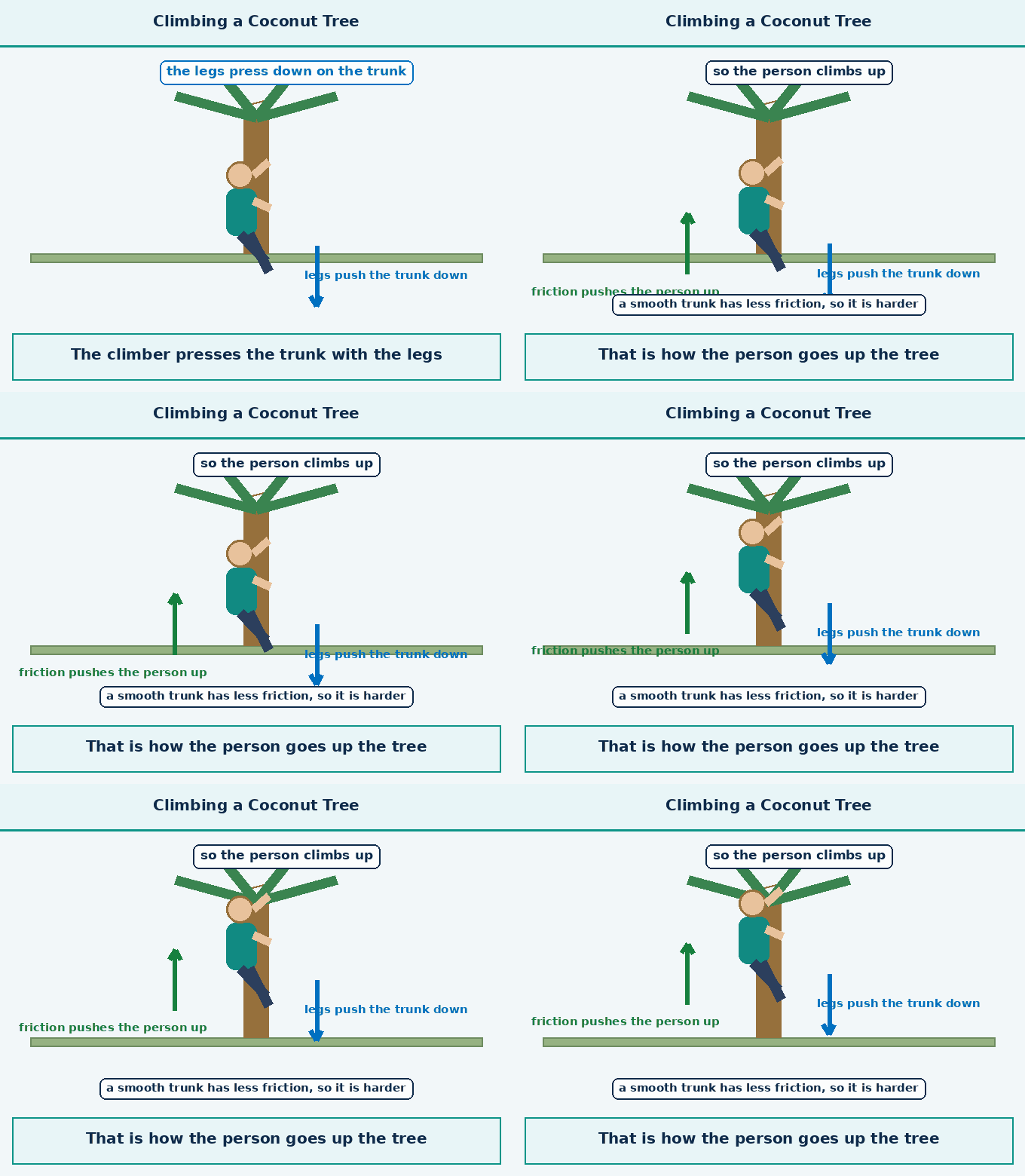 GIF
Watch: the legs of the person push down against the trunk
GIF
Watch: the legs of the person push down against the trunk
- The legs of the person push down against the trunk.
- The friction between the trunk and the legs pushes the person up by an equal force.
- So it is harder to climb a smooth trunk, because a smooth trunk gives less friction.
GIF
Watch: the legs of the person push down against the trunk
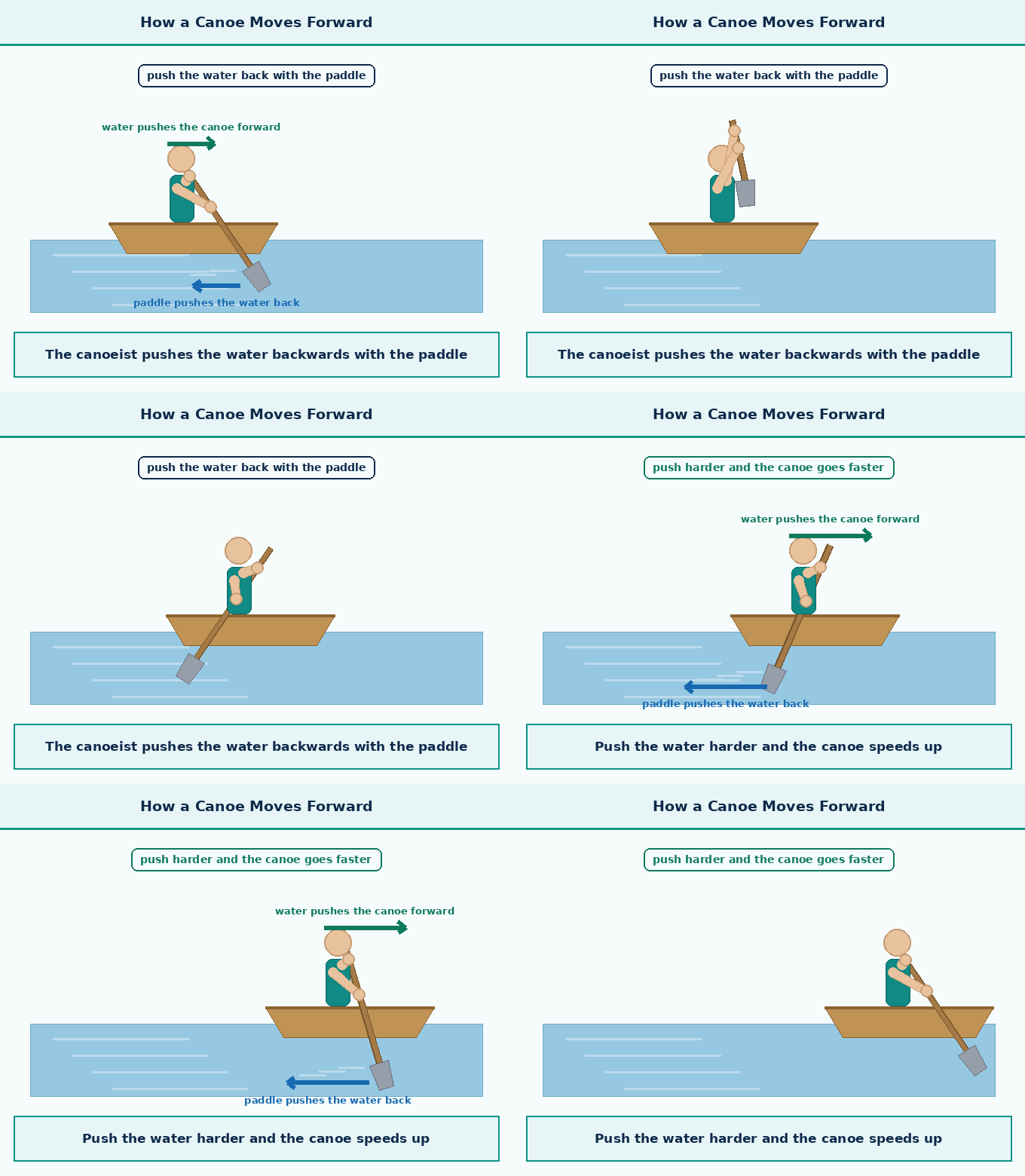
How does a canoe move forward in water?
-
 GIF
Watch: the canoeist pushes the water backwards with the paddle
GIF
Watch: the canoeist pushes the water backwards with the paddle
- The canoeist pushes the water backwards with the paddle.
- The water pushes the paddle forwards with an equal force.
- The two forces act on different objects — one on the water, one on the paddle. So they do not cancel.
- The force on the paddle makes the paddle and the canoe move forward.
- If the canoeist pushes harder, the forward force on the paddle is larger, so the canoe's velocity increases.
📌 Note
- The speed of a canoe does not depend on paddling alone.
- Drag, water currents, the mass of the canoe and the style of rowing also affect its speed.
🔧
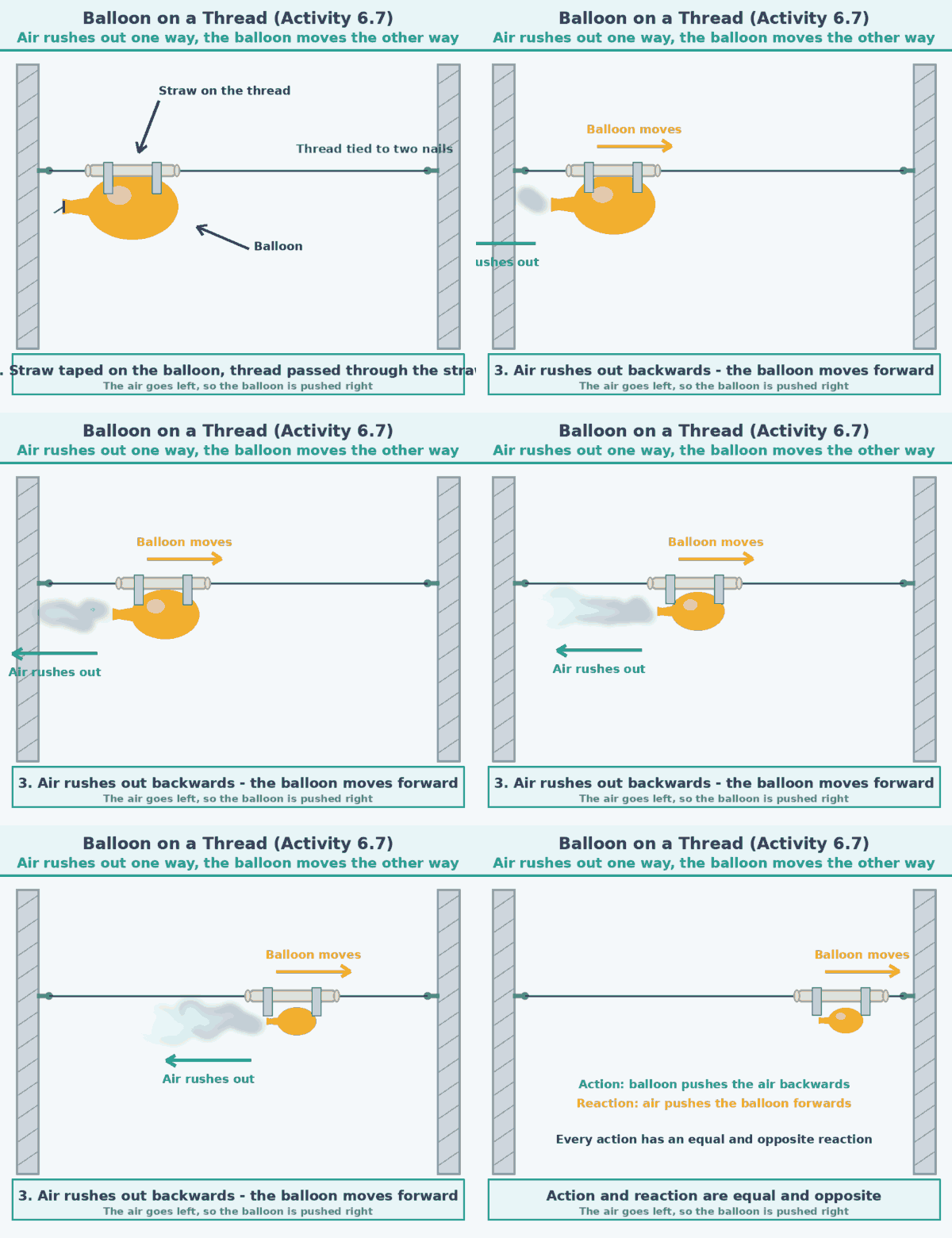
Activity 6.7: Let us understand
 GIF
Watch: a large balloon, a piece of drinking straw, adhesive tape, a long thread, and two
GIF
Watch: a large balloon, a piece of drinking straw, adhesive tape, a long thread, and two
What do we need?
- A large balloon, a piece of drinking straw, adhesive tape, a long thread, and two nails or hooks on two walls
What do we do?
- Inflate the balloon and tie its neck with a small piece of thread.
- Tape the straw on the balloon so that one end of the straw points towards the neck.
- Pass the long thread through the straw, tie its ends to the two nails, and keep it taut.
- Remove the thread tied at the neck, and watch which way the straw and balloon move.
What do we observe?
- Air rushes out of the neck in one direction.
- The balloon moves in the opposite direction along the thread.
What does this tell us?
- The stretched balloon material pushes the air out.
- The rushing air pushes the balloon back with an equal force in the opposite direction.
- That force makes the balloon move.
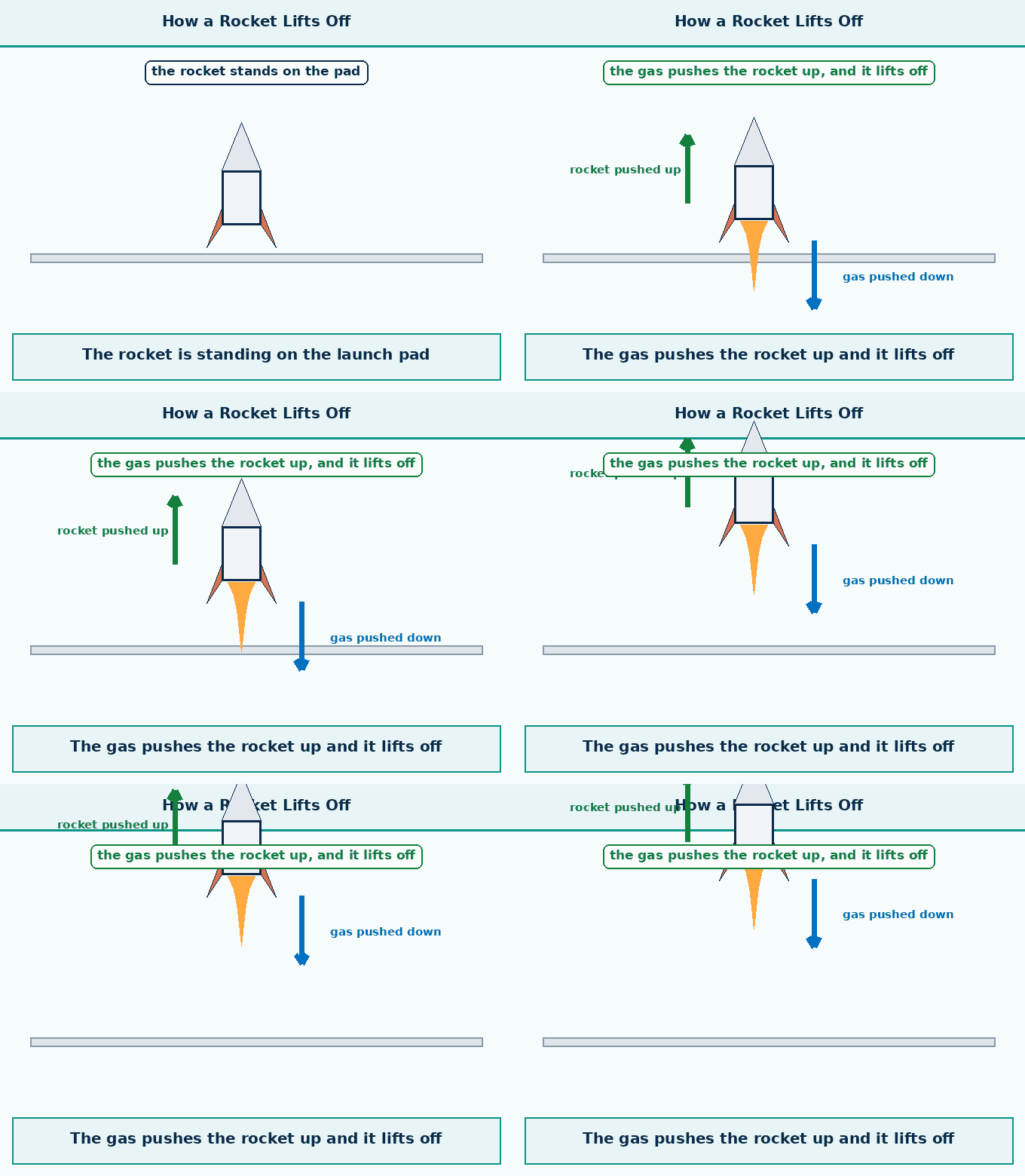
How does a rocket lift off?
-
 GIF
Watch: the rocket engine produces gas and pushes it downwards
GIF
Watch: the rocket engine produces gas and pushes it downwards
- The rocket engine produces gas and pushes it downwards.
- The gas pushes the rocket upwards with an equal and opposite force.
- This upward force is larger than the weight of the rocket.
- So the net force is upwards, and the rocket lifts off.
Why does a rocket go up?
The engine pushes the gas downwards
a large force on the gas
↓
The gas pushes the rocket upwards
an equal force in the opposite direction
↓
This upward force is larger than the weight
so the two do not balance
↓
The net force is upwards, and the rocket lifts off
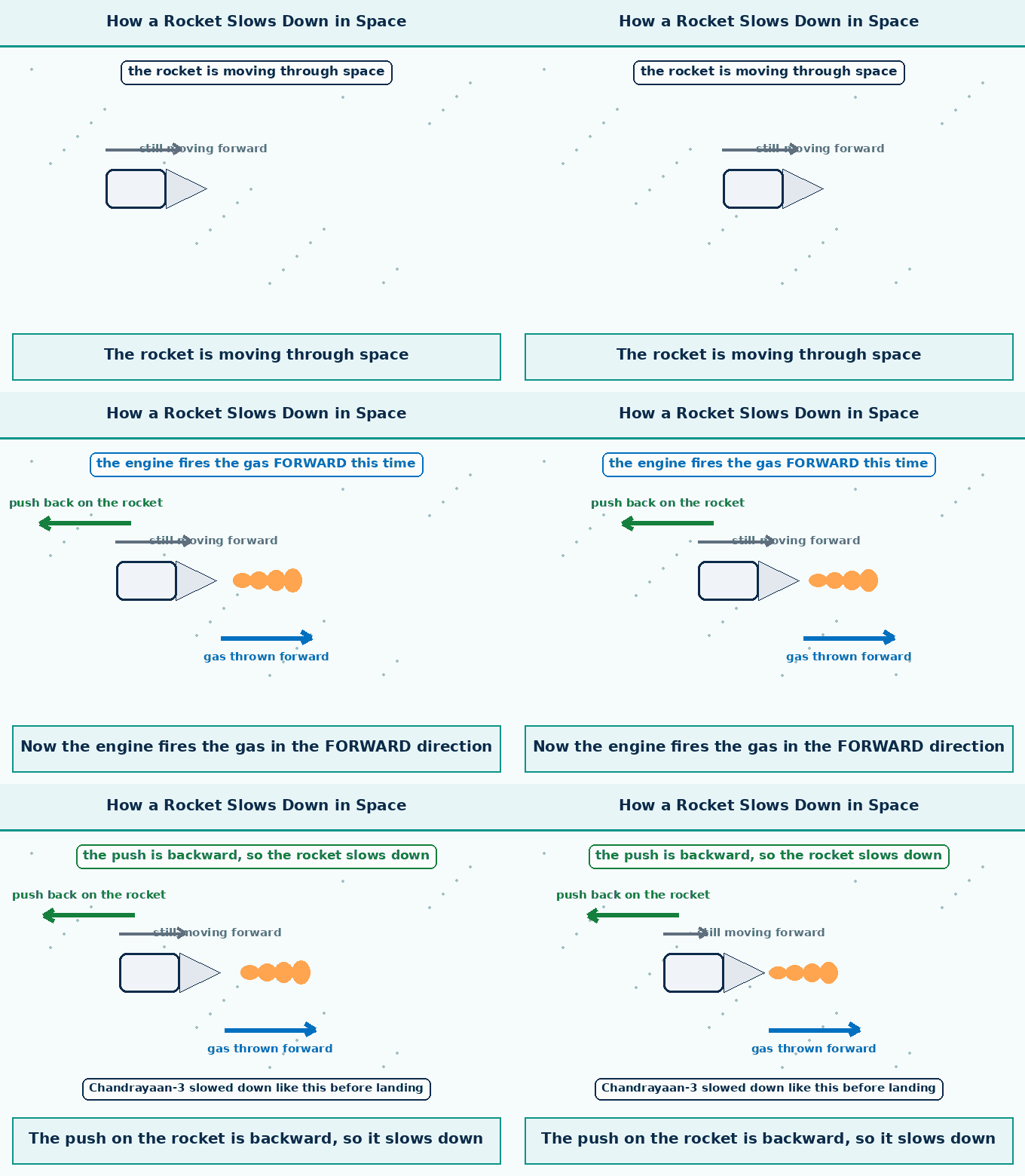
How can a rocket slow down in space?
-
 GIF
Watch: the engine of a moving rocket is fired in the direction of its motion
GIF
Watch: the engine of a moving rocket is fired in the direction of its motion
- The engine of a moving rocket is fired in the direction of its motion.
- The exhaust gases then push the rocket in the direction opposite to its motion.
- This slows the rocket down.
Example
- The Vikram lander of Chandrayaan-3 used this method to slow down and get the right velocity for a soft landing near the south pole of the Moon.
Other Points
Does Newton's third law work only for contact forces?
- No. It works for all types of forces we meet in everyday mechanical situations.
- Contact forces — the two objects touch each other, like your feet and the ground.
- Non-contact forces — the two objects act on each other from a distance.
Example
- Two bar magnets apply equal and opposite magnetic forces on each other. (Fig. 6.31)
Example
- Two similarly charged balloons apply equal and opposite electrostatic forces on each other. (Fig. 6.32)
Example
- The Earth and a fruit apply equal and opposite gravitational forces on each other. (Fig. 6.33)
Pause and Ponder (Page 110) — Questions 9 and 10
-
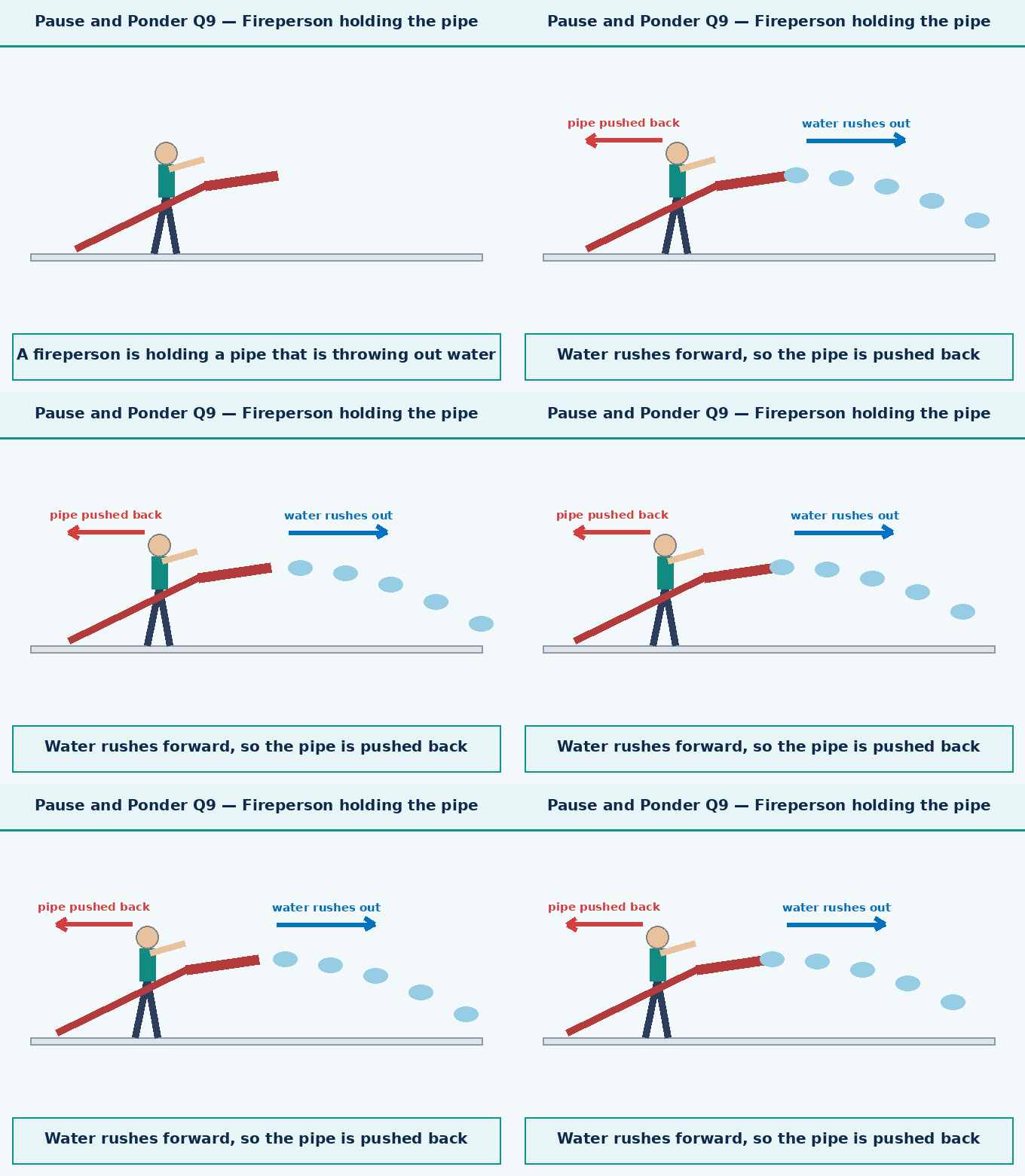
9. Why does a fireperson sometimes struggle when holding the pipe issuing water?
 GIF
Watch: why does a fireperson sometimes struggle when holding the pipe issuing water?
GIF
Watch: why does a fireperson sometimes struggle when holding the pipe issuing water?
View answer
Answer- The pipe pushes the water forwards with a large force.
- By the third law, the water pushes the pipe backwards with an equal force.
- This backward push is large, so the fireperson has to hold the pipe tightly to stay steady.
-
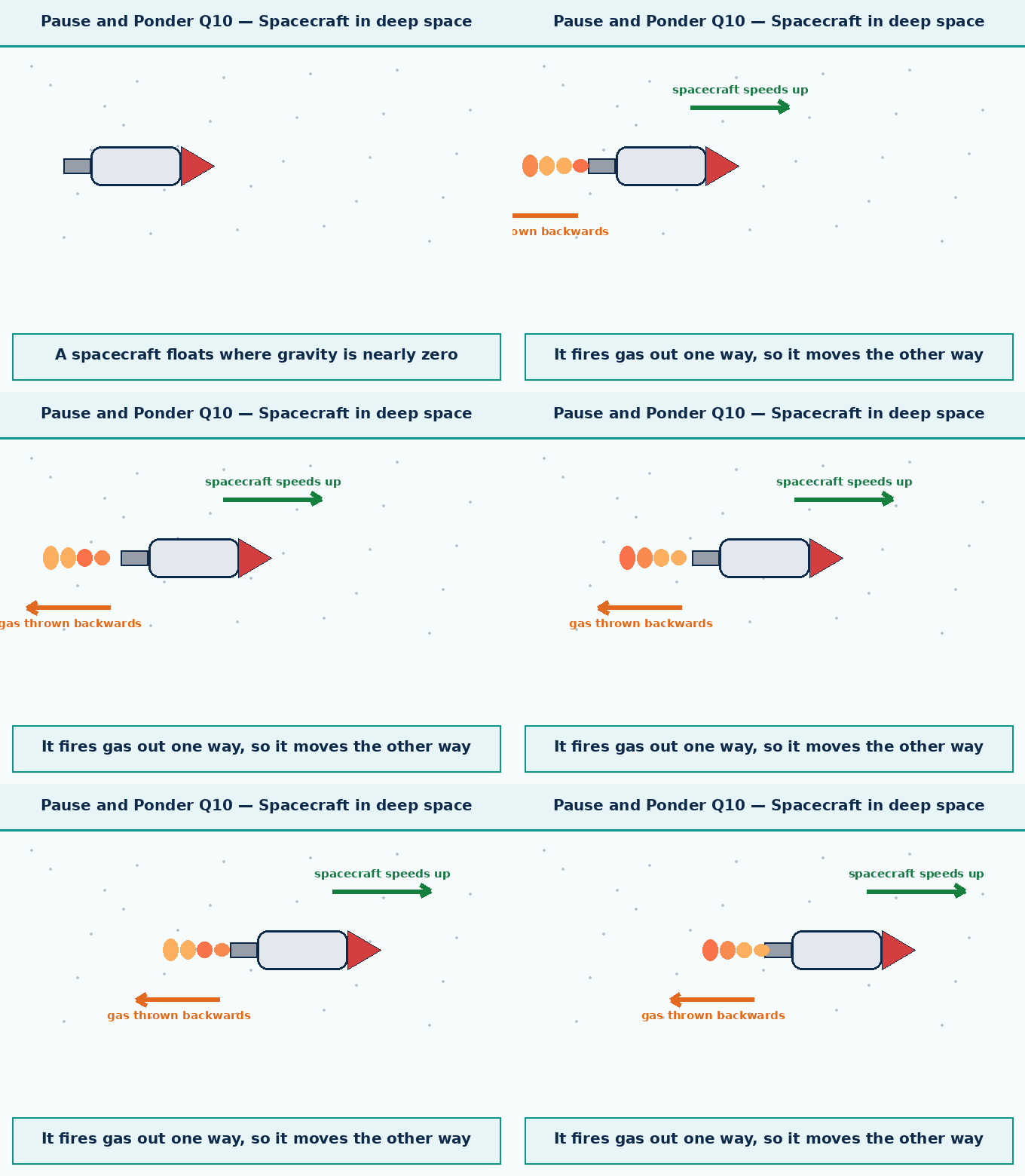
10. A spacecraft is moving in a region of space where gravitational force on it is negligible. Suggest how it can change its velocity.
 GIF
Watch: a spacecraft is moving in a region of space where gravitational force on it is
GIF
Watch: a spacecraft is moving in a region of space where gravitational force on it is
View answer
Answer- It can fire its engine and push out gas in one direction.
- The gas pushes the spacecraft in the opposite direction with an equal force.
- This force changes the velocity of the spacecraft.
📋 Revise, Reflect, Refine, Q7, page 113
A sailor jumps out from a small boat to the shore. As the sailor jumps forward, will the boat move? If yes, in which direction and why.
View Answer →
📋 Revise, Reflect, Refine, Q9, page 113
A hand cart loaded with vegetables collides with an identical but empty hand cart. During the collision:
View Answer →
📋 Revise, Reflect, Refine, Q16, page 113
When the pole of a bar magnet is brought near a magnetic compass, both exert equal and opposite magnetic forces on each other. But the compass needle moves and the bar magnet does not. Explain why.
View Answer →
📝 Important points about this Topic
| Point | Meaning | In the bicycle example |
|---|---|---|
| Forces come in pairs | A single object alone can never have a force | Your feet and the ground |
| Opposite | Both forces are in opposite directions | Feet push back, ground pushes forward |
| Simultaneous | Both forces act at the same time | No gap between the push and the push-back |
| Equal | Both forces have the same magnitude | Feet push ground = ground pushes feet |
| Two different objects | The pair does not cancel | One force on the ground, one on you |
| Same force, different acceleration | Masses are different | You move, the Earth does not |
💡 Worth Remembering
- Newton's third law: Whenever one object is exerting a force on a second object, the second object is simultaneously exerting an equal and opposite force on the first object.
- The two forces act on two different objects, so they never cancel each other.
- Equal forces do not give equal accelerations, because masses can differ.
- While walking or cycling, friction is the force that pushes you forward.
- The law applies to contact as well as non-contact forces.
✅ Quick Self-Check
-
On a bicycle, name the two objects that form the force pair.
View Answer
- Your feet and the ground.
-
Why do the two forces of an action-reaction pair never cancel each other?
View Answer
- Because they act on two different objects, and forces cancel only when they act on the same object.
-
The same bullet is fired from a heavier gun. Does the recoil force change? Does the recoil acceleration change?
View Answer
- The recoil force stays the same, because it is equal to the force on the bullet.
- The recoil acceleration becomes smaller, because a = F/m and the mass is larger.
-
While walking, in which direction does your foot push the ground, and in which direction does the ground push your foot?
View Answer
- The foot pushes the ground backwards, and the ground pushes the foot forwards.
-
A rocket in space has no air to push against. Then how does it move forward?
View Answer
- Its engine pushes gas out in one direction, and the gas pushes the rocket in the opposite direction with an equal force.
Key Terms and Units
| Term | Meaning | Unit |
|---|---|---|
| Newton's third law of motion | Every force has an equal and opposite force on the other object | - |
| Action-reaction pair | The two equal and opposite forces acting on two different objects | newton (N) |
| Recoil | The backward motion of a gun when a bullet is fired from it | - |
| Force of friction | The force acting between two surfaces in contact; while walking it pushes you forward | newton (N) |
