
 You are here
Suppose we kick a ball, does it keep moving?
-
GIF Watch: no, the ball moves forward, slows down, and finally comes to rest
![6.3 The Force of Friction: Often - How Forces Affect Moti - [Teachoo] - Concepts](https://cdn.teachoo.com/0ec1ccf9-3791-4f11-a38a-1456ef2a568b/animation-for-suppose-we-kick-a-ball-does-it-keep-moving-.-a-short-looping-gif-three-or-four-beats-drawn-in-the-flat-classroom-style-of.gif)
- No, the ball moves forward, slows down, and finally comes to rest.
- No wall comes in the way, and nobody steps in to stop it.
- Still it stops on its own after travelling some distance.
Why does it come to rest?
- A force is acting on the ball against its motion.
- That force is called the force of friction.
- It acts between the ball and the ground.
What is the force of friction?
- The force of friction is the force that acts between two surfaces in contact.
- It always acts opposite to the direction of the motion of the object.
- Example — You stop pedalling a bicycle. It does not stop at once. It comes to rest after travelling some distance, because friction acts against its motion.
GIF
Watch: the force of friction is the force that acts between two surfaces in contact
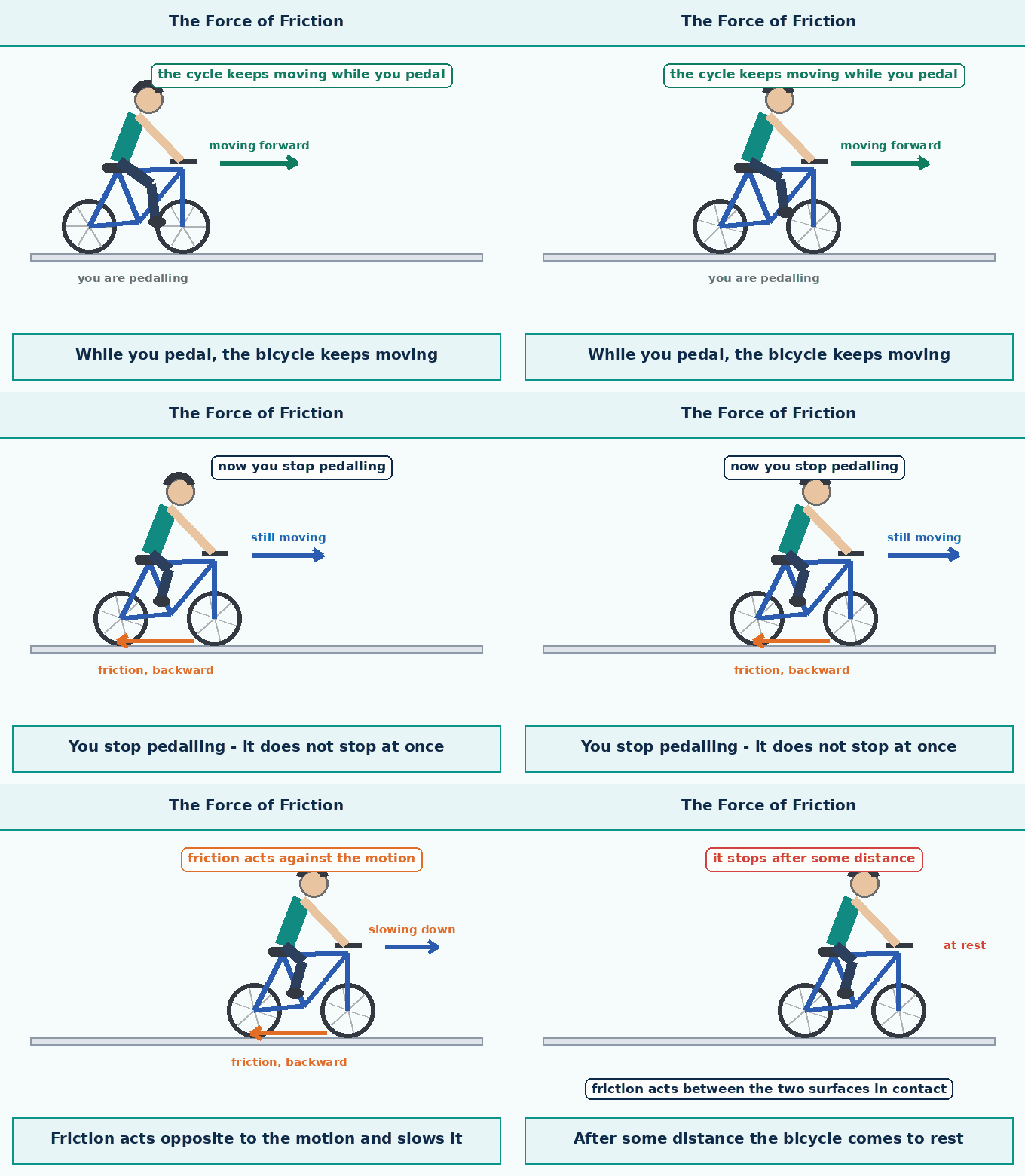
What do we mean by the force of friction?
Friction
rubbing between two surfaces
Force
a push or a pull
↓
The force that acts between two surfaces in contact, always opposite to the direction of the motion
Everyday example: you stop pedalling, and the cycle still rolls a little before it stops.
So what does the force of friction do?
-
GIF Watch: it makes a moving object slow down and eventually come to rest
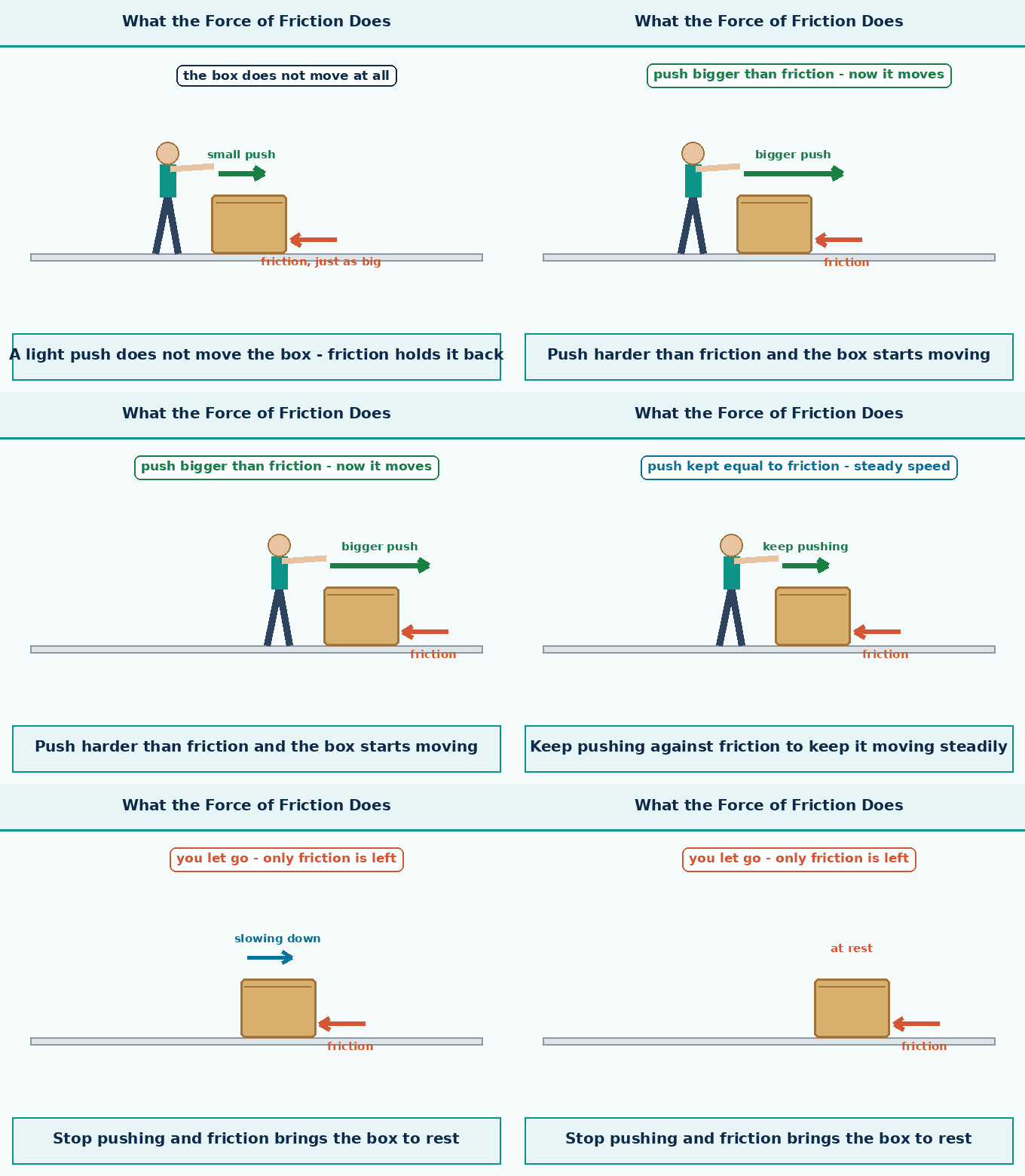
- It makes a moving object slow down and eventually come to rest.
- On a moving object we have to continuously apply a force to counter the force of friction.
- Otherwise friction brings the object to rest.
- For an object at rest, friction must be beaten before it will move.
- Example — You push a box lightly and it does not move. You push harder and it moves. It starts moving only when your force is larger than the force of friction. A net force then acts on the box in the direction of its motion.
What happens to a ball after you kick it?
You kick the ball
a net force acts on it in the forward direction
↓
The ball rolls forward
friction acts on it, backward
↓
Its velocity keeps decreasing
nothing is pushing it any more
↓
The ball comes to rest on its own, after travelling some distance
📌 Note
- Multiple forces may act on an object, but its motion depends only on the net force.
What if the force of friction disappears in the world?
- Objects once set in motion would never stop on their own.
- We could not walk, because our feet would slip on the ground.
- Vehicles could not start or stop safely.
- Nothing kept on a table would stay in place.
🔧
Activity 6.1: Let us investigate
 GIF
Watch: collect four coins of Rs 10, one large strong rubber band and an adhesive tape
GIF
Watch: collect four coins of Rs 10, one large strong rubber band and an adhesive tape
What to do
- Collect four coins of Rs 10, one large strong rubber band and an adhesive tape.
- Locate level horizontal surfaces of different materials — wooden table top, cemented floor, laminated table top, and polished marble or tiled floor.
- Stack the four coins and secure them with adhesive tape around the sides.
- Hold the rubber band slightly stretched between your forefinger and thumb on the wooden table top.
- Mark points A and B at its ends, and a mark C up to which you will stretch the rubber band.
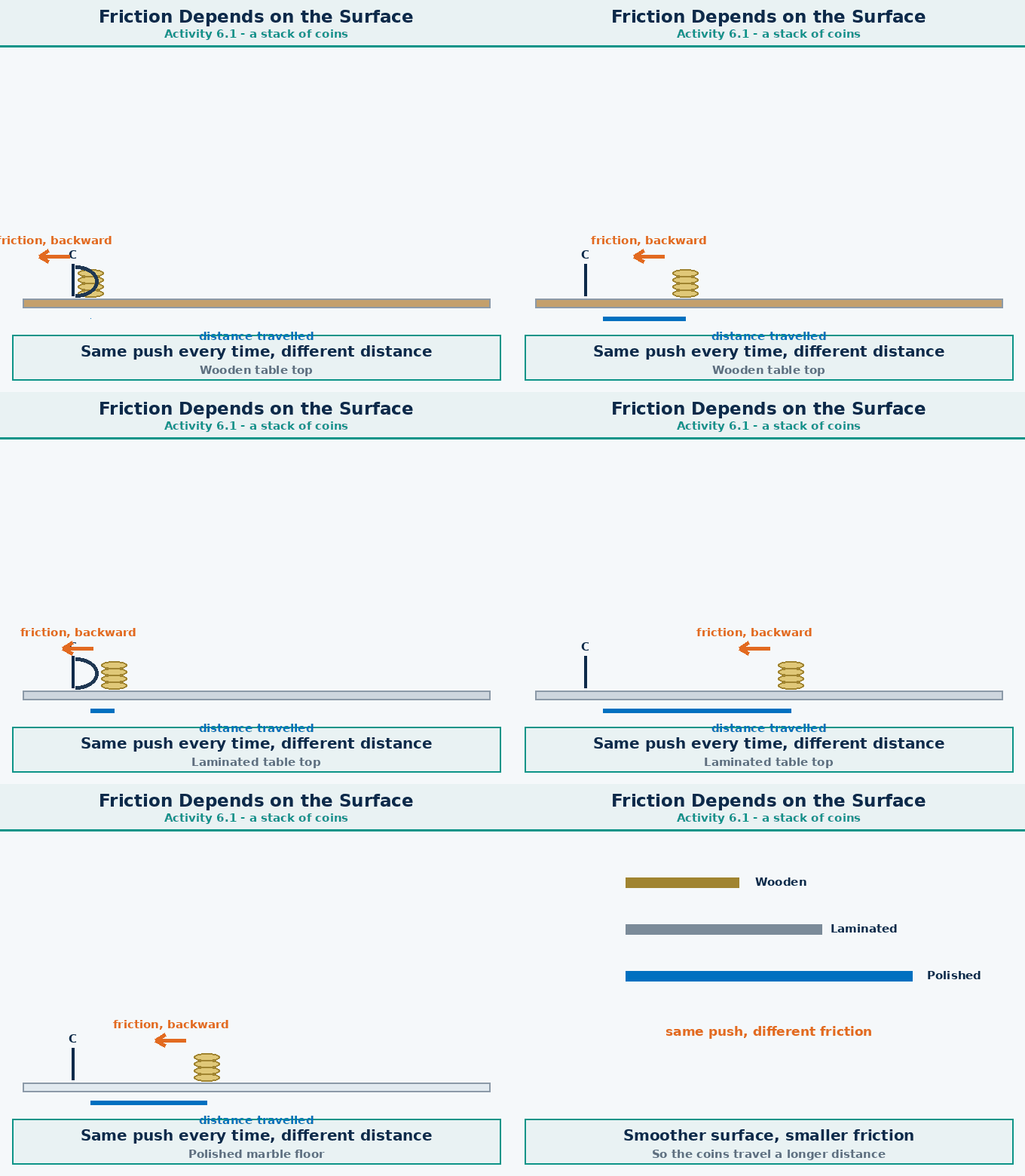
- Place the stack of coins near the middle of A and B, push it back till the rubber band reaches mark C, then release it.
- Measure the distance travelled from C and record it. Repeat twice.
- Repeat on the laminated table top, keeping A, B and C at the same distances.
- Repeat on a horizontal polished marble or tile floor.
What you see
- After losing contact with the rubber band, the velocity of the stack decreases gradually and it comes to rest.
- On the laminated table top the stack travels a larger distance, and its velocity decreases more slowly.
- On the polished marble or tile floor it travels an even larger distance, and the velocity decreases even more slowly.
What it shows
- The rubber band is stretched by the same amount every time, so the same force is applied every time.
- Even then the distance travelled on different surfaces changes.
- This indicates that the force of friction on these surfaces is different.
What happens to the stack of coins, step by step?
| Stage | Forces acting | What happens |
|---|---|---|
| Before release | Forces are balanced | The stack is stationary |
| At release | Force by the rubber band is larger than friction, so a net force acts forward | The velocity changes from zero to a certain value, that is the stack accelerates forward |
| After losing contact | Only friction acts, opposite to the motion | The velocity decreases gradually and the stack comes to rest |
🔬 Think as a Scientist
-
Suppose you find an object and a horizontal floor having such smooth surfaces that the force of friction between them is zero. Imagine, what will happen if you repeat steps 3 and 4 of Activity 6.1 with such an object and a horizontal floor? Will the velocity of the object decrease? Will the object ever come to rest or continue moving forever?
View answer
Answer- This is a thought experiment. We do a thought experiment when the conditions needed are difficult to create in the real world.
- With friction zero, no force acts on the object against its motion once it leaves the rubber band.
- So its velocity will not decrease.
- The object will never come to rest. It will keep moving.
- Suggested answer. The book does not print an answer for this question.
🔧
Activity 6.2: Let us measure
 GIF
Watch: take a spring balance and a wooden block
GIF
Watch: take a spring balance and a wooden block
What to do
- Take a spring balance and a wooden block.
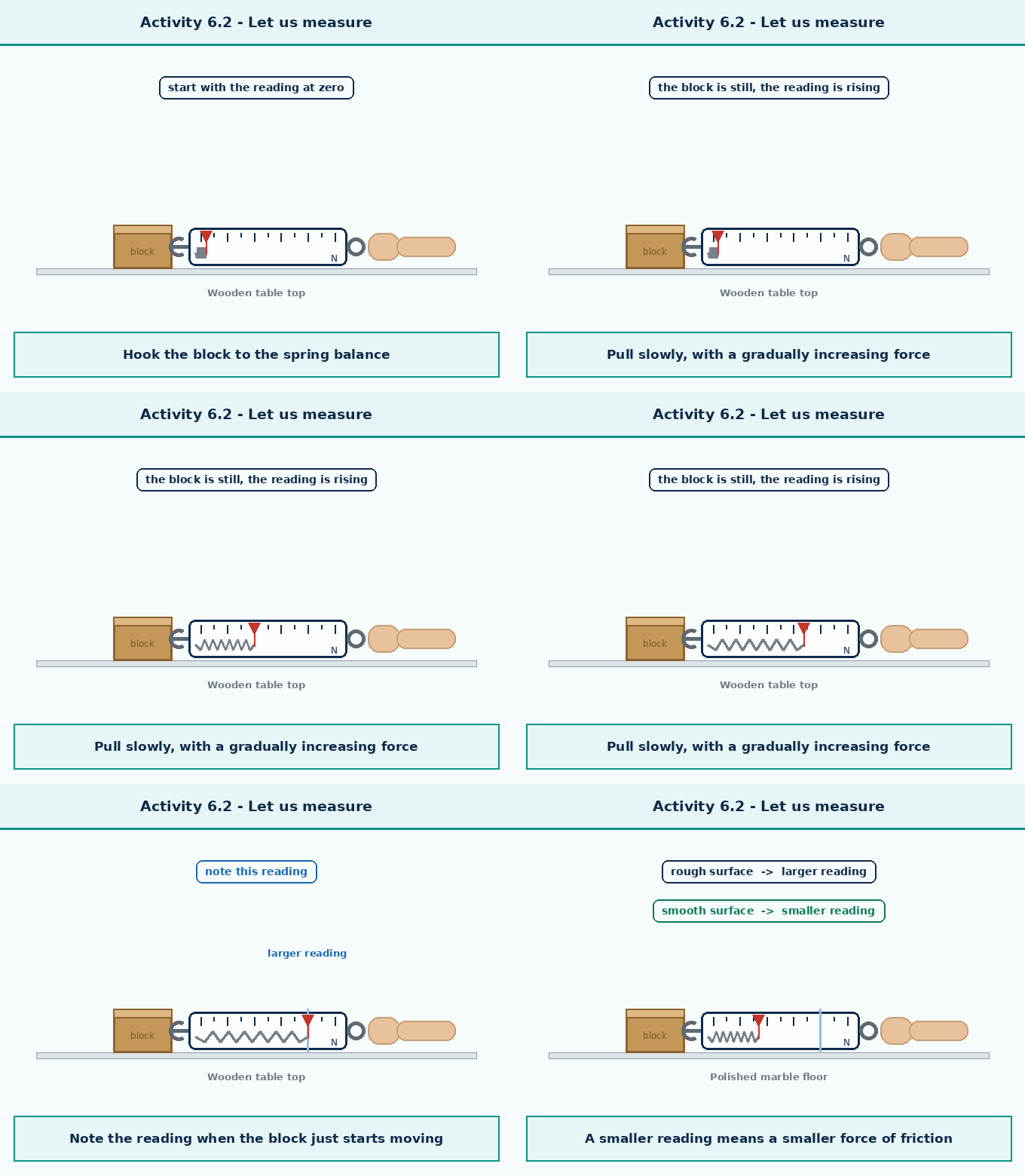
- Place the spring balance in a horizontal position on one of the surfaces used in Activity 6.1, and check that its scale reading is zero.
- Attach the wooden block to the hook of the spring balance.
- Pull the spring balance with gradually increasing force and note the reading when the block just starts moving.
- Repeat on the remaining three surfaces from Activity 6.1.
- Compare the readings for all surfaces.
What you see
- The readings of the spring balance are different for different surfaces.
- The reading is smallest for the surface on which the stack of coins travelled the largest distance.
- The reading is largest for the surface on which the distance travelled was the smallest.
What it shows
- The reading of the spring balance gives an approximate measure of the force of friction between the block and the surface.
- A smaller reading indicates a smaller force of friction.
- A larger reading indicates a larger force of friction.
What do the two activities together tell us?
- From Activities 6.1 and 6.2 we conclude the following.
- When the force of friction is smaller, the velocity of the stack of coins decreases more slowly.
- It then travels a larger distance before coming to rest.
📋 Revise, Reflect, Refine, Q1, page 112
Using a horizontal force F, a table is moved across the floor at a constant velocity. How much is the frictional force exerted by the floor on the table?
View Answer →
🚀 Ready to Go Beyond, page 97
- For an object being pushed, some other forces also act on it apart from the applied force and the force of friction.
- Let's study them below.
What forces act on an object kept on the floor?
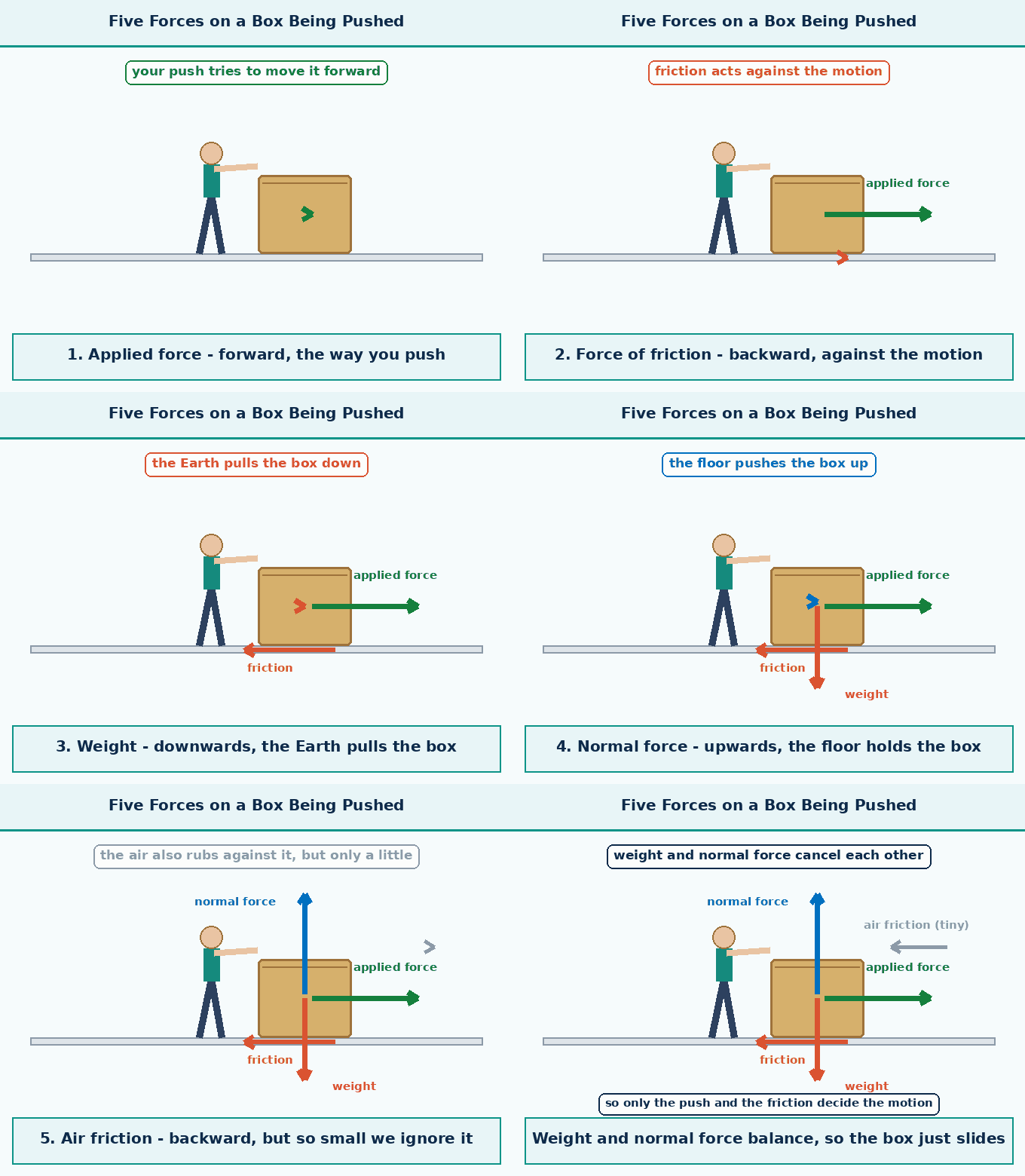
- Five forces can act on a box being pushed along the floor.
| Force | Direction | What it does |
|---|---|---|
| Applied force | Forward, the way you push | Tries to move the box forward |
| Force of friction | Backward, opposite to the motion | Opposes the motion, slows the box |
| Gravitational force, that is the weight | Downwards | Pulls the box towards the Earth |
| Normal force | Upwards, perpendicular to the surface | Balances the weight, so the box does not sink into the floor |
| Force of friction by the air | Backward, opposite to the motion | Opposes the motion, but is usually so small it can be neglected |
- The weight and the normal force are balanced, so the box does not move up or down.
- Only the applied force and friction decide whether it moves forward.
GIF
Watch: five forces can act on a box being pushed along the floor
🔬 Meet a Scientist — Galileo Galilei
- In ancient times it was well recognised that a force was required to move a stationary object or to stop a moving object.
- But was a force required to keep an object moving with a constant velocity?
- For ages it was mistakenly thought that a force was indeed required to maintain such motion.
- In the 17th century Galileo Galilei argued through a series of thought experiments that if a body moves along a horizontal plane and all impediments to its motion are removed, it will continue to move indefinitely. (In simple words, if an object is in motion, it continues to be in motion.)
🔬 Meet a Scientist — Isaac Newton
- Isaac Newton framed the three laws of motion.
- He used the concept of inertia in his laws.
- The unit of force is named after Newton.
📝 Important points about the force of friction
| Point | Detail |
|---|---|
| Where it arises | Between the two surfaces in contact |
| Direction | Opposite to the direction of the applied force, or of the motion |
| When the object starts moving | When the applied force is larger than the force of friction |
| What it does to a moving object | Decreases its velocity and finally brings it to rest |
| What it depends on | The nature of the surfaces in contact |
| How it is measured | Approximately, by the reading of a spring balance |
| Smaller friction | Velocity decreases more slowly, object travels a larger distance |
💡 Worth remembering
The same push sends the coins a short way on a wooden table and a long way on polished marble. The push did not change. The surface did.
✅ Quick self-check
-
In which direction does the force of friction act on a moving object?
View Answer
Opposite to the direction of its motion. -
On which surface will a stack of coins travel the largest distance — wooden table top or polished marble floor?
View Answer
Polished marble floor. -
A block is pulled at a constant velocity with a force of 8 N. What is the force of friction on it?
View Answer
8 N, opposite to the direction of motion.
Key terms and units
| Term | Meaning | Unit |
|---|---|---|
| Force of friction | The force between two surfaces in contact, opposing motion | newton (N) |
| Normal force | The upward force applied by a surface on the object placed on it | newton (N) |
| Thought experiment | An experiment imagined when the real conditions are hard to create | - |
| Inertia | The tendency of objects to resist change in their state of rest or uniform motion | - |
