
 You are here
What happens in a tug of war?
- Two teams pull a rope in opposite directions.
- If both teams pull with equal force, the rope does not move.
- If one team pulls harder, the rope moves towards that team.
What are balanced forces?
- Two forces that are equal in magnitude but opposite in direction are called balanced forces.
- When the forces on an object are balanced, the object does not move.
- Example — In a tug of war, both teams pull the rope with equal force. The rope does not move.
GIF
Watch: two forces that are equal in magnitude but opposite in direction are called
![6.2 Balanced and Unbalanced Forc - How Forces Affect Moti - [Teachoo] - Concepts](https://cdn.teachoo.com/6c19802f-db44-4628-9f2c-92209c9374aa/animation-for-what-are-balanced-forces-.-a-short-looping-gif-three-or-four-beats-drawn-in-the-flat-classroom-style-of-the-chapter.-beat-1.gif)
What happens when the two forces are equal?
50 N towards the left
one team pulls
50 N towards the right
the other team pulls
↓
Net force is zero, so the rope does not move
What are unbalanced forces?
- When the two forces are not equal in magnitude, they are called unbalanced forces.
- The object then moves in the direction of the larger force.
- Example — In a tug of war, one team pulls harder. The rope moves towards that team.
GIF
Watch: when the two forces are not equal in magnitude, they are called unbalanced forces
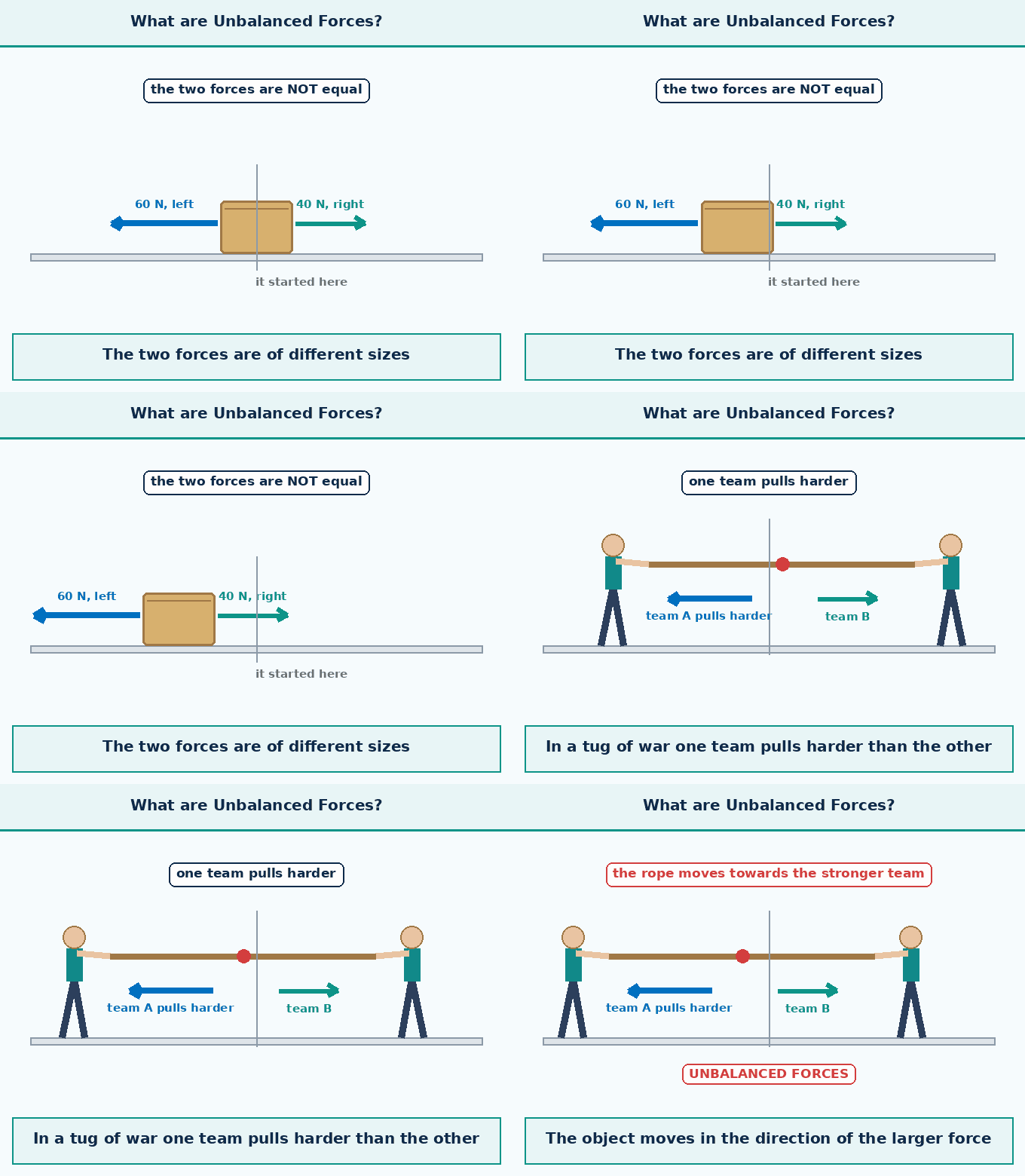
What happens when the two forces are not equal?
60 N towards the left
this team pulls harder
50 N towards the right
the other team pulls
↓
Net force is 10 N towards the left, so the rope moves that way
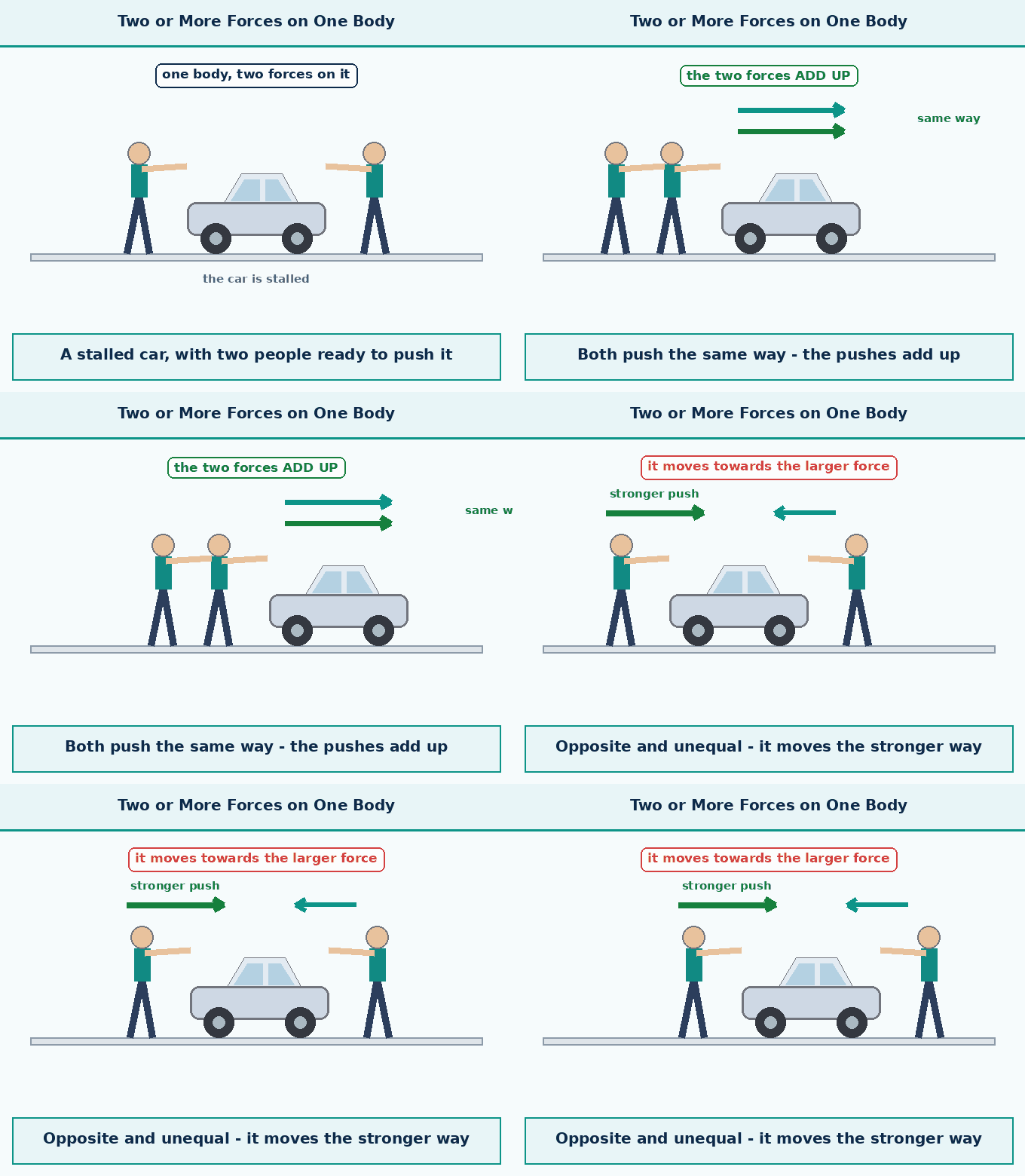
What happens when two or more forces act on a body?
- In real life, situations seldom exist where only one force acts on an object.
- Usually there is more than one force acting on an object.
-
Example — Two people push a stalled car.
- If they push in the same direction, the two forces add up and the car moves faster.
- If they push in opposite directions with equal force, the forces are balanced and the car does not move.
- If they push in opposite directions with unequal force, the car moves in the direction of the larger force.
GIF
Watch: in real life, situations seldom exist where only one force acts on an object
What is net force?
- If the forces applied on an object are not balanced, a non-zero net force acts on the object.
- Net force is the single force that has the same effect as all the forces together.
How is net force calculated in different situations?
| Situation | How to find the net force | Direction of the net force |
|---|---|---|
| Two forces in opposite directions, unequal in magnitude | Difference of the two magnitudes | Along the force of larger magnitude |
| Two forces in the same direction | Sum of the two magnitudes | Same as the direction of the two forces |
Two forces act on one object
how do we find the net force?
Same direction
Add the two magnitudes
Net force acts in that same direction
Example:
10 N + 6 N = 16 N towards the right
Opposite directions
Subtract the smaller from the larger
Net force acts along the larger force
Example:
10 N − 6 N = 4 N towards the larger one
Solved example — net force on a block
🔢 Example 6.1, page 96
Two forces of 10 N and 6 N are acting on a block lying on the table. What is the magnitude and the direction of the net force acting on the block in each case?
Case (a) — both forces towards the right
-
GIF Watch: in real life, situations seldom exist where only one force acts on an object
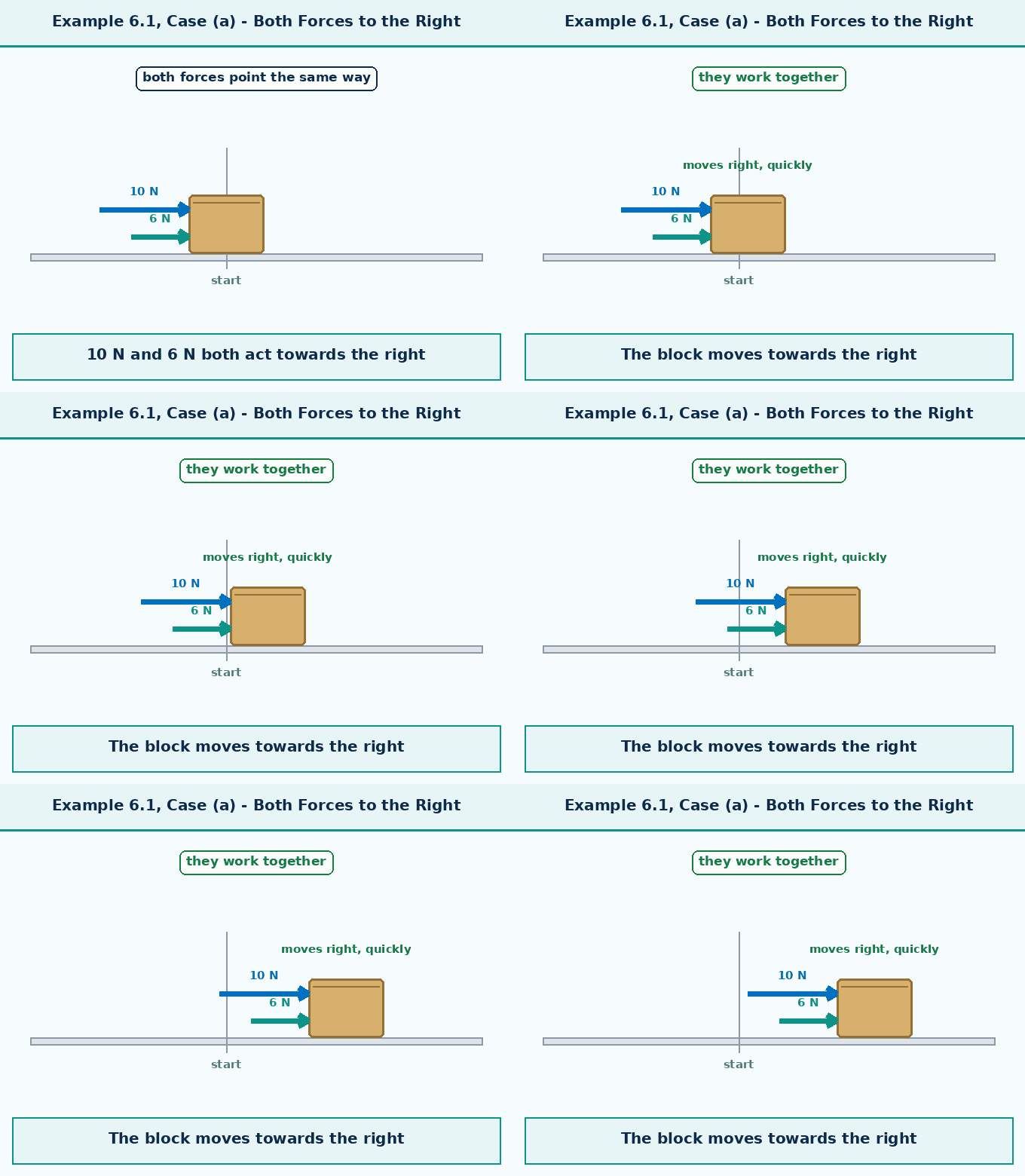
- Given: 10 N towards the right, 6 N towards the right
- Same direction, so the net force is the sum.
- Net force = 10 N + 6 N = 16 N
- Answer: 16 N, acting towards the right side.
Case (b) — 10 N towards the right, 6 N towards the left
GIF
Watch: in real life, situations seldom exist where only one force acts on an object
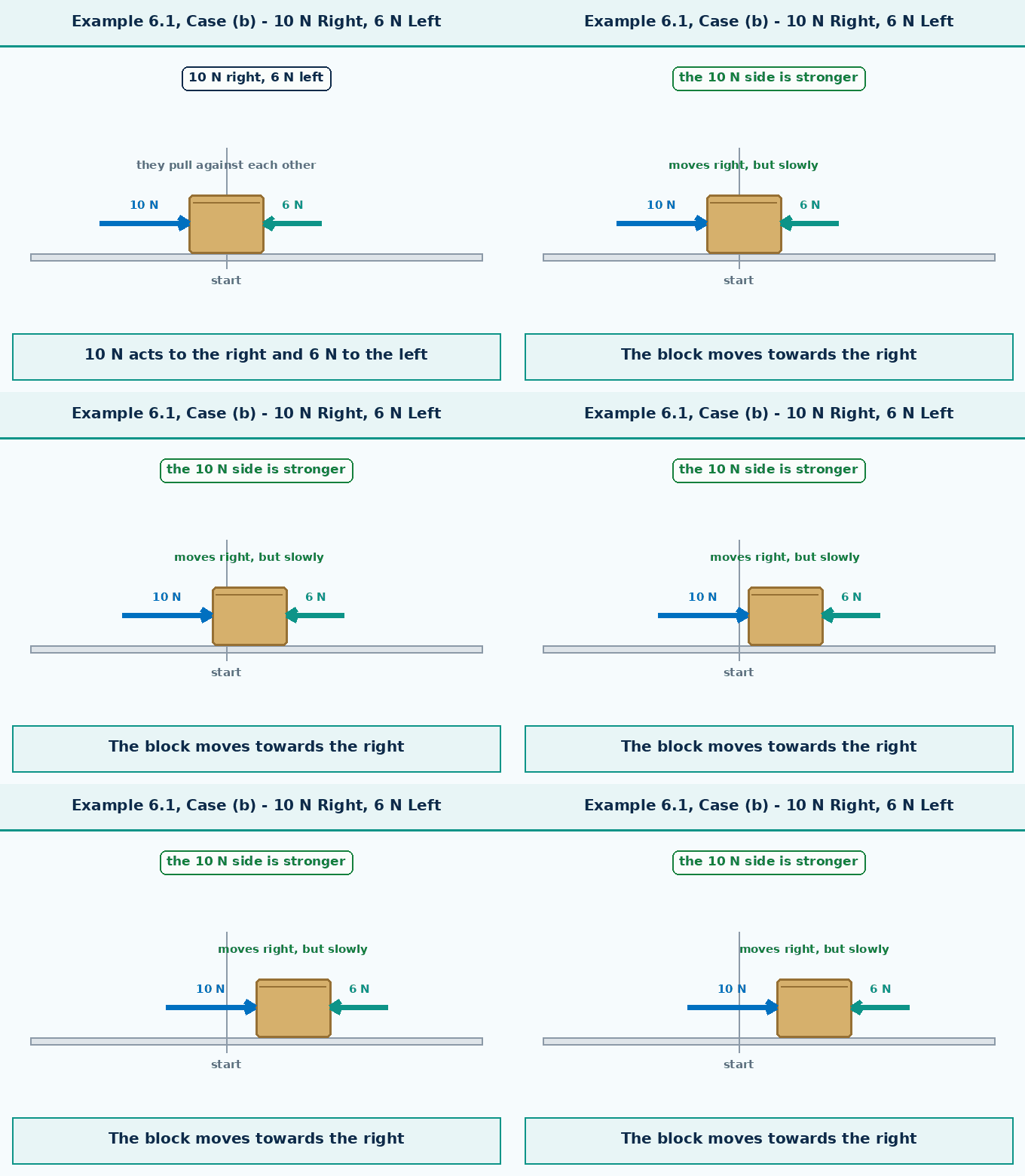
- Given: 10 N towards the right, 6 N towards the left
- Opposite directions, so the net force is the difference.
- Net force = 10 N − 6 N = 4 N
- The larger force is towards the right.
- Answer: 4 N, acting towards the right side.
Case (c) — 6 N towards the right, 10 N towards the left
GIF
Watch: in real life, situations seldom exist where only one force acts on an object
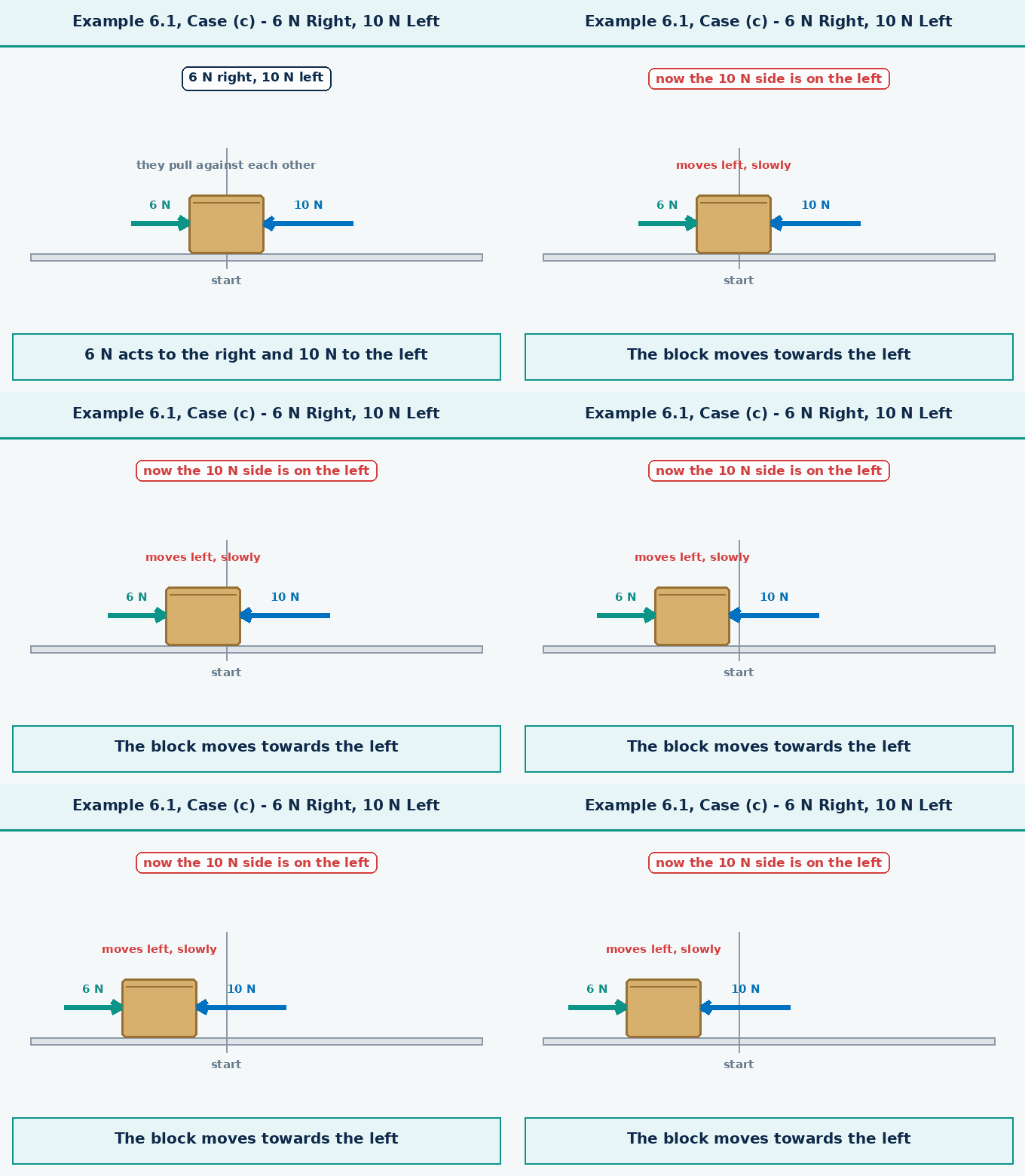
- Given: 6 N towards the right, 10 N towards the left
- Opposite directions, so the net force is the difference.
- Net force = 10 N − 6 N = 4 N
- The larger force is towards the left.
- Answer: 4 N, acting towards the left side.
Pause and Ponder (Page 97) — Questions 1 and 2
-
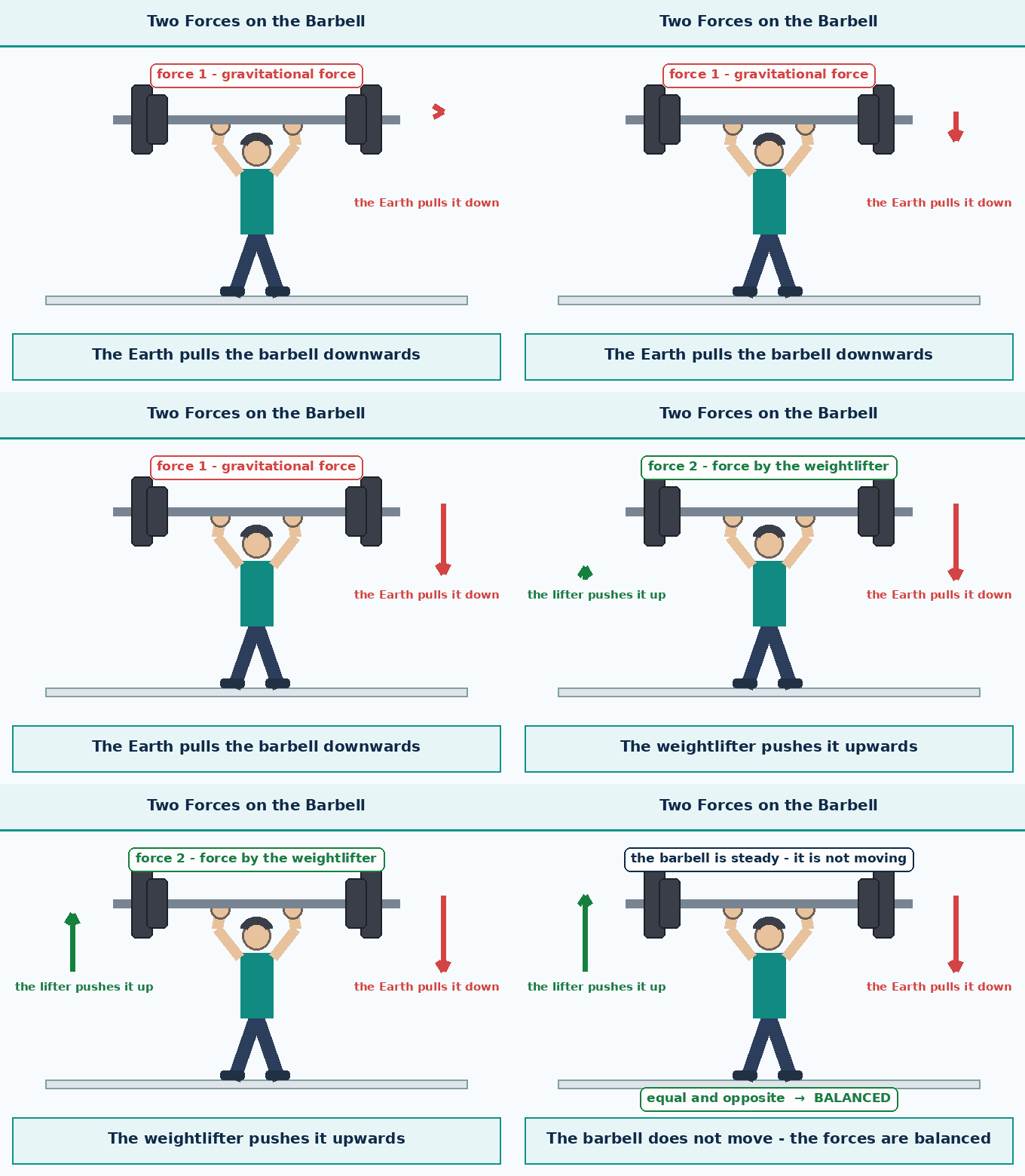
1. A weightlifter lifts a barbell. List two forces that are acting on the barbell. Are these forces balanced if the weightlifter keeps the barbell steady?GIF Watch: a weightlifter lifts a barbell. List two forces that are acting on the barbell.
View answer
Answer- The two forces are the gravitational force by the Earth acting downwards, and the force applied by the weightlifter acting upwards.
- The barbell is steady, so it is not moving.
- So the two forces are balanced.
-
2. Two players R and S are participating in an arm-wrestling match. At the instant, when the arms tilt to the front direction (out of the page towards you), are the forces exerted by the players balanced? If not, which player exerted the larger force?
View answer
Answer- The arms tilt in the front direction.
- It means the force exerted by S is more than the force of R.
- So the forces are unbalanced, and S exerts the larger force.
GIF Equal forces keep the arms steady, then S pushes harder and the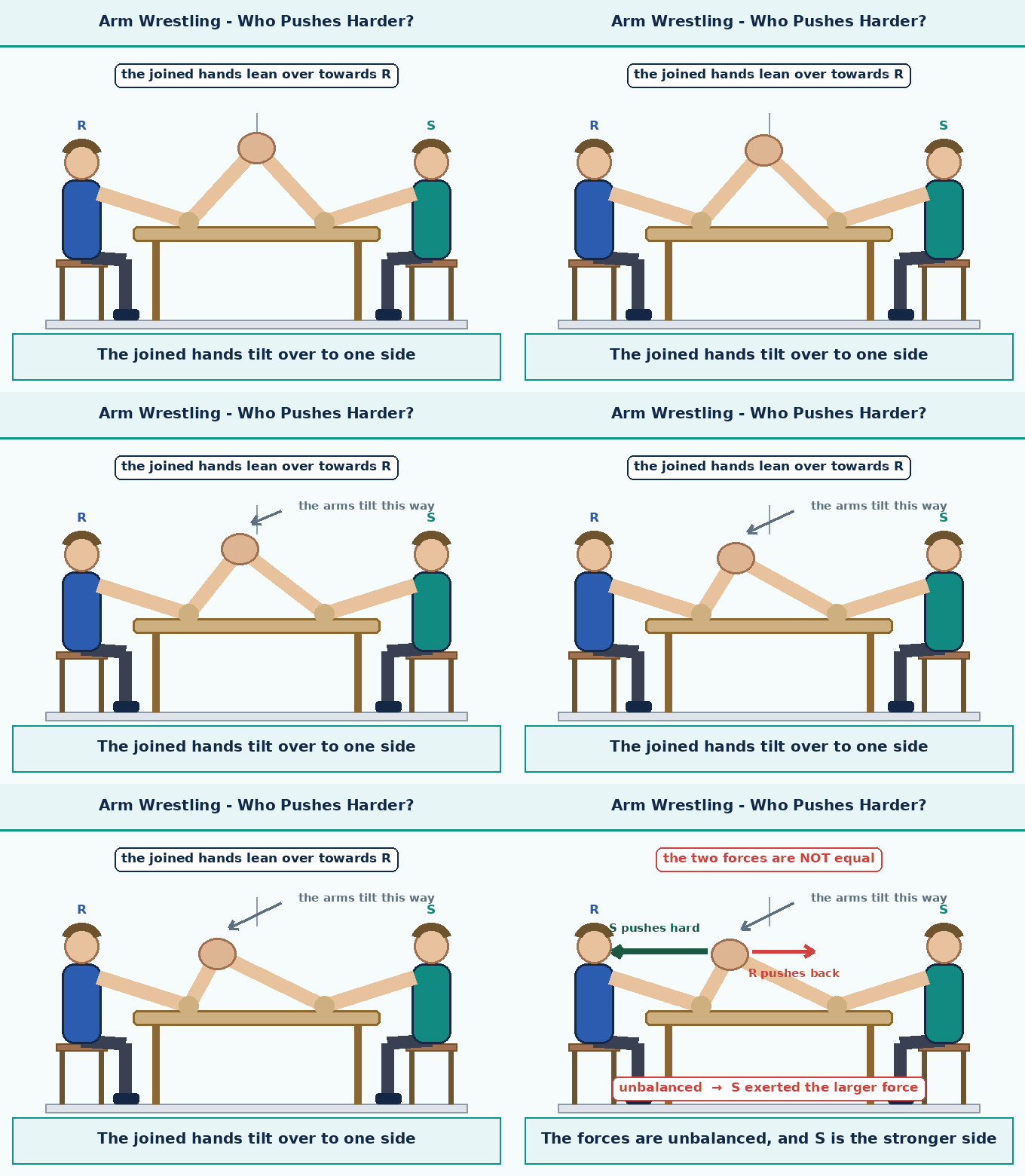
📋 Revise, Reflect, Refine, Q3, page 112
Two blocks P and Q on a smooth horizontal surface are shown in Fig. 6.36a and Fig. 6.36b. Two forces of magnitudes 4 N and 5 N are acting in opposite directions on block P, while block Q is moving with a constant velocity. Which of the following statement is correct? (i) P experiences a net force and Q does not experience a net force. (ii) P does not experience a net force and Q experiences a net force. (iii) Both P and Q experience a net force. (iv) Neither P nor Q experiences a net force.
View Answer →
📋 Revise, Reflect, Refine, Q4, page 113
While practising for the snake boat race (Vallum kalli in Kerala), 100 oarsmen are rowing a boat together. Out of these, 95 row backwards to propel the boat forward. But by mistake, 5 oarsmen row in the opposite direction. If each oarsman applies a horizontal force of 200 N, what is the net force on the snake boat? (Ignore drag forces, air friction, etc.)
View Answer →
📝 Important points about balanced and unbalanced forces
| Point | Detail |
|---|---|
| Balanced forces | Equal in magnitude, opposite in direction |
| Effect of balanced forces | The object does not move |
| Unbalanced forces | Not equal in magnitude |
| Effect of unbalanced forces | The object moves in the direction of the larger force |
| Net force when directions are opposite | Difference of the magnitudes, along the larger force |
| Net force when directions are the same | Sum of the magnitudes, in the same direction |
Two more everyday examples
🔢 Example — a heavy box being moved on the floor
-
Which forces are acting on the box?
- The force applied by your hand, in the forward direction
- The force of friction, opposite to the direction of the motion
- If both forces are equal, the forces are balanced and the box does not start moving.
- If the applied force is larger, the box moves in the forward direction.
🔢 Example — a ball floating on water
-
Which forces are acting on the ball?
- The gravitational force by the Earth, acting downwards
- The buoyant force by the liquid, acting upwards
- The ball keeps floating without moving up or down, so the two forces are balanced.
🚀 Ready to Go Beyond, page 96
-
Sometimes two forces do not act parallel or opposite to each other, but act at an angle. Finding the net force in such cases is learnt in higher grades.
- Example: A kite is flying in the sky. The string pulls it downward while the wind pushes it sideways. The two forces are not on the same line. Beyond the textbook.
-
Sometimes equal and opposite forces are applied to the two ends of an extended object. This makes the object rotate.
- How does it rotate? The two forces are equal and opposite, so the object does not shift from its place. But they act on two different ends, not on the same point. One end is pushed one way and the other end is pushed the other way, so the object turns. Beyond the textbook.
- Example: Applying equal and opposite forces to a handlebar or a tap makes it turn.
- Example: Your thumb pushes one side of the tap knob while your index finger pulls the other side to twist it open. The knob does not move away from the tap, it only turns, and the water starts flowing. Beyond the textbook.
- Example: One hand pushes one end of the handlebar forward while the other hand pulls the other end backward, so the handlebar turns and the bicycle changes its direction. Beyond the textbook.
💡 Worth remembering
The rope in a tug of war does not move when the forces are balanced, but it moves the moment one team pulls even a little harder.
✅ Quick self-check
-
What are balanced forces?
View Answer
Two forces equal in magnitude and opposite in direction. -
Forces of 12 N and 7 N act on a box in opposite directions. What is the net force and in which direction?
View Answer
12 N − 7 N = 5 N, along the direction of the 12 N force. -
In which direction does the rope move when the forces on it are unbalanced?
View Answer
In the direction of the larger force.
Key terms and units
| Term | Meaning | Unit |
|---|---|---|
| Balanced forces | Two forces equal in magnitude and opposite in direction | newton (N) |
| Unbalanced forces | Forces that are not equal in magnitude | newton (N) |
| Net force | The single force that has the same effect as all the forces together | newton (N) |
