
 You are here
Which microorganisms are generally found in food?
| Food item | Microorganism |
|---|---|
| Bread and cake | Yeast |
| Idli and dosa batter | Lactobacillus and yeast |
| Curd | Lactobacillus |
| Bhatura | Yeast |
What is yeast? In which foods do we use it, and how?
![2.4.2 Microorganisms and food - The Invisible Living W - [Teachoo] - Concepts](https://cdn.teachoo.com/88acd8fd-8b5e-4e85-a62e-c6e4d84f969b/image-a-bowl-of-dough-that-has-risen-and-turned-fluffy-because-of-yeast-with-gas-bubbles-inside-next-to-flat-dough-without-yeast.webp)
What does yeast make inside dough?
Yeast in dough
It respires and breaks food
Carbon dioxide
Forms bubbles in dough
Makes it soft and fluffy
Example:
Bread
Cakes
Alcohol
Made in small amount
Gives a different smell
Example:
The smell of risen dough
Yeast
- Yeast is a microorganism (a fungus).
- It breaks down sugar and releases carbon dioxide gas.
- The gas bubbles make the dough soft and fluffy.
How does yeast make items like bread fluffy?
How does yeast make bread fluffy?
Yeast respires in the dough
It feeds on the sugars in the flour
↓
It releases carbon dioxide
The gas forms tiny bubbles
↓
Bubbles push through the dough
The dough rises
↓
The baked bread is soft and fluffy
- Yeast respires and releases carbon dioxide .
- The gas forms bubbles that make the dough rise and turn fluffy.
🥝
Activity 2.8 — Let us perform
How do we test what yeast does to dough?
Take two bowls, A and B
200 g of flour and a pinch of sugar in each
↓
Add yeast to bowl A only
Bowl B has no yeast — it is the comparison
↓
Knead both with warm water
Make a soft dough in each bowl
↓
Cover and keep them warm
A damp cloth, in a warm place, for 4–5 hours
↓
Bowl A has risen, turned fluffy and smells different; bowl B has not
In this Activity, we will knead two bowls of dough, one with yeast and one without, and compare them.
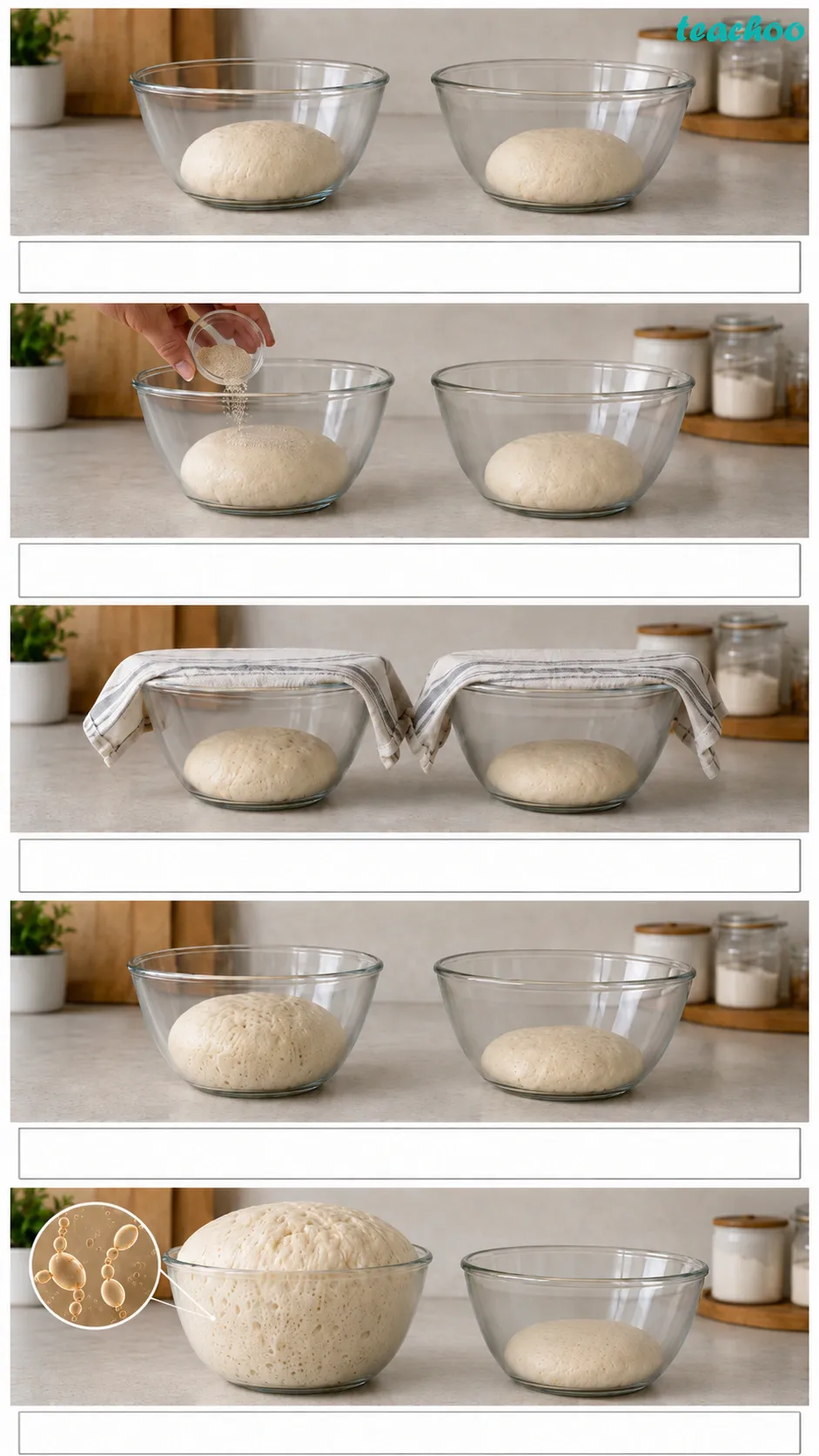
Bowl A
Add yeast into Bowl A only.
Bowl B
Bowl A
Prepare 2 bowls of Dough.
Leave them for few hours.
Cover both bowls and keep them in a warm place.
Bowl B
Bowl A
Bowl B
Bowl B
Bowl A
Dough in Bowl A rises and smells different; Bowl B stays the same.
Materials needed
Flour, water, sugar, yeast, and two bowls (A and B).
Procedure
1. In bowl A, mix flour, water, a little sugar, and yeast into a dough.
2. In bowl B, mix flour, water, and sugar into a dough, but add no yeast.
3. Cover both bowls and keep them in a warm place.
4. Leave them for a few hours.
5. Compare the size and smell of the dough in both bowls.
2. In bowl B, mix flour, water, and sugar into a dough, but add no yeast.
3. Cover both bowls and keep them in a warm place.
4. Leave them for a few hours.
5. Compare the size and smell of the dough in both bowls.
Observation
Bowl A rises and smells different; bowl B stays the same.
Explanation
The yeast respires, releasing carbon dioxide (fluffiness) and a little alcohol (smell). This is used in breads, cakes, idli, dosa, and bhatura.
Yeast releases carbon dioxide, which makes the dough in bowl A rise and turn fluffy.
◆ Summary
- Yeast dough rises and smells
- Caused by carbon dioxide gas
- Used in breads and cakes
What is fermentation? Give examples and the microbe involved.
- Fermentation is the breakdown of sugars by microbes, releasing gas or acid.
| Fermented food | Microbe |
|---|---|
| Bread, cake | Yeast |
| Idli, dosa | Lactobacillus |
| Curd | Lactobacillus |
How is curd prepared? Give the steps.
How is curd made from milk?
Warm the milk
Take lukewarm milk in a bowl
↓
Add a spoon of curd
Mix it into the warm milk
↓
Keep it in a warm place
Leave it undisturbed overnight
↓
The milk sets into curd
- Warm the milk, add a spoon of curd, and keep it warm overnight.
- The milk sets into curd.
Which microorganism is responsible for curd, and how?
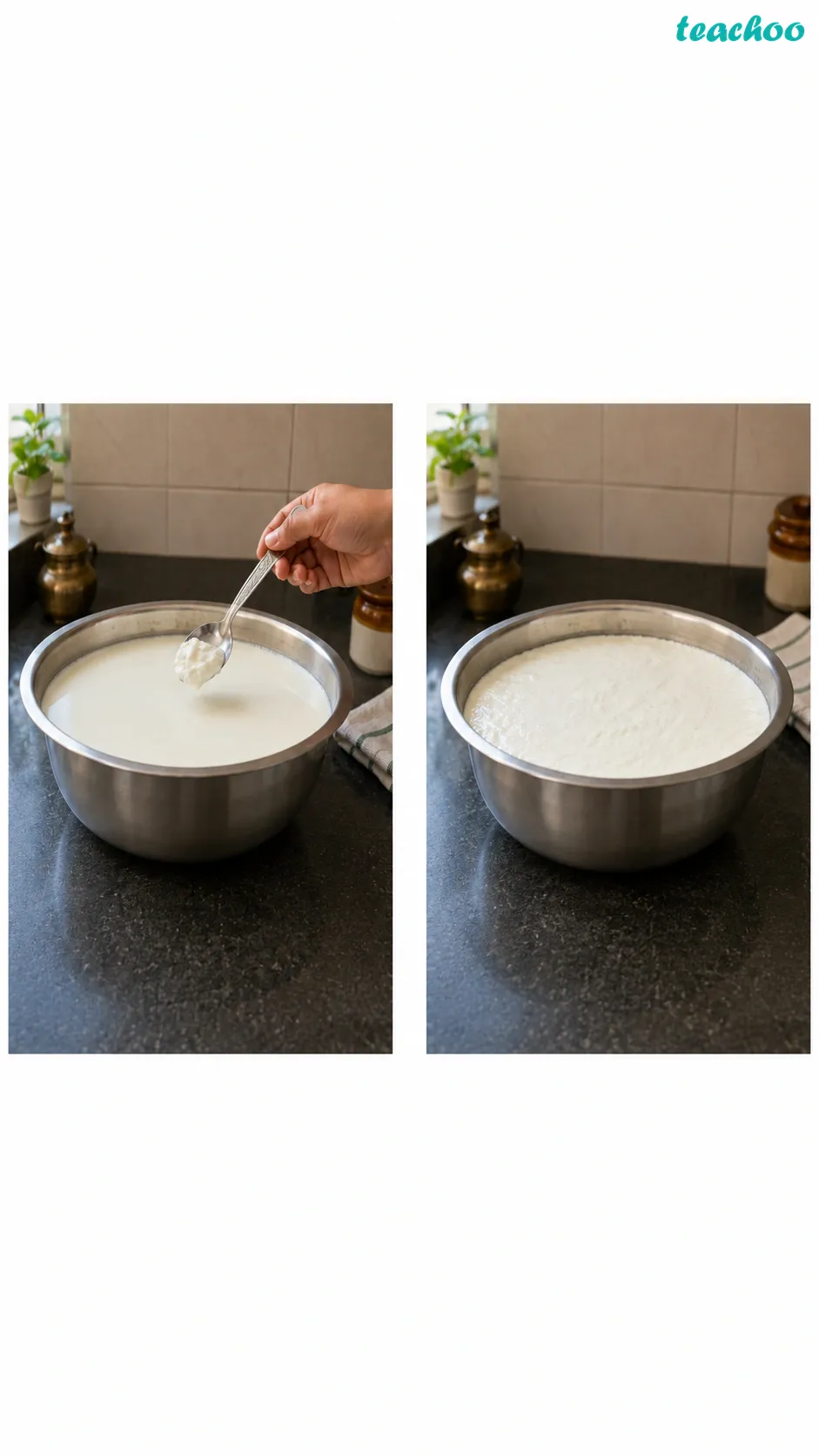
How does warm milk turn into curd?
Warm milk + a spoon of curd
Curd carries Lactobacillus bacteria
↓
Lactobacillus multiplies
It feeds on lactose, the sugar in milk
↓
Lactic acid is produced
Not alcohol, as yeast would make
↓
The milk sets into curd and tastes sour
Milk
Curd
Lactobacillus
Table 2.4 — record what happens to the milk
What changes in warm milk and in cold milk?
|
Change in the appearance of milk
Bowl A |
Change in the appearance of milk
Bowl B |
Change in the colour of milk
Bowl A |
Change in the colour of milk
Bowl B |
Possible reason | |
|---|---|---|---|---|---|
| Prediction | Milk will thicken and set | Milk will stay runny | Stays white | Stays white | Warmth helps the microbes in curd act on the milk |
| Observation | Milk has set into curd and tastes a little sour | Milk has not set; it is still liquid | White, slightly dull | White | Lactobacillus grows well in warmth and turns milk into curd; in the cold bowl it stays inactive |
What are legumes?
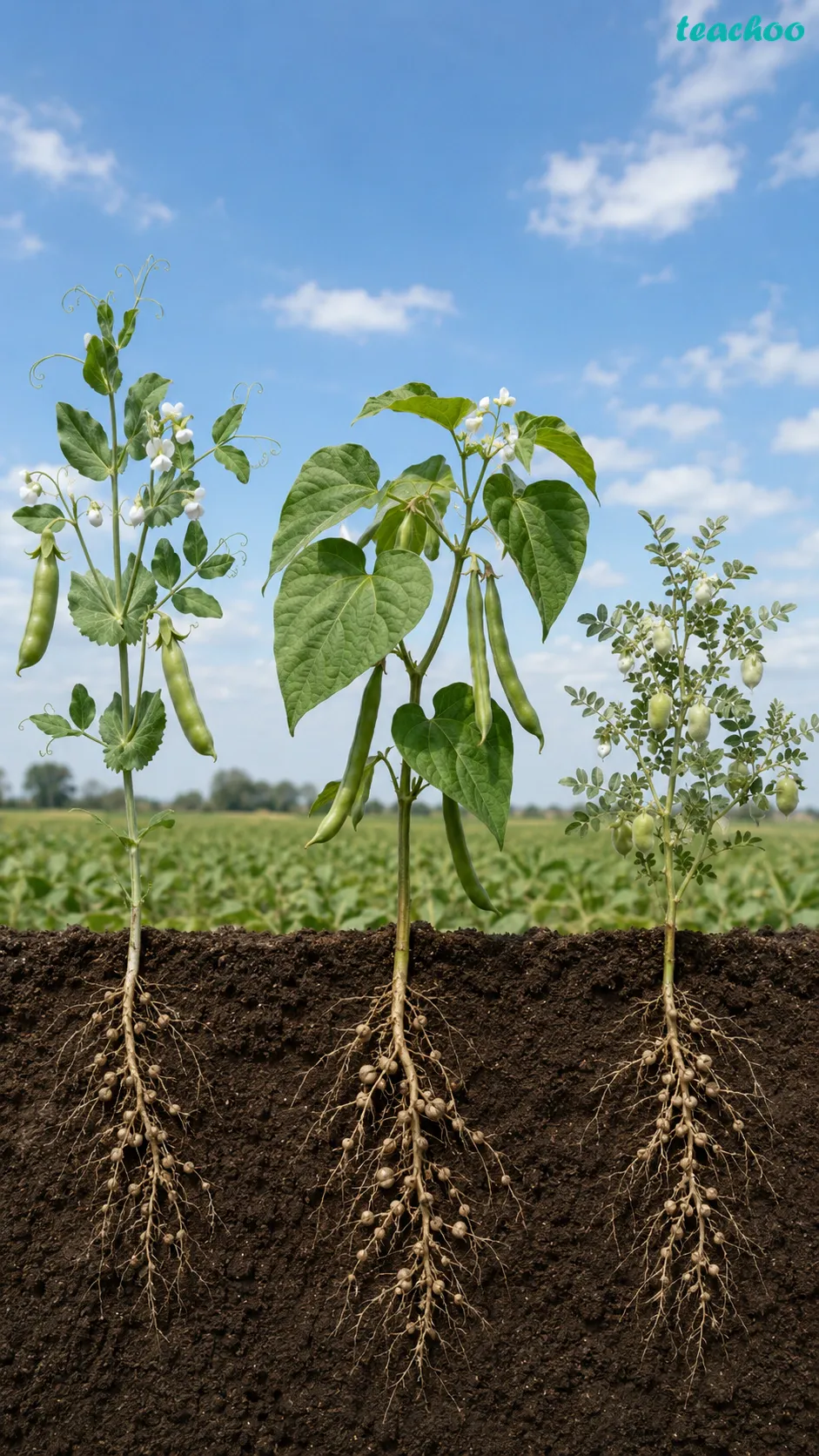
Legumes
Pod-bearing plants
beans, peas and lentils
Root nodules
swellings that house helpful bacteria
↓
Legumes are pod-bearing plants whose roots carry nodules full of helpful bacteria.
Pea Plant
Bean Plant
Gram Plant
- Legumes are pod-bearing plants like beans, peas and lentils.
- Their roots carry nodules full of helpful bacteria.
Which microorganisms are present in legumes?
Rhizobium
Lives in root nodules
of legume plants
Fixes nitrogen
from the air into the soil
↓
Rhizobium is a bacterium that lives in legume root nodules and fixes nitrogen.
- Rhizobium bacteria live in the root nodules of legumes.
- They fix nitrogen from the air into the soil.
Why do farmers grow legumes along with other crops?
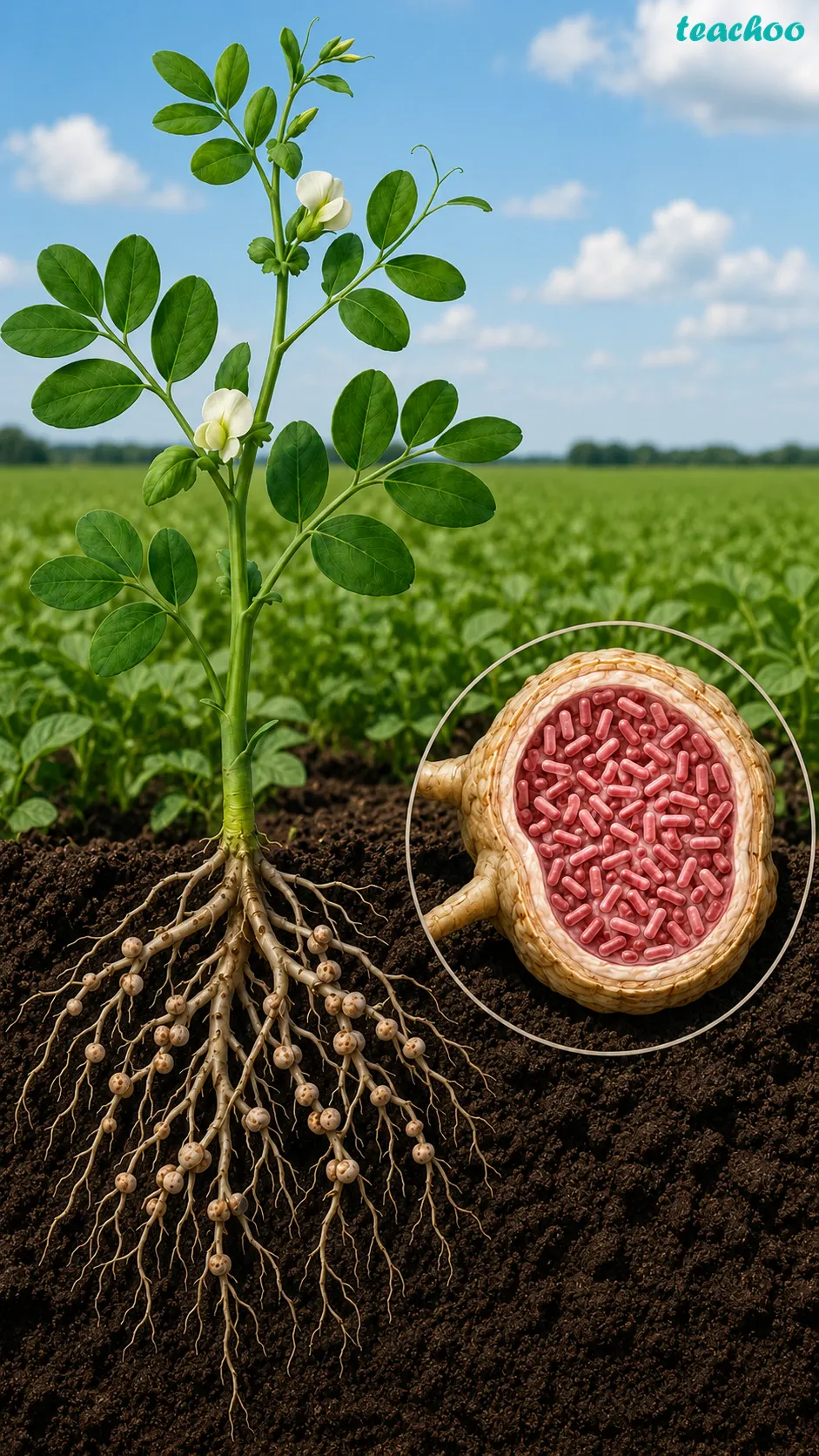
What do plant and bacteria give each other?
Rhizobium in root nodules
A partnership in soil
Plant gives shelter
Swollen root nodules
Example:
Beans
Peas
Lentils
Bacteria give nitrogen
Trap nitrogen from air
No chemical fertiliser
Example:
Legumes grown in rotation
Rhizobium Bacteria
Nitrogen in Air
- Rhizobium bacteria live in the root nodules of legumes.
- They trap nitrogen from the air and give it to the plant.
- So legumes grow well and make the soil fertile without chemical fertilisers.
🥛
Activity 2.9 — Let us prepare
How do we test what makes milk set?
Take two glass bowls, A and B
Label them clearly
↓
Lukewarm milk in A, cold milk in B
The only difference is the temperature
↓
Add a spoonful of curd to each
Mix it in well
↓
Cover both and wait
Bowl A in a warm place, bowl B in a cool place, overnight
↓
Bowl A has set into sour curd; bowl B has not curdled — Lactobacillus needs warmth
In this Activity, we will set warm milk and cold milk with a spoon of curd, and find out which one sets.
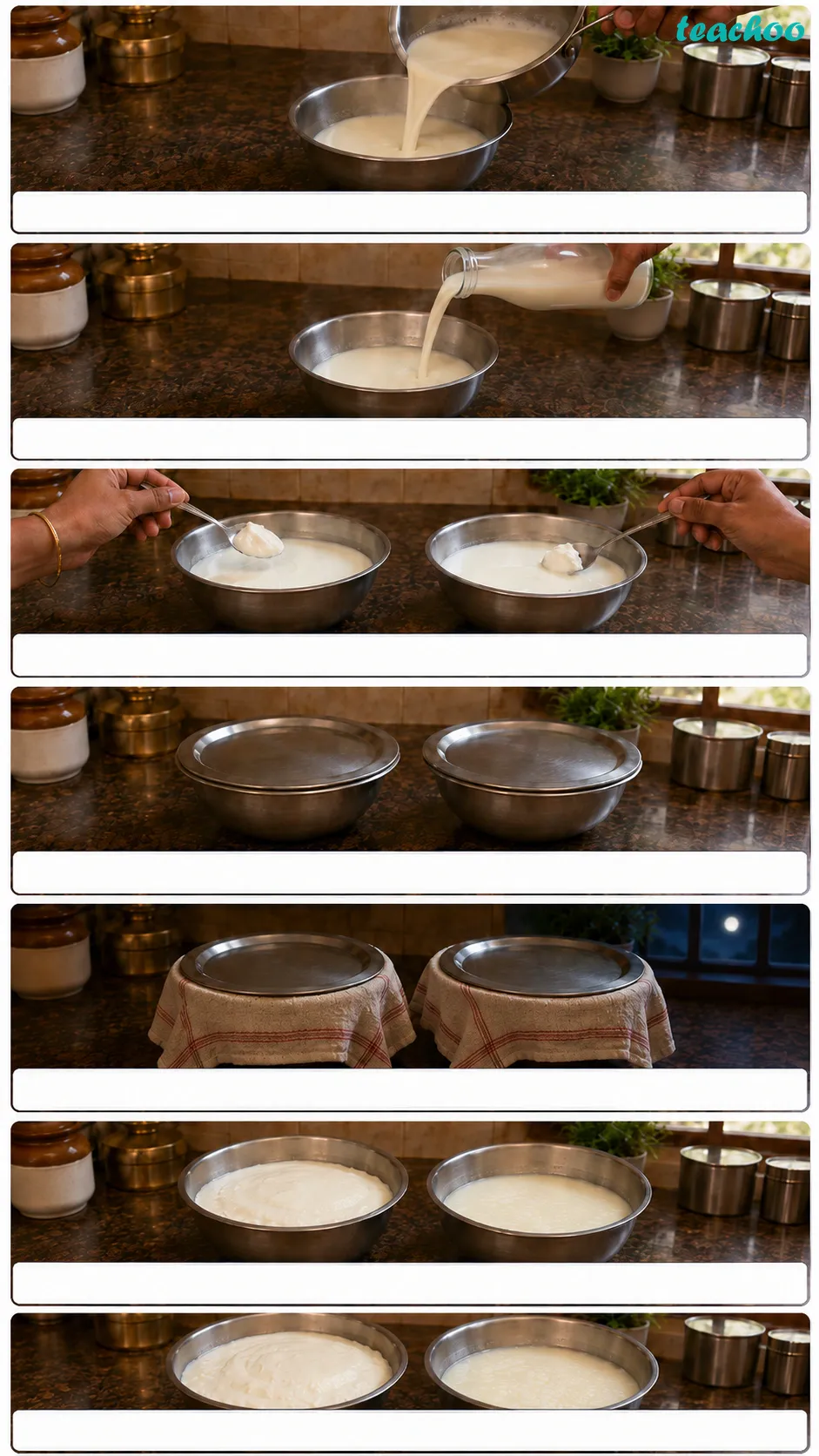
Warm some milk slightly and pour it into Bowl A.
Bowl B
Bowl A
Bowl B
Bowl A
Leave them undisturbed overnight.
Check both bowls the next morning.
Cover both bowls.
Add a spoon of curd to each bowl and stir.
Pour cold milk into Bowl B.
Bowl A sets into Curd ; Bowl B does not set well.
Materials needed
Milk, a spoon of curd, and two bowls (A and B).
Procedure
1. Warm some milk slightly and pour it into bowl A.
2. Pour cold milk into bowl B.
3. Add a spoon of curd to each bowl and stir.
4. Cover both bowls.
5. Leave them undisturbed overnight.
6. Check both bowls the next morning.
2. Pour cold milk into bowl B.
3. Add a spoon of curd to each bowl and stir.
4. Cover both bowls.
5. Leave them undisturbed overnight.
6. Check both bowls the next morning.
Observation
Bowl A sets into curd; bowl B does not set well.
Explanation
Lactobacillus
bacteria ferment warm milk into curd, producing lactic acid. Warmth helps them grow.
Lactobacillus ferments warm milk into curd; the cold milk in bowl B does not set.
◆ Summary
- Warm milk sets into curd
- Cold milk does not
- Bacteria need warmth to work
✅ Test Yourself
-
Which microbe makes dough rise, and which gas causes it?
View Answer
Yeast; the gas is carbon dioxide. -
Rhizobium
in root nodules traps ______ from the air.
View Answer
Nitrogen. -
Name one everyday food made with the help of bacteria.
View Answer
Curd (also idli, dosa or bhatura ).
📋 NCERT Question 2 — Aanandi took two test tubes
Aanandi took two test tubes and marked them A and B. She put two spoonfuls of sugar solution in each of the test tubes. In test tube B, she added a spoonful of yeast. Then she attached two incompletely inflated balloons to the mouth of each test tube. She kept the set-up in a warm place, away from sunlight.
View Answer →
📋 NCERT Question 3 — A farmer was planting wheat
A farmer was planting wheat crops in his field. He added nitrogen-rich fertiliser to the soil to get a good yield of crops. In the neighbouring field, another farmer was growing bean crops, but she preferred not to add nitrogen fertiliser to get healthy crops. Can you think of the reasons?
View Answer →
📋 NCERT Question 8 — A student observes that curd
A student observes that when curd is left out for a day, it becomes more sour. What can be two possible explanations for this observation?
View Answer →
📋 NCERT Question 9 — Observe the set-up given
Observe the set-up given in Fig. 2.15 and answer the following questions.
View Answer →
📖 Important Definitions
- Yeast — A unicellular fungus that releases carbon dioxide, used to make dough rise.
- Fermentation — The breakdown of sugar by microbes, used in making curd, idli, dosa, etc.
- Legumes — Plants whose seeds grow in pods, such as peas, beans, gram, and lentils.
- Rhizobium — Bacteria living in the root nodules of legumes that trap nitrogen from the air.
📝 Summary - What we have learnt
- Yeast (a fungus) releases CO₂ that makes dough rise.
- Lactobacillus turns milk into curd.
- Rhizobium in legume roots fixes nitrogen.

