
 You are here
What is manure?
Manure
Dark, rich material
made from plant and animal waste
Increases fertility
makes the soil better for crops
↓
Manure is a dark, nutrient-rich material that increases soil fertility.
- Manure is a dark, nutrient-rich material.
- It increases the fertility of the soil.
How do microorganisms help in making manure?
| Step | What happens |
|---|---|
| Plant waste is buried in soil | Peels and dead leaves are left in the ground |
| Fungi and bacteria act on it | They slowly break the waste down |
| Dark, nutrient-rich manure forms | It increases the fertility of the soil |
What is decomposition?
![2.4.1 Key players in cleaning th - The Invisible Living W - [Teachoo] - Concepts](https://cdn.teachoo.com/39c3e4a7-1dd3-479a-8c22-e94c3ae638e6/image-fruit-and-vegetable-peels-buried-in-a-soil-pit-slowly-turning-into-dark-crumbly-manure-as-fungi-and-bacteria-break-them-down.webp)
Decomposition
de–
to break down
composition
complex, built-up matter
↓
Decomposition is the breaking down of complex waste into simpler, nutrient-rich substances.
- It is the breaking down of dead plant and animal matter.
- Microbes turn it into simpler, nutrient-rich substances.
- These nutrients go back into the soil.
How do microorganisms help in decomposition?
How do microbes decompose waste?
Dead leaves and dead animals
Complex waste piles up on the soil
↓
Microbes break it down
They turn complex matter into simple substances
↓
Nutrients return to the soil
The soil is enriched
↓
Plants grow better in the enriched soil
- Microbes break complex dead matter into simple substances.
- The nutrients return to the soil, so plants grow better.
🌱
Activity 2.7 — Let us do
How do peels turn into manure?
Half-fill a container with garden soil
An empty container is enough
↓
Add fruit and vegetable peels
Then put a layer of soil on top
↓
Leave it aside for 2–3 weeks
Do not disturb it
↓
Open it and look
The peels are gone
↓
Fungi and bacteria have broken the peels down into dark, nutrient-rich manure
In this Activity, we will bury fruit and vegetable peels in soil and watch what the microbes turn them into.
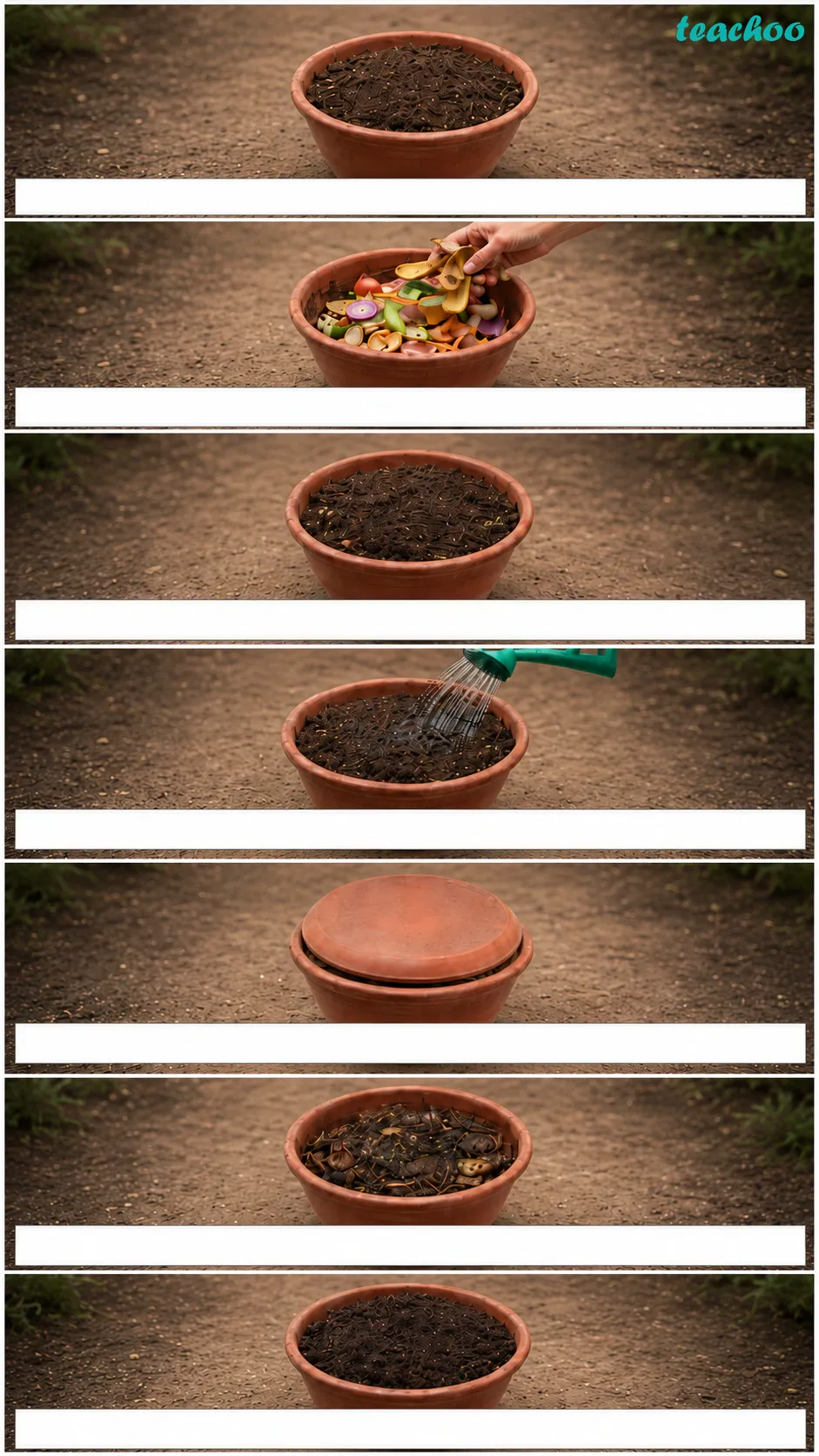
Bury the peels under the soil.
Sprinkle a little water to keep the soil slightly moist.
Collect Fruit and Vegetable peels from the kitchen and bury them under the soil.
Dig a small pit or take a pot filled with soil.
Then check it.
Leave it for 2-3 weeks.
The peels turn into dark, crumbly manure.
Materials needed
Fruit and vegetable peels, a pit or a pot of soil, and some water.
Procedure
1. Collect fruit and vegetable peels from the kitchen.
2. Dig a small pit, or take a pot filled with soil.
3. Bury the peels under the soil.
4. Sprinkle a little water to keep the soil slightly moist.
5. Leave it and check the peels after 2–3 weeks.
2. Dig a small pit, or take a pot filled with soil.
3. Bury the peels under the soil.
4. Sprinkle a little water to keep the soil slightly moist.
5. Leave it and check the peels after 2–3 weeks.
Observation
The peels turn into dark, crumbly manure.
Explanation
Fungi and bacteria broke down the peels, showing that microbes clean the environment and enrich the soil.
Fungi and bacteria break peels down into dark, nutrient-rich manure.
◆ Summary
- Buried peels are decomposed
- Microbes turn them into manure
- Shows microbes recycle waste
What is biogas? What is it used for?
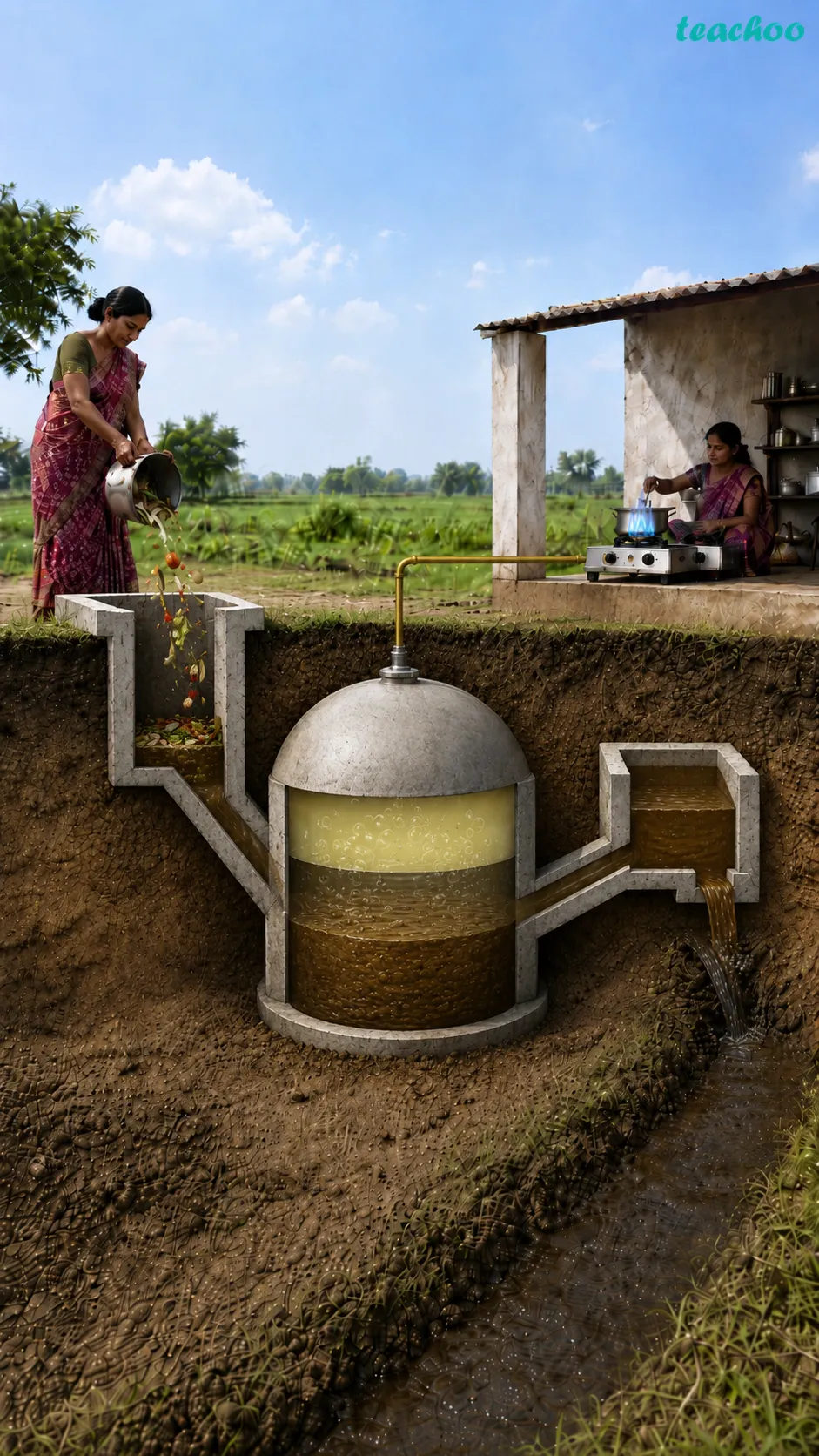
How is biogas made and used?
Waste and microbes, no oxygen
Microbes break down waste in an oxygen-free tank
↓
Biogas is released
Mainly methane with carbon dioxide
↓
Fuel for cooking, heating, electricity and vehicles
- Biogas is a mix of gases — mainly methane and carbon dioxide.
- Microbes release it while breaking down waste without oxygen.
- It is used for cooking, heating, electricity and running vehicles.
📚 A step further
Microbes as a source of biogas
- Many microbes, like bacteria and fungi, live in an oxygen-free environment.
- Some of these bacteria break down plant and animal waste, or household wastewater.
- During this they release a mixture of gases called biogas .
- Biogas is mainly carbon dioxide plus a high proportion of methane .
- It is used as fuel for cooking, heating, generating electricity, and even to run vehicles.
How are microorganisms helpful to us?
How do microbes help us?
Microorganisms
Helpful in three ways
Help plants grow
They enrich the soil
Example:
Manure
Rhizobium
Clean the environment
They break down waste
Example:
Decompose dead matter
Clean oil spills
A special bacterium
Example:
Developed by Chakrabarty
- Microbes help plants grow by enriching the soil.
- They clean the environment by breaking down waste.
- They can clean oil spills — a special bacterium for this was made by scientist Ananda Mohan Chakrabarty .
🔬 Be a scientist
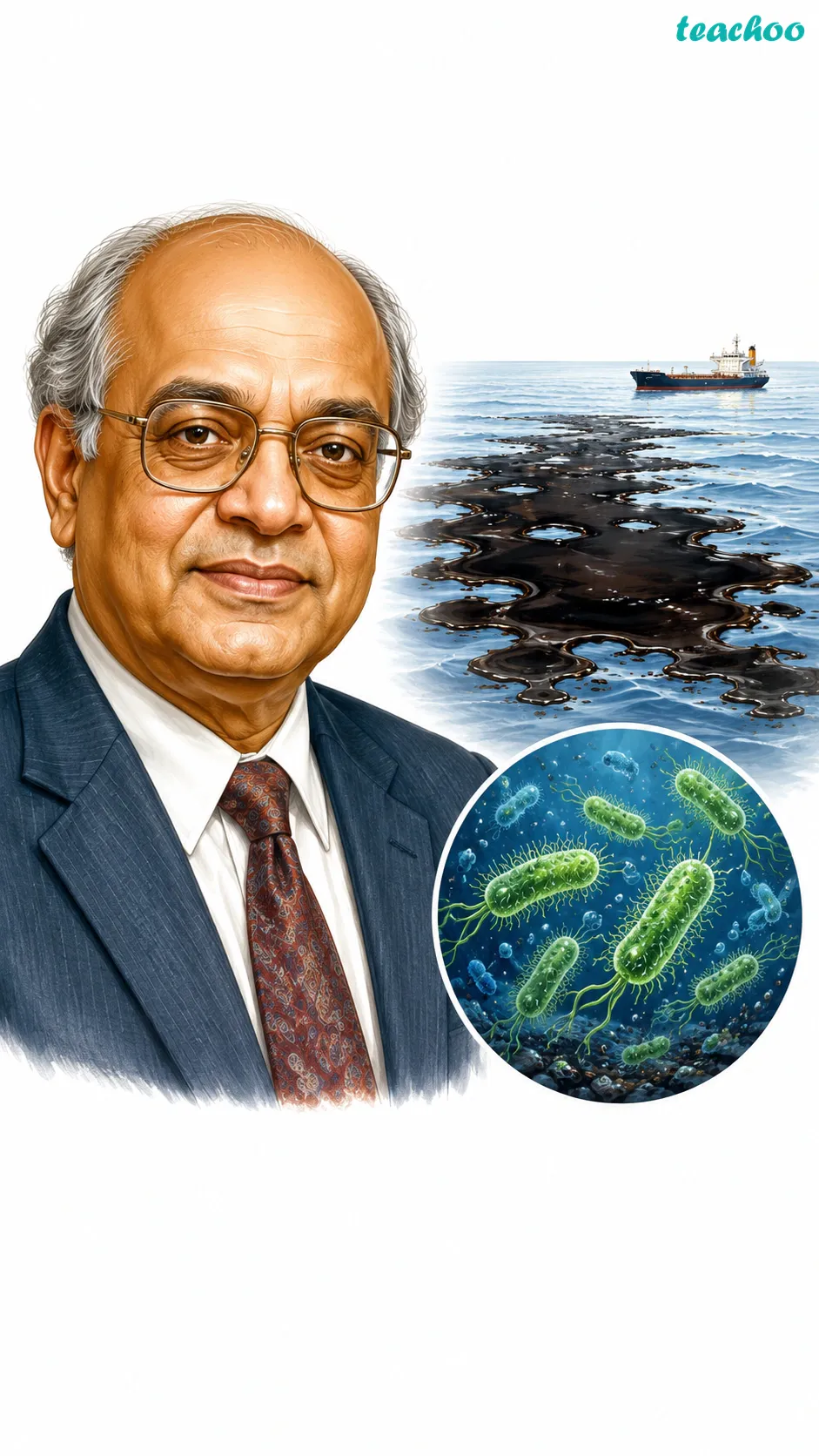
- In 1971, Ananda Mohan Chakrabarty developed a special bacterium.
- It could break down oil spills and clean the environment.
- His discovery earned a patent in 1980.
- His work showed microbes can help solve pollution problems.
🌍 Our scientific heritage
- Ancient Indian texts like the Vedas and Atharvaveda mention "Krimi".
- Krimi means tiny entities, both visible (Drishya) and invisible (Adrishya).
- These texts describe their helpful and harmful effects.
📋 NCERT Question 4 — Snehal dug two pits
Snehal dug two pits, A and B, in her garden. In pit A, she put fruit and vegetable peels and mixed it with dried leaves. In pit B, she dumped the same kind of waste without mixing it with dried leaves. She covered both the pits with soil and observed after 3 weeks. What is she trying to test?
View Answer →
📋 NCERT Question 7 — Take 2 slices of bread
Take 2 slices of bread. Place one slice in a plate near the sink. Place the other slice in the refrigerator. Compare after three days. Note your observations. Give reasons for your observations.
View Answer →

