
 You are here
What are organisms?
![2.3 What Are Microorganisms? - The Invisible Living W - [Teachoo] - Concepts](https://cdn.teachoo.com/5aa44d1b-a75a-4a8a-a6a8-dd5f8745083e/image-a-variety-of-living-beings-tall-trees-animals-small-insects-and-tiny-invisible-microbes-all-called-organisms-shown-by-size-fr.webp)
Organism
Living being
a plant or an animal
Grows and feeds
and multiplies
↓
An organism is any living being — a plant or an animal.
- All living beings, whether plants or animals, are called organisms .
- We met this word in the Introduction.
What are the different types of organisms?
Visible
Invisible
Organisms we can see with the naked eye
Organisms we cannot see with the naked eye
Example: plants, animals, humans
Example: microorganisms
- Some organisms we can see with the naked eye.
- Others we cannot — they are called microorganisms .
What are microorganisms?
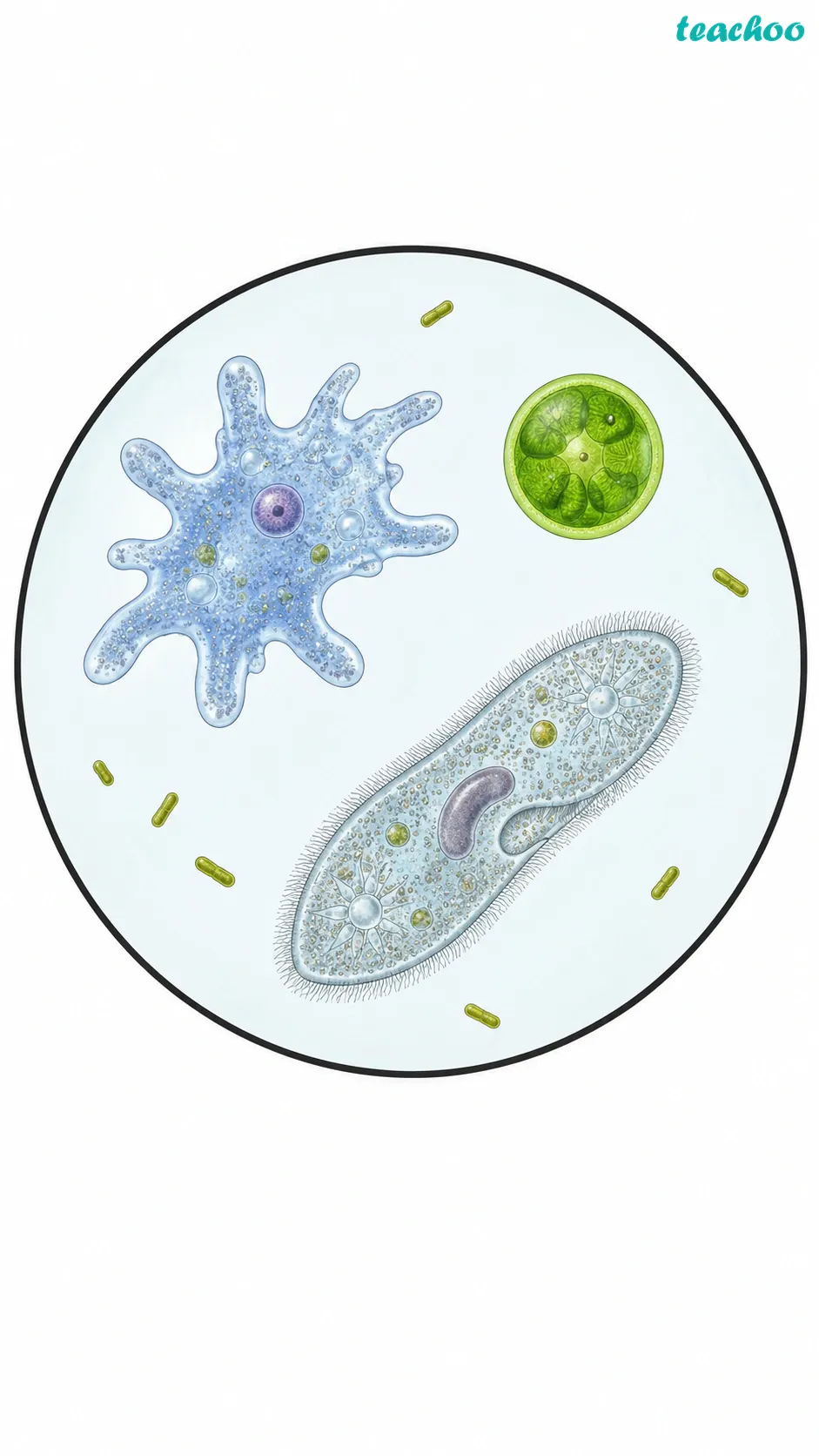
Microorganism
micro
very small
organism
a living being
↓
A microorganism is a living being too small to see with the naked eye.
Microoorganisms
- Microorganisms are living things made of one or a few cells.
- They are so small they can be seen only with a microscope.
How can we see microorganisms?
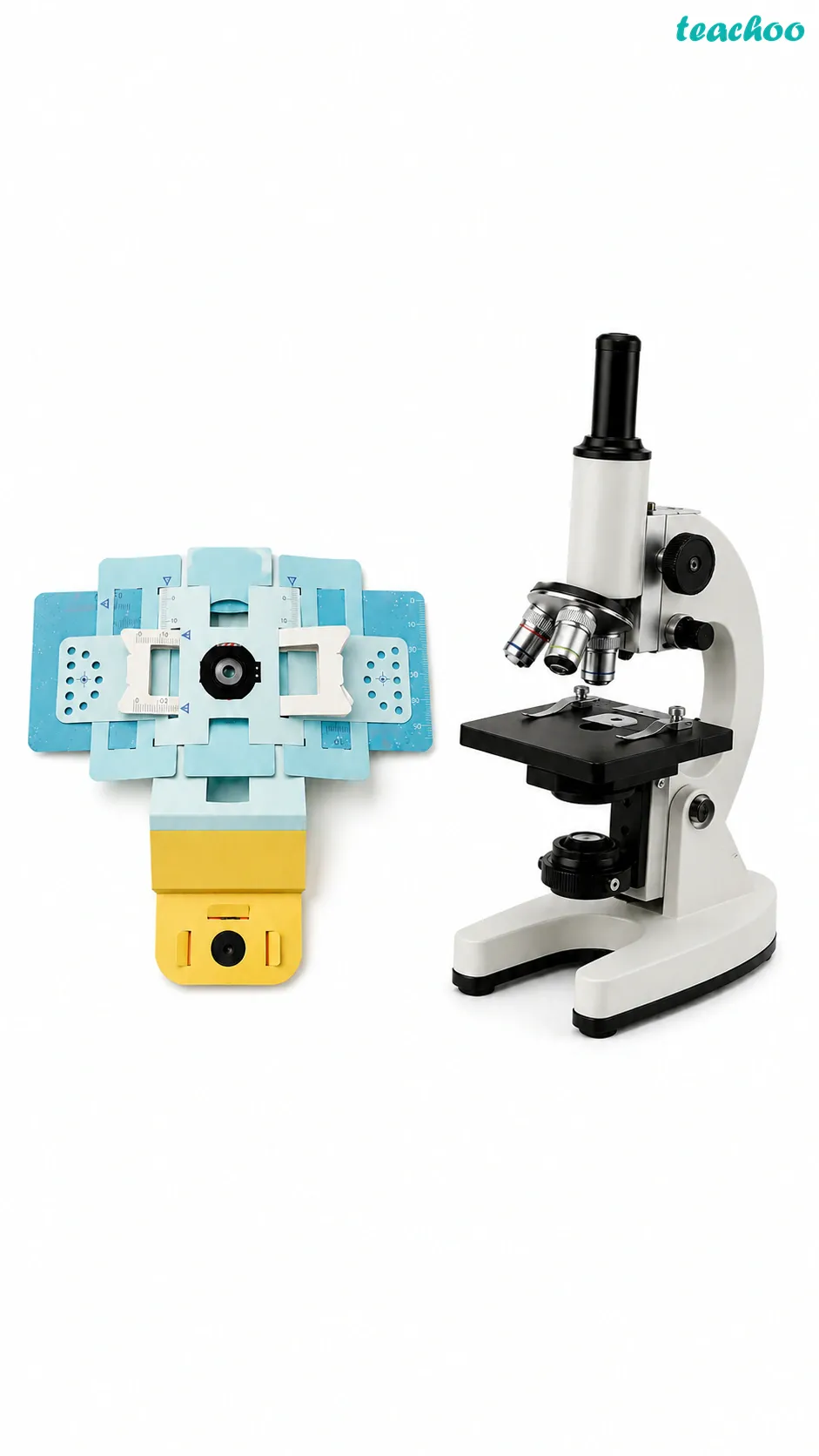
Paper microscope
Laboratory microscope
Low-cost and foldable.
High-powered and expensive.
Shows less detail.
Shows much more detail.
Makes the microscopic world reachable for many.
Used for careful scientific study.
PAPER
MICROSCOPE
LABORATORY
MICROSCOPE
- Microbes can be seen only under a microscope.
- Even a low-cost foldable paper microscope works.
What are microbes? Give examples of different microbes.
- Microbes are tiny living things, made of one or a few cells, seen only under a microscope.
| Group | Example | What it looks like |
|---|---|---|
| Protozoa | Amoeba , Paramecium | Single cell, irregular or slipper-shaped |
| Algae | Chlamydomonas , Spirulina | Green because of chlorophyll |
| Fungi | Bread mould, yeast | Branched filament, no chlorophyll |
| Bacteria | Lactobacillus , Rhizobium | Spherical, comma, spiral or rod-shaped |
Where can we find microorganisms (microbes)?
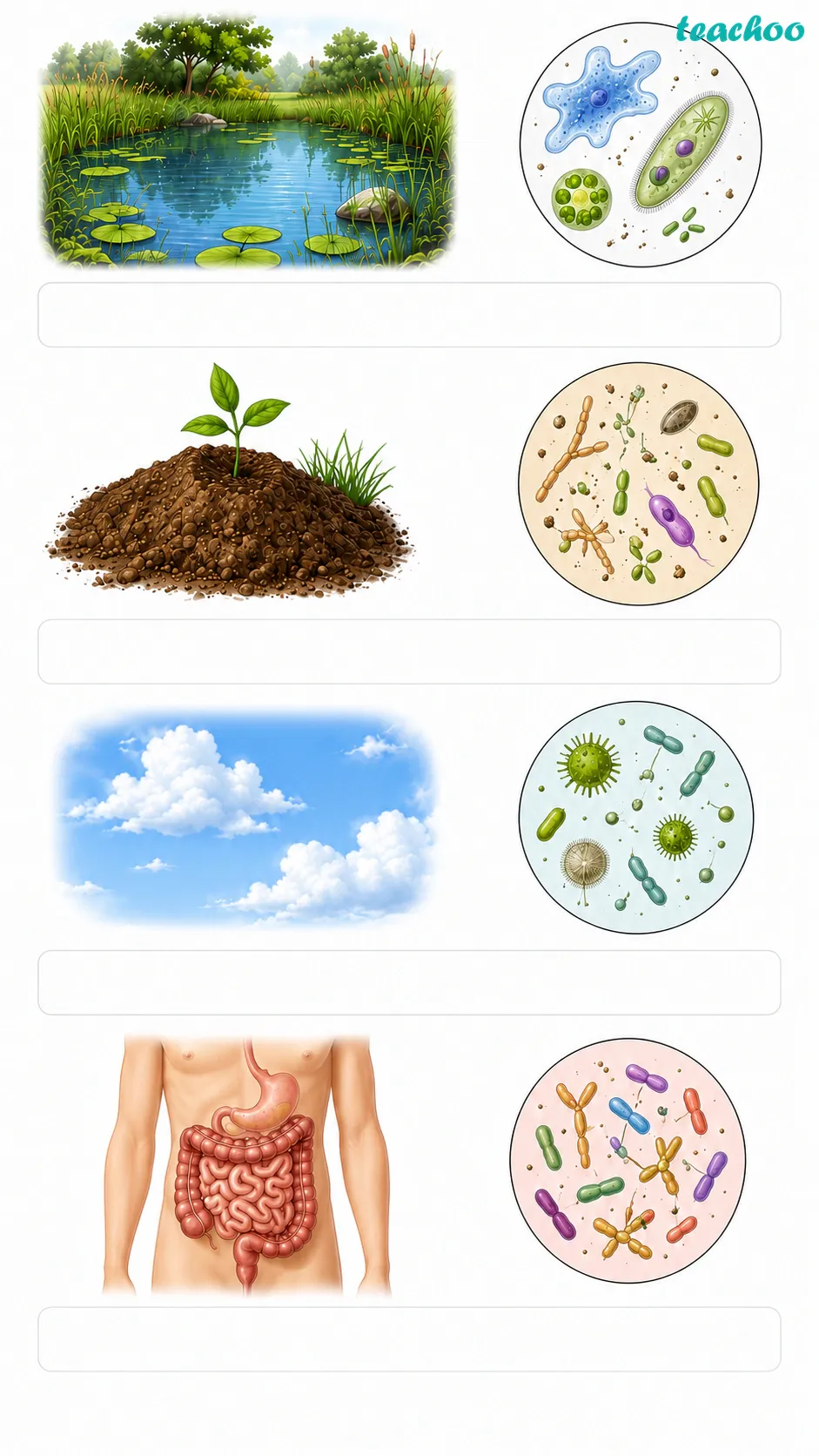
In what places do microbes live?
Microorganisms
Found everywhere
In water
Ponds and stagnant water
Example:
Pond water
In soil and air
Even extreme places
Example:
Hot springs
Inside living bodies
Even our gut
Example:
Bacteria in the intestine
Microorganisms live in water
Microorganisms live in Soil
Microorganisms live in Air
Microorganisms live inside our body
- Microbes are present everywhere — in soil, water, air and inside our bodies.
- Some even live in extreme places like hot springs and snow.
✅ Test Yourself
-
“Microbe” means very ______ organism.
View Answer
Small. -
Name the four main kinds of microorganisms.
View Answer
Protozoa, algae, fungi and bacteria. -
Which pond-water microbe moves with special structures?
View Answer
Paramecium .
🔬
Activity 2.4 — Let us observe pond water/stagnant water
How do we look for life in pond water?
Collect pond or stagnant water
With the help of your teacher or an elder
↓
Place a drop on a slide
Use a dropper
↓
Cover it with a coverslip
And put the slide under the microscope
↓
Tiny moving organisms appear — ones the naked eye cannot see
In this Activity, we will put a drop of pond water under the microscope and look for living things in it.
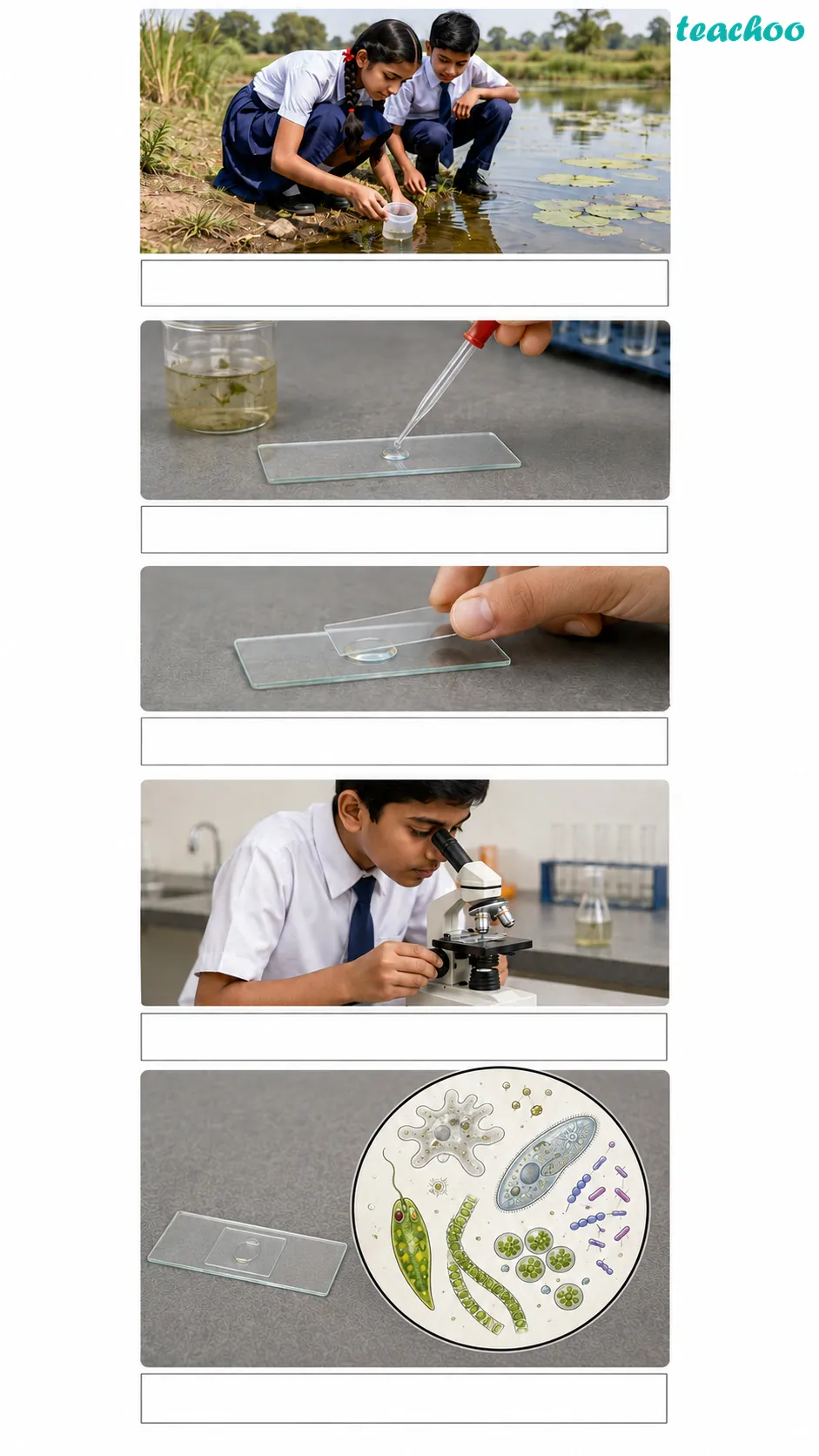
Observe the slide under the microscope.
You see many tiny moving organisms in the drop of water.
Collect pond or stagnant water in a container.
Put a coverslip over the drop.
Place a drop of this water on a microscopic slide with dropper.
Materials needed
Pond or stagnant water, a container, a dropper, a glass slide, a coverslip, and a microscope.
Procedure
1. With the help of your teacher or an elder, collect pond or stagnant water in a container.
2. Use a dropper to place a drop of this water on a microscope slide.
3. Put a coverslip over the drop.
4. Observe the slide under the microscope.
5. Look for the tiny organisms found in the pond or stagnant water.
2. Use a dropper to place a drop of this water on a microscope slide.
3. Put a coverslip over the drop.
4. Observe the slide under the microscope.
5. Look for the tiny organisms found in the pond or stagnant water.
Observation
You see many tiny moving organisms in the drop of water.
Explanation
Pond and stagnant water contain microbes that are too small to see with the naked eye.
Pond water is full of tiny moving organisms that the naked eye cannot see.
◆ Summary
- Pond water holds microbes
- A microscope reveals them
- Microbes live in water
🔬
Activity 2.5 — Let us observe soil suspension
How do we make a soil suspension?
Collect moist soil in a beaker
Use a spoon or gloves — never bare hands
↓
Add water and stir
Stir with a glass rod; the liquid looks dirty
↓
Let the mixture settle
Keep it aside for some time
↓
Take a drop from the top layer
Place it on a slide and cover it
↓
Small moving organisms appear again — even soil holds a variety of microbes
In this Activity, we will make a soil suspension and check whether soil, too, holds tiny living things.
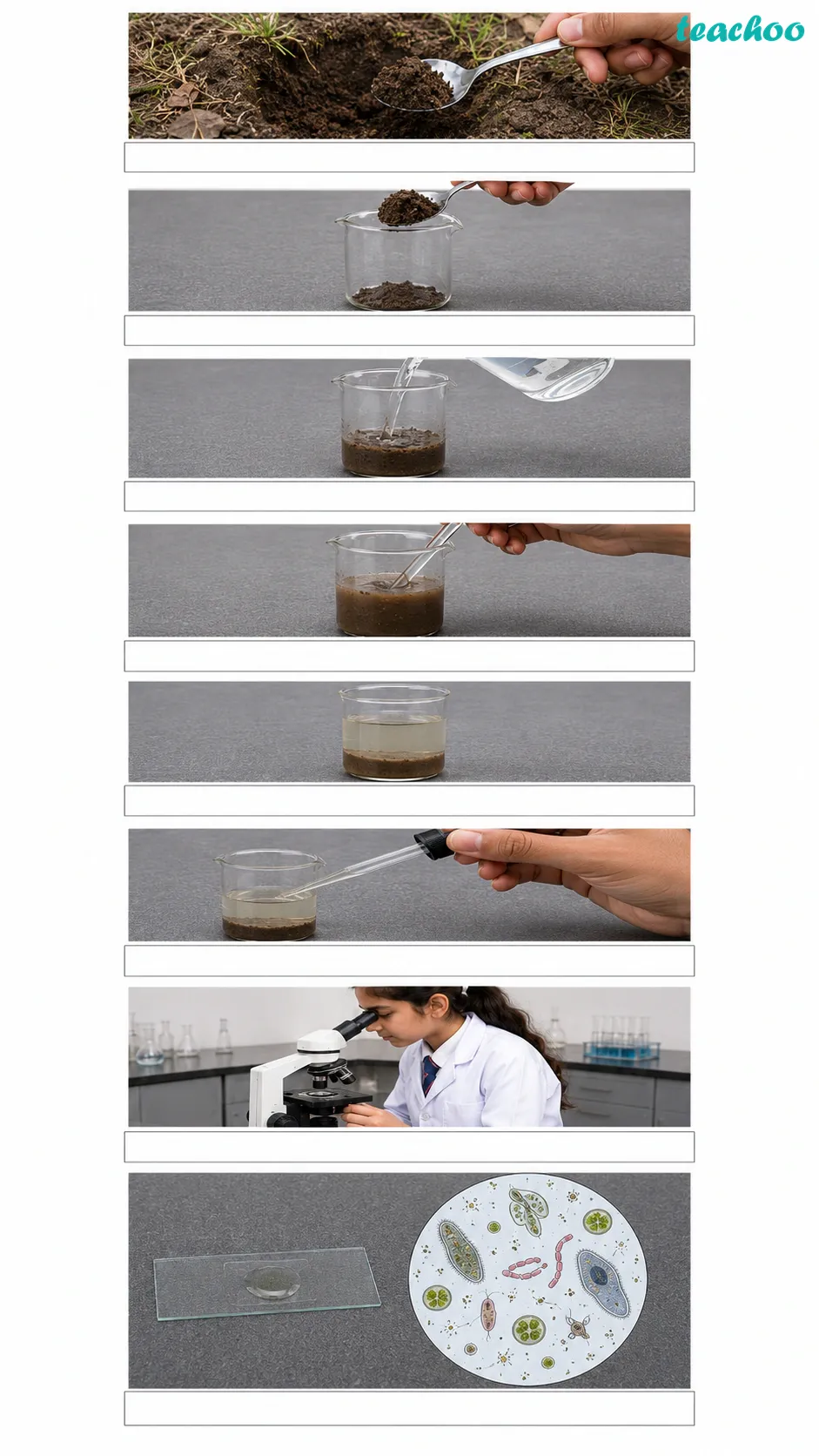
Use a dropper to take a drop of water from the top layer
Keep it aside for some time and let the mixture settle.
Stir it with a glass rod.
Pour some water into the beaker.
Put collected soil in a beaker.
Collect some moist soil from a field or garden.
Place it on a slide and observe under the microscope.
Small moving organisms similar to those in the pond water.
Materials needed
Moist soil, a beaker, water, a glass rod, a spoon or gloves, a dropper, a glass slide, a coverslip, and a microscope.
Procedure
1. Collect some moist soil from a field or garden in a beaker. Do not touch it with bare hands — use a spoon or gloves.
2. Pour some water into the beaker and stir it with a glass rod. This liquid with fine soil particles is called soil suspension.
3. Keep it aside for some time and let the mixture settle.
4. Use a dropper to take a drop of water from the top layer and place it on a slide.
5. Cover it gently with a coverslip and observe under the microscope.
2. Pour some water into the beaker and stir it with a glass rod. This liquid with fine soil particles is called soil suspension.
3. Keep it aside for some time and let the mixture settle.
4. Use a dropper to take a drop of water from the top layer and place it on a slide.
5. Cover it gently with a coverslip and observe under the microscope.
Observation
You see small moving organisms similar to those in the pond water.
Explanation
Even soil suspension contains many tiny creatures that cannot be seen with the unaided eye.
Even soil holds a variety of microorganisms.
◆ Summary
- Soil suspension holds microbes
- A microscope reveals them
- Microbes live in soil too
🔎
Activity 2.6 — Let us study
How do we record what we found?
Perform Activities 2.4 and 2.5
Observe the pond water and the soil suspension
↓
Collect more information
From the library and from the internet
↓
Record the pond water data
Amoeba, Paramecium, algae — shape and movement
↓
Record the soil data
Bread mould, mould, algae, bacteria — shape and structure
↓
The microbes sort into four groups: protozoa, algae, fungi and bacteria
In this Activity, we will study the recorded observations of pond water and soil, and name the microbes found.
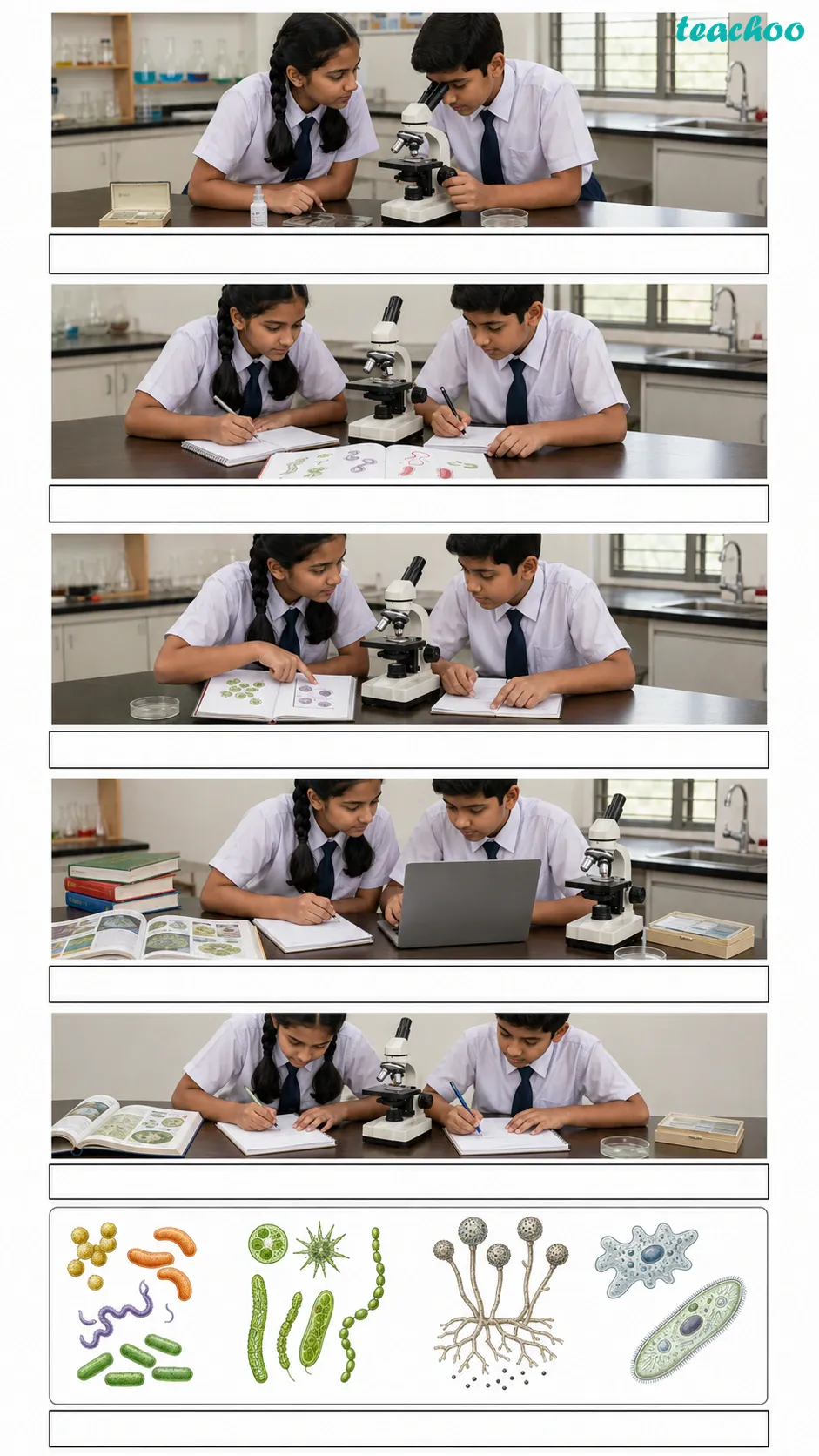
Note the shape and colour of each organism you see.
Note whether it moves or stays still.
Observe each slide carefully under the microscope.
Compare each one with the reference pictures.
Record which group every microbe belongs to.
Fungus
Algae
Bacteria
Protozoa
Materials needed
The prepared slides from Activity 2.4 and 2.5, a microscope, and reference pictures of microbes.
Procedure
1. Observe each slide carefully under the microscope.
2. Note the shape and colour of each organism you see.
3. Note whether it moves or stays still.
4. Compare each one with the reference pictures.
5. Record which group every microbe belongs to.
2. Note the shape and colour of each organism you see.
3. Note whether it moves or stays still.
4. Compare each one with the reference pictures.
5. Record which group every microbe belongs to.
Observation
Amoeba and Paramecium are protozoa (single-celled, moving); algae are green with chlorophyll; bread mould is a fungus with branched filaments; bacteria are spherical, comma, spiral, or rod-shaped.
Explanation
A microscope magnifies these 100–400 times, letting us see and sort the four main groups of microbes.
Pond water and soil give protozoa, algae, fungi and bacteria — four groups of microbes.
◆ Summary
- Microbes differ in shape and colour
- They sort into four groups
- A microscope makes them visible
What turns up in pond water?
| Microorganism observed | Recorded data |
|---|---|
| Amoeba (protozoa) | Single cell, moving, irregular shape |
| Paramecium (protozoa) | Single cell, moves using specialised structures |
| Algae | Single cell, green, moves using specialised structures |
What turns up in soil suspension?
| Microorganism | Remarks |
|---|---|
| Bread mould (fungi) | Branched filament, no chlorophyll, sac-like structure |
| Mould (fungi) | Branched filament, no chlorophyll, brush-like structure |
| Algae | Spherical, has chlorophyll — a green pigment |
| Bacteria | Spherical, comma, spiral or rod-shaped with hair-like projections |
The microorganisms found in a soil suspension
🎉 Ever heard of ...
- Viruses are microscopic and acellular (not made of cells).
- They are different from other microorganisms.
- They can multiply only after they enter a living host cell.
- They reproduce only inside that host organism, never on their own.
- They may infect plant, animal, or bacterial cells and cause disease.
📋 NCERT Question 5 — Identify the following microorganisms
Identify the following microorganisms:
View Answer →
📝 Summary - What we have learnt
- Microorganisms are living things too small to see.
- The four main groups are protozoa, algae, fungi and bacteria.
- We see them with a microscope.
- Pond water and soil are full of them.

