You are here
Analysing Statistical Data Using Probability
Analysing Statistical Data Using Probability
Last updated at August 14, 2026 by Teachoo
Transcript
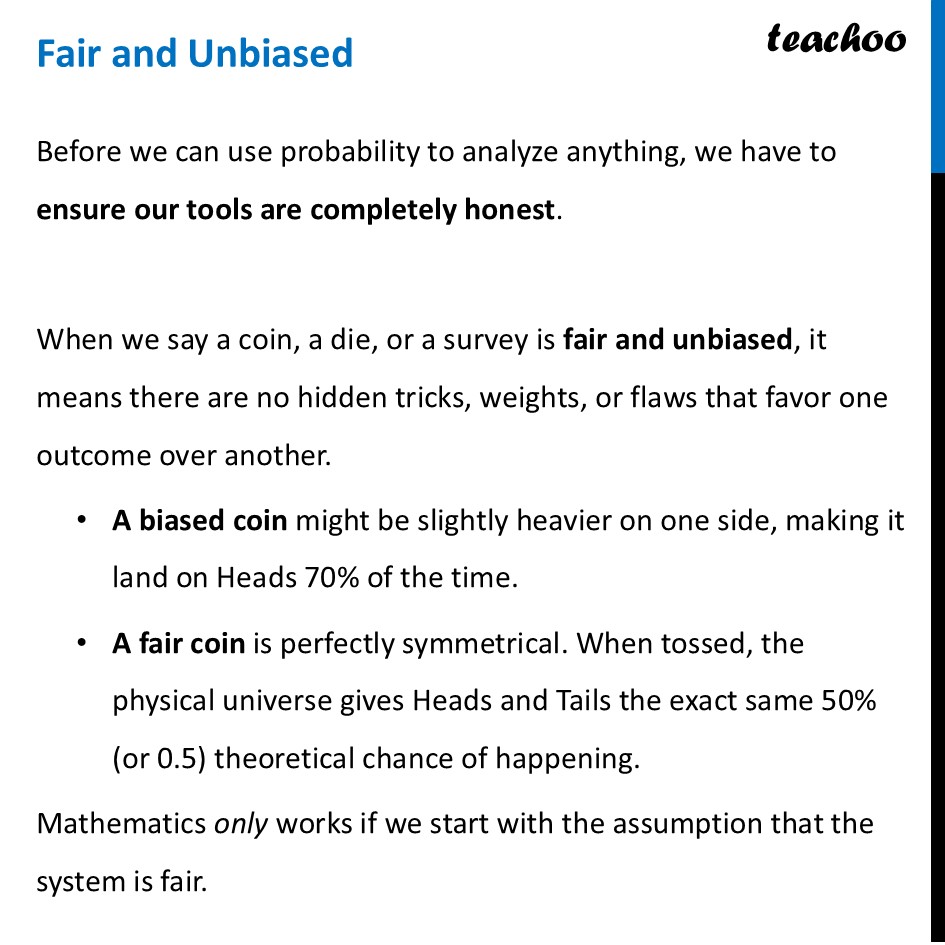
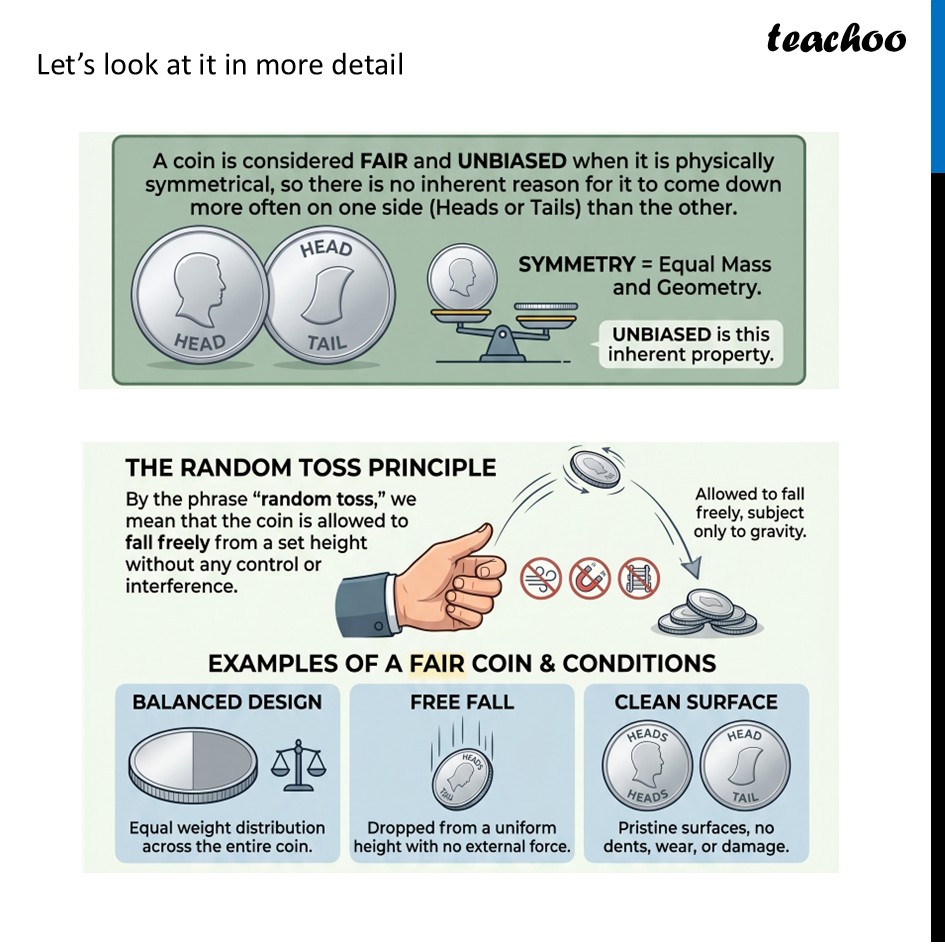
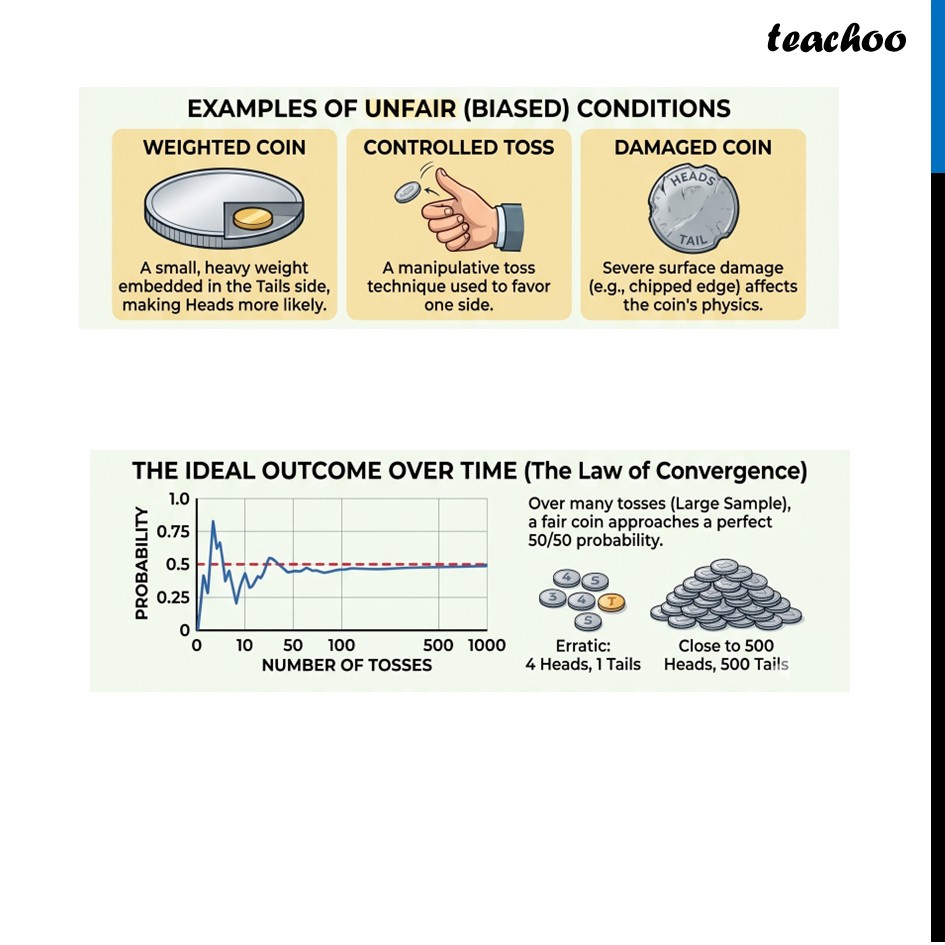
Fair and Unbiased Before we can use probability to analyze anything, we have to ensure our tools are completely honest. When we say a coin, a die, or a survey is fair and unbiased, it means there are no hidden tricks, weights, or flaws that favor one outcome over another. A biased coin might be slightly heavier on one side, making it land on Heads 70% of the time. A fair coin is perfectly symmetrical. When tossed, the physical universe gives Heads and Tails the exact same 50% (or 0.5) theoretical chance of happening. Mathematics only works if we start with the assumption that the system is fair. Let’s look at it in more detail A coin is considered FAIR and UNBIASED when it is physically symmetrical, so there is no inherent reason for it to come down more often on one side (Heads or Tails) than the other. RY = Equal Mass and Geometry. UNBIASED is this inherent property. THE RANDOM TOSS PRINCIPLE By the phrase "random toss," we mean that the coin is allowed to fall freely from a set height without any control or interference. EXAMPLES OF A FAIR COIN & CONDITIONS BALANCED DESIGN Equal weight distribution across the entire coin. FREE FALL Dropped from a uniform height with no external force. CLEAN SURFACE Pristine surfaces, no dents, wear, or damage.EXAMPLES OF UNFAIR (BIASED) CONDITIONS WEIGHTED COIN A small, heavy weight embedded in the Tails side, making Heads more likely. CONTROLLED TOSS A manipulative toss technique used to favor one side. DAMAGED COIN Severe surface damage (e.g., chipped edge) affects the coin's physics. THE IDEAL OUTCOME OVER TIME (The Law of Convergence) Over many tosses (Large Sample), a fair coin approaches a perfect 50/50 probability. Erratic: 4 Heads, 1 Tails Close to 500 Heads, 500 Tails