
 You are here
What is Weathering?
It means the slow breaking down of large rocks into smaller pieces .
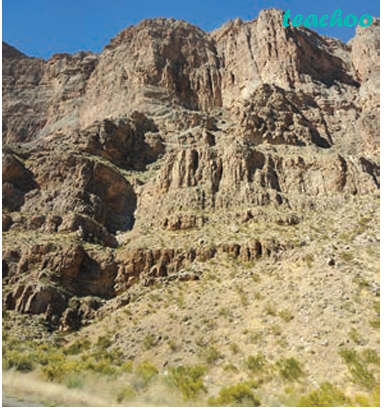
Example
- Look at the heaps of sand, soil, and stones often seen at the base of mountains and cliffs.
- These heaps are called sediments .
- They are formed by weathering.
Weathering is the collective name for the physical and chemical changes that slowly break rocks into smaller pieces.
Over thousands of years, weathering eventually forms soil .
Physical Weathering — Breaking Rocks Apart
This is the part of weathering where rocks physically break into smaller pieces.
No new substance is formed.
Causes of physical weathering
-
Temperature changes
- Rocks expand on hot days.
- They contract on cold nights.
- Over years, this stress cracks them.
-
Growing tree roots
- Tree roots push into the cracks of rocks.
- As the roots grow thicker, they widen the cracks.
- Slowly, the rock breaks apart.
-
Freezing of water
- Water seeps into the cracks of rocks.
- When the water freezes, it expands.
- The expanding ice splits the rock open.
Why this is a physical change
- The rock just breaks into smaller pieces.
- No new substance is formed.
- So this part of weathering is a physical change .
Chemical Weathering — Changing the Rock's Composition
This is the part of weathering where the rock chemically changes .
A new substance is formed inside the rock.
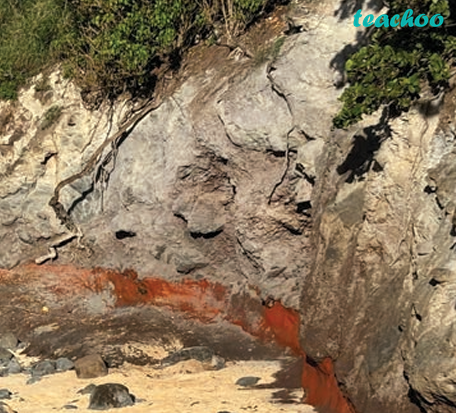
Example — basalt rock turning red
- The original rock is basalt .
- Basalt is normally black in colour.
- Basalt contains iron .
- Over a long time, the rock is exposed to water and moist air.
- The iron reacts with water and air.
- It forms iron oxide — the same red-brown substance as rust.
- This produces a red-coloured layer on the rock.
Why this is a chemical change
- A new substance (iron oxide) has been formed.
- So chemical weathering is a chemical change .
Weathering — Both Physical and Chemical Together
In nature, weathering is almost always a combination of both.
How both work together
-
Physical part:
- Temperature changes crack the rock.
- Freezing water splits the rock.
- Tree roots widen the cracks.
-
Chemical part:
- Water and air now reach freshly broken rock surfaces.
- These surfaces react chemically.
- New substances are formed.
- Over thousands of years, hard rock slowly becomes soil .
- This soil is the foundation of agriculture.
-
What is weathering?
View Answer
The slow breakdown of rocks into smaller pieces — through physical and chemical changes — that eventually forms soil. -
Name two causes of physical weathering.
View Answer
(Any two) Temperature changes; growing tree roots; freezing of water in cracks. -
Give one example of chemical weathering.
View Answer
Iron in basalt rock reacts with water and air over time to form iron oxide (the red layer on the rock). -
Is weathering a physical or chemical change?
View Answer
Both — weathering involves physical breaking and chemical reactions happening together over long periods. -
Why does weathering matter for life on Earth?
View Answer
Because weathering produces soil , which is essential for growing plants and supporting agriculture.
