
 You are here
Can Both Changes Happen Together?
Yes — in many real-world processes, both happen at the same time.
The best example is a burning candle .
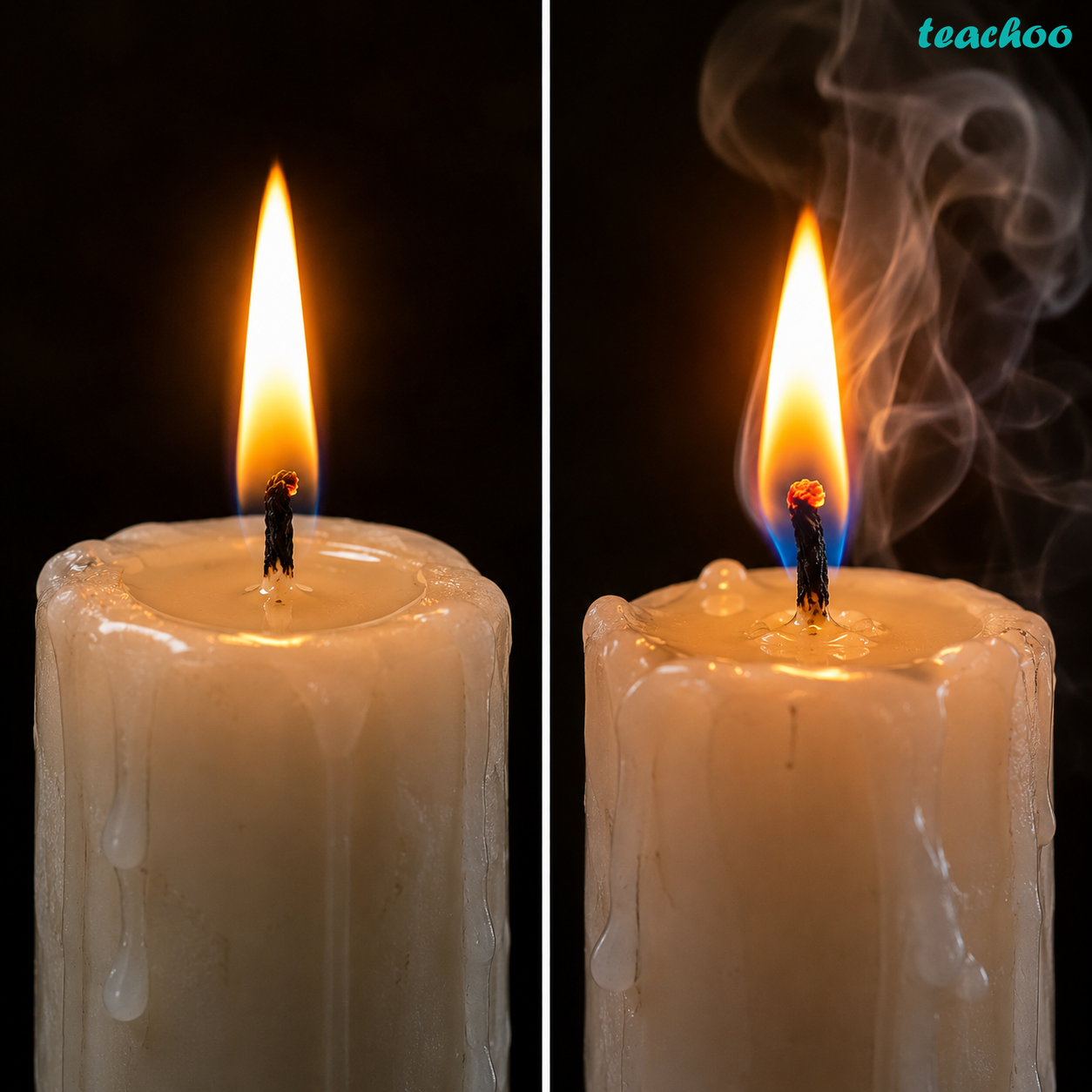
What happens when a candle burns
-
Step 1 — Wax melts
(near the flame)
- Solid wax becomes liquid wax.
- This is a physical change .
-
Step 2 — Liquid wax rises up the wick
- The wick draws up the melted wax.
- This is also a physical movement.
-
Step 3 — Liquid wax evaporates
(at the wick tip)
- Liquid wax becomes wax vapour.
- This is a physical change .
-
Step 4 — Wax vapour burns
(in air, with oxygen)
- The vapour reacts with oxygen.
- New substances are formed (carbon dioxide and water vapour).
- Heat and light are produced.
- This is a chemical change — combustion.
-
Step 5 — Some melted wax drips down and solidifies
- Liquid wax becomes solid wax again on the side of the candle.
- This is a physical change .
Key Insight
A single burning candle shows both physical and chemical changes happening at the same time .
Melting, evaporation, and solidification are physical.
Burning of wax vapour is chemical.
Mapping Each Step to a Type of Change
Physical changes in a burning candle
Chemical change in a burning candle
Wax
melts
(solid → liquid).
Wax vapour
burns
in air, producing carbon dioxide, water vapour, heat, and light.
Liquid wax flows down and
solidifies
(liquid → solid) on the side.
New substances are formed (so this part is a chemical change — combustion).
Liquid wax
evaporates
on the wick (liquid → gas).
Quick fact:
Melting of wax is necessary for a candle to keep burning
— the solid wax must first become liquid, then vapour, before it can burn. Without melting, no flame.
🤔
Quick Check — Test Yourself
-
Name the physical changes that happen when a candle burns.
View Answer
Melting of solid wax; evaporation of liquid wax; solidification of dripped wax. -
Name the chemical change that happens when a candle burns.
View Answer
The burning of wax vapour in air to form carbon dioxide and water vapour, with heat and light released. -
Why does a candle need wax to be melted before it can burn?
View Answer
Solid wax cannot burn directly — it must first melt, then evaporate, and the vapour is what actually burns. -
Is the burning of a candle purely a physical change?
View Answer
No — it involves both physical changes (melting, evaporation) and a chemical change (combustion). -
Give one more example of a process that involves both physical and chemical changes.
View Answer
Cooking food — water evaporates (physical) while ingredients chemically transform (chemical). Other examples: burning of an LPG stove; weathering of rocks.
👀 Activity 5.7 — Discussing the Burning Candle
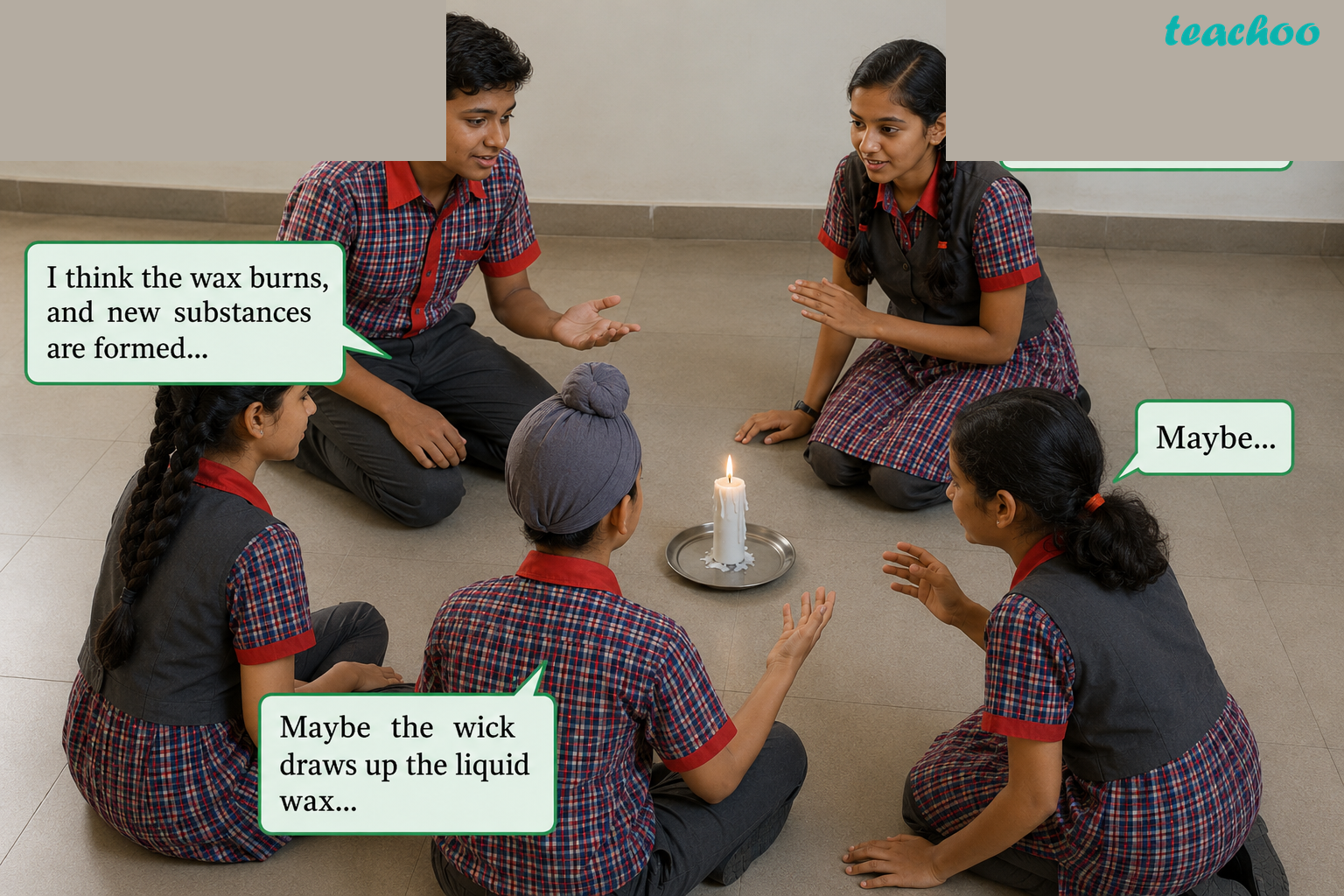
Procedure
- Look at the picture with your partner.
- Each student in the picture is suggesting one observation.
- Discuss whether each observation is a physical or a chemical change.
- Build a complete picture of what is really happening to the candle wax.
Observation
- "Wax melts and flows" — physical change.
- "Wax solidifies into different shapes" — physical change.
- "The wick draws up liquid wax" — physical (movement, no new substance).
- "Wax burns and new substances form" — chemical change.
Explanation
- The wax melts due to heat from the flame — melting (physical) .
- The melted wax is drawn up the wick — capillary action (physical) .
- At the wick tip, the heat evaporates the liquid wax — vaporisation (physical) .
- The wax vapour reacts with oxygen in the air — combustion (chemical) .
- This combustion produces the flame, heat, and light, plus carbon dioxide and water vapour as new substances.
- Some melted wax that drips down the side cools and solidifies — solidification (physical) .
🔬
Know a Scientist — Michael Faraday and the Chemical History of a Candle
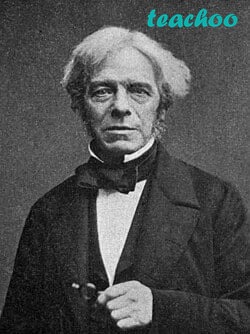
- Michael Faraday made major contributions to many areas of science, including electromagnetism and electrochemistry.
- In the nineteenth century , he delivered a famous series of lectures called Chemical History of a Candle .
- Faraday believed the candle was the perfect object to introduce the scientific method to young students.
- Through the candle, he demonstrated melting, vaporisation, and combustion — all of physical and chemical change packed into one familiar object.
- His lectures are still studied today and remain a model of clear scientific teaching.
📋 NCERT Question 3 — True/False (Multi-Concept)
(i) Melting of wax for a burning candle; (ii) Condensing water vapour; (iii) Leaves becoming compost; (iv) Baking soda + lemon juice. Last covered concept — the candle (5.4).
View Answer →
📋 NCERT Question 9 — Venn Diagram (Multi-Concept)
Sort 9 changes into a Venn diagram with three regions: physical only (A), chemical only (B), and both physical AND chemical (C).
View Answer →
