End-of-Chapter Exercises

 You are here
Last updated at August 14, 2026 by Teachoo
Transcript
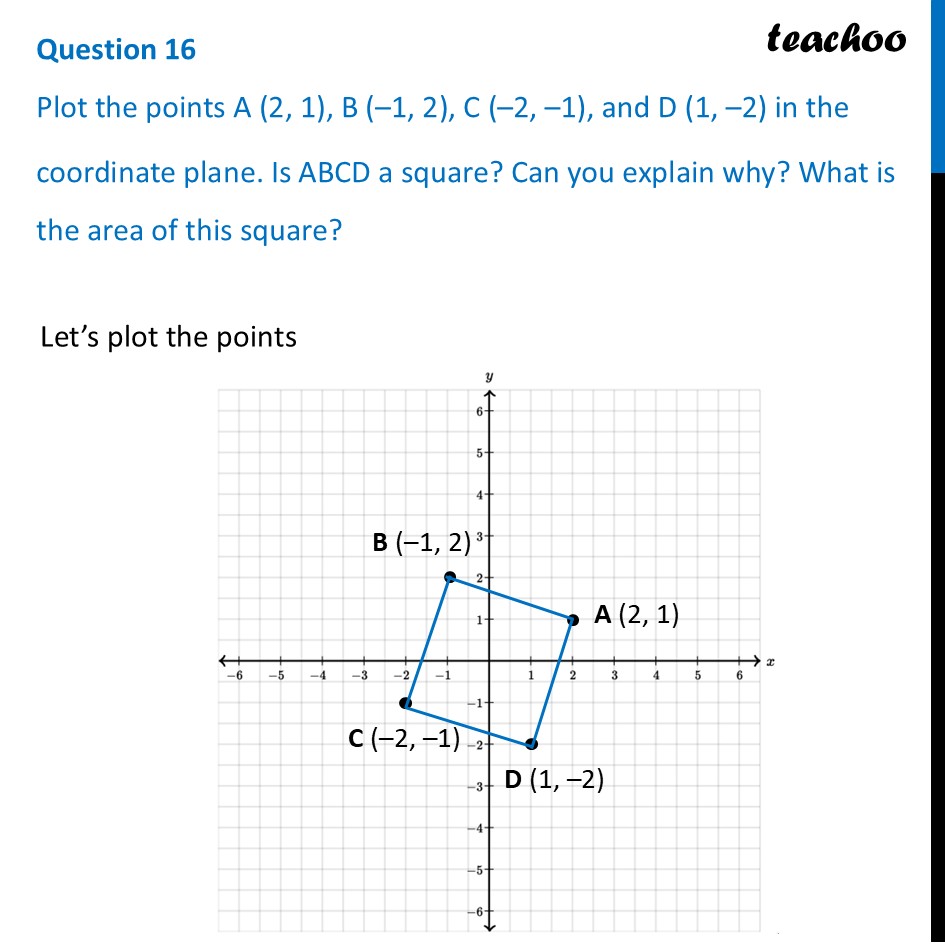
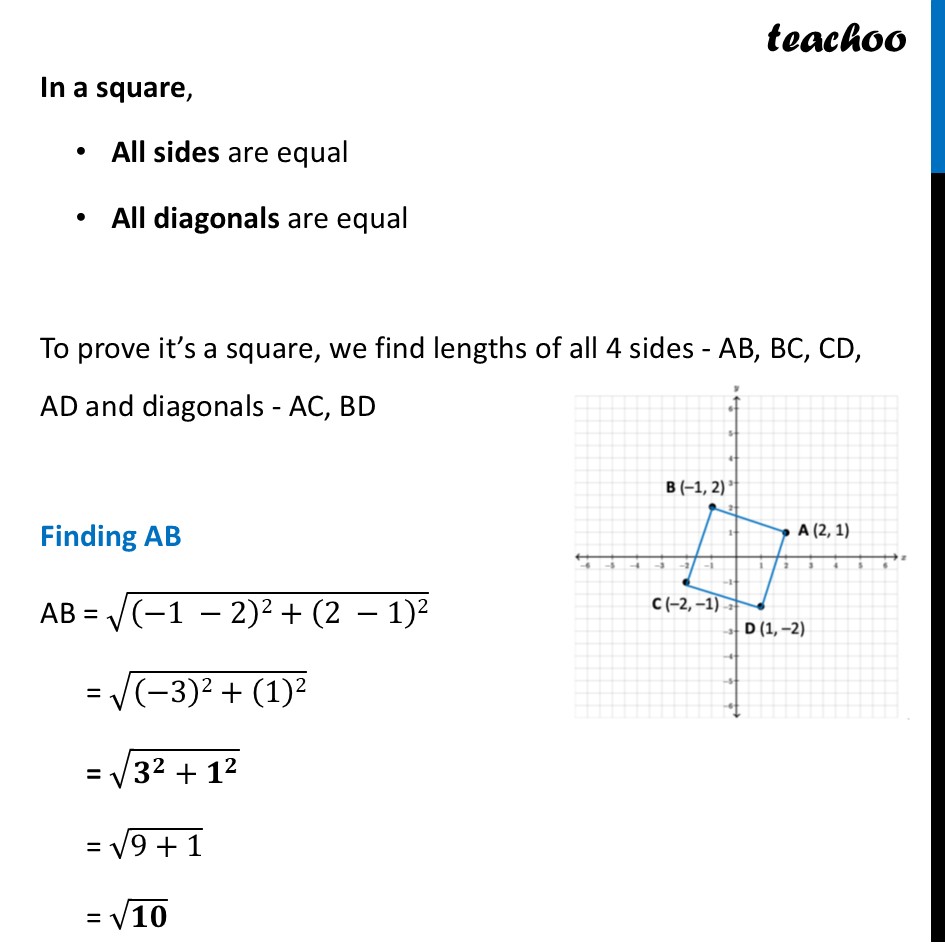
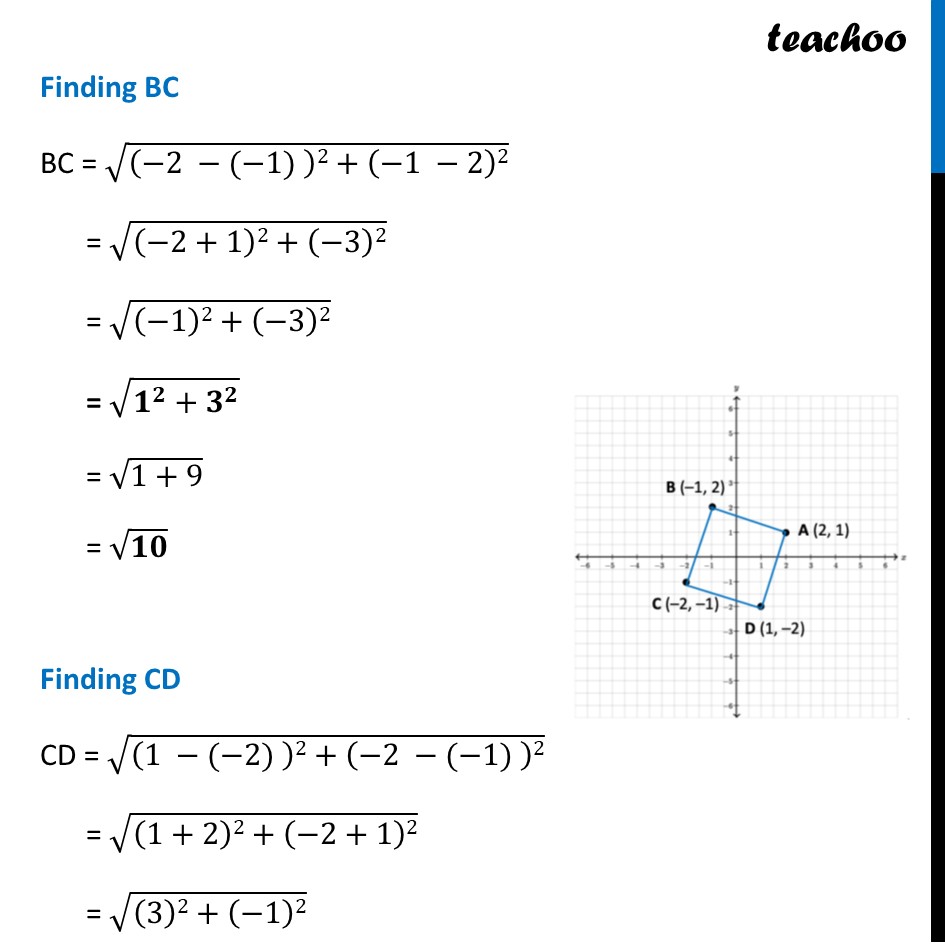
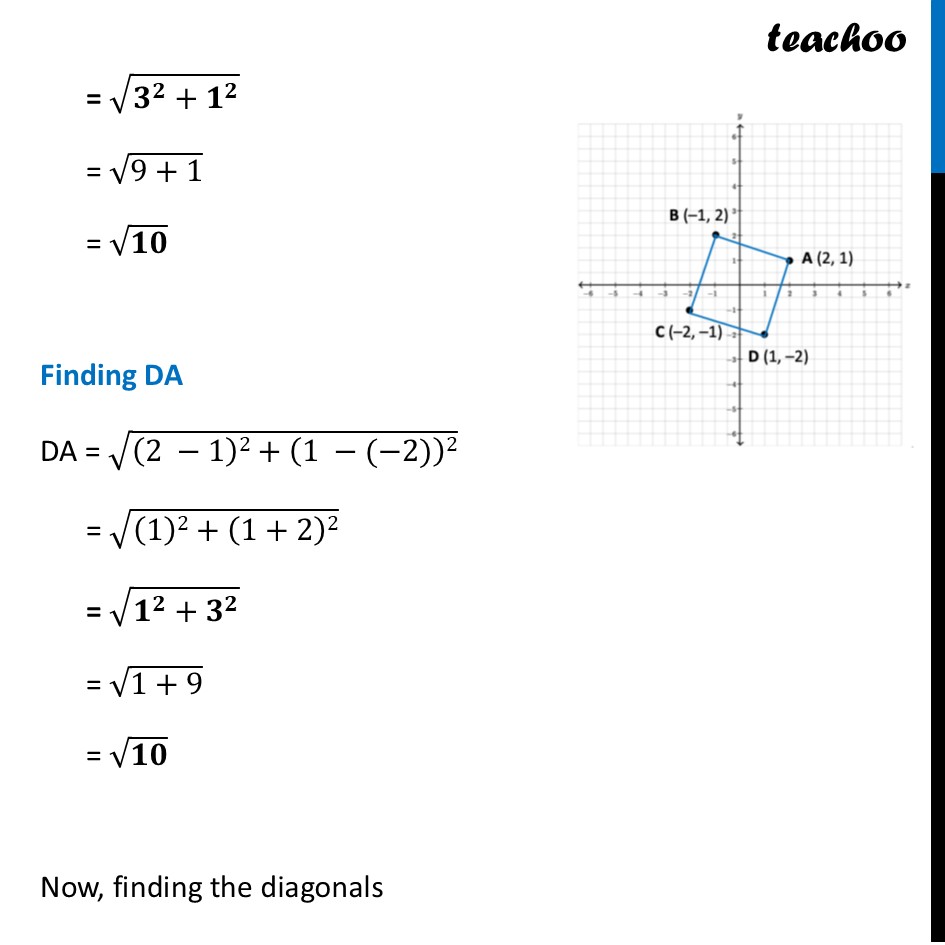
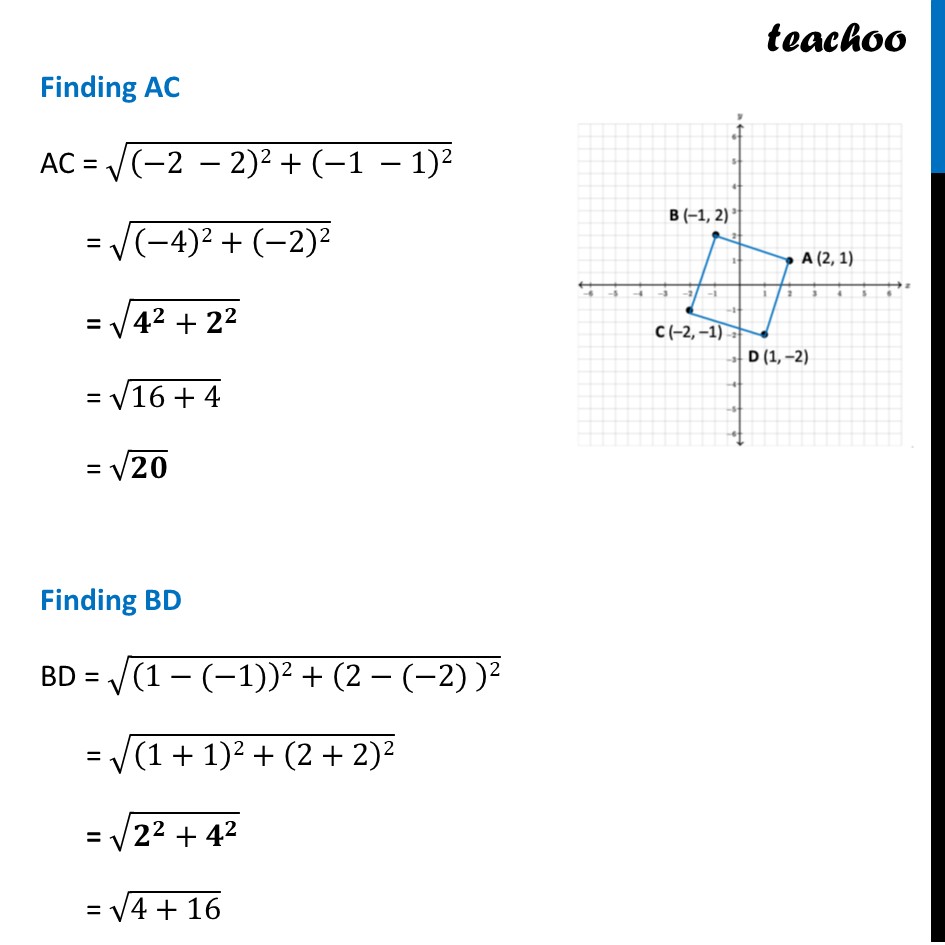
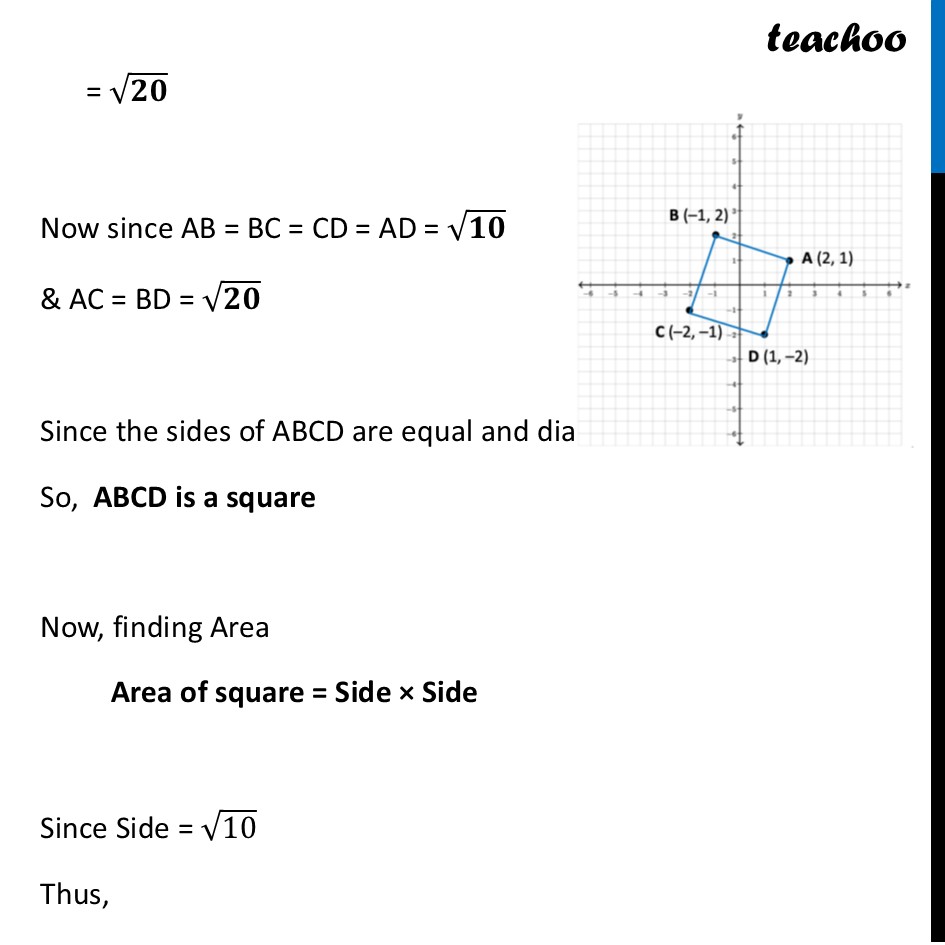
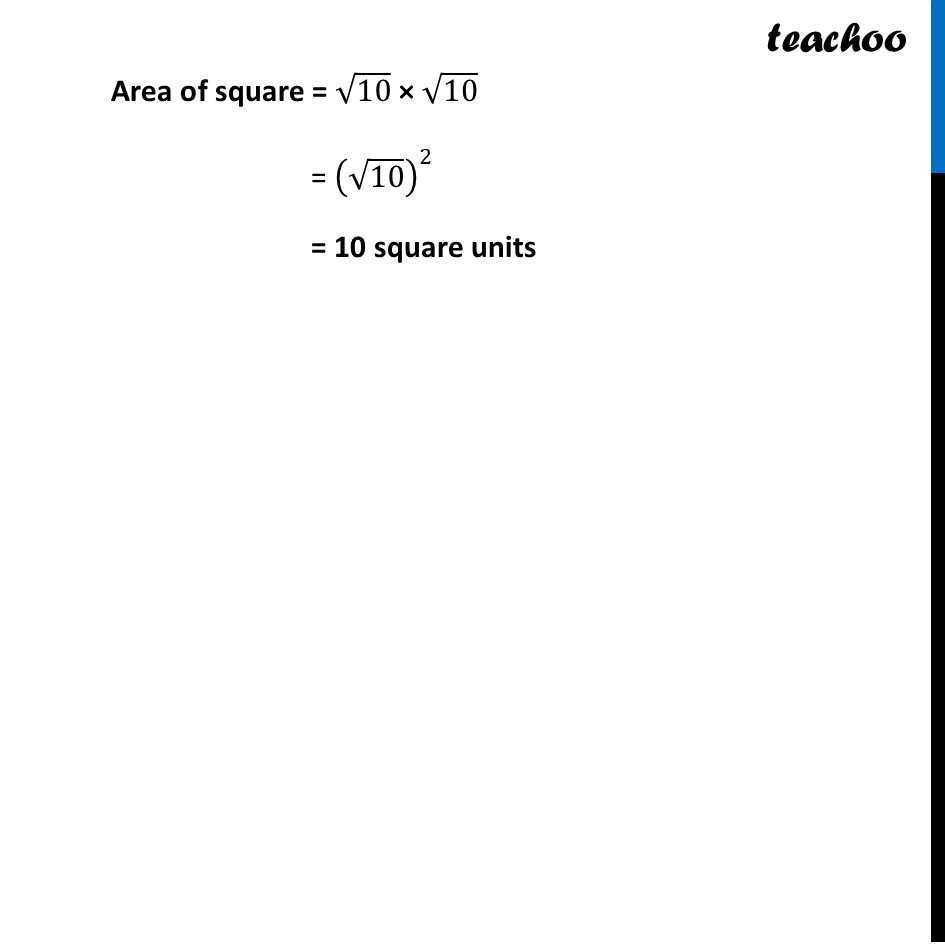
Question 16 Plot the points A (2, 1), B (–1, 2), C (–2, –1), and D (1, –2) in the coordinate plane. Is ABCD a square? Can you explain why? What is the area of this square? Let’s plot the points In a square, All sides are equal All diagonals are equal To prove it’s a square, we find lengths of all 4 sides - AB, BC, CD, AD and diagonals - AC, BD Finding AB AB = √((−1 −2)2+(2 −1)2) = √((−3)2+(1)2) = √(𝟑^𝟐+𝟏^𝟐 ) = √(9+1) = √𝟏𝟎= √(𝟑^𝟐+𝟏^𝟐 ) = √(9+1) = √𝟏𝟎 Finding DA DA = √((2 −1)2+(1 −(−2))2) = √((1)2+(1+2)2) = √(𝟏^𝟐+𝟑^𝟐 ) = √(1+9) = √𝟏𝟎 Now, finding the diagonals = √𝟐𝟎 Now since AB = BC = CD = AD = √𝟏𝟎 & AC = BD = √𝟐𝟎 Since the sides of ABCD are equal and diagonals are equal So, ABCD is a square Now, finding Area Area of square = Side × Side Since Side = √10 Thus, Area of square = √10 × √10 = (√10)^2 = 10 square units