Figure it out - Page 28, 29, 30

 You are here
Figure it out - Page 28, 29, 30
Last updated at February 17, 2026 by Teachoo
Transcript
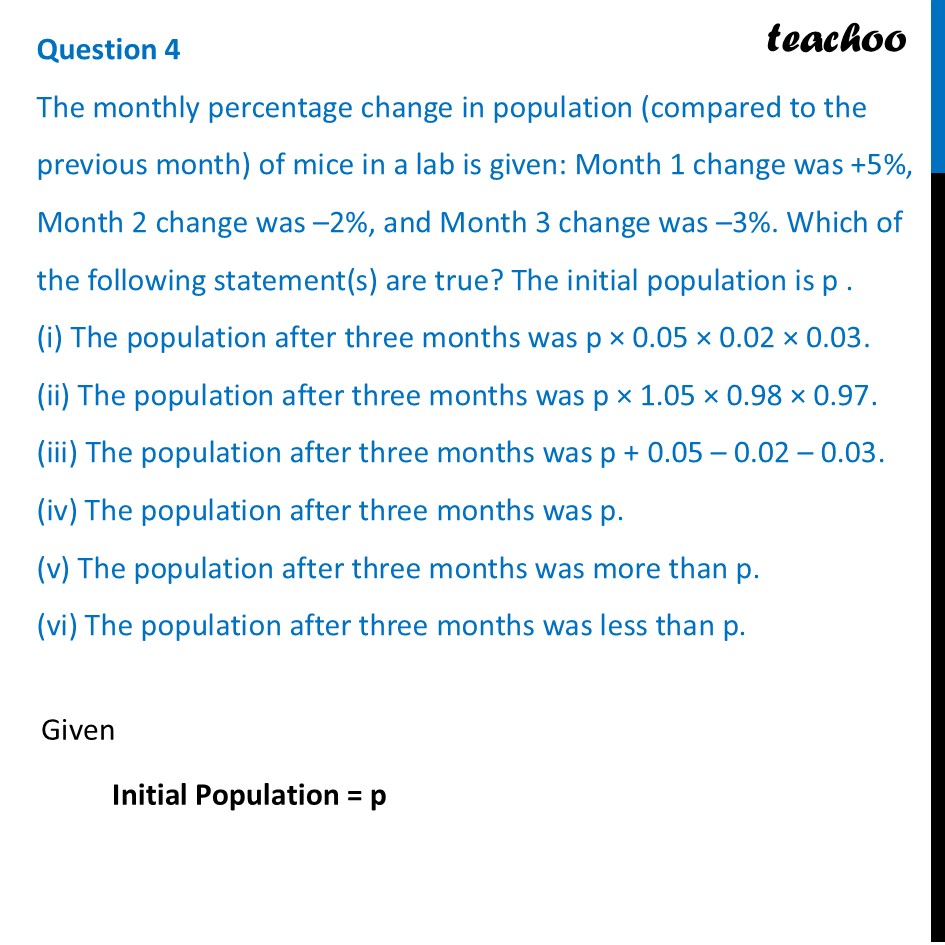
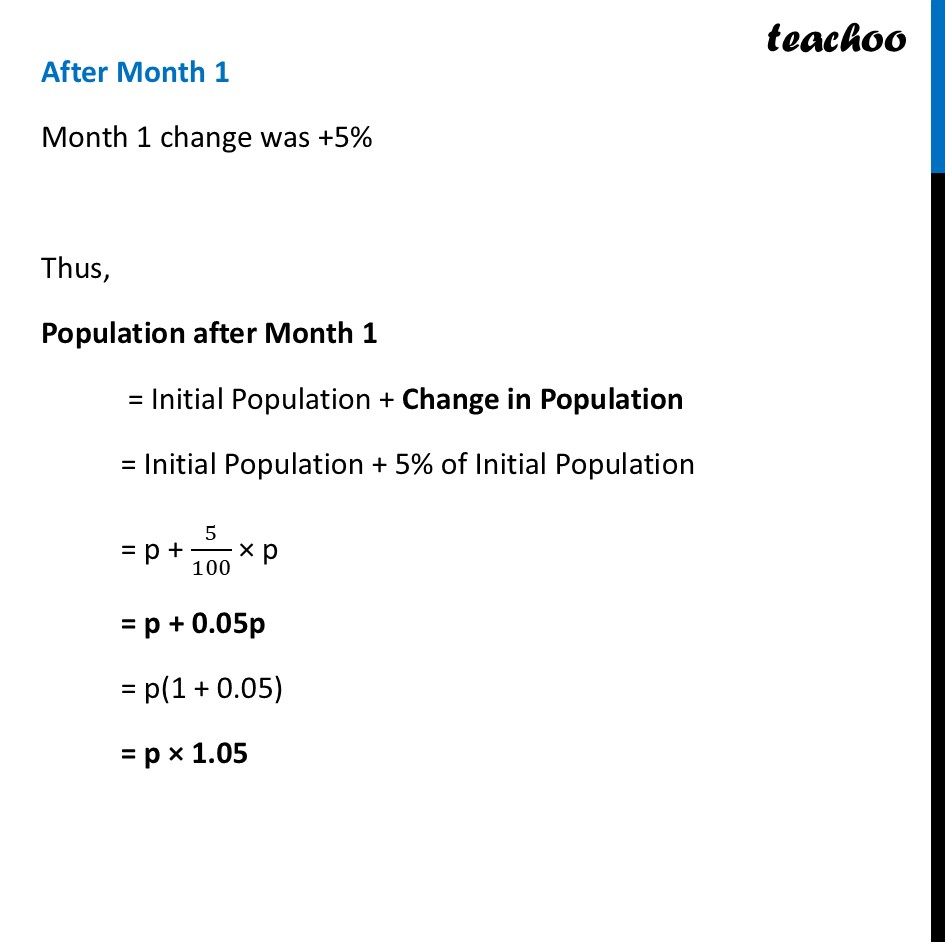
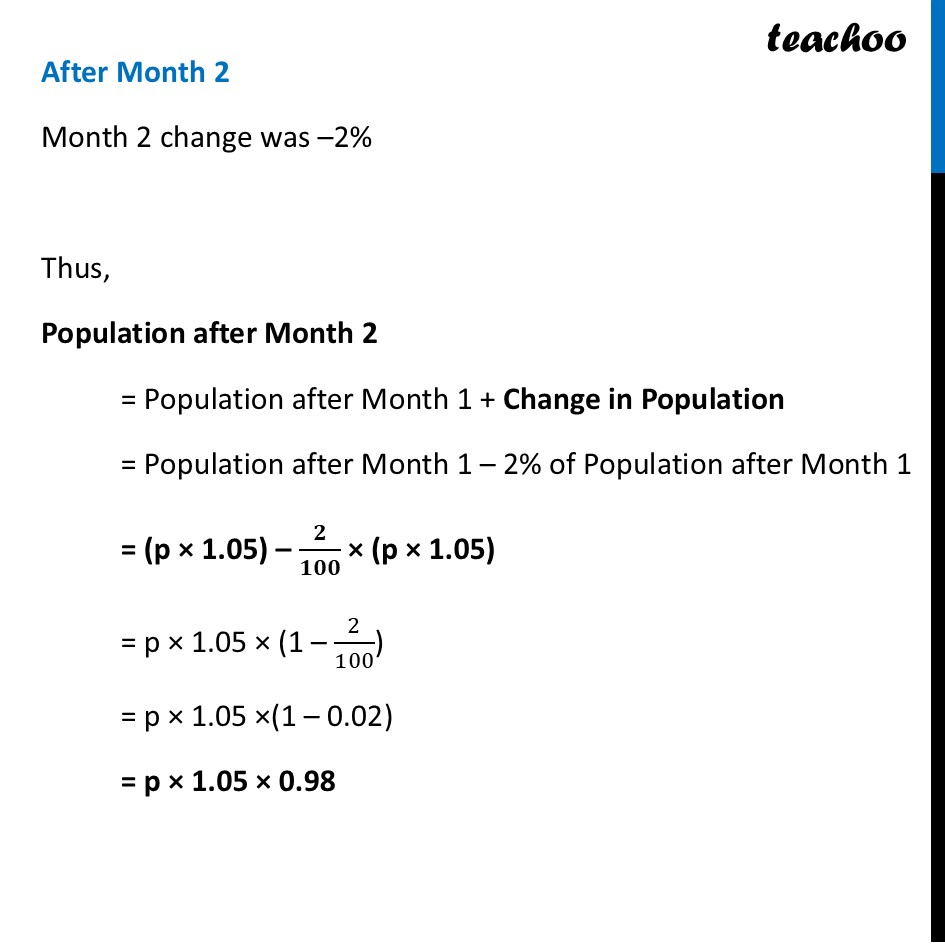
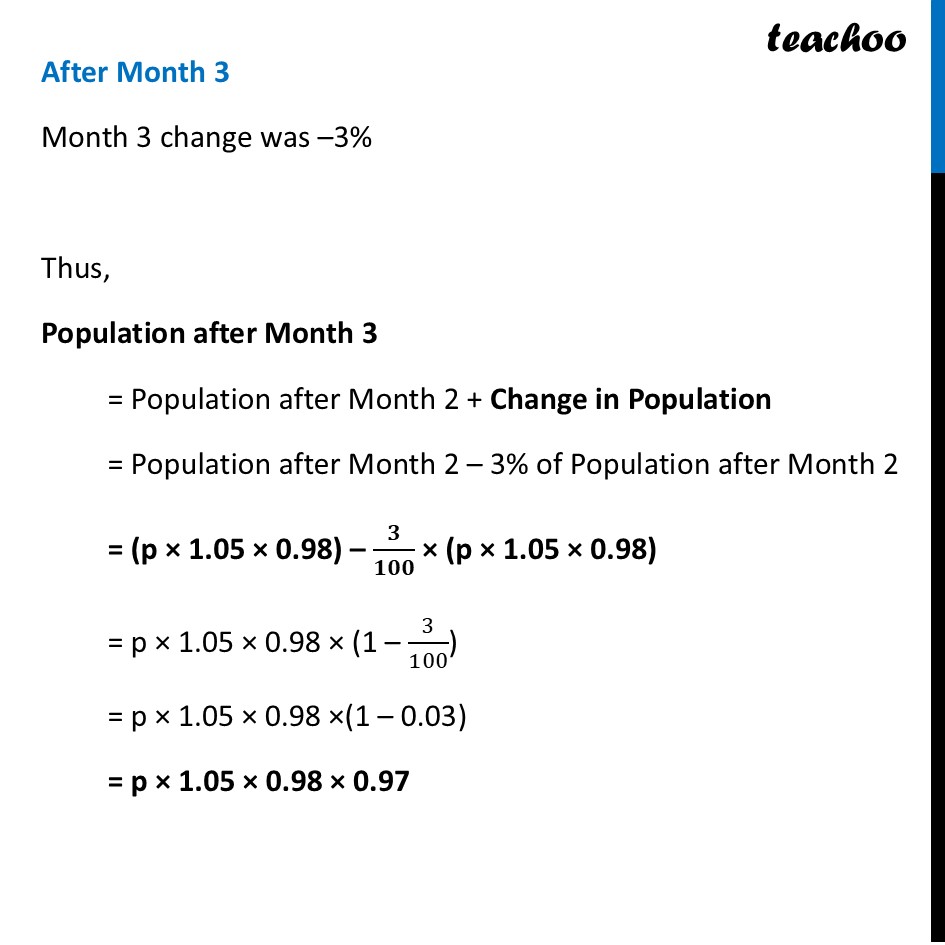
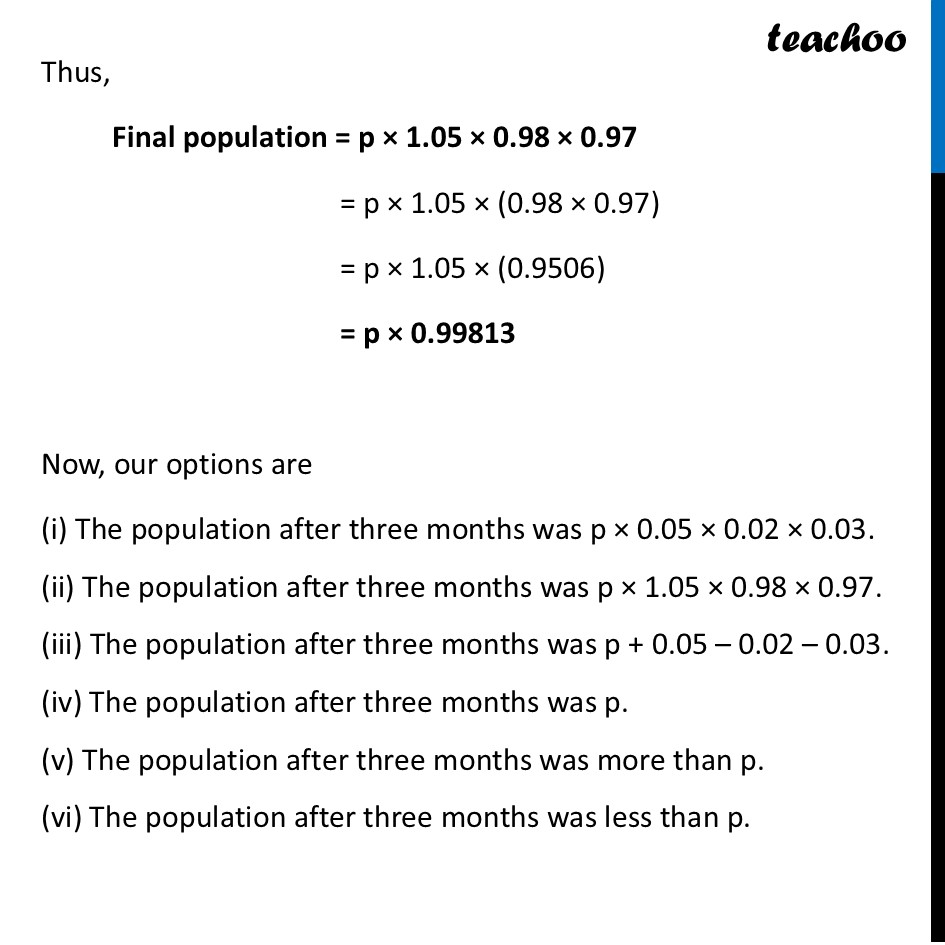
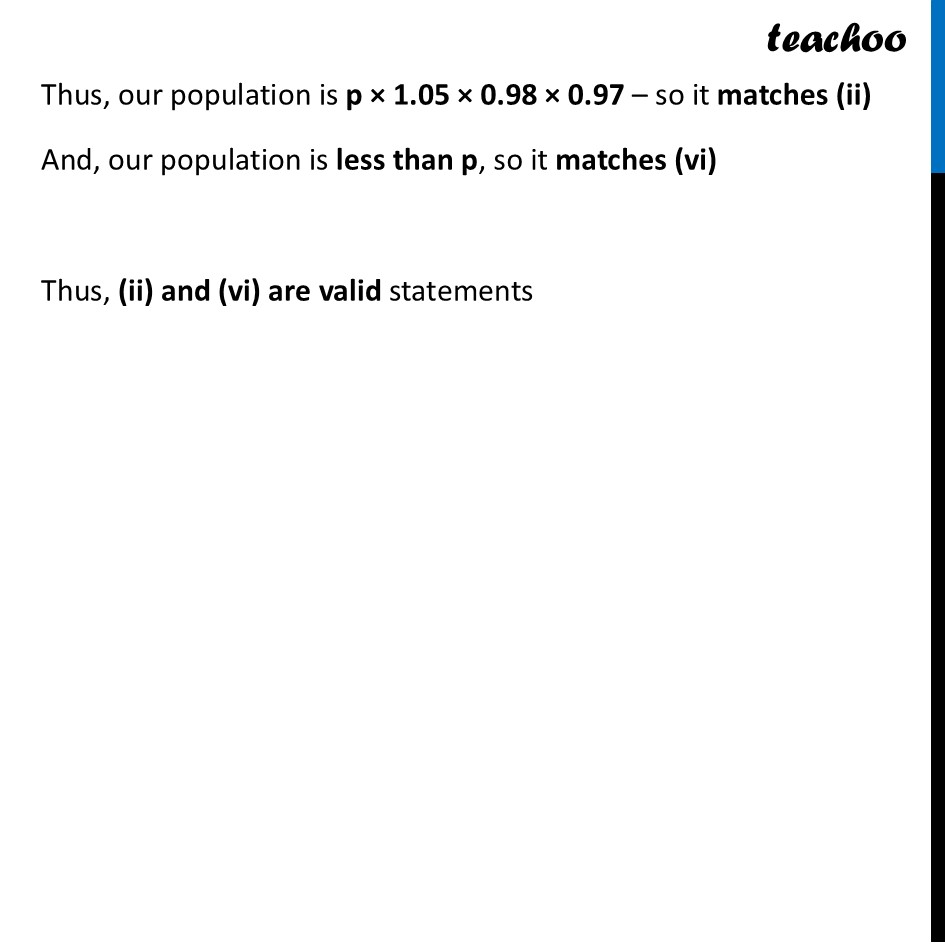
Question 4 The monthly percentage change in population (compared to the previous month) of mice in a lab is given: Month 1 change was +5%, Month 2 change was –2%, and Month 3 change was –3%. Which of the following statement(s) are true? The initial population is p . (i) The population after three months was p × 0.05 × 0.02 × 0.03. (ii) The population after three months was p × 1.05 × 0.98 × 0.97. (iii) The population after three months was p + 0.05 – 0.02 – 0.03. (iv) The population after three months was p. (v) The population after three months was more than p. (vi) The population after three months was less than p.Given Initial Population = p After Month 1 Month 1 change was +5% Thus, Population after Month 1 = Initial Population + Change in Population = Initial Population + 5% of Initial Population = p + 5/100 × p = p + 0.05p = p(1 + 0.05) = p × 1.05 After Month 2 Month 2 change was –2% Thus, Population after Month 2 = Population after Month 1 + Change in Population = Population after Month 1 – 2% of Population after Month 1 = (p × 1.05) – 𝟐/𝟏𝟎𝟎 × (p × 1.05) = p × 1.05 × (1 – 2/100) = p × 1.05 ×(1 – 0.02) = p × 1.05 × 0.98 After Month 3 Month 3 change was –3% Thus, Population after Month 3 = Population after Month 2 + Change in Population = Population after Month 2 – 3% of Population after Month 2 = (p × 1.05 × 0.98) – 𝟑/𝟏𝟎𝟎 × (p × 1.05 × 0.98) = p × 1.05 × 0.98 × (1 – 3/100) = p × 1.05 × 0.98 ×(1 – 0.03) = p × 1.05 × 0.98 × 0.97 Thus, Final population = p × 1.05 × 0.98 × 0.97 = p × 1.05 × (0.98 × 0.97) = p × 1.05 × (0.9506) = p × 0.99813 Now, our options are (i) The population after three months was p × 0.05 × 0.02 × 0.03. (ii) The population after three months was p × 1.05 × 0.98 × 0.97. (iii) The population after three months was p + 0.05 – 0.02 – 0.03. (iv) The population after three months was p. (v) The population after three months was more than p. (vi) The population after three months was less than p. Thus, our population is p × 1.05 × 0.98 × 0.97 – so it matches (ii) And, our population is less than p, so it matches (vi) Thus, (ii) and (vi) are valid statements
