 You are here

Depreciation
Last updated at February 17, 2026 by Teachoo
Transcript
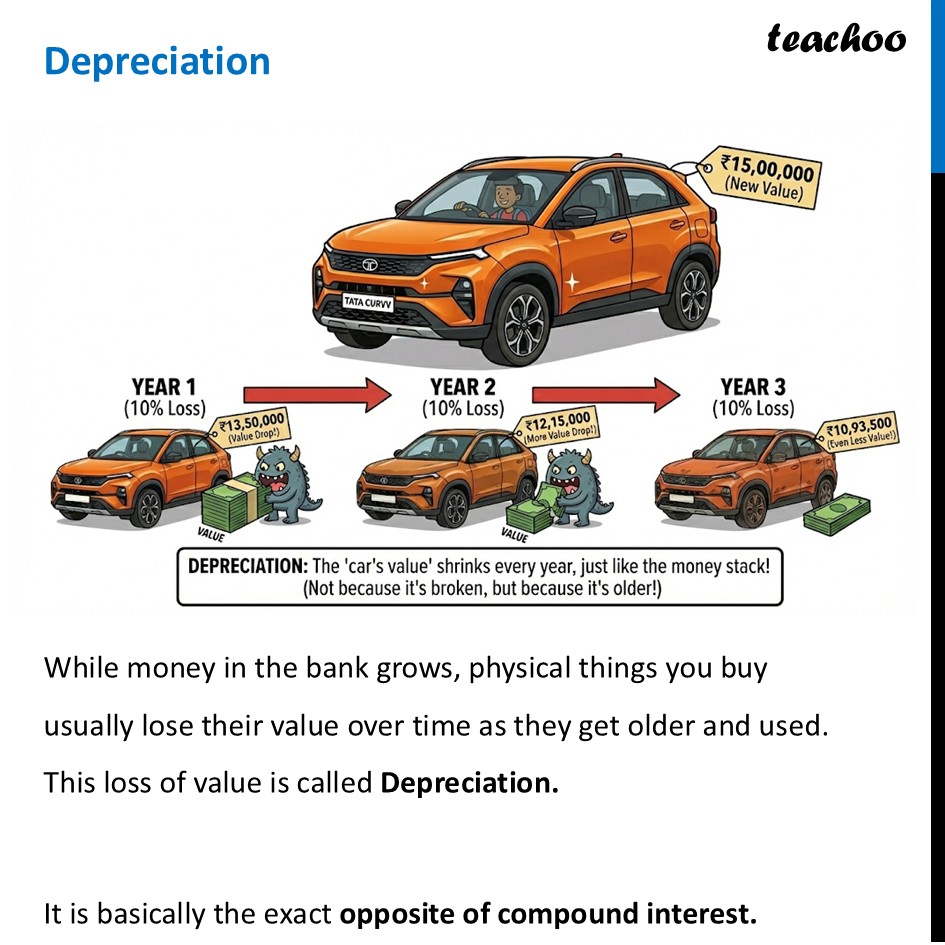
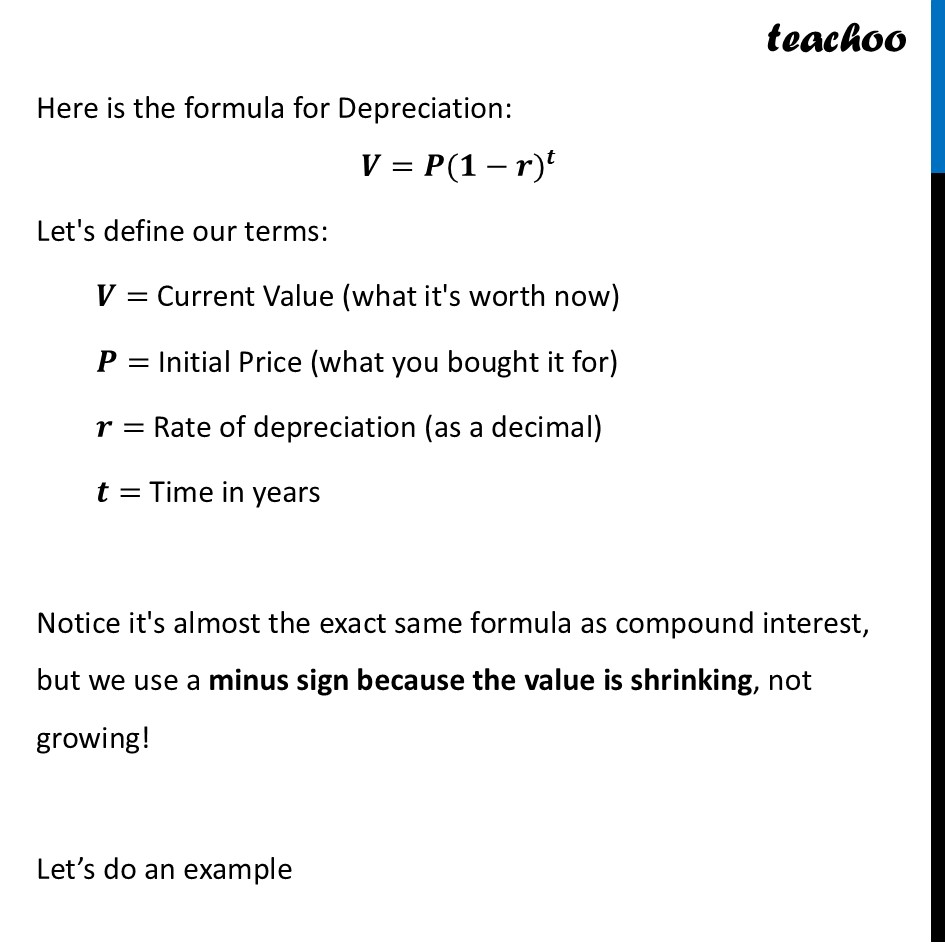
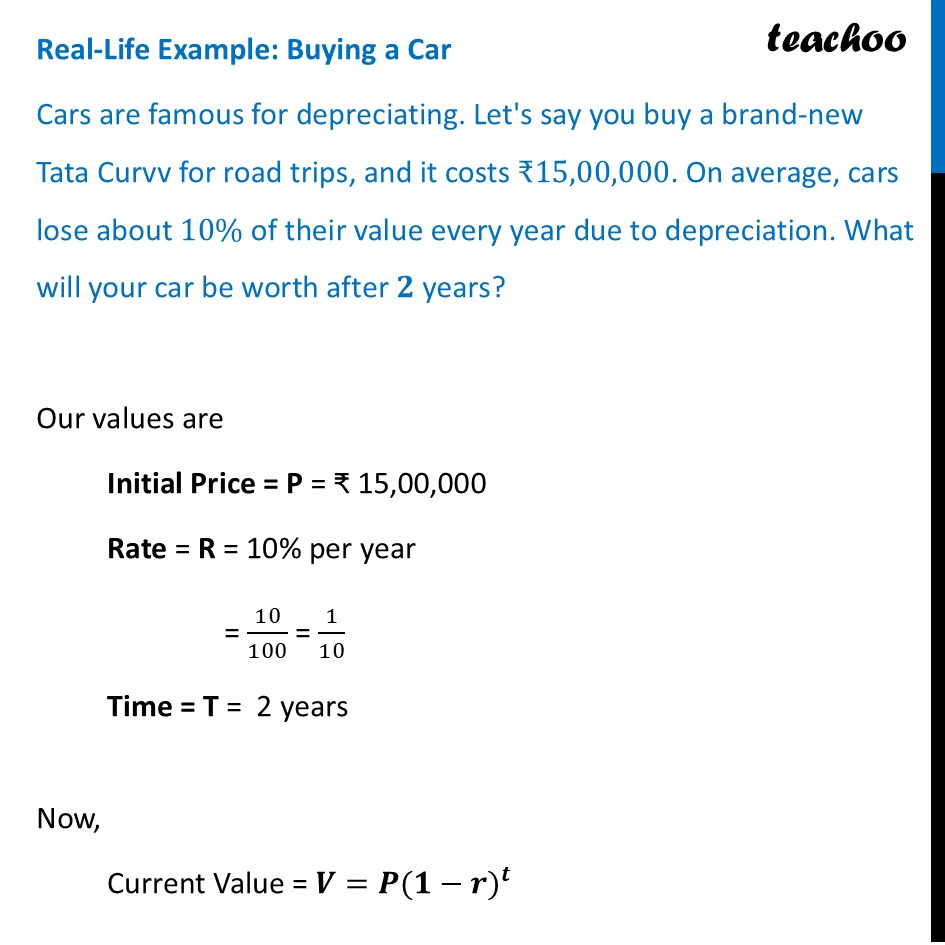
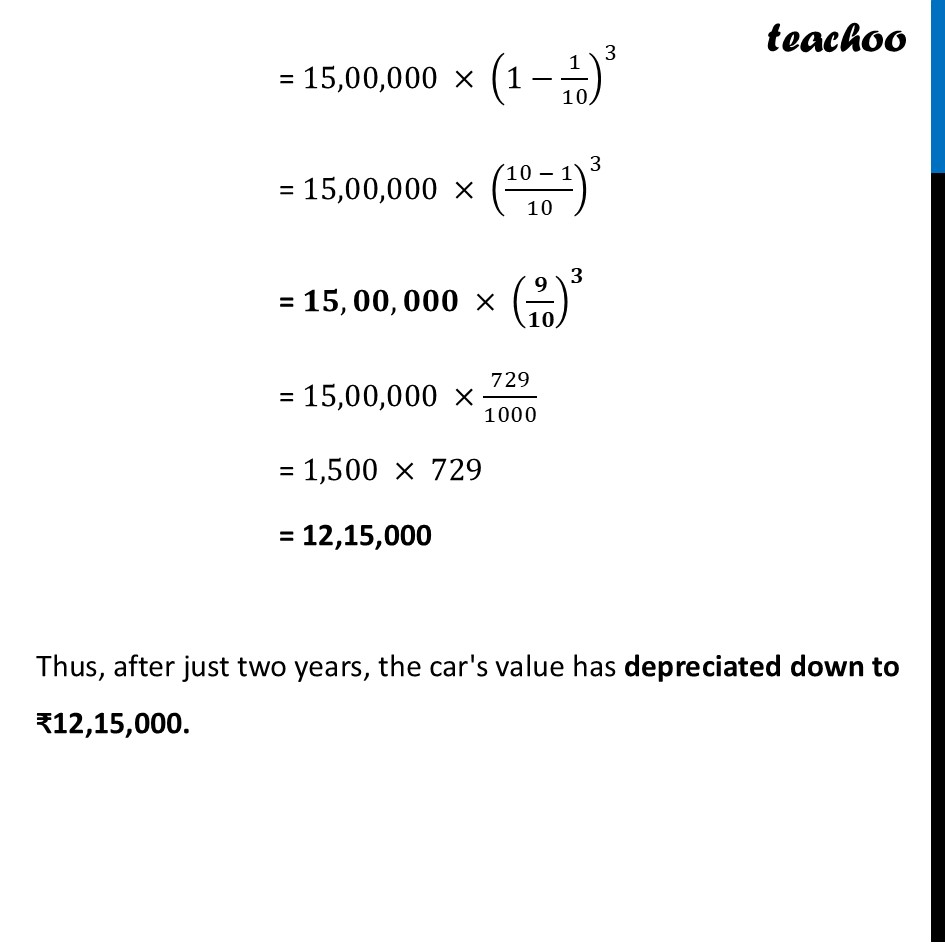
DepreciationWhile money in the bank grows, physical things you buy usually lose their value over time as they get older and used. This loss of value is called Depreciation. It is basically the exact opposite of compound interest. Here is the formula for Depreciation: 𝑉=𝑃(1−𝑟)^𝑡 Here is the formula for Depreciation: 𝑽=𝑷(𝟏−𝒓)^𝒕 Let's define our terms: 𝑽= Current Value (what it's worth now) 𝑷= Initial Price (what you bought it for) 𝒓= Rate of depreciation (as a decimal) 𝒕= Time in years Notice it's almost the exact same formula as compound interest, but we use a minus sign because the value is shrinking, not growing! Let’s do an example Real-Life Example: Buying a Car Cars are famous for depreciating. Let's say you buy a brand-new Tata Curvv for road trips, and it costs ₹15,00,000. On average, cars lose about 10% of their value every year due to depreciation. What will your car be worth after 𝟐 years? Our values are Initial Price = P = ₹ 15,00,000 Rate = R = 10% per year = 10/100 = 1/10 Time = T = 2 years Now, Current Value = 𝑽=𝑷(𝟏−𝒓)^𝒕 = 15,00,000 × (1−1/10)^3 = 15,00,000 × ((10 − 1)/10)^3 = 𝟏𝟓,𝟎𝟎,𝟎𝟎𝟎 × (𝟗/𝟏𝟎)^𝟑 = 15,00,000 ×729/1000 = 1,500 × 729 = 12,15,000 Thus, after just two years, the car's value has depreciated down to ₹12,15,000.
