 You are here


Tricky Percentages
Last updated at February 17, 2026 by Teachoo
Transcript
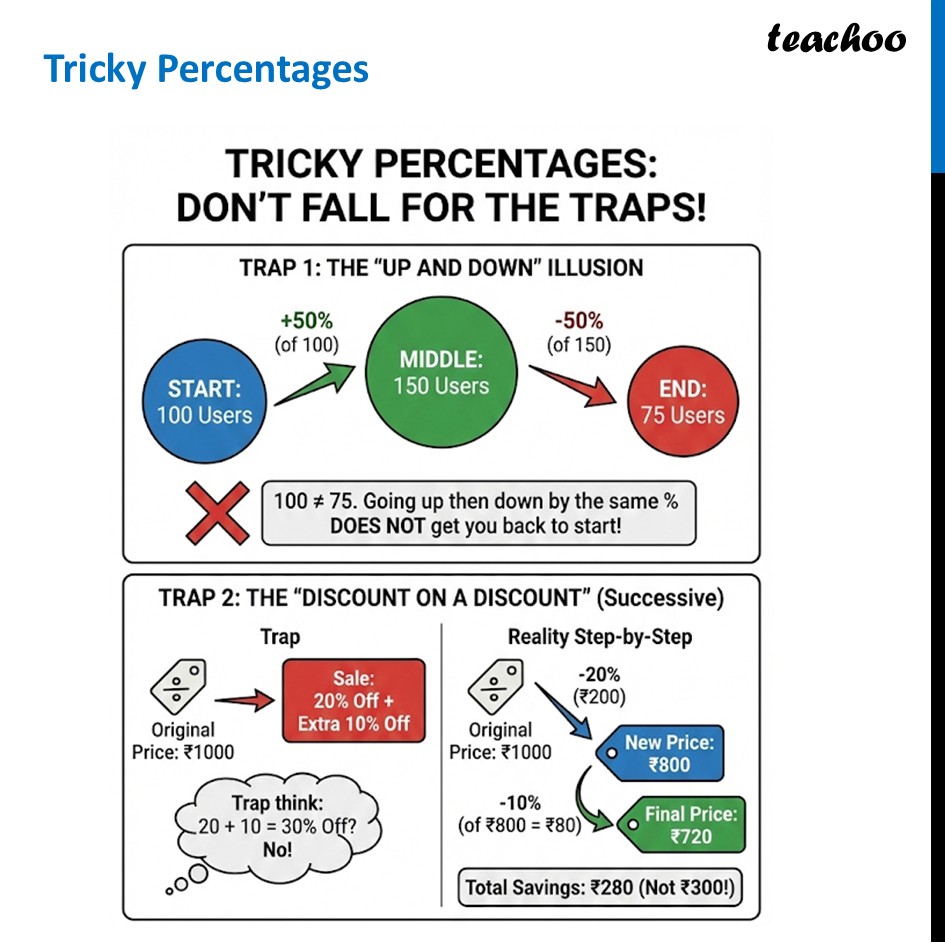
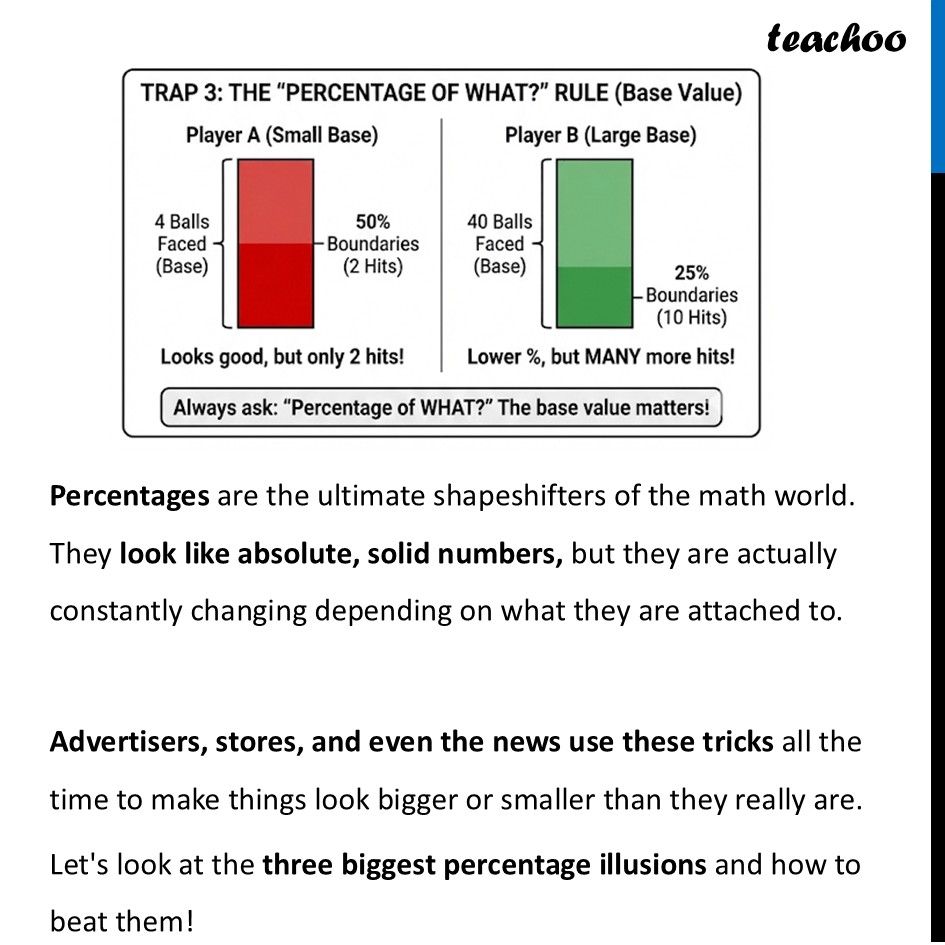
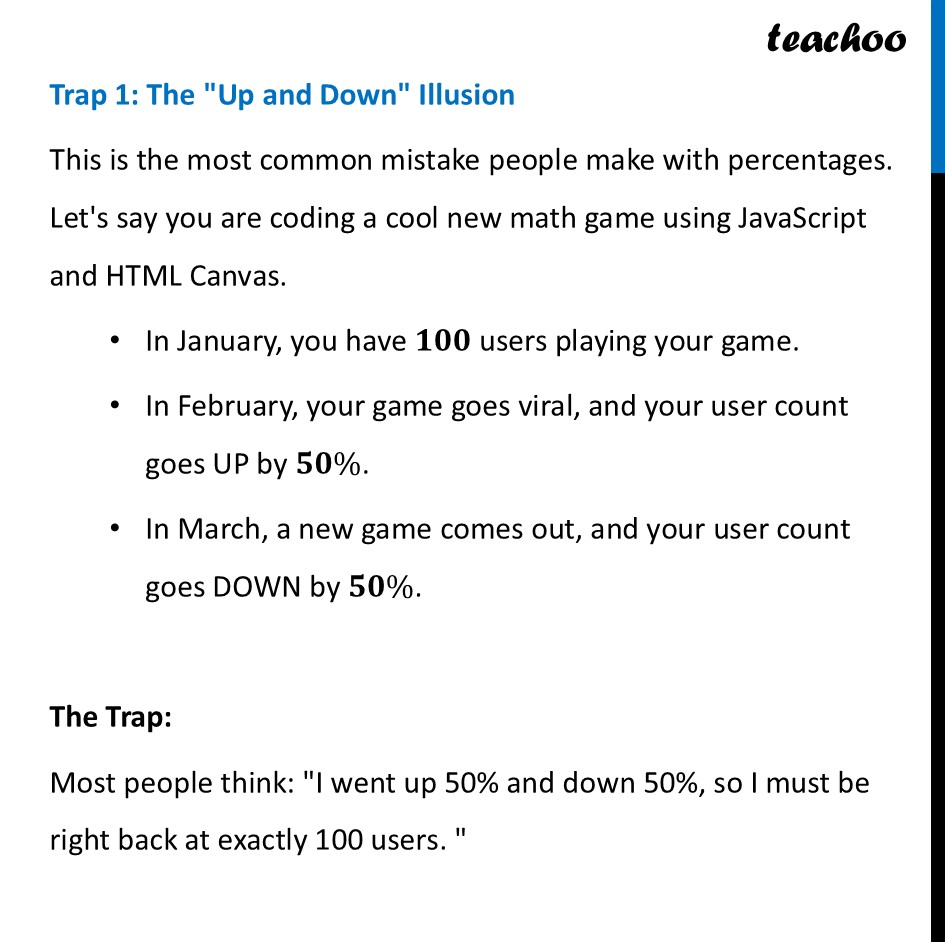
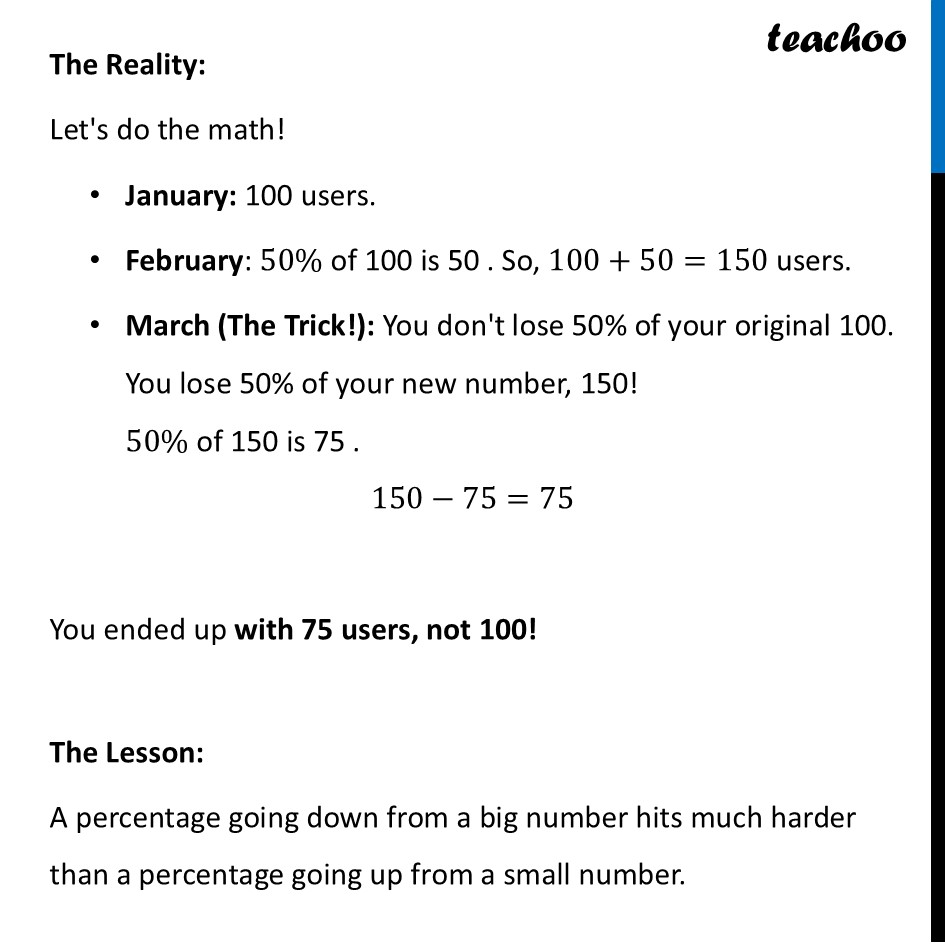
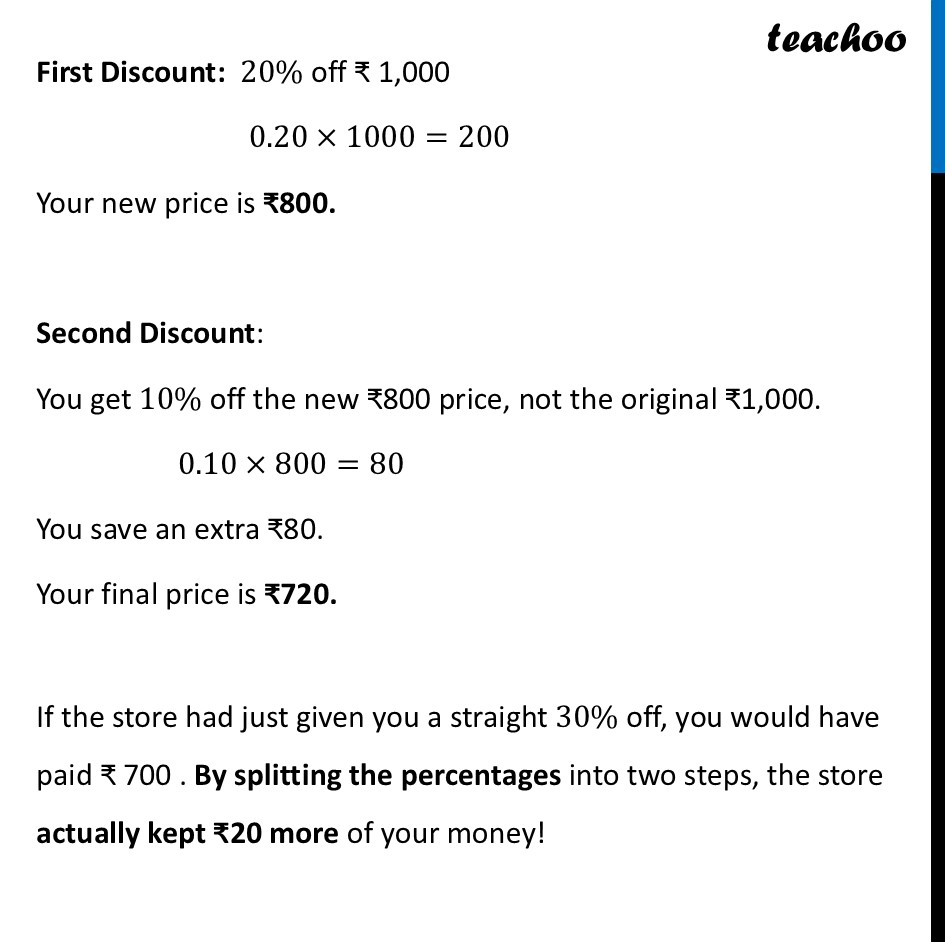
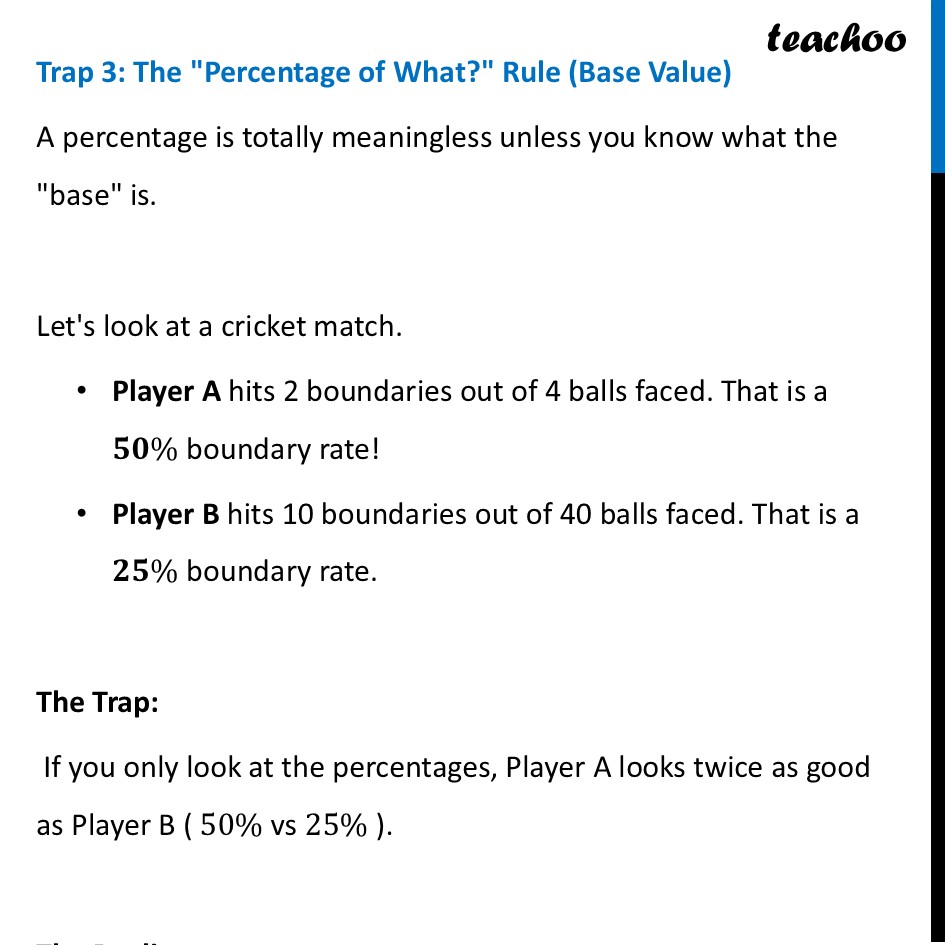
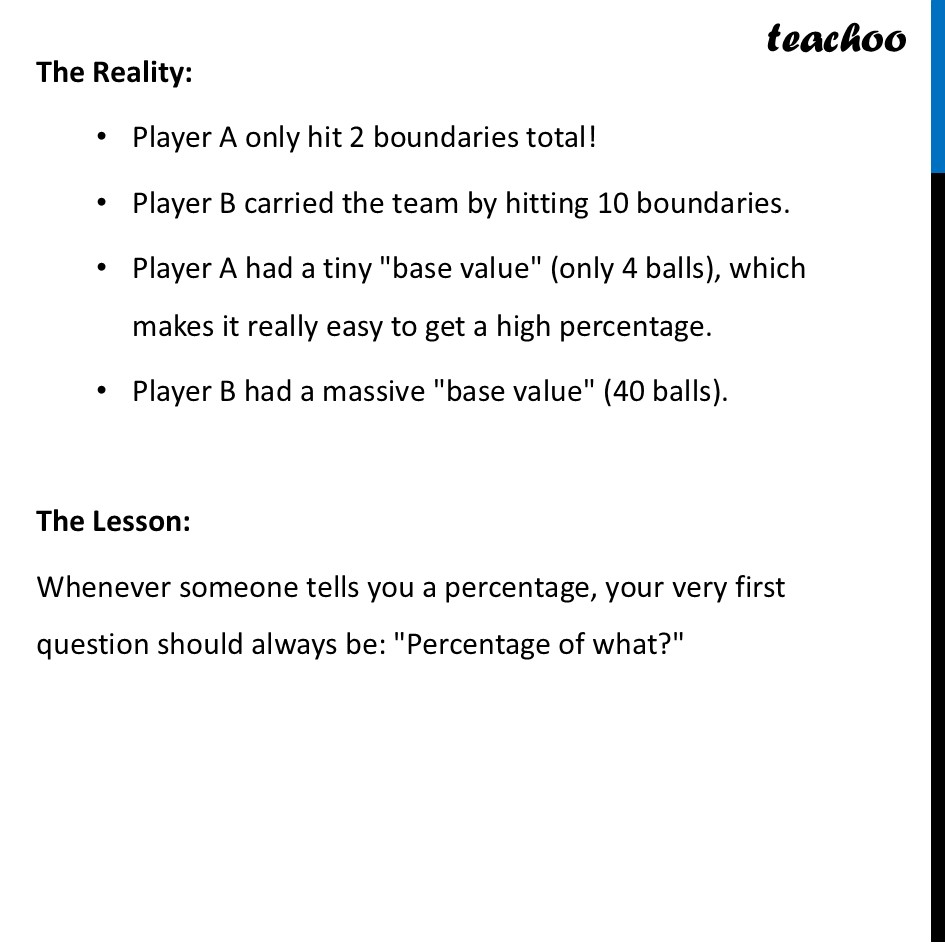
Tricky PercentagesTRICKY PERCENTAGES: DON'T FALL FOR THE TRAPS! TRAP 2: THE "DISCOUNT ON A DISCOUNT" (Successive)Percentages are the ultimate shapeshifters of the math world. They look like absolute, solid numbers, but they are actually constantly changing depending on what they are attached to. Advertisers, stores, and even the news use these tricks all the time to make things look bigger or smaller than they really are. Let's look at the three biggest percentage illusions and how to beat them! Trap 1: The "Up and Down" Illusion This is the most common mistake people make with percentages. Let's say you are coding a cool new math game using JavaScript and HTML Canvas. In January, you have 𝟏𝟎𝟎 users playing your game. In February, your game goes viral, and your user count goes UP by 𝟓𝟎%. In March, a new game comes out, and your user count goes DOWN by 𝟓𝟎%. The Trap: Most people think: "I went up 50% and down 50%, so I must be right back at exactly 100 users. " The Reality: Let's do the math! January: 100 users. February: 50% of 100 is 50 . So, 100+50=150 users. March (The Trick!): You don't lose 50% of your original 100. You lose 50% of your new number, 150! 50% of 150 is 75 . 150−75=75 You ended up with 75 users, not 100! The Lesson: A percentage going down from a big number hits much harder than a percentage going up from a small number. Trap 2: The "Discount on a Discount" (Successive Percentages) Stores love to use this trick during big sales. Imagine you are at the toy store buying a beautiful, wooden Tangram puzzle set that costs ₹1,000. The sign says: "Massive Sale! 20% Off!” When you get to the cash register, the cashier says, "Since you are a student, I'll give you an extra 10% off the sale price!" The Trap: Your brain immediately adds them together: " 20%+10%=30% off! I'm saving ₹300!" The Reality: Let's break it down step-by-step (this is called Successive Percentages). First Discount: 20% off ₹ 1,000 0.20×1000=200 Your new price is ₹800. Second Discount: You get 10% off the new ₹800 price, not the original ₹1,000. 0.10×800=80 You save an extra ₹80. Your final price is ₹720. If the store had just given you a straight 30% off, you would have paid ₹ 700 . By splitting the percentages into two steps, the store actually kept ₹20 more of your money! Trap 3: The "Percentage of What?" Rule (Base Value) A percentage is totally meaningless unless you know what the "base" is. Let's look at a cricket match. Player A hits 2 boundaries out of 4 balls faced. That is a 𝟓𝟎% boundary rate! Player B hits 10 boundaries out of 40 balls faced. That is a 𝟐𝟓% boundary rate. The Trap: If you only look at the percentages, Player A looks twice as good as Player B ( 50% vs 25% ). The Reality: Player A only hit 2 boundaries total! Player B carried the team by hitting 10 boundaries. Player A had a tiny "base value" (only 4 balls), which makes it really easy to get a high percentage. Player B had a massive "base value" (40 balls). The Lesson: Whenever someone tells you a percentage, your very first question should always be: "Percentage of what?"
