
 You are here
Uses of Percentages
Last updated at February 12, 2026 by Teachoo
Transcript
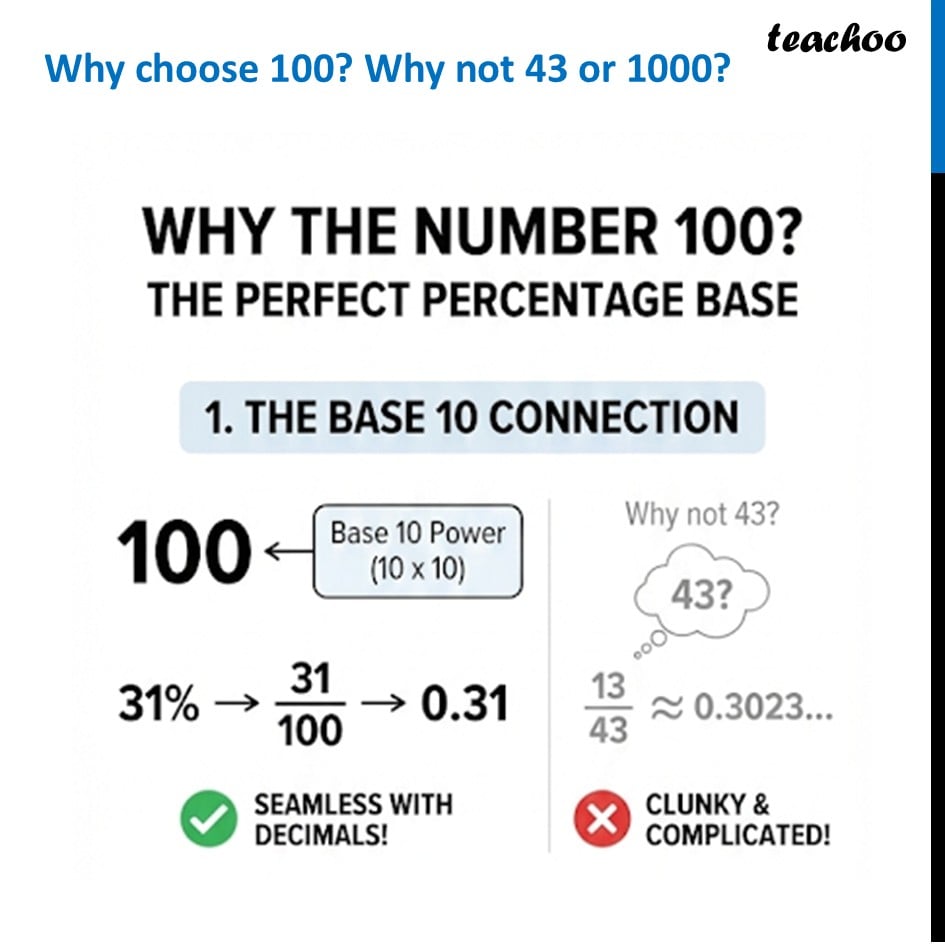
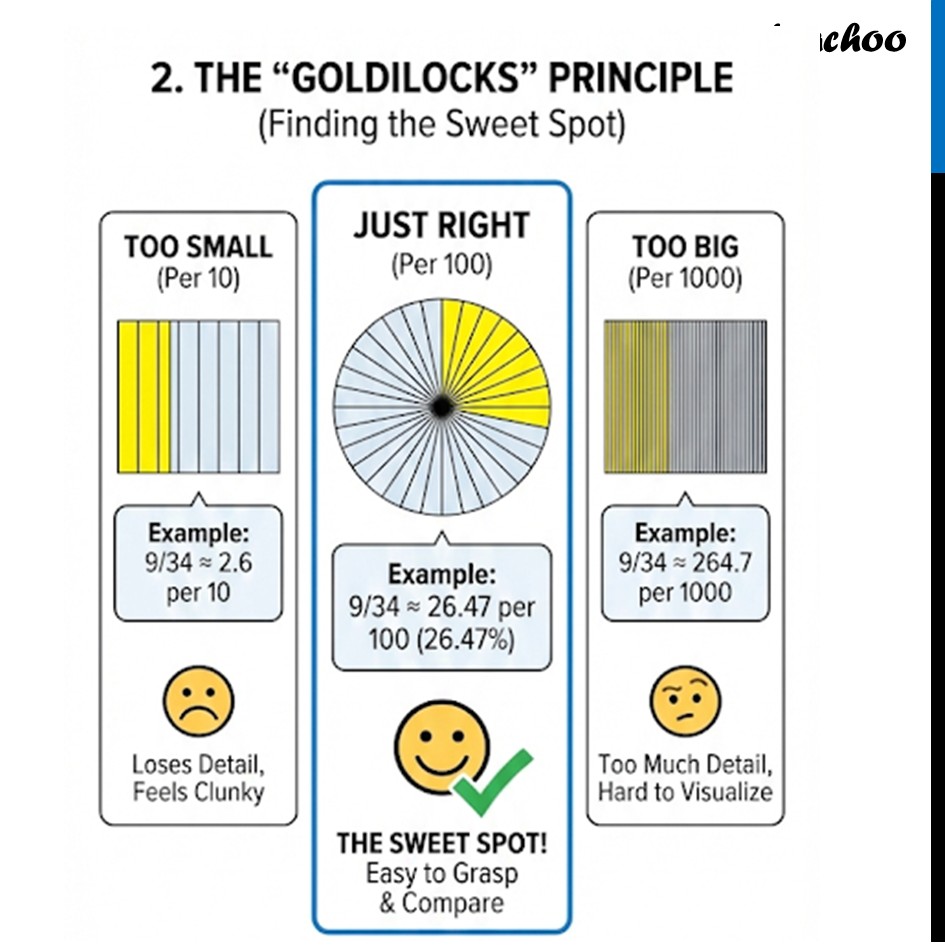
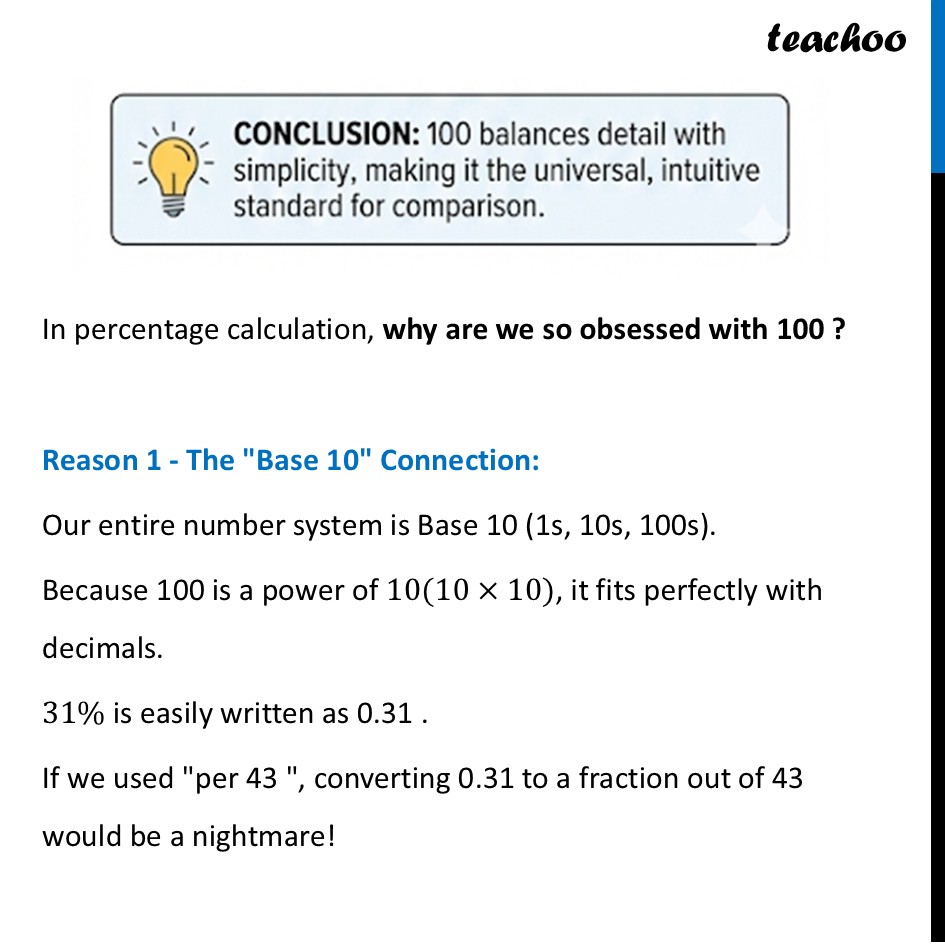
Why choose 100? Why not 43 or 1000?WHY THE NUMBER 100? THE PERFECT PERCENTAGE BASE THE BASE 10 CONNECTION 100 Base 10 Power Why not 43? 43? SEAMLESS WITH CLUNKY & DECIMALS! COMPLICATED!THE "GOLDILOCKS" PRINCIPLE (Finding the Sweet Spot)In percentage calculation, why are we so obsessed with 100 ? Reason 1 - The "Base 10" Connection: Our entire number system is Base 10 (1s, 10s, 100s). Because 100 is a power of 10(10×10), it fits perfectly with decimals. 31% is easily written as 0.31 . If we used "per 43 ", converting 0.31 to a fraction out of 43 would be a nightmare! Reason 2 - The "Goldilocks" Number (The Sweet Spot) 10 is too small: "Per 10 "(per decem) loses detail. 9/34 is roughly 2.6 out of 10 . It feels clunky. 1000 is too big: "Per 1000 " (per mille) gives too much detail for everyday life. Saying "264.7 per 1000" is harder to visualize than "about 26% ". 100 is just right: It is large enough to show small differences (like the difference between 26% and 28% ) but small enough that we can visualize it easily.
