
 You are here
💬 Think about it
Big ideas in science come from many people adding one piece each. The idea that all life is made of cells took three scientists and many years. Let us see how the Cell Theory was built.
Who built the Cell Theory?
![2.5 Cell Theory — The Unifying P - Cell — The Building Bl - [Teachoo] - Concepts](https://cdn.teachoo.com/3f684f98-6336-4104-b0ad-2a76c4812cf5/image-portraits-of-the-three-scientists-who-built-the-cell-theory-matthias-schleiden-theodor-schwann-and-rudolf-virchow-arranged-in-a.webp)
Founders of the Cell Theory
Matthias Schleiden (1838)
Said all plants are made of cells.
↓
Theodor Schwann (1839)
Found all animals are made of cells.
↓
Rudolf Virchow (1855)
Said new cells form only from existing cells.
- In 1838, Matthias Schleiden said all plants are made of cells.
- In 1839, Theodor Schwann found all animals are made of cells.
- In 1855, Rudolf Virchow said new cells form only from existing cells.
- Together their work formed the Cell Theory.
What does the classical Cell Theory say?
Classical Cell Theory
Postulate 1
All living organisms are made of one or more cells.
↓
Postulate 2
The cell is the basic unit of structure and function.
↓
Postulate 3
All cells arise only from pre-existing cells. Schleiden (1838), Schwann (1839), Virchow (1855)
| Scientist | Year | Contribution |
|---|---|---|
| Matthias Schleiden | 1838 | All plants are made of cells. |
| Theodor Schwann | 1839 | All animals are made of cells. |
| Rudolf Virchow | 1855 | New cells form only from existing cells. |
- All living organisms are made of one or more cells.
- The cell is the basic unit of structure and function.
- All cells arise from pre-existing cells.
Do cells grow and reproduce forever?
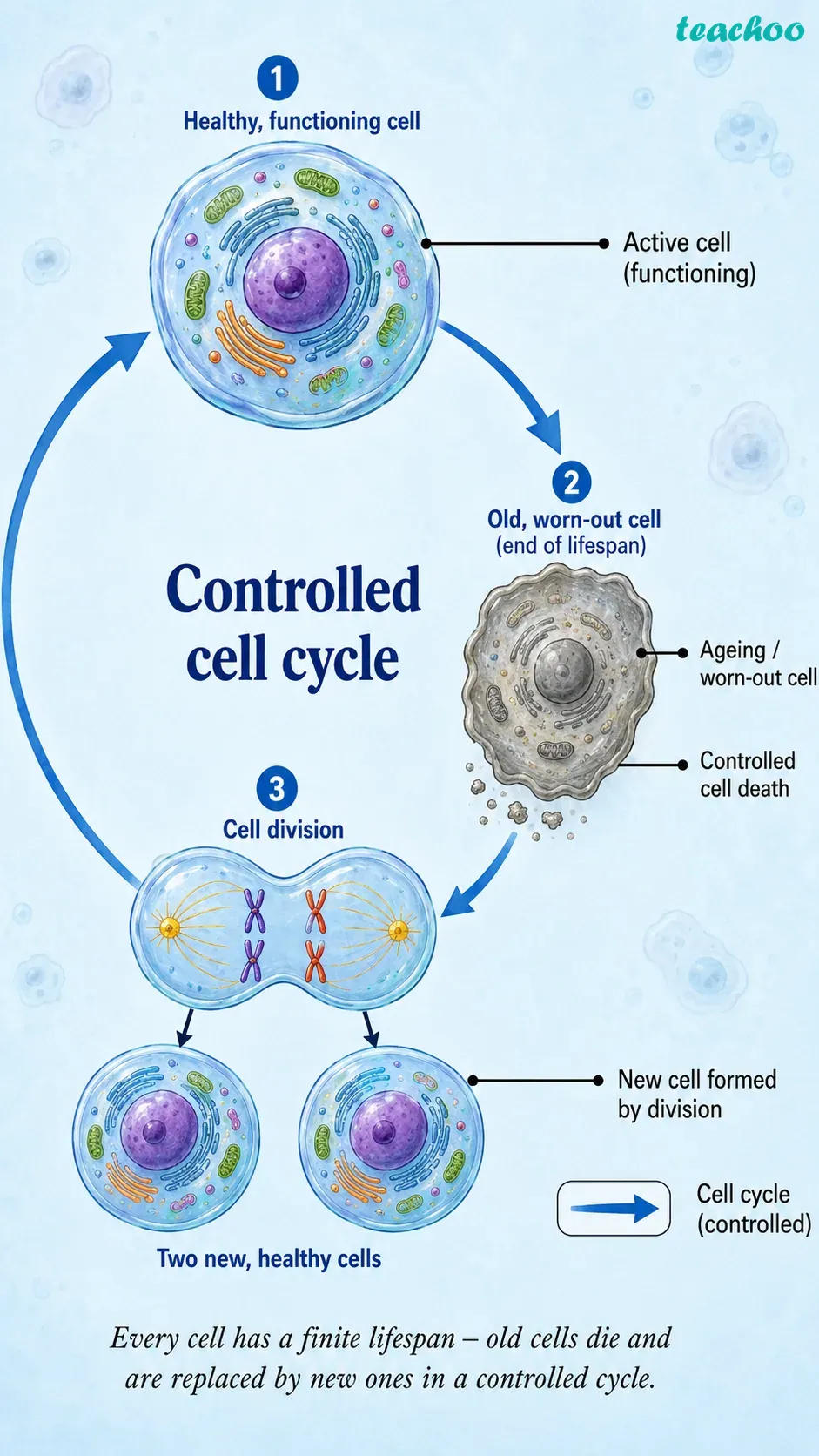
- No, cells grow and divide in a controlled way.
- Dead cells are replaced by new ones doing the same work.
- So every cell has a definite life span.
- Problems arise if cells die too early or do not die.
Example:
Old skin cells die and are replaced by new ones doing the same job.
What is contact inhibition?
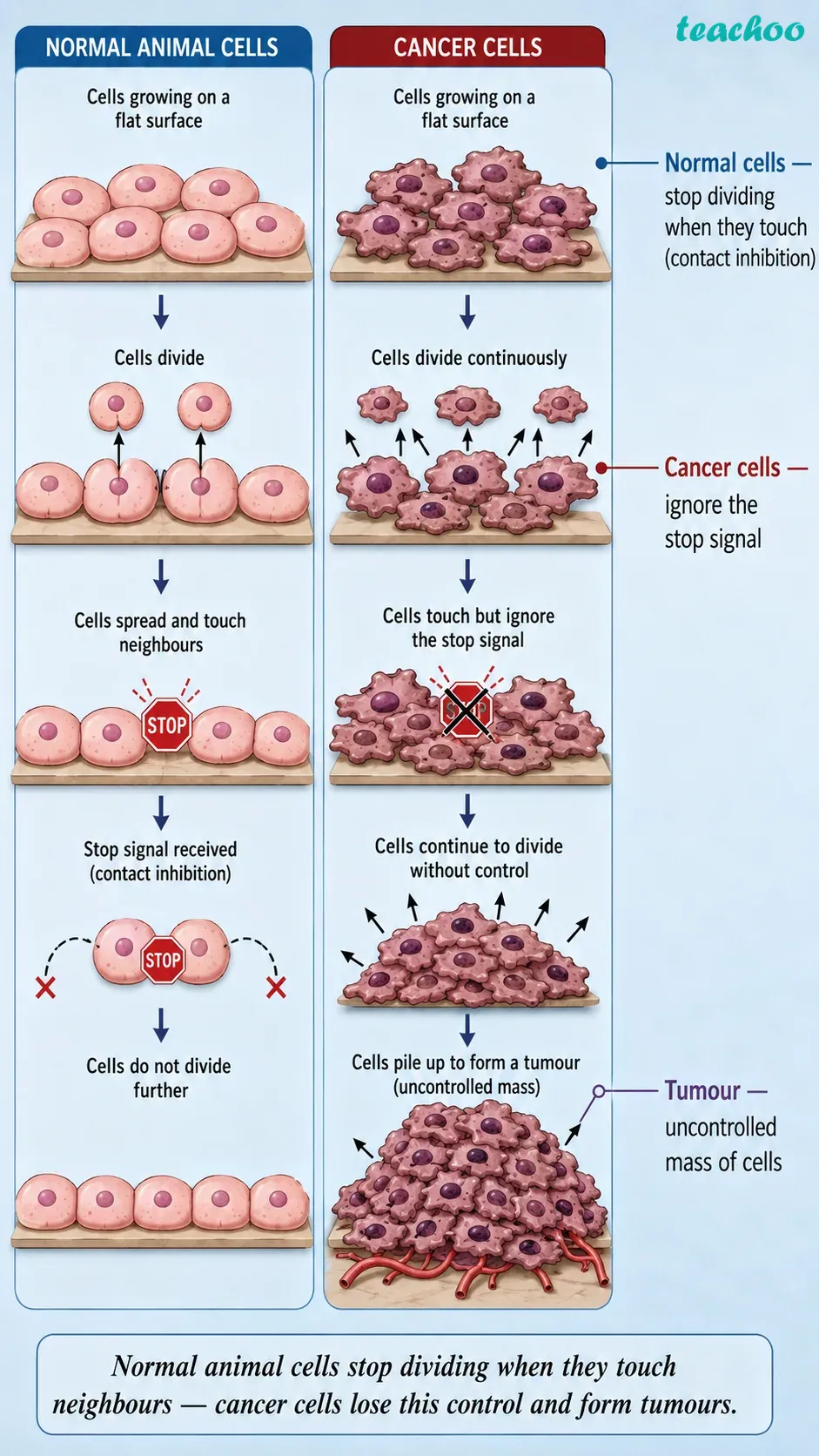
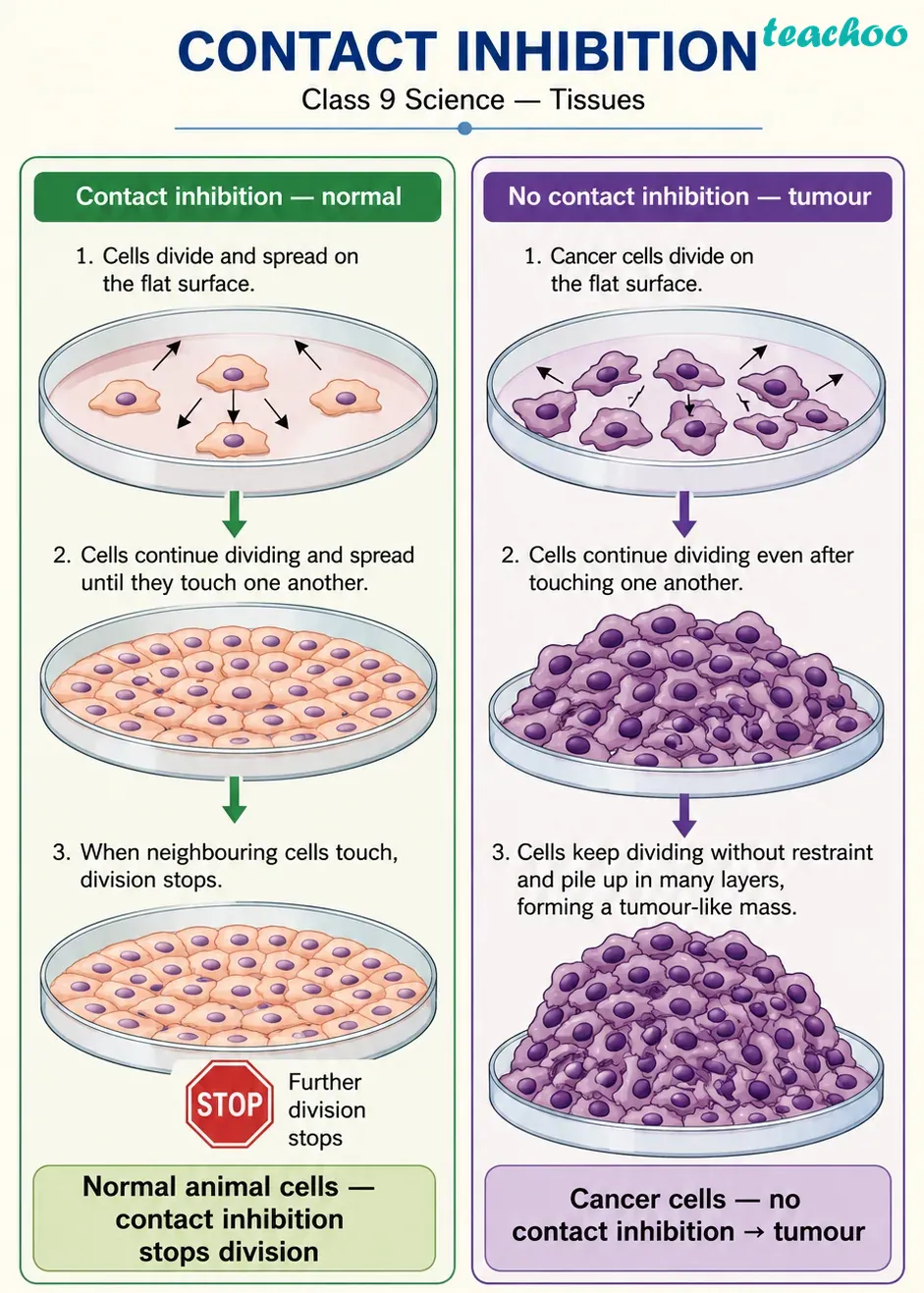
- In many animal cells, division stops on touching neighbours.
- This control is called contact inhibition.
- Cancer cells lose this control and keep dividing.
- This leads to the formation of tumours.
Example:
Plant cells have rigid walls, so they do not show contact inhibition.
Important Points
- Schleiden, Schwann and Virchow built the Cell Theory.
- All cells arise from pre-existing cells.
- Contact inhibition stops normal animal cells dividing when they touch.
- Cancer cells lose this control and form tumours.
💡 Ready to Go Beyond
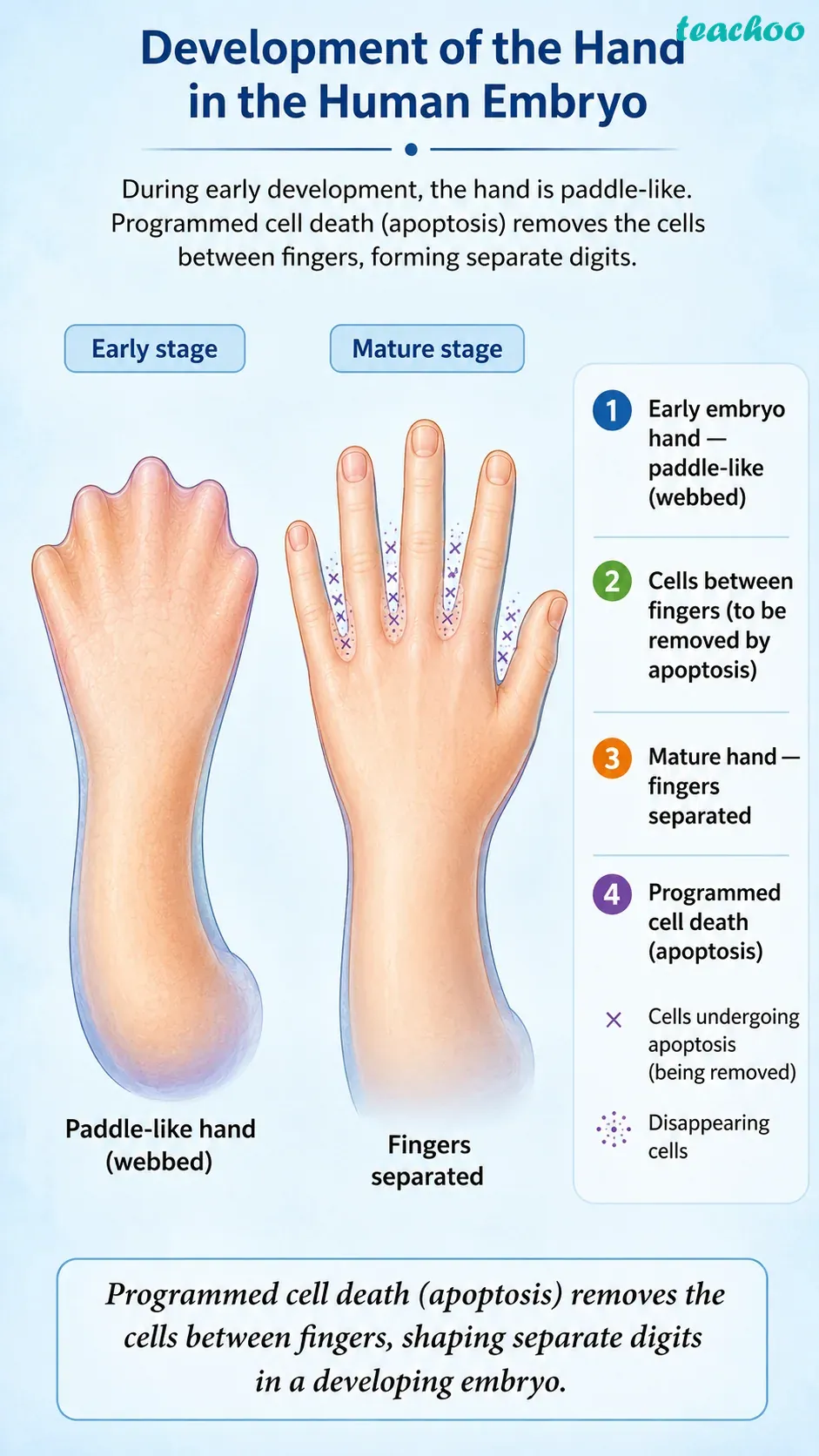
- Cells have natural ways of dying to stay in balance.
- This is called Programmed Cell Death (PCD).
- It is needed for normal development and quality control.
- In an embryo, PCD removes cells between fingers.
🔬 Meet a Scientist
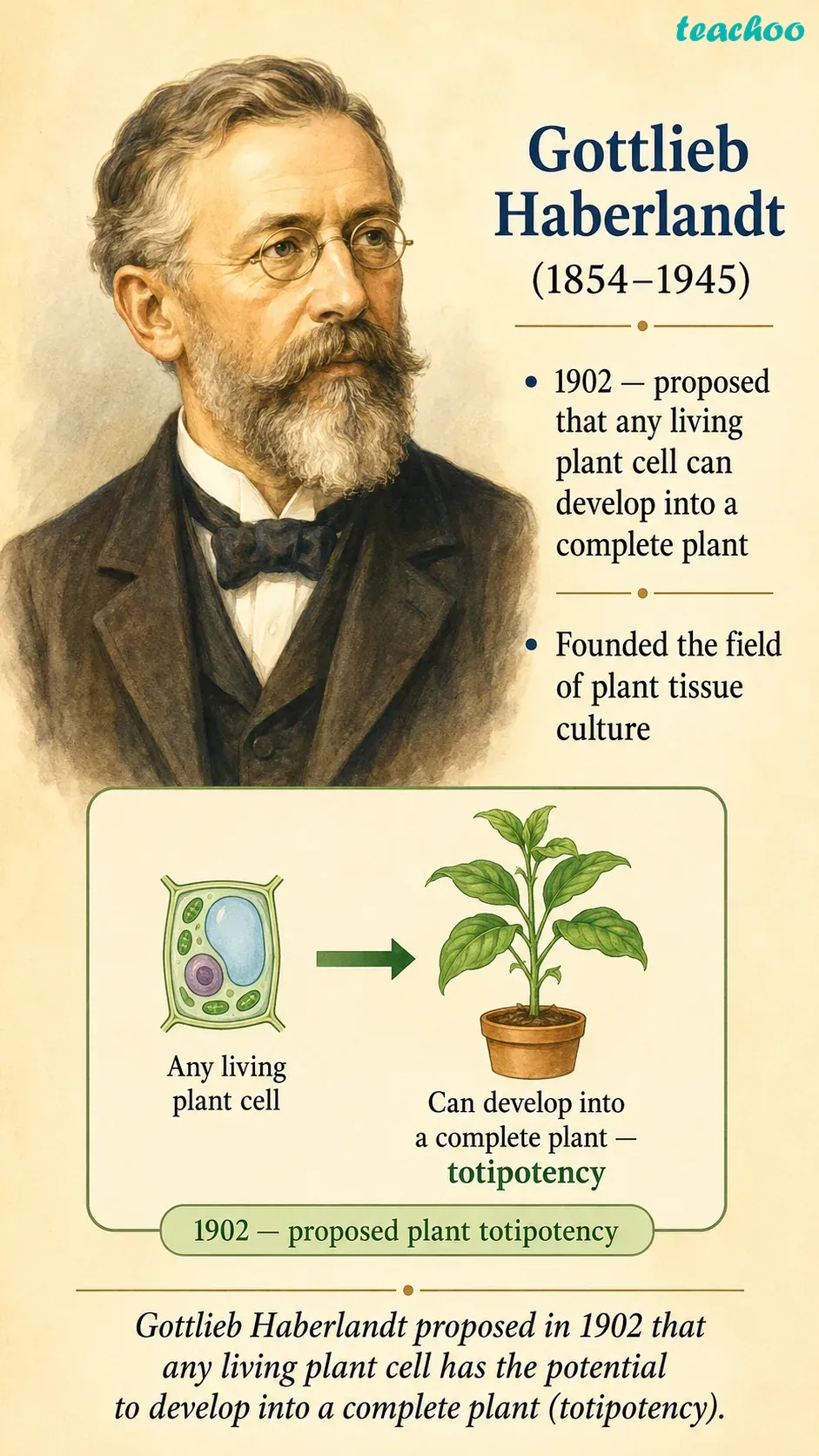
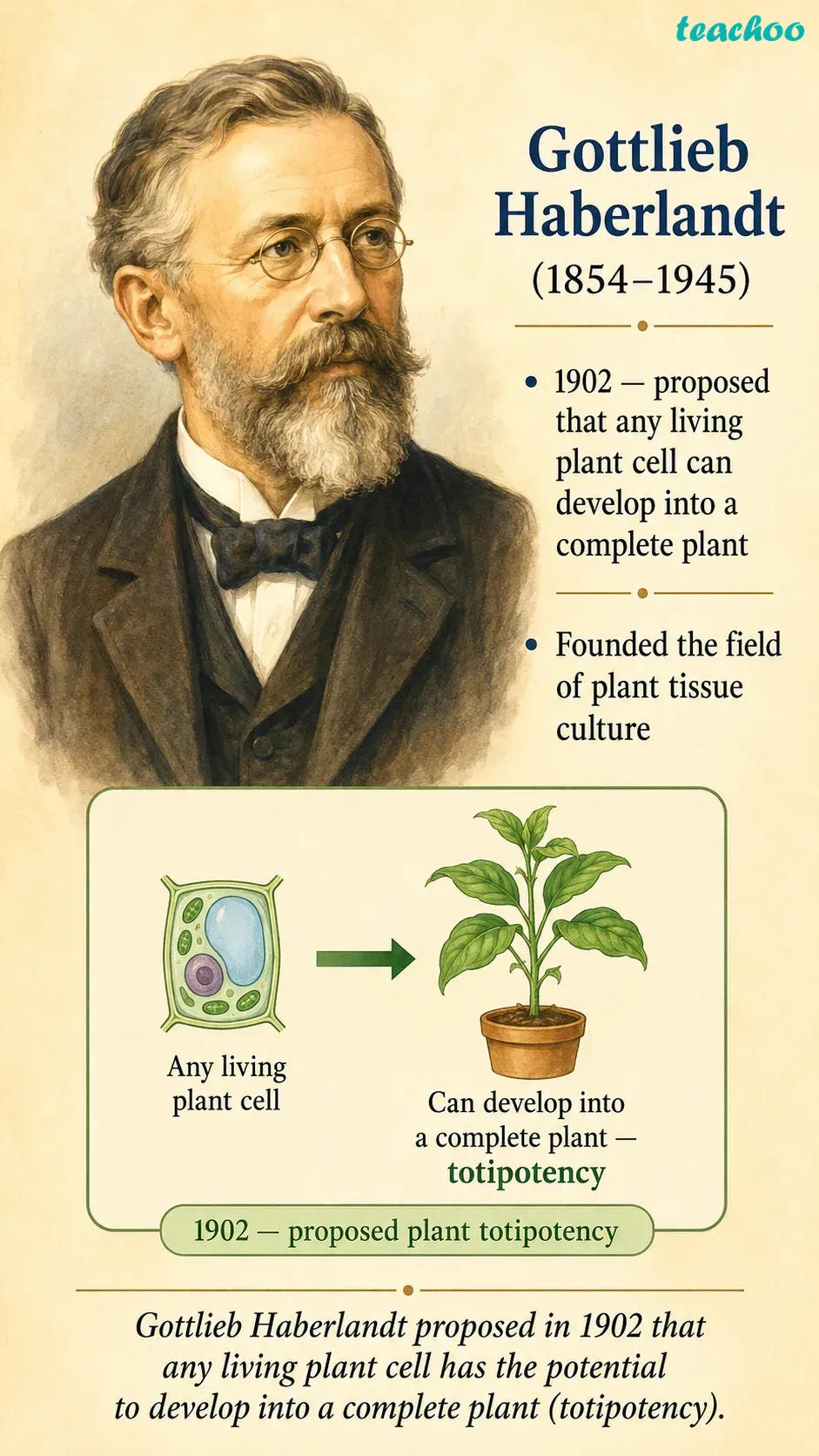
- In 1902, Austrian botanist Gottlieb Haberlandt had an idea.
- He said any living plant cell can grow into a whole plant.
- This special ability of plant cells is called totipotency.
- His idea founded Plant Tissue Culture Technology.
🧬 Threads of Curiosity
- Normal cells grow, age and die in a controlled manner.
- Sometimes this control breaks down.
- Abnormal cells then divide uncontrollably, forming tumours.
- Cancerous tumours can invade and spread to other parts.
❓ Test Yourself
-
Who said all plants are made of cells, and when?
View Answer
Matthias Schleiden, in 1838. -
State one point of the classical Cell Theory.
View Answer
All cells arise from pre-existing cells. -
What is contact inhibition?
View Answer
When animal cells stop dividing on touching their neighbours. -
What happens when cells lose contact inhibition?
View Answer
They keep dividing uncontrollably, forming tumours. -
What is totipotency?
View Answer
The ability of a living plant cell to grow into a complete plant.
Important Definitions
- Cell Theory — the principle that all organisms are made of cells, the basic unit of life, arising from existing cells.
- Contact inhibition — the stopping of cell division when animal cells touch their neighbours.
- Tumour — a mass formed by cells that keep dividing uncontrollably.
- Totipotency — the ability of a plant cell to develop into a whole plant.
- Programmed Cell Death — the natural, organised death of cells to keep the body in balance.
📋 NCERT Question 13 — Which phenomenon inhibits the
Which phenomenon inhibits the formation of tumors in the human body? Can plants also develop tumors? Explain.
View Answer →
📋 NCERT Question 16 — A farmer, Deepa, was
A farmer, Deepa, was very happy with the harvest of amla (Indian Gooseberry) and lemons on her farm. However, she could sell only one-fourth of the produce in the local market. Recognising that a significant amount of produce may be lost post-harvest, she employed a traditional yet scientifically sound method to extend the shelf life of amla and lemons. She turned perishable produce into profitable products, such as pickles and sharbat. She used the excess produce to prepare pickles, murabbas, and sharbat by adding appropriate amounts of salt, sugar, or jaggery to small pieces of fruit and their juices. These were then stored in small glass bottles for sale, helping her prevent the wastage of post-harvest produce. Based on the above passage answer the following questions: (i) Which scientific concept has the farmer applied in the preservation of the farm produce? (ii) How does the addition of high concentrations of salt and sugar create an environment that prevents the growth of spoilage-causing bacteria and fungi? (iii) Suggest a healthy recipe of this kind for food preservation. (iv) What are the scientific values addressed in this case?
View Answer →
💭 The Quest Continues …
-
What is the future of the development of synthetic cells using non-living chemicals?
In future, scientists may build fuller synthetic cells from non-living chemicals. These could help make medicines, fuels and study how life works, though making a complete living cell from scratch is still very hard. -
If a synthetic cell is developed, what may be the related ethical issues?
Ethical worries include misuse for harmful organisms, safety if such cells escape, questions of who owns or controls them, and debate about creating artificial life.
