
 You are here
💬 Think about it
A factory has many rooms — one builds, one packs, one cleans, one powers the machines. If each room works well, the factory runs smoothly. A cell has its own little "rooms" called organelles. Let us meet them one by one.
Why does a eukaryotic cell need organelles?
![2.3.1 Why do eukaryotic cells ne - Cell — The Building Bl - [Teachoo] - Concepts](https://cdn.teachoo.com/fbb04a57-f354-43a4-83bf-2c8458561804/image-a-cell-drawn-like-a-tiny-factory-with-different-organelles-shown-as-little-workshops-one-building-materials-one-packing-one-clea.webp)
- They carry out many life processes at the same time.
- They build new materials and remove waste.
- They provide energy to the cell.
- Together they run the cell like a tiny living factory.
What does the nucleus do?
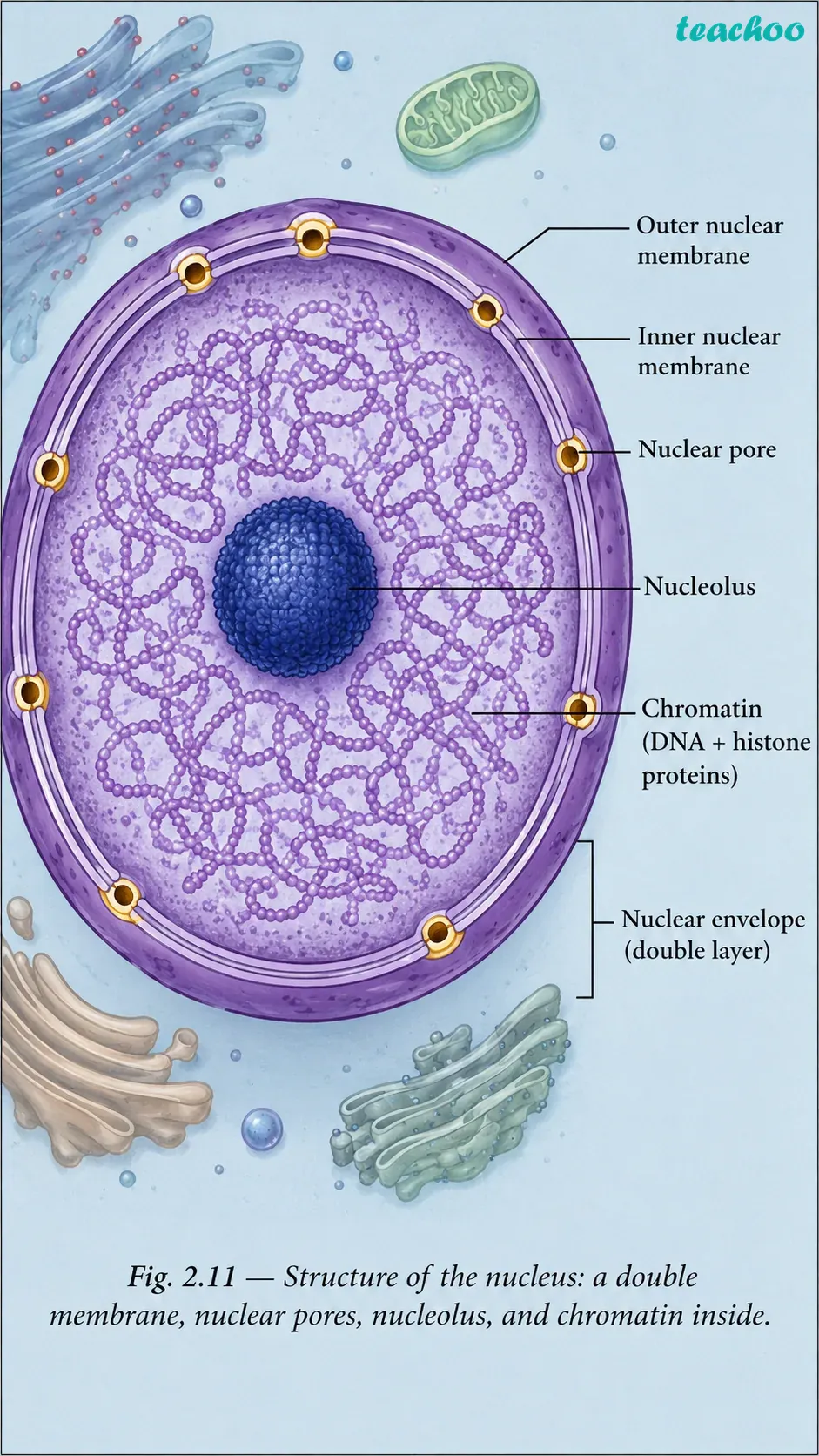
Role of the Nucleus
Control Centre
Directs all activities of the cell.
↓
Nuclear Membrane
Double-layered with pores that allow transfer of material with the cytoplasm.
↓
Nucleolus
Lies inside and makes ribosomal subunits.
- The nucleus is the control centre of the cell.
- It has a double-layered nuclear membrane with pores.
- Pores allow transfer of material with the cytoplasm.
- The nucleolus inside makes ribosomal subunits.
What is inside the nucleus?
Inside the Nucleus
Nuclear Membrane
Double-layered boundary with pores controlling entry and exit.
↓
Nucleoplasm
Jelly-like fluid that fills the nucleus.
↓
Nucleolus
Small dense body that helps make ribosomes.
↓
Chromatin / Chromosomes
Chromatin condenses into chromosomes during division.
↓
DNA & Genes
DNA carries genetic information; its segments are genes.
From Cell to DNA
Cell
↓
Nucleus
Control centre holding genetic material.
↓
Chromosome
Made of DNA and proteins.
↓
DNA
Carries the genetic information; its parts are genes.
- It contains chromosomes, seen only when a cell divides.
- Chromosomes are made of DNA and proteins.
- DNA carries genetic information; its parts are genes.
- In a resting cell, DNA stays as chromatin threads.
Where is the genetic material in a prokaryotic cell?
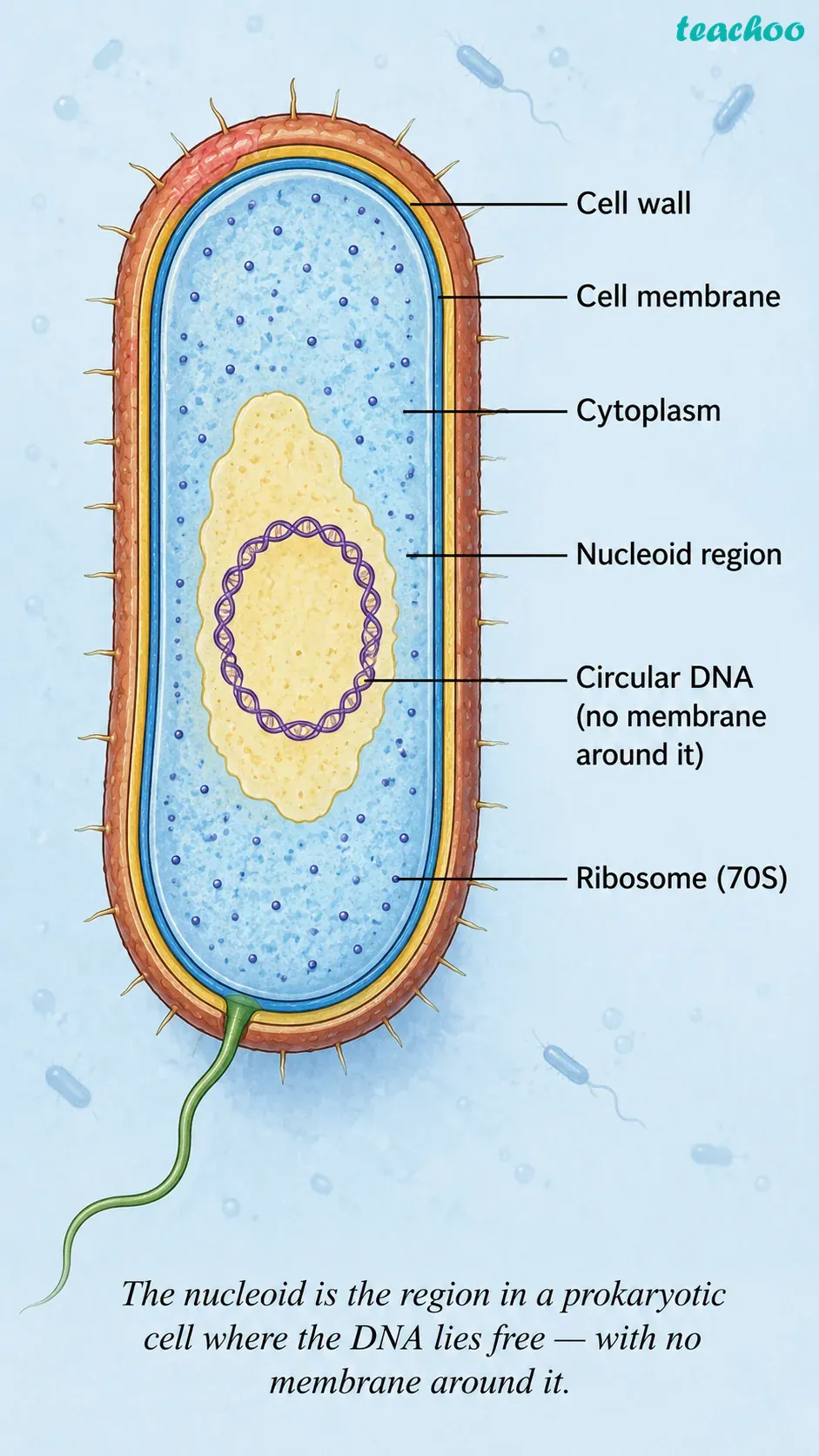
Nucleoid
In a prokaryotic cell there is no true nucleus; the DNA is a single circular molecule held in a region called the nucleoid.
- Prokaryotic cells have no well-defined nucleus.
- Their DNA is a single circular molecule with proteins.
- The region holding this DNA is called the nucleoid.
What do ribosomes do?
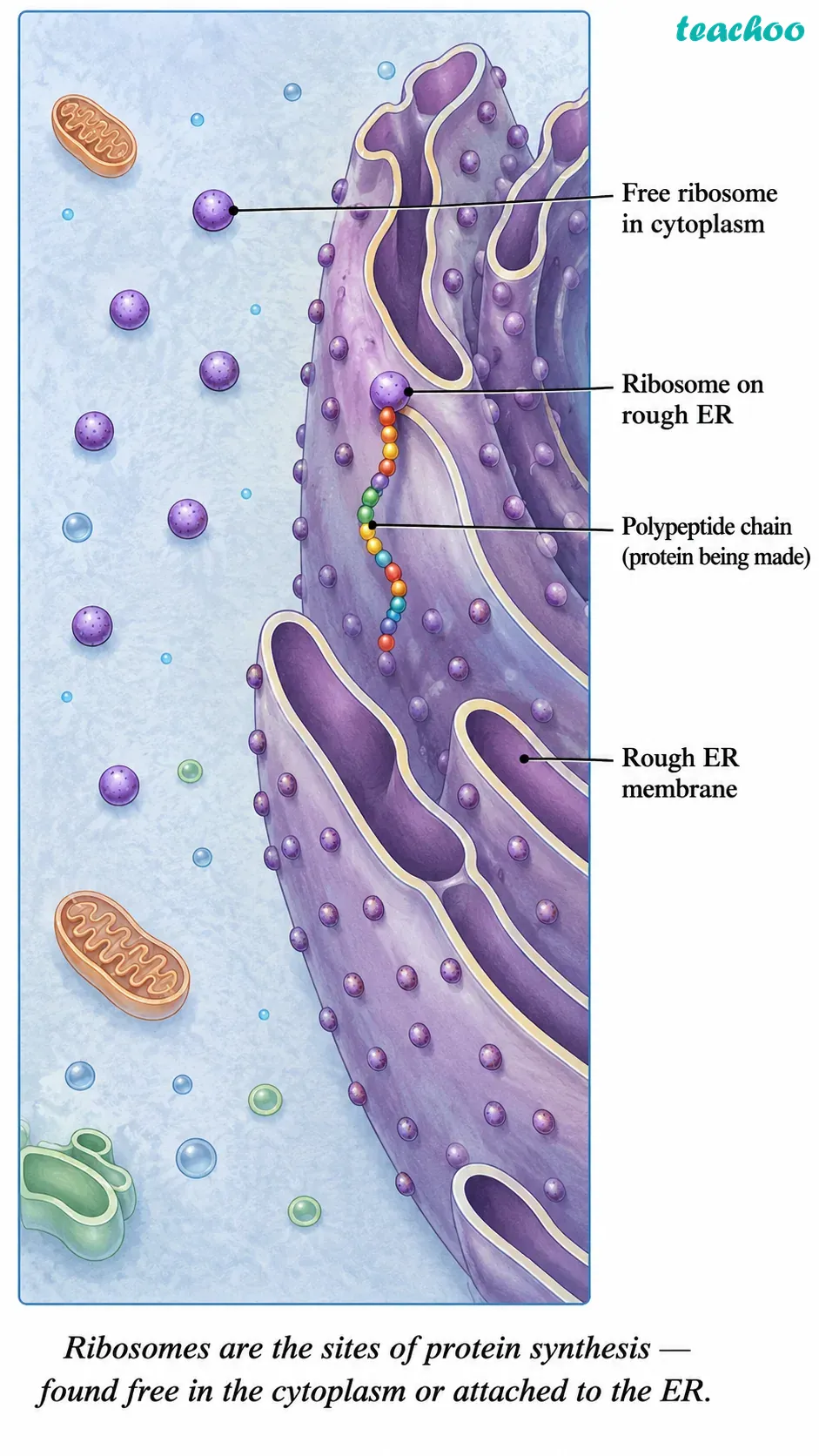
Ribosomes
Tiny structures, free in the cytoplasm or on the ER, that are the sites of protein synthesis.
Example:
Ribosomes are like the cell's protein factories.
- Ribosomes are tiny structures in the cell.
- They are free in the cytoplasm or on the ER.
- They are the sites of protein synthesis.
Example:
Ribosomes are like the cell's protein factories.
What is the endoplasmic reticulum (ER)?
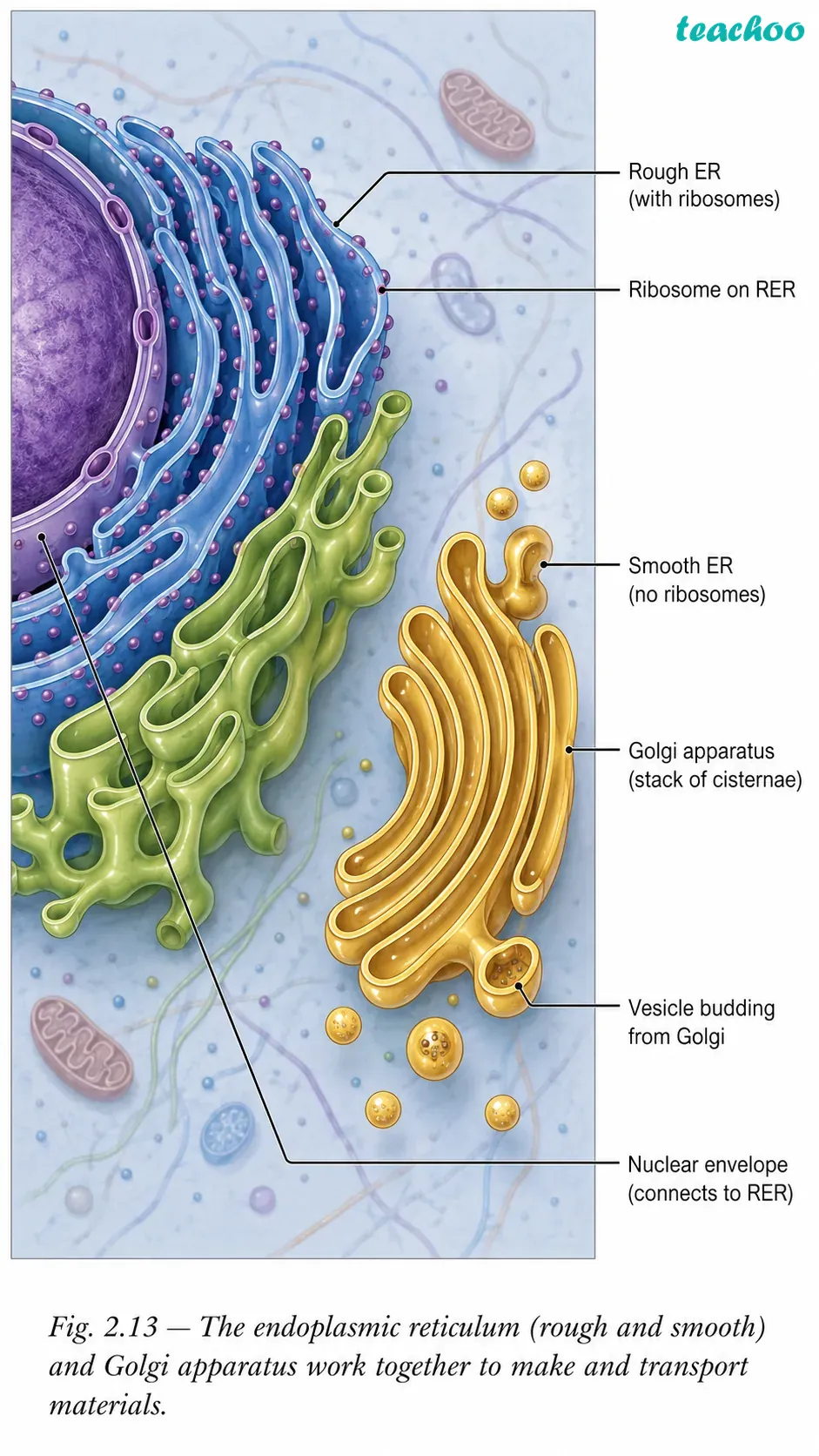
- The ER is a large network spread through the cytoplasm.
- It is continuous with the outer nuclear membrane.
- It helps make and transport proteins, fats and some hormones.
How are rough ER and smooth ER different?
Rough ER vs Smooth ER
Rough ER (RER)
Smooth ER (SER)
Has ribosomes on its surface.
Has no ribosomes; looks smooth.
Makes and secretes proteins.
Makes and stores fats and hormones.
e.g. pancreas gland cells.
e.g. liver cells.
Rough ER (RER)
Smooth ER (SER)
Has ribosomes on its surface.
Has no ribosomes; looks smooth.
Makes and secretes proteins.
Makes and stores fats and hormones.
Example: gland cells like pancreas.
Involved in fat and hormone work.
- Rough ER has ribosomes on its surface.
- It mainly makes and secretes proteins.
- Smooth ER has no ribosomes, so it looks smooth.
- It makes and stores fats and hormones.
What does the Golgi apparatus do?
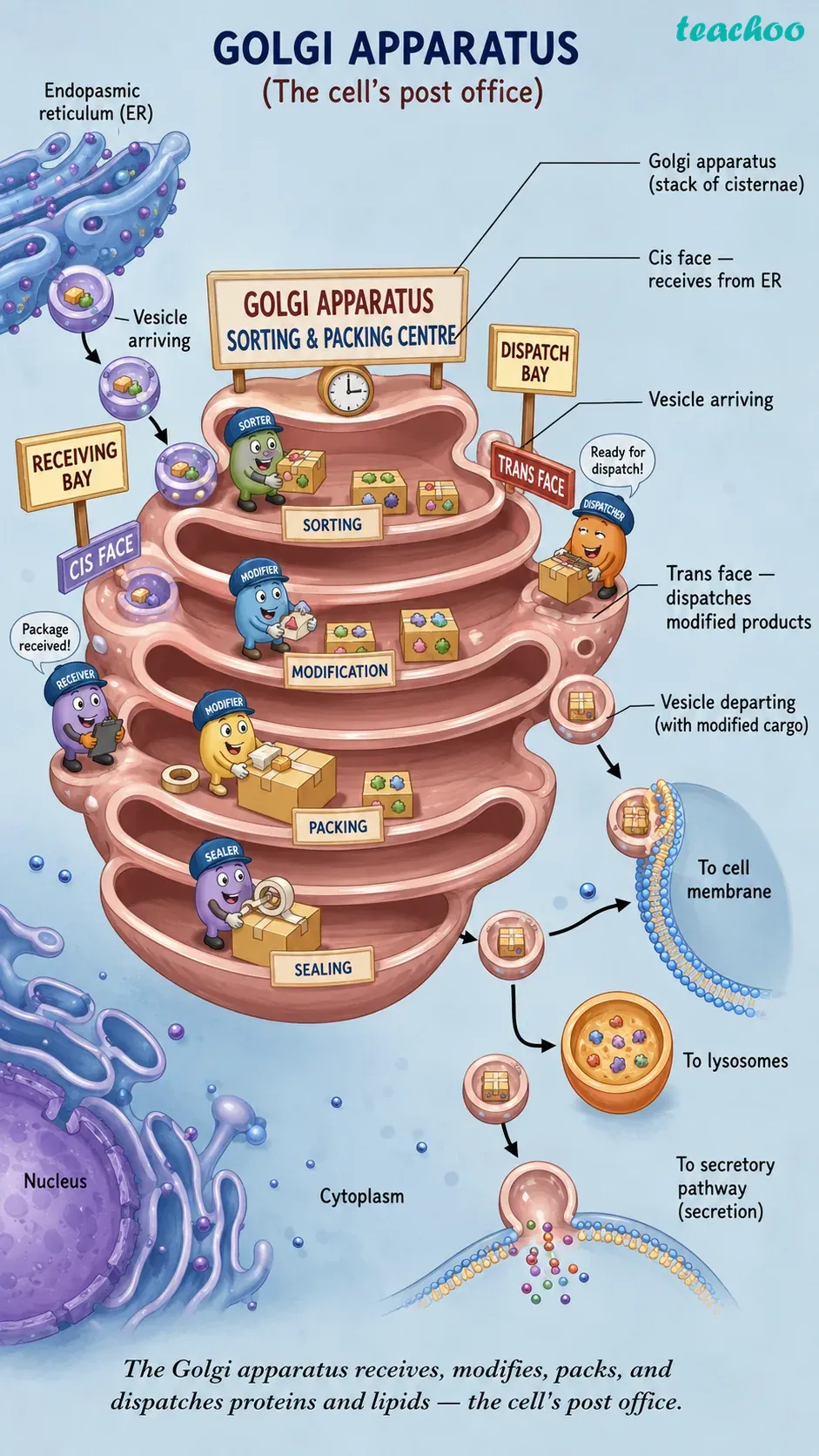
Golgi Apparatus — The Cell's Post
Office
↓
Receives
Takes in proteins and lipids from the ER.
↓
Modifies & Sorts
Chemically modifies and sorts the molecules.
↓
Packs
Packs them into vesicles.
↓
Ships parcels to the right place
- It is a stack of flattened, sac-like structures.
- It acts like the cell's post office.
- It modifies, sorts and packs proteins and lipids.
- It packs them into vesicles for transport or secretion.
Example:
Like a post office, it packs and ships parcels (proteins) to the right place.
What is the job of lysosomes?
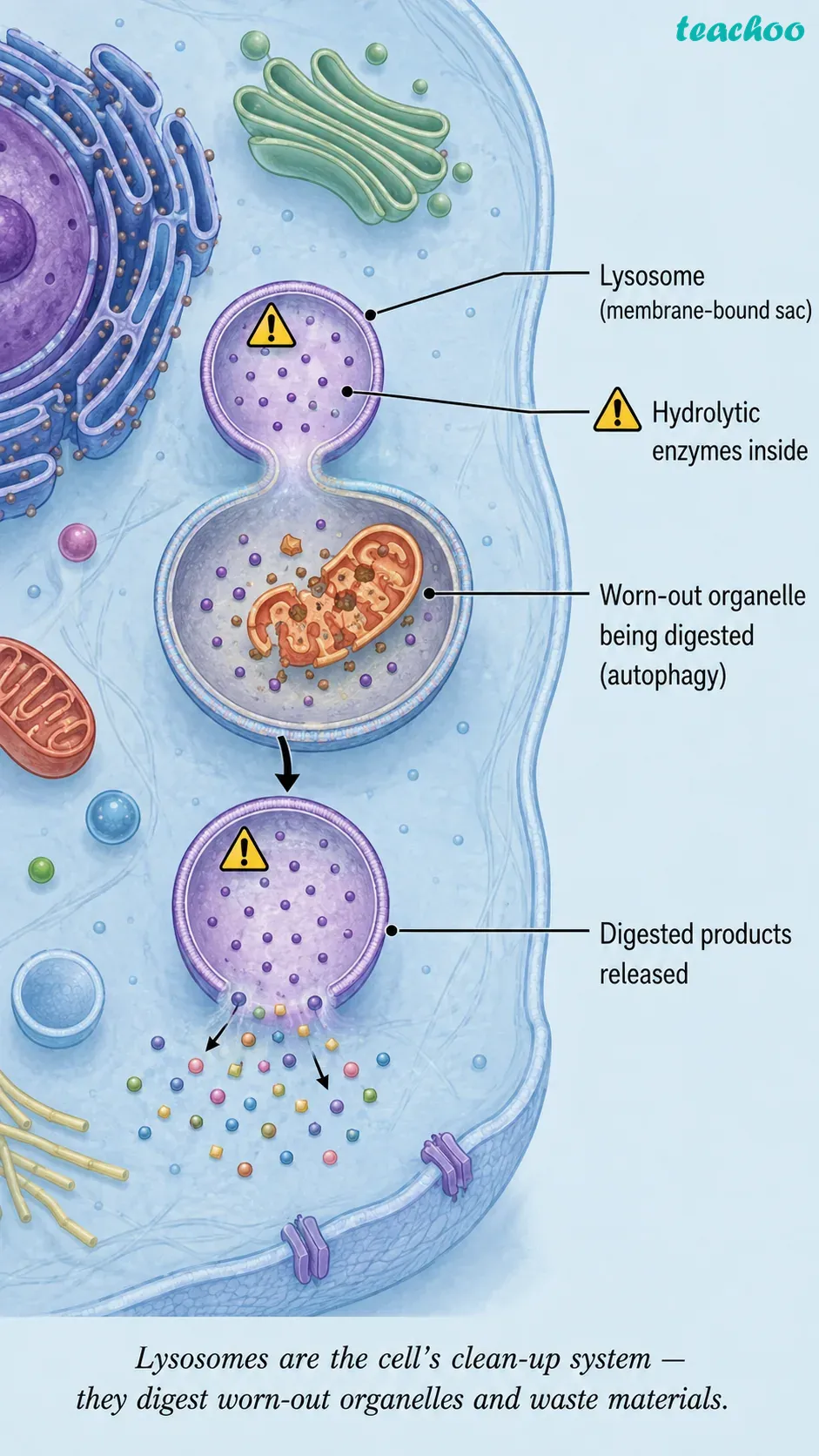
- Lysosomes are single membrane-bound sacs of enzymes.
- They break down unwanted proteins, carbohydrates and fats.
- They clear damaged parts, keeping the cell clean and healthy.
- The broken products go back to the cytoplasm to be reused.
Why are mitochondria called the powerhouse of the cell?
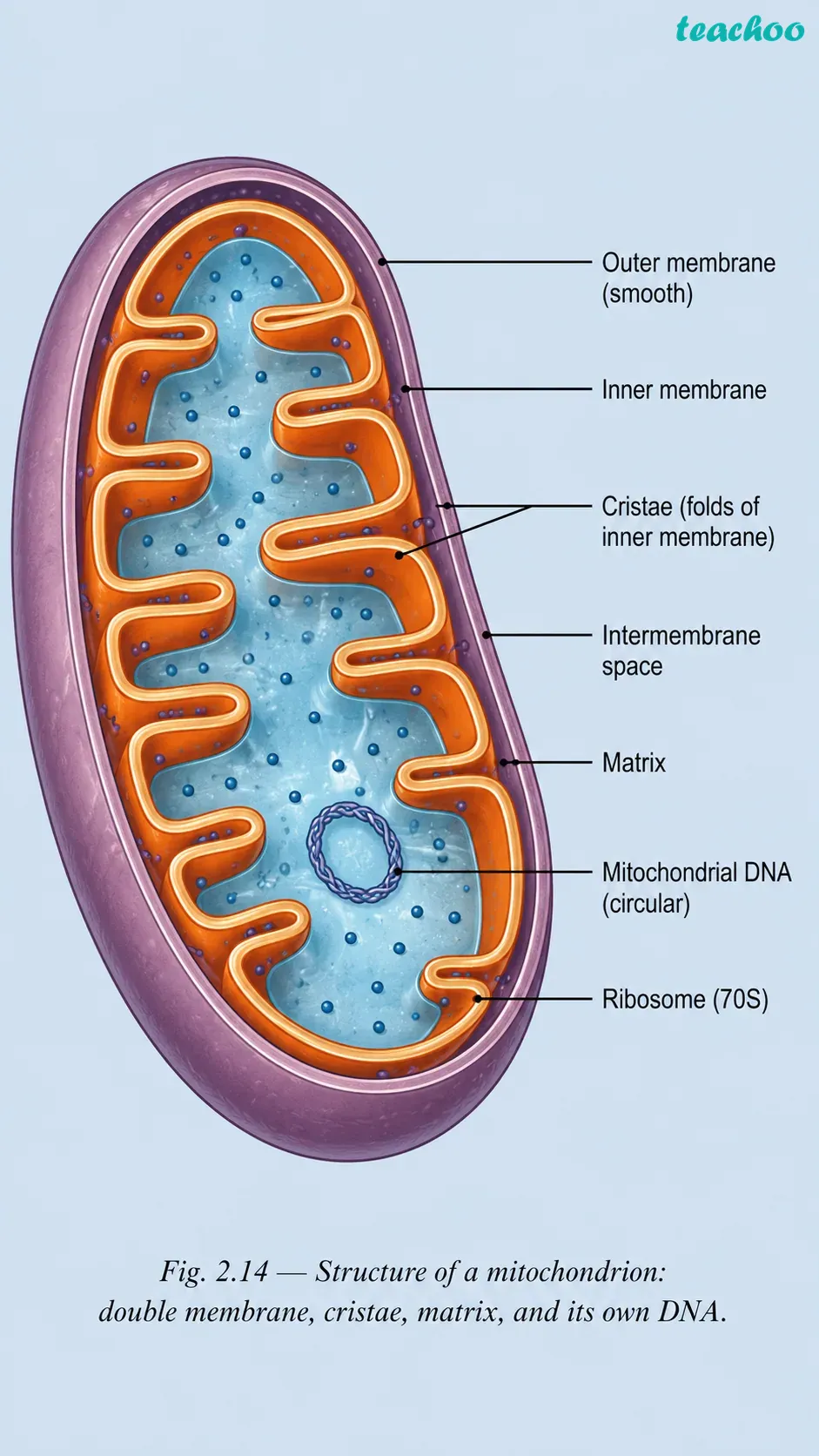
- They supply the energy needed for most cell activities.
- Each is surrounded by two membranes.
- The outer membrane is smooth and porous.
- The inner membrane folds into cristae for more reactions.
How do mitochondria release energy?
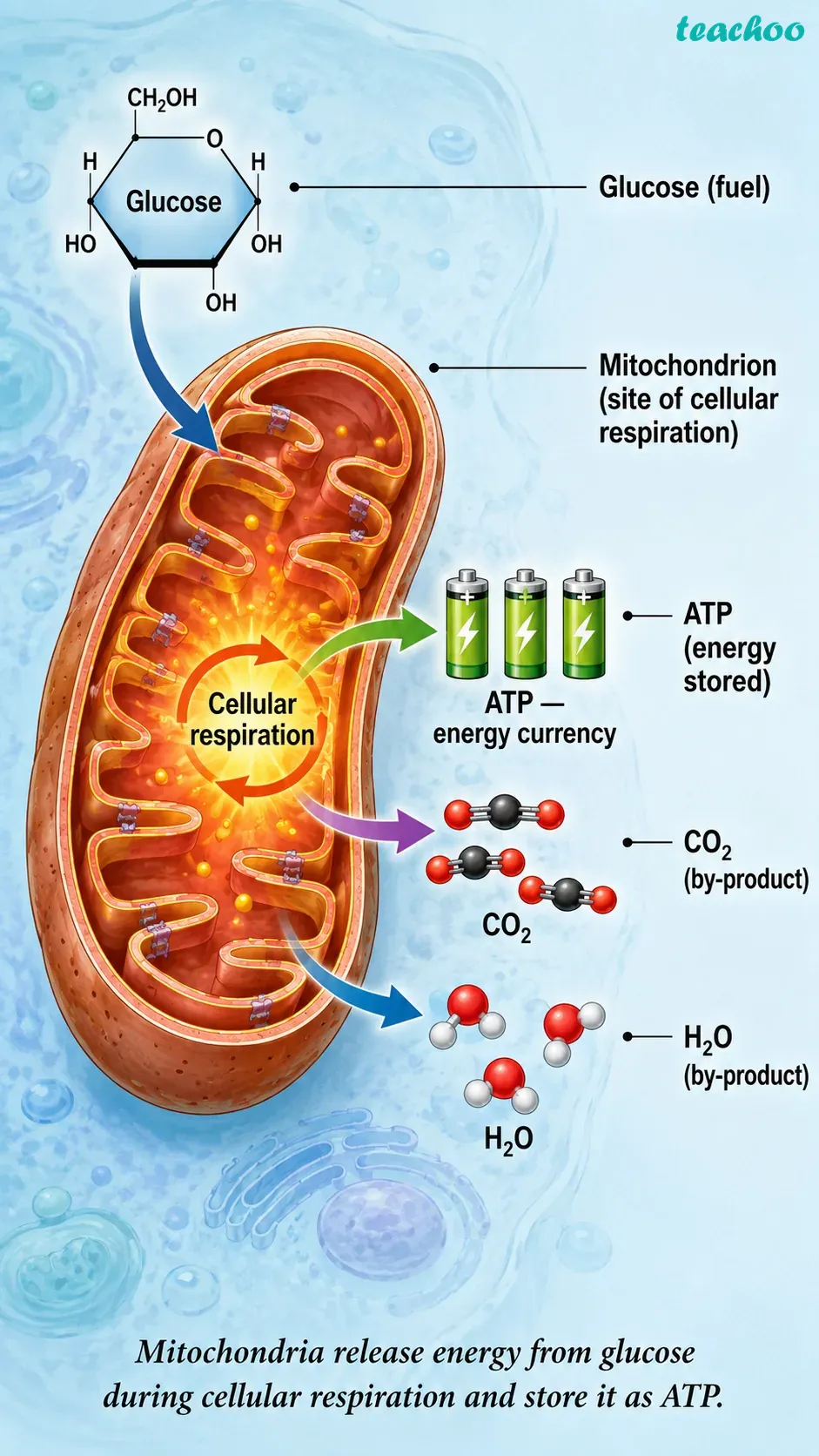
How Mitochondria Release Energy
Break down fuel
Glucose and other molecules are broken down inside them.
↓
Cellular respiration
Energy is released during respiration.
↓
Store as ATP
The energy is stored in a molecule called ATP.
↓
ATP = energy currency of the cell
- Glucose and other molecules are broken down inside them.
- This happens during cellular respiration.
- The energy is stored in a molecule called ATP.
- ATP acts as the energy currency of the cell.
Example:
ATP is like a charged battery the cell spends to do work.
What are plastids and what do they do?
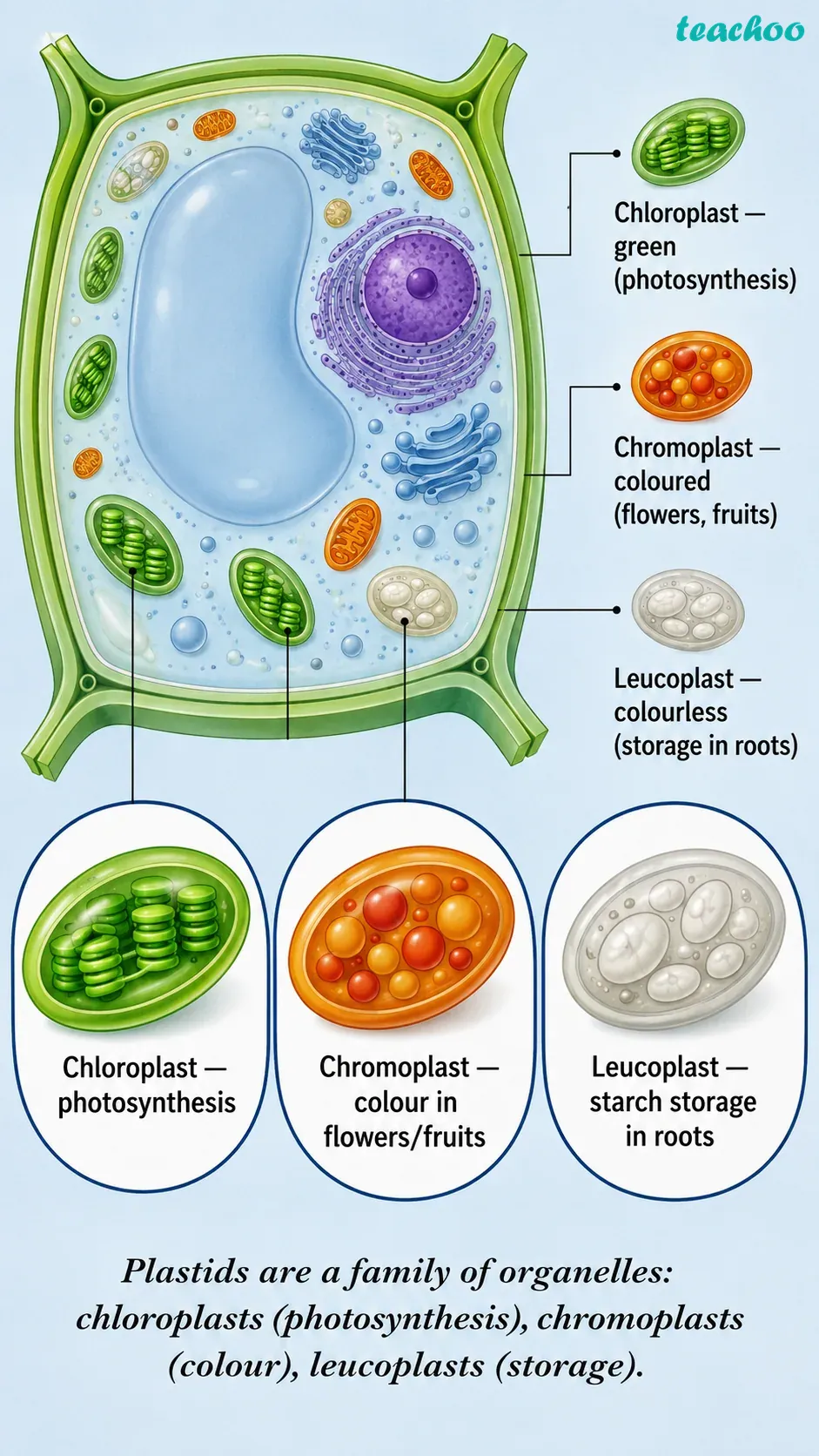
Plastids
Plastids
Organelles in plant cells for food synthesis and storage.
↓
Chloroplasts
Contain chlorophyll, which absorbs sunlight for photosynthesis.
↓
Double Membrane
Like mitochondria, chloroplasts are double-membrane-bound.
- Plastids are organelles in plant cells for food synthesis and storage.
- Chloroplasts contain the green pigment chlorophyll.
- Chlorophyll absorbs sunlight for photosynthesis.
- Chloroplasts are double-membrane-bound, like mitochondria.
How do flowers, fruits and vegetables get their colours?
| Plastid | Pigment | Job |
|---|---|---|
| Chloroplast | Green (chlorophyll) | Makes food by photosynthesis. |
| Chromoplast | Yellow, orange or red | Gives colour to flowers and fruits. |
| Leucoplast | No pigment (colourless) | Stores starch, oils or proteins. |
- Some plastids hold pigments other than chlorophyll.
- These are called chromoplasts (chroma means colour).
- Their yellow, orange or red colours attract pollinators.
- Colourless plastids that store food are called leucoplasts.
Why are mitochondria and plastids special?
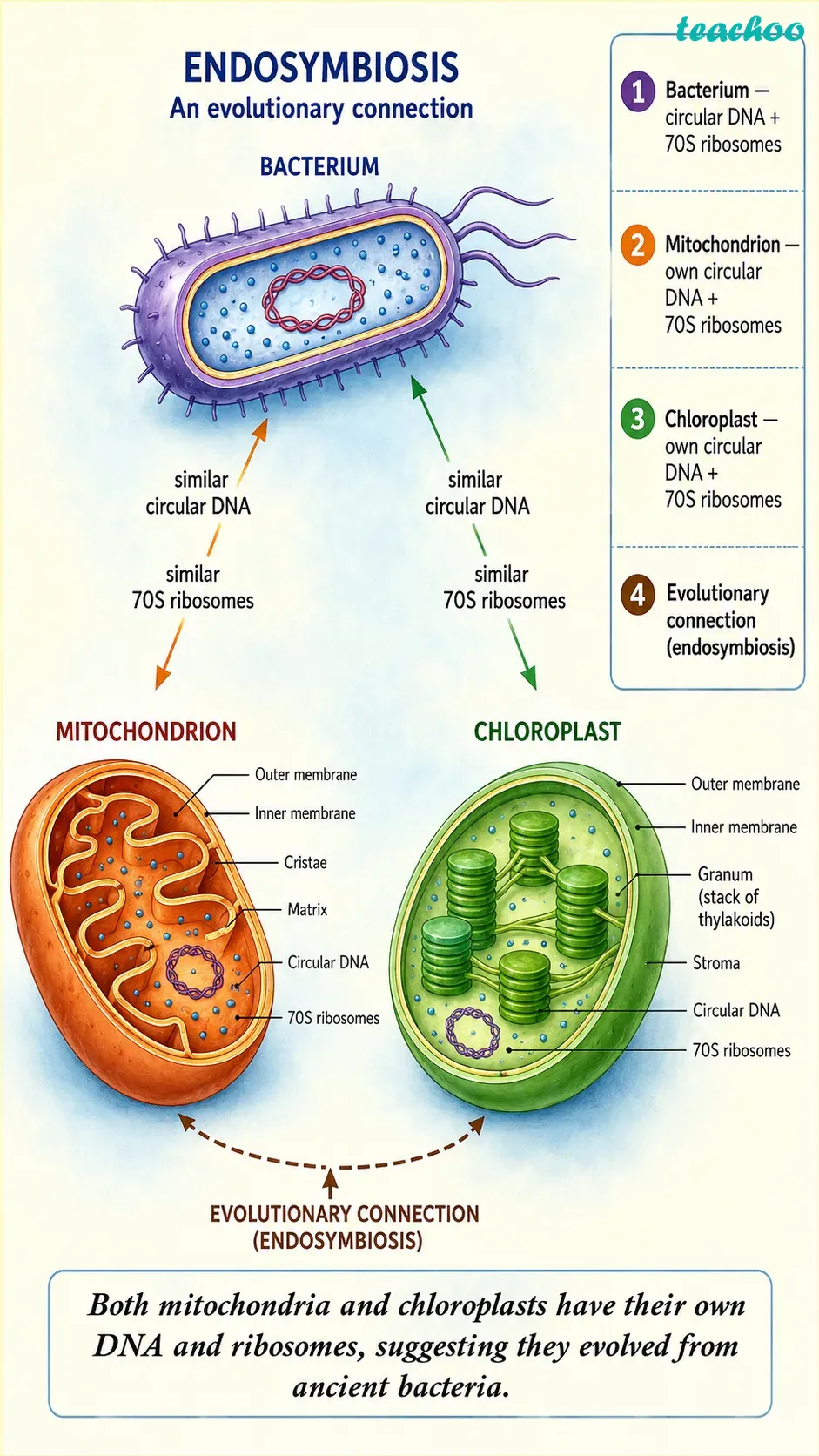
- They both have their own DNA and ribosomes.
- So they can make some of their own proteins.
- This is also true of certain bacteria.
- It suggests they share an evolutionary history with single-celled organisms.
Example:
Like bacteria, both these organelles carry their own DNA.
What is the job of vacuoles?
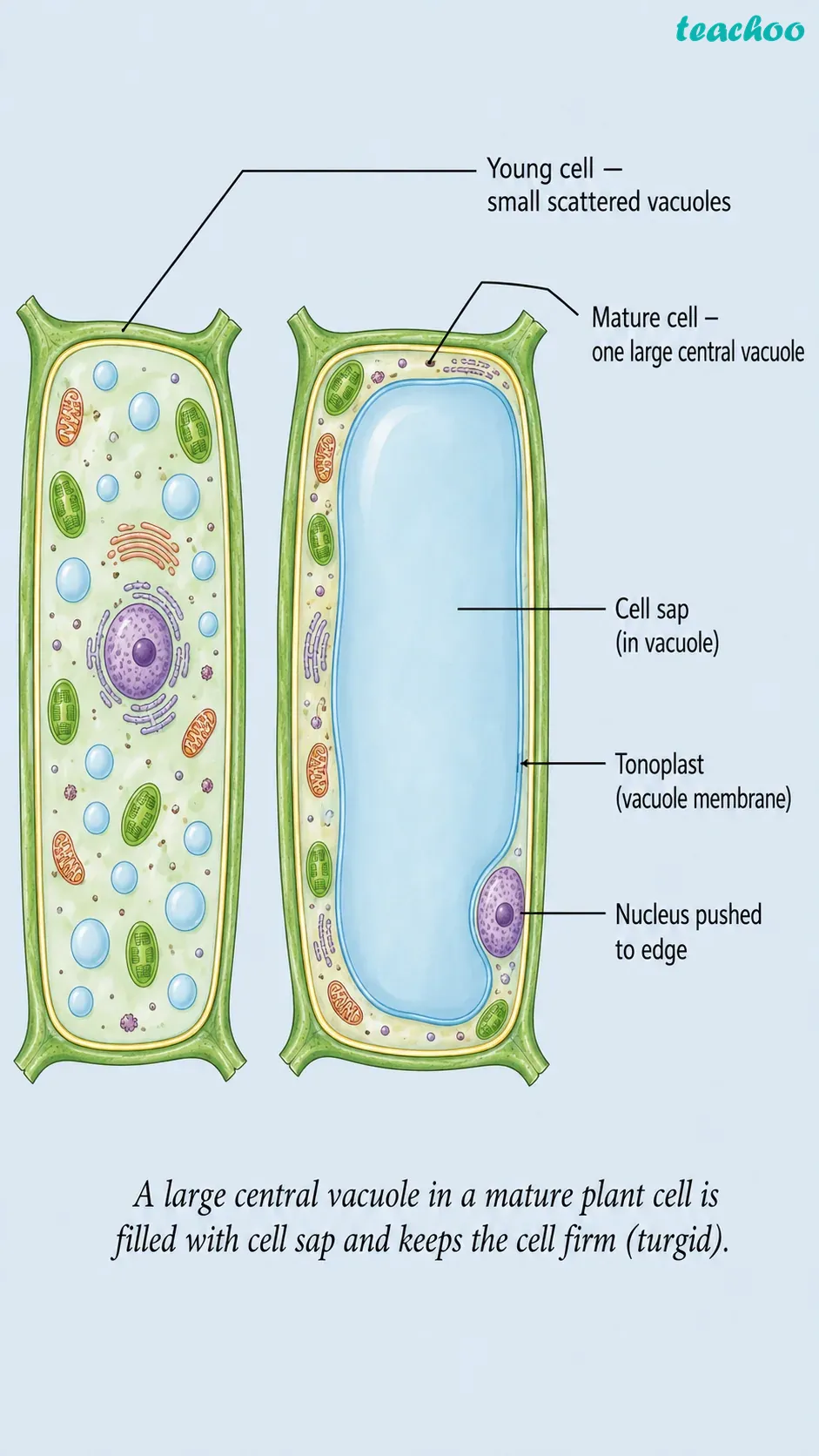
Central Vacuole
A mature plant cell usually has one large central vacuole filled with cell sap. It stores water, minerals, sugars and waste, and keeps the cell firm.
- A mature plant cell usually has one large central vacuole.
- It is filled with a watery fluid called cell sap.
- It stores water, minerals, sugars and waste.
- By storing water, it keeps the plant cell firm.
Why do plants wilt without enough water?
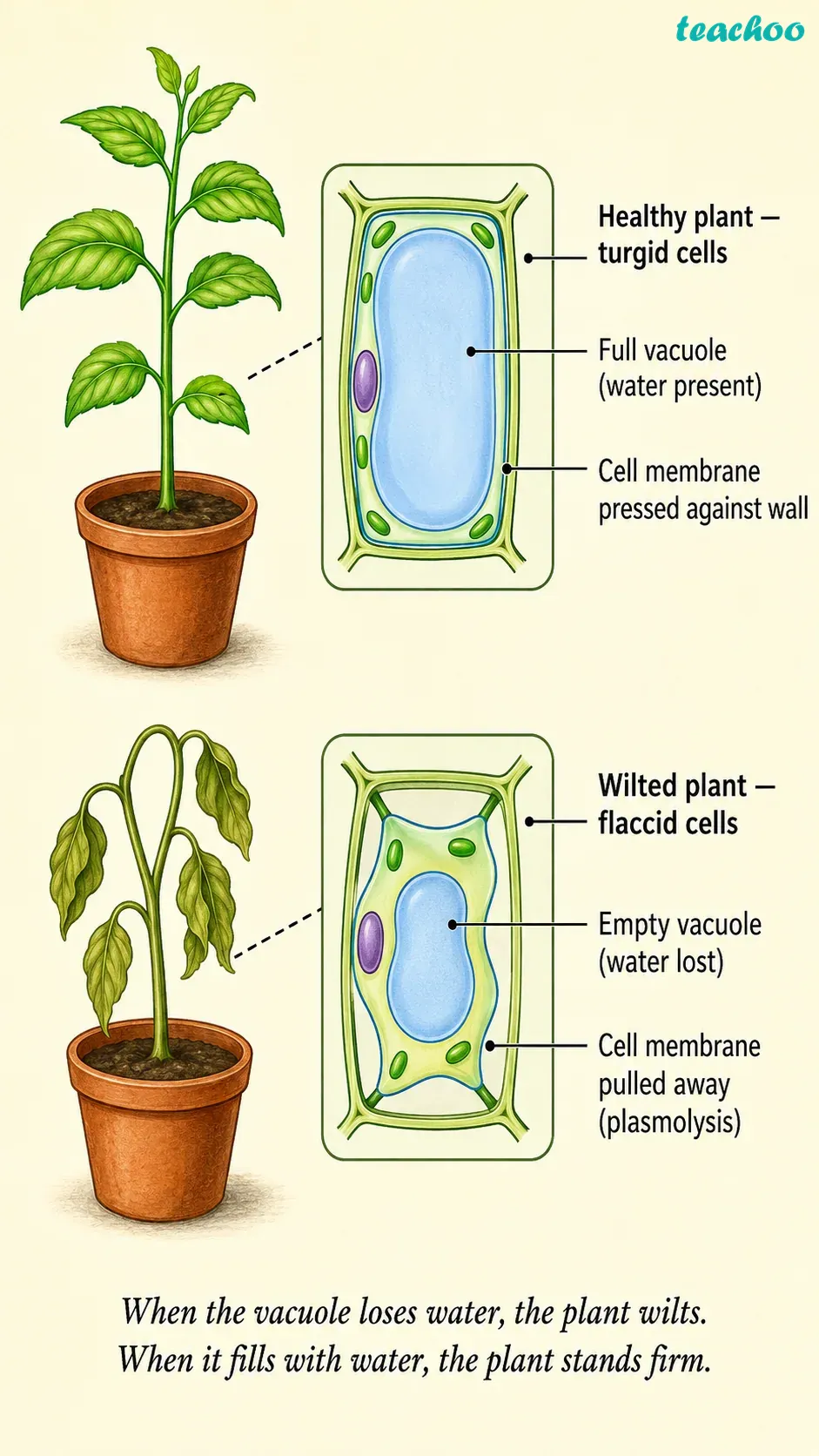
- The vacuole stores water and keeps up pressure.
- Without water, the vacuole loses water.
- So the cells become less firm and the plant wilts.
- In animal cells vacuoles are small and sometimes present.
Example:
A plant left without water on a hot day droops and wilts.
Important Points
- The nucleus controls the cell and holds the DNA.
- Ribosomes make proteins; the ER makes and moves proteins and fats.
- The Golgi apparatus packs and ships; lysosomes clean up.
- Mitochondria release energy; plastids and vacuoles serve plant cells.
🧬 Threads of Curiosity
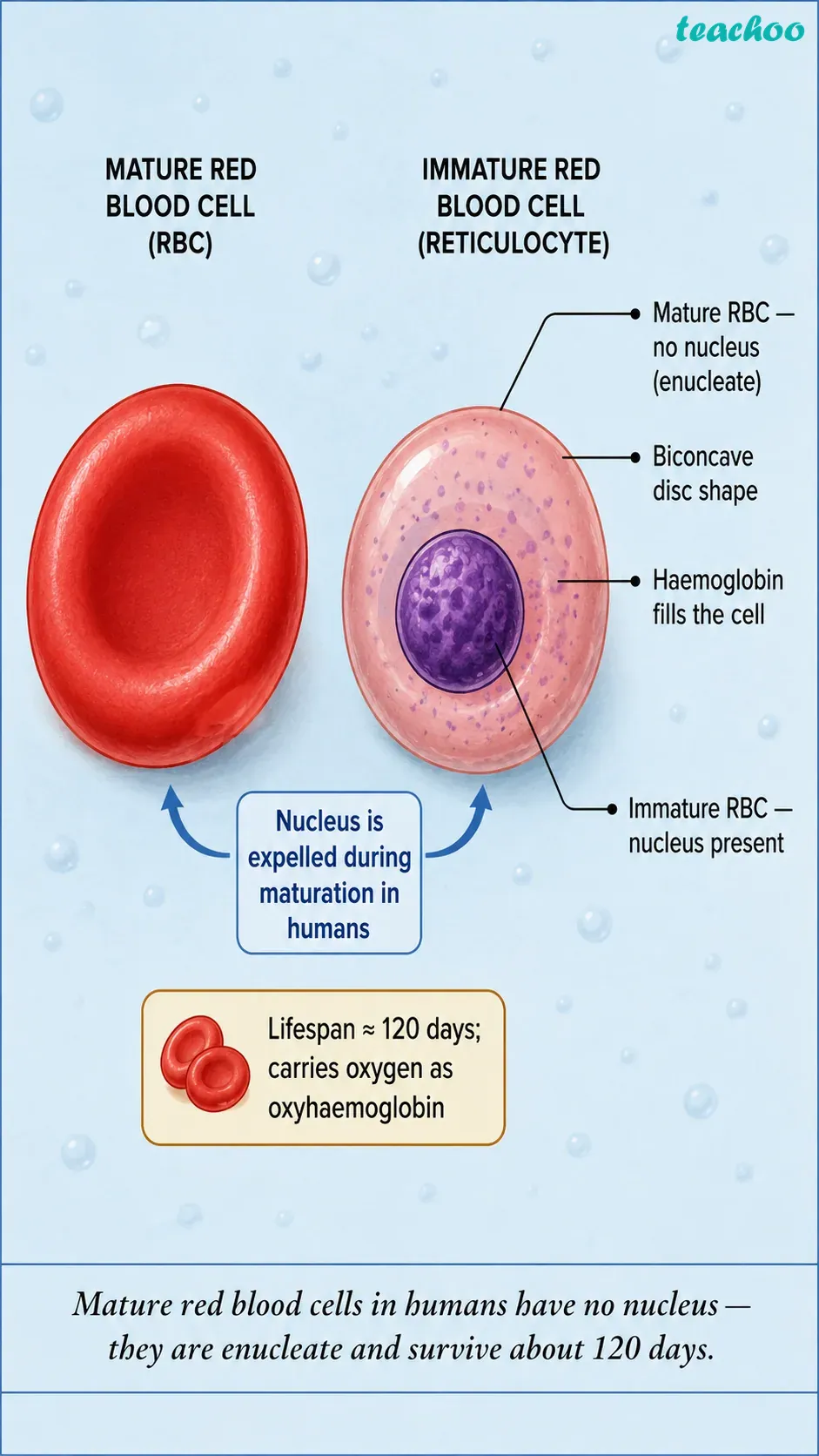
- Mature red blood cells (RBCs) have no nucleus.
- This gives more space for haemoglobin to carry oxygen.
- Without a nucleus they cannot repair or divide.
- So their lifespan is short, about 120 days.
🔬 Meet a Scientist
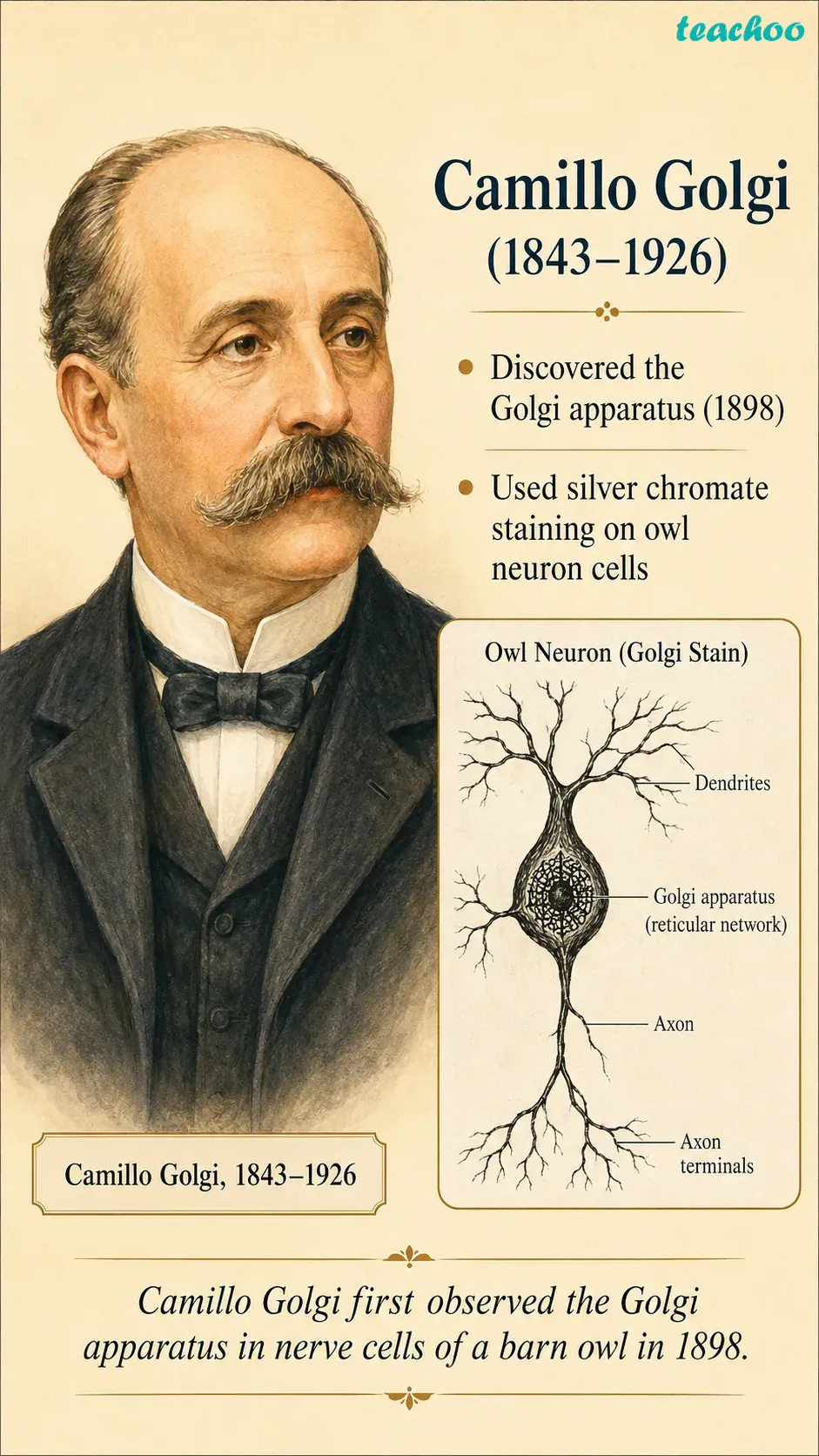
- The Golgi apparatus was first seen in 1898.
- Italian scientist Camillo Golgi observed it.
- He used special staining on barn owl nerve cells.
- Electron microscopes later confirmed it; it was named in his honour.
🧬 Threads of Curiosity
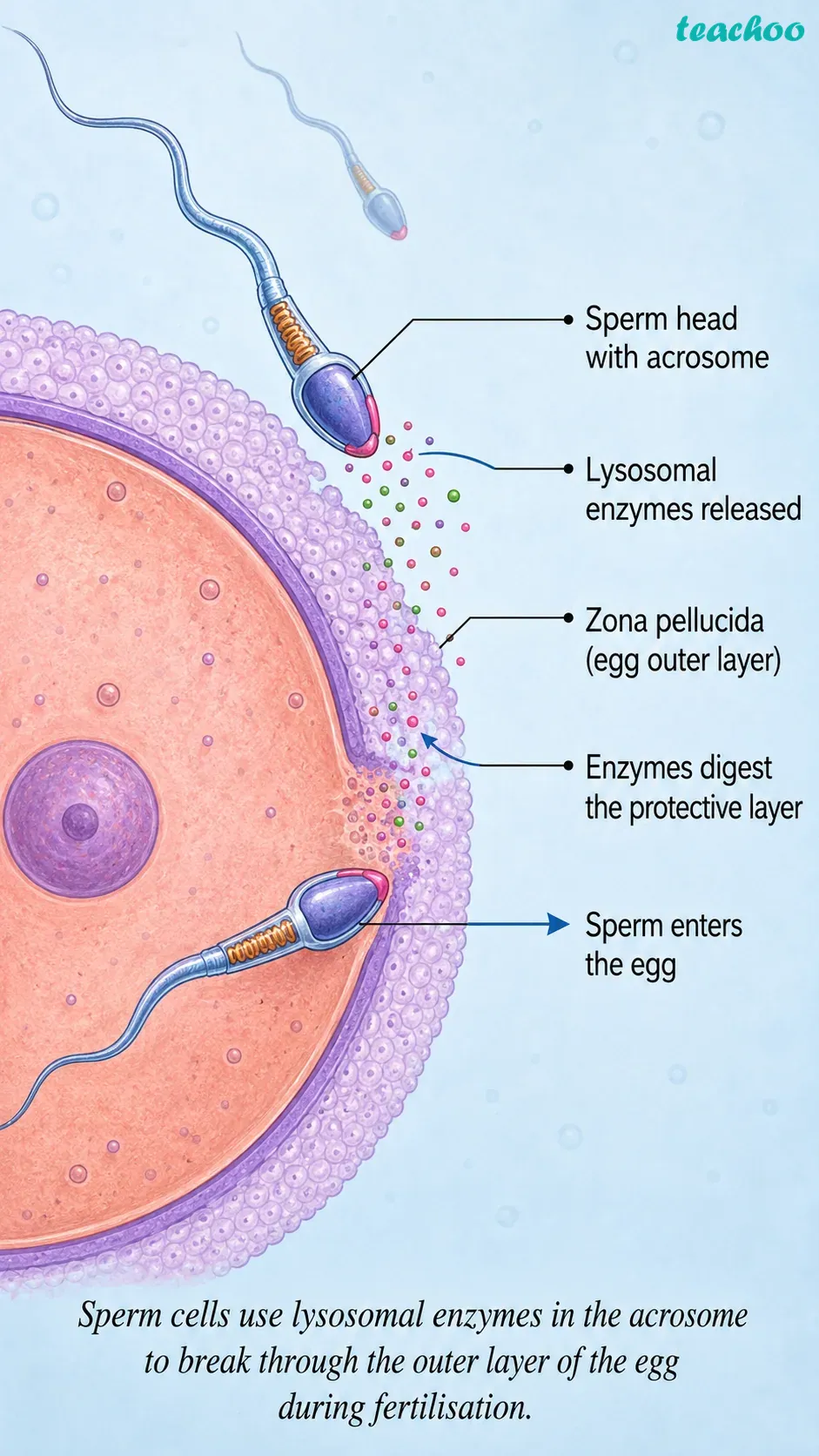
- Human sperm cells contain lysosomal enzymes.
- When a sperm meets an egg, these enzymes act.
- They break down the egg's outer layer.
- This allows fertilisation to take place.
🧬 Threads of Curiosity
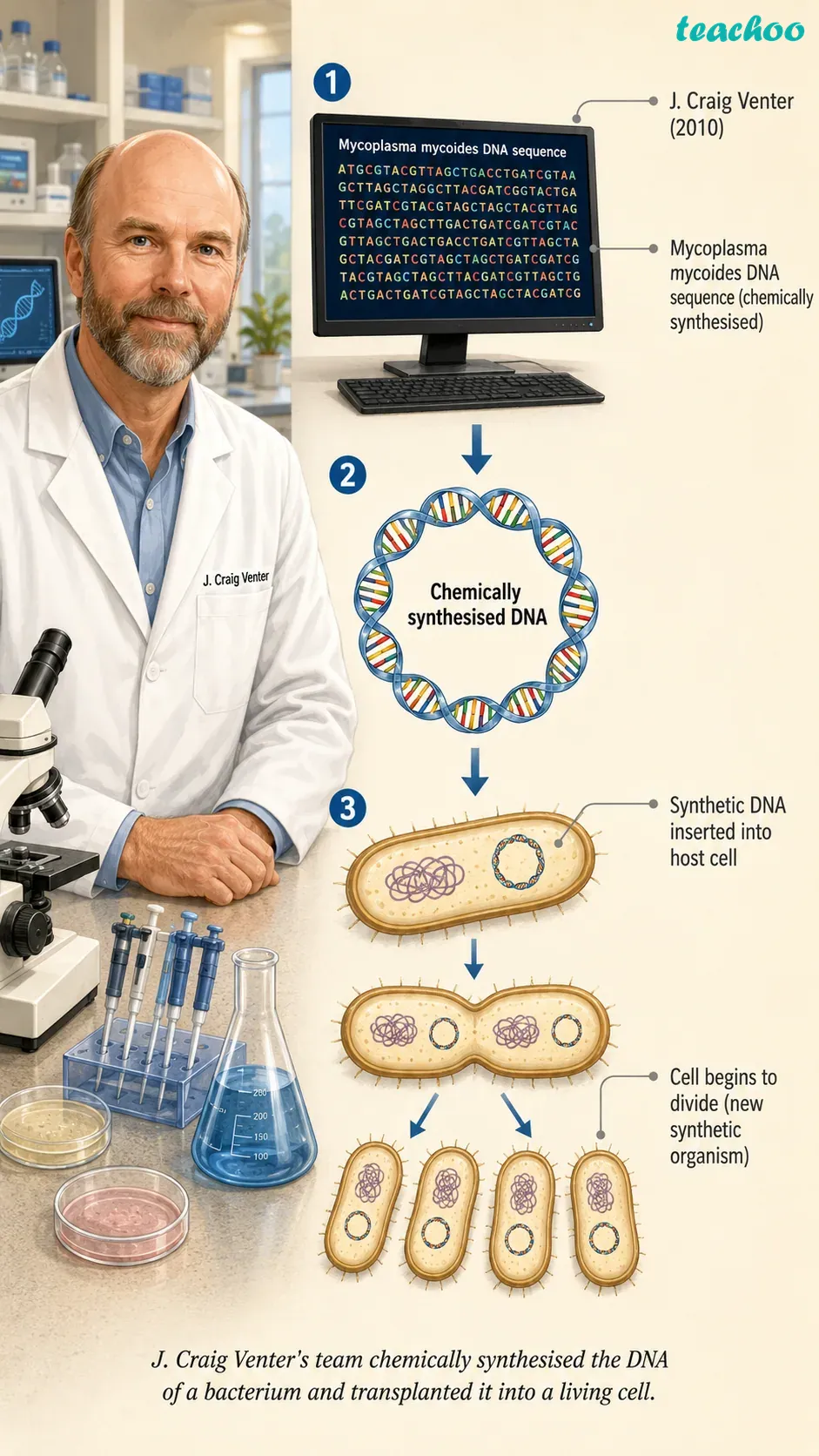
- In 2010, J. Craig Venter's team studied a bacterium's DNA.
- They chemically made an exact copy of this DNA.
- They put the synthetic DNA into another cell.
- The cell grew and divided — showing DNA controls the cell.
❓ Test Yourself
-
Which organelle is the control centre of the cell?
View Answer
The nucleus. It holds the DNA. -
Where does protein synthesis happen?
View Answer
On the ribosomes. -
Which organelle is the "post office" of the cell?
View Answer
The Golgi apparatus — it packs and ships proteins and lipids. -
What is the energy currency of the cell?
View Answer
ATP (Adenosine Triphosphate), made in mitochondria. -
Which plastid gives fruits their red and orange colour?
View Answer
The chromoplast.
Important Definitions
- Nucleus — the control centre of the cell that holds the DNA.
- Nucleoid — the region holding the DNA in a prokaryotic cell, without a membrane.
- Ribosomes — tiny structures that are the sites of protein synthesis.
- Endoplasmic reticulum — a network that makes and transports proteins and fats.
- Golgi apparatus — stacked sacs that modify, sort and pack materials into vesicles.
- Lysosomes — enzyme-filled sacs that break down waste and worn-out parts.
- Mitochondria — double-membrane organelles that release energy as ATP.
- Plastids — plant organelles for food synthesis and storage (chloroplast, chromoplast, leucoplast).
- Vacuole — a sap-filled sac that stores materials and keeps a plant cell firm.
📋 NCERT Question 3 — Look at the diagram
Look at the diagram of a cell in Fig. 2.20. Identify the parts labelled from (a) to (g) and correctly match them with their functions given below: (i) Controlling all the activities of a cell. (ii) Site of cellular respiration. (iii) Storage organelle that also provides rigidity to the cell. (iv) Separates the cell contents from surroundings. (v) Provides structural rigidity to the cell. (vi) Packs and stores materials received from ER. (vii) Helps in manufacturing food.
View Answer →
📋 NCERT Question 4 — Which of the following option(s)
Which of the following option(s) of the pairs of cell organelles are correctly placed under the given categories? (i) Present in plant cells: Leucoplast | Absent in animal cells: Cell wall. (ii) Mitochondria | Ribosome. (iii) Cell wall | Golgi apparatus. (iv) Lysosome | Endoplasmic reticulum.
View Answer →
📋 NCERT Question 5 — Two students, Renu and Rohit
Two students, Renu and Rohit, were having a discussion on the plastids. Renu emphasised that all parts of the plants, even roots, contain plastids. However, Rohit did not agree with the statement and told her that plastids are absent in plant roots since the roots are underground and do not need to perform photosynthesis. Who is correct? Justify your answer.
View Answer →
📋 NCERT Question 6 — Mitochondria and chloroplasts are
Mitochondria and chloroplasts are two important organelles in a plant cell. Discuss how these two organelles are structurally and functionally similar to each other, and different from each other.
View Answer →
📋 NCERT Question 7 — Which of the following pairs
Which of the following pairs of cell organelles contains DNA? (i) Chloroplasts, Ribosomes (ii) Mitochondria, Nucleus (iii) Golgi bodies, Ribosomes (iv) Nucleus, Lysosomes
View Answer →
📋 NCERT Question 11 — Identify the pair that
Identify the pair that incorrectly matches the cell organelle with its function. (i) Ribosome — Protein synthesis (ii) SER — Lipid and cellulose synthesis (iii) Lysosome — Digestion of foreign agents
View Answer →
📋 NCERT Question 12 — What outcome do you
What outcome do you expect, if all the mitochondria are removed from a eukaryotic cell?
View Answer →
📋 NCERT Question 14 — The cell membrane of
The cell membrane of a cell is made up of proteins and lipids. Which cell organelles help in the synthesis of cell membrane? Write the path of these compounds from their site of synthesis to the cell membrane and show this through a labelled diagram.
View Answer →
