
 You are here
💬 Think about it
One ball of dough can be split into two equal rotis, or into smaller pieces. Cells also split to make new cells. But there are two ways they do it. Let us meet mitosis and meiosis.
What is cell division?
![2.4.1 Cell division - Cell — The Building Block of Life - [Teachoo] - Concepts](https://cdn.teachoo.com/afb6d8be-2905-4322-b8fb-d628ccf18ba3/image-a-parent-cell-dividing-to-form-new-cells-with-arrows-branching-into-mitosis-on-one-side-and-meiosis-on-the-other-the-two-major-type.webp)
Cell Division
Forming new cells from pre-existing cells, letting organisms grow, repair tissues and reproduce. The two major types are mitosis and meiosis.
Example:
Skin cells divide continuously to replace cells lost every day.
- It is forming new cells from pre-existing cells.
- It lets organisms grow, repair tissues and reproduce.
- There are two major types: mitosis and meiosis.
Example:
Skin cells divide continuously to replace cells lost every day.
What is mitosis?
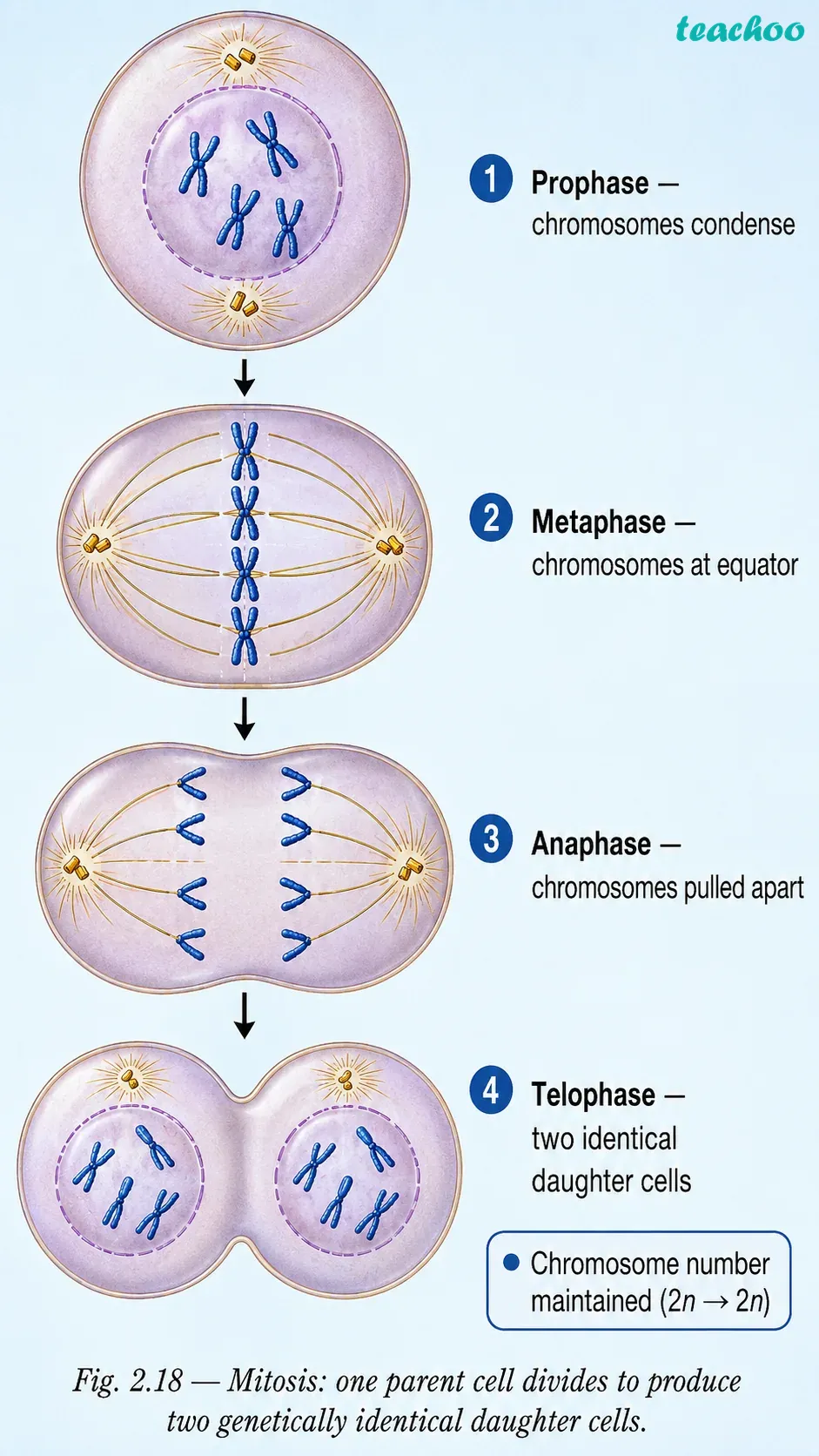
Mitosis
Parent cell
A body (somatic) cell prepares to divide.
↓
Division
Chromosomes copy and split equally.
↓
Two daughter cells
Two identical cells form, with the same chromosome number.
↓
Used for growth and repair
Mitosis — Step by Step
One parent cell
↓
One division
The cell divides once.
↓
Daughter cells
Same DNA and same chromosome number as the parent.
↓
Two genetically identical cells
- Mitosis is the most common type of cell division.
- It produces two genetically identical daughter cells.
- Each new cell gets the same DNA and chromosome number.
- It is important for growth, repair and asexual reproduction.
What is meiosis?
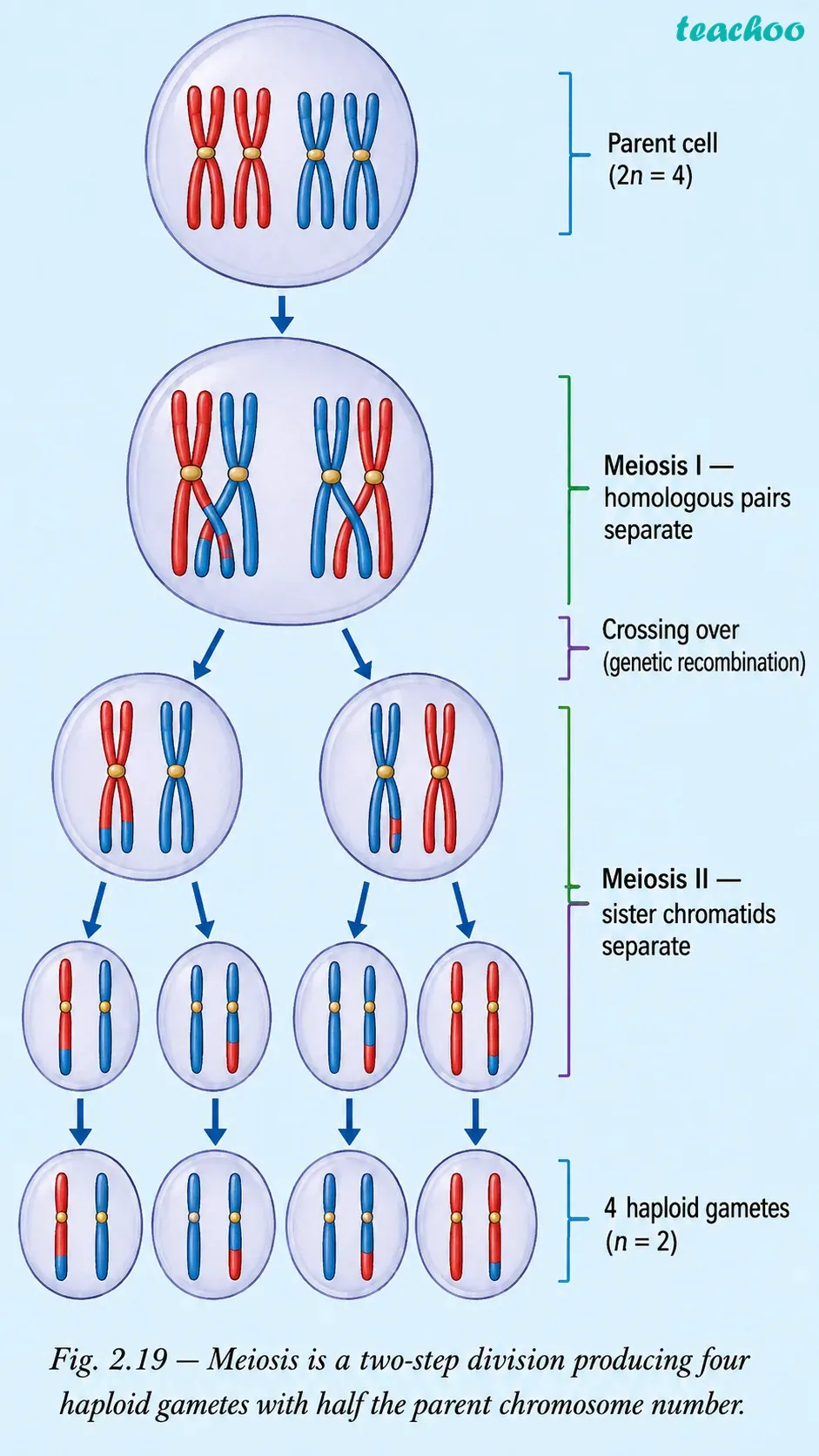
Meiosis
Parent cell
A reproductive cell prepares to divide.
↓
Two divisions
The cell divides twice; chromosome number halves.
↓
Four daughter cells
Four cells form, each genetically different.
↓
Used for sexual reproduction
Meiosis — Step by Step
One parent cell
↓
First division
The cell divides into two; chromosome number is halved.
↓
Second division
Each cell divides again, like mitosis.
↓
Four gametes, each with half the chromosomes
- Meiosis produces gametes (sex cells).
- It occurs only in cells of reproductive organs.
- The parent cell divides twice to form four daughter cells.
- Each gamete has half the number of chromosomes.
How are mitosis and meiosis different?
How do mitosis and meiosis differ?
Cell division
Two kinds
1. Mitosis
Two identical cells
Example:
Growth and repair
2. Meiosis
Four half-set cells
Example:
Making gametes
Mitosis
Meiosis
Produces two daughter cells.
Produces four daughter cells.
Chromosome number stays the same.
Chromosome number is halved.
For growth, repair, asexual reproduction.
For sexual reproduction and variation.
- Mitosis makes two identical cells; meiosis makes four.
- Mitosis keeps the chromosome number; meiosis halves it.
- Mitosis is for growth and repair; meiosis is for reproduction.
What happens if mitosis or meiosis goes wrong?
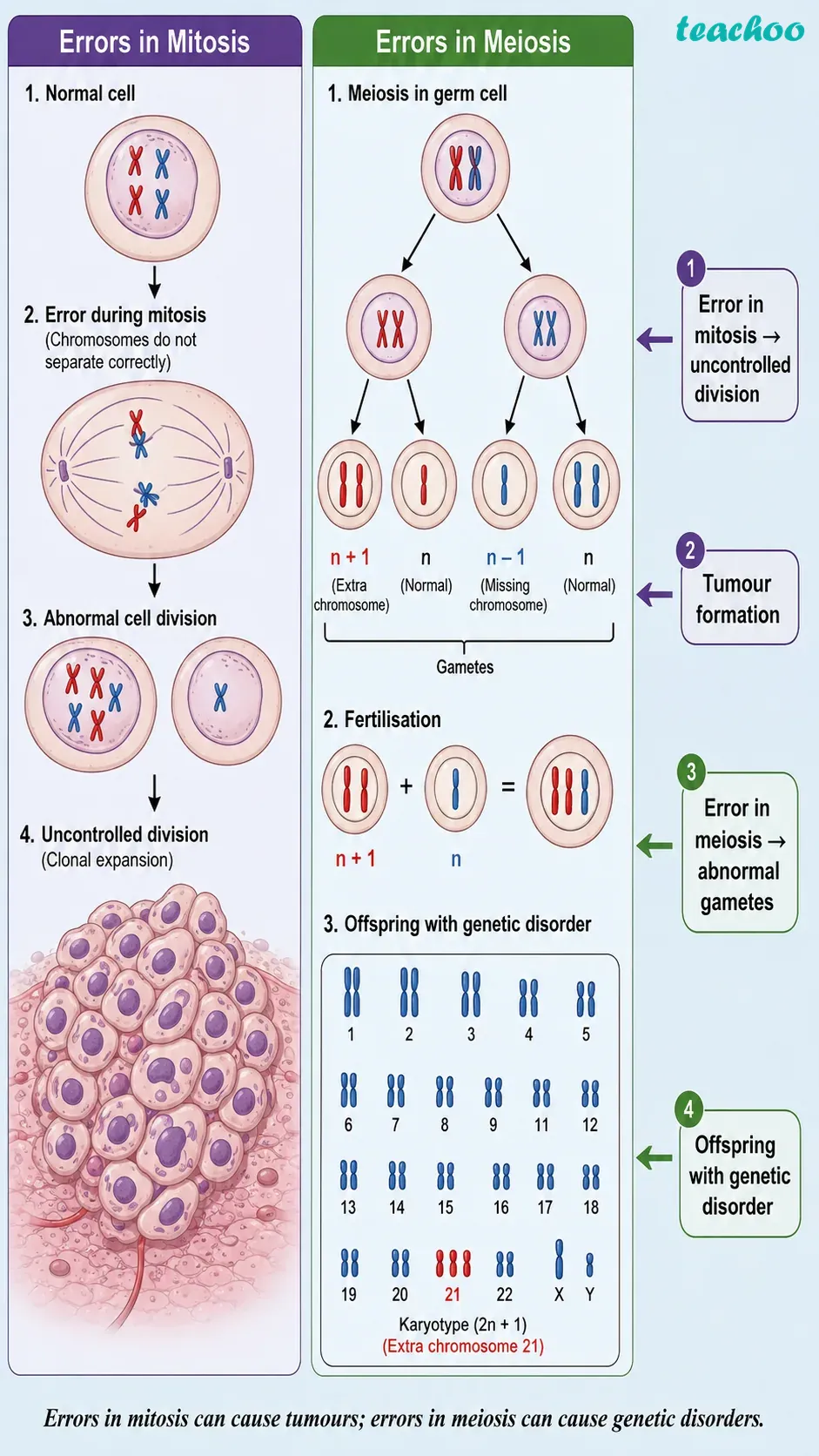
When Cell Division Goes Wrong
Errors in Mitosis
Errors in Meiosis
Cause uncontrolled division.
May cause genetic disorders.
Can form tumours.
Can cause early pregnancy loss.
Abnormal chromosome numbers.
Reduced fertility.
- Errors in mitosis cause uncontrolled cell division.
- This can form tumours and abnormal chromosome numbers.
- Errors in meiosis may cause genetic disorders.
- They may also cause early pregnancy loss or reduced fertility.
Example:
Uncontrolled cell division can lead to the formation of tumours.
Important Points
- Cell division forms new cells from pre-existing cells.
- Mitosis gives two identical cells; meiosis gives four with half the chromosomes.
- The orderly division of eukaryotic cells is called the cell cycle.
- Errors in division can cause tumours or genetic disorders.
🌏 Bridging Science and Society
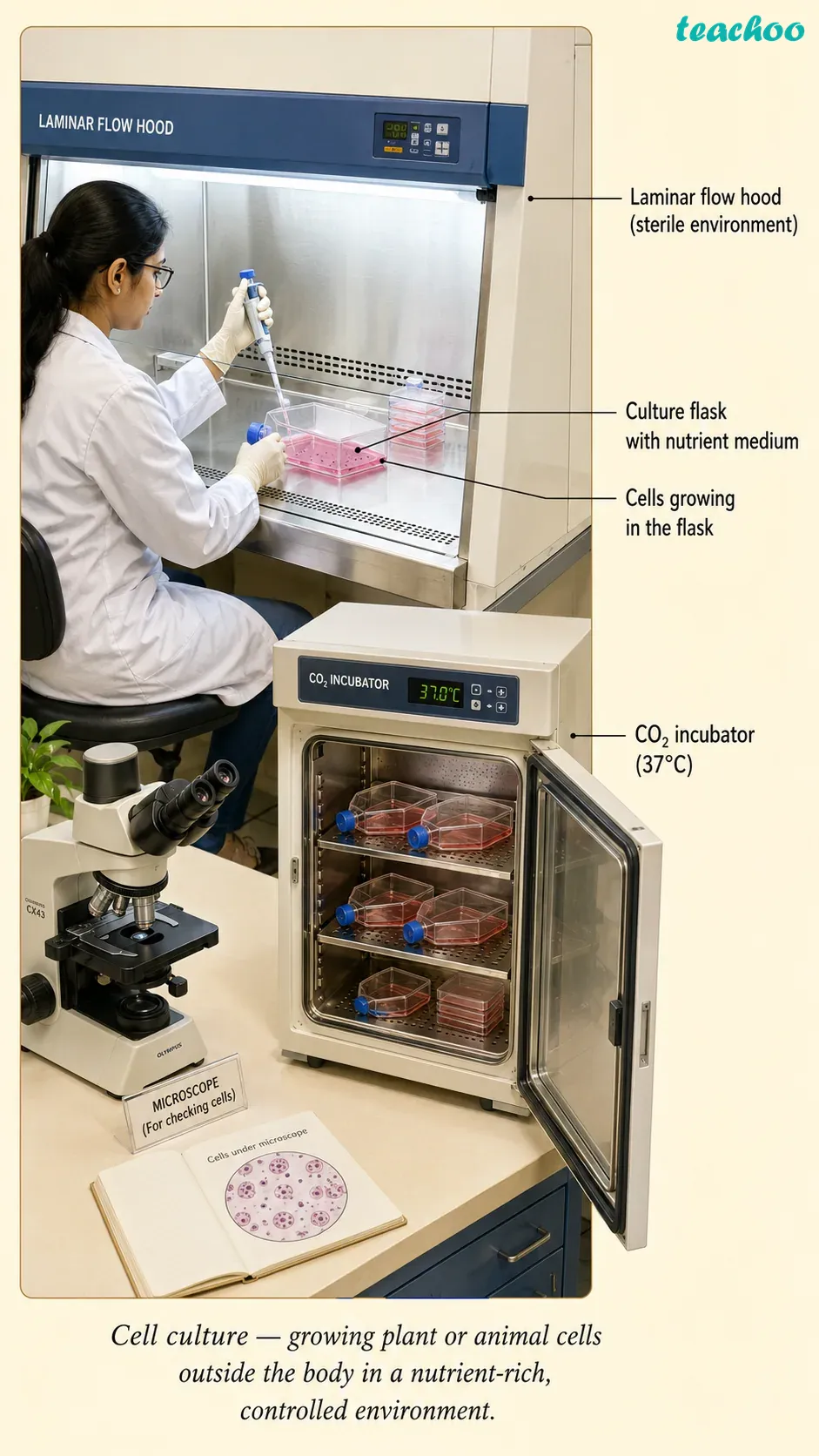
- Scientists can grow cells outside the body.
- This is called cell culture.
- Cells grow in a nutrient-rich, sterile medium.
- It helps make medicines, vaccines, food and biochemicals.
🔬 Meet a Scientist
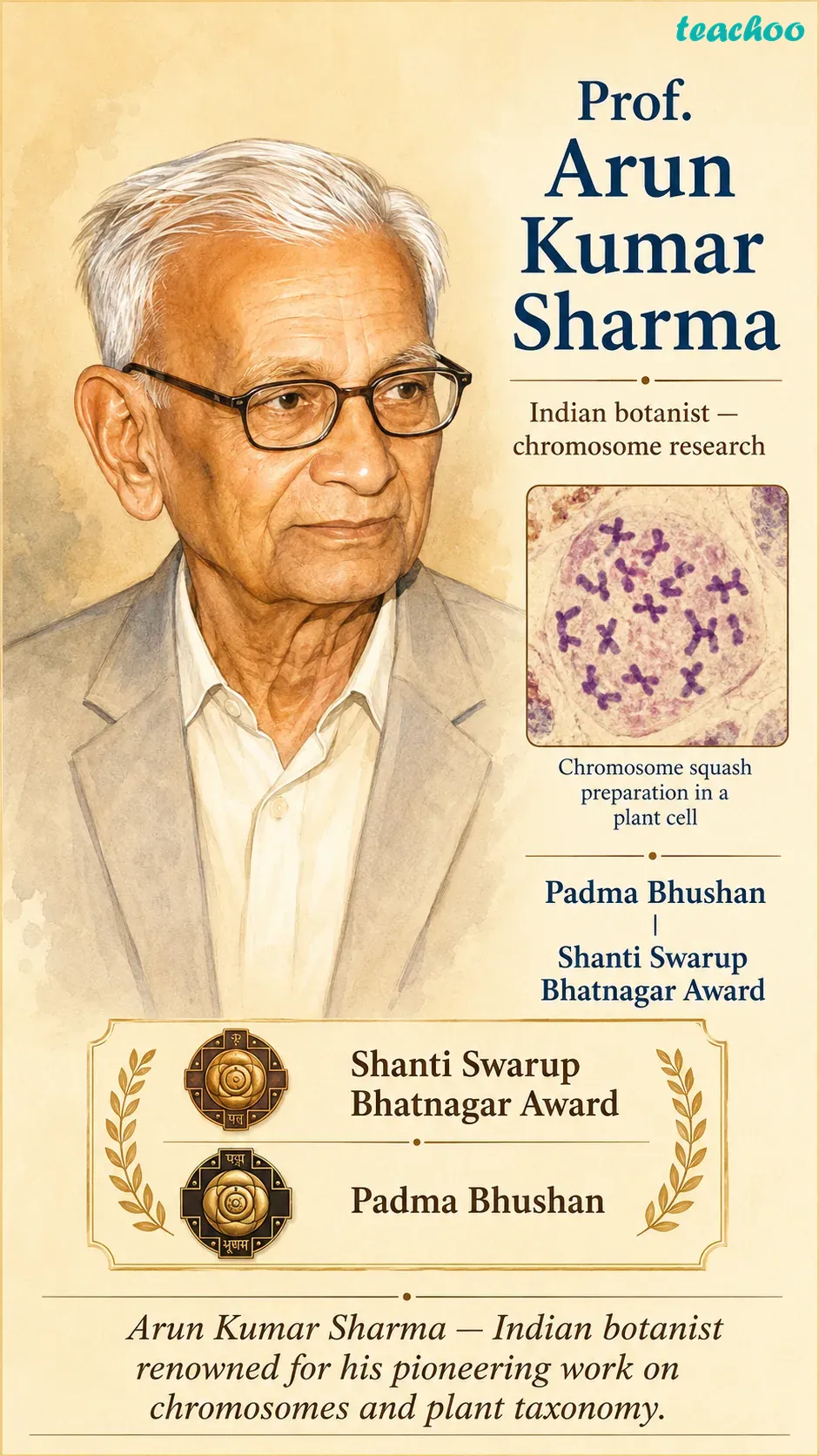
- Arun Kumar Sharma was a famous Indian scientist.
- He is known for his work on chromosomes.
- He invented useful lab methods to study chromosomes in plants.
- He received the Shanti Swarup Bhatnagar award and Padma Bhushan.
⏸️ Pause and Ponder
-
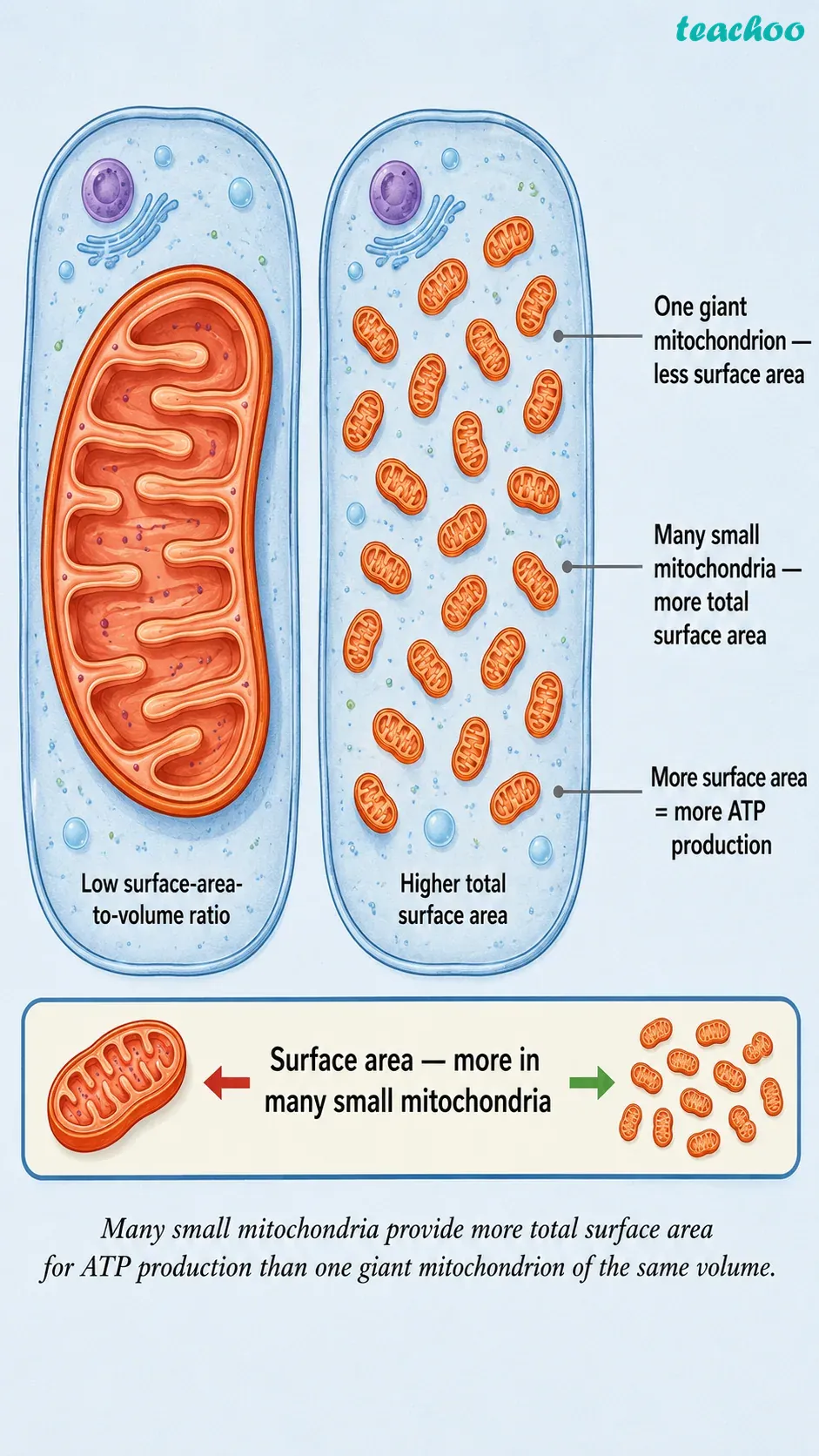
Instead of many small ones, why does a cell not have a single giant mitochondrion? How does this relate to the concept of surface area?
Many small mitochondria give much more total surface area than one big one. More surface means more inner membrane and cristae, so more energy reactions can happen. -
If the skin cells start dividing by meiosis instead of mitosis, what do you think will happen to a cut on the skin?
Meiosis makes cells with half the chromosomes and is meant for gametes, not repair. So the skin could not heal properly, and the new cells would be abnormal.
❓ Test Yourself
-
What are the two major types of cell division?
View Answer
Mitosis and meiosis. -
How many daughter cells does mitosis produce?
View Answer
Two, and they are genetically identical to the parent. -
Where does meiosis happen?
View Answer
Only in the cells of reproductive organs. -
What is the orderly division of eukaryotic cells called?
View Answer
The cell cycle. -
What can errors in mitosis lead to?
View Answer
Uncontrolled cell division and the formation of tumours.
Important Definitions
- Cell division — forming new cells from pre-existing cells.
- Cell cycle — the controlled, orderly way eukaryotic cells divide.
- Mitosis — division giving two genetically identical daughter cells.
- Meiosis — two-step division giving four cells with half the chromosomes.
- Gametes — sex cells (sperm and eggs) made by meiosis.
📋 NCERT Question 15 — What would happen if
What would happen if gametes are formed by mitotic divisions?
View Answer →
