
 You are here
💬 Think about it
Think of a hot, bubbling spring high in the mountains. It is too hot for you and me. But tiny living things still survive there. Scientists think the very first life may have started in water like this. Let us begin our cell story here.
![Introduction - Cell — The Building Block of Life - [Teachoo] - Concepts](https://cdn.teachoo.com/724697da-132f-4789-b830-2227401ec567/image-a-steaming-hot-spring-in-a-cold-mountain-valley-like-puga-valley-in-ladakh-with-bubbles-and-mineral-deposits-around-its-edges-showi.webp)
Where do scientists think life first began?
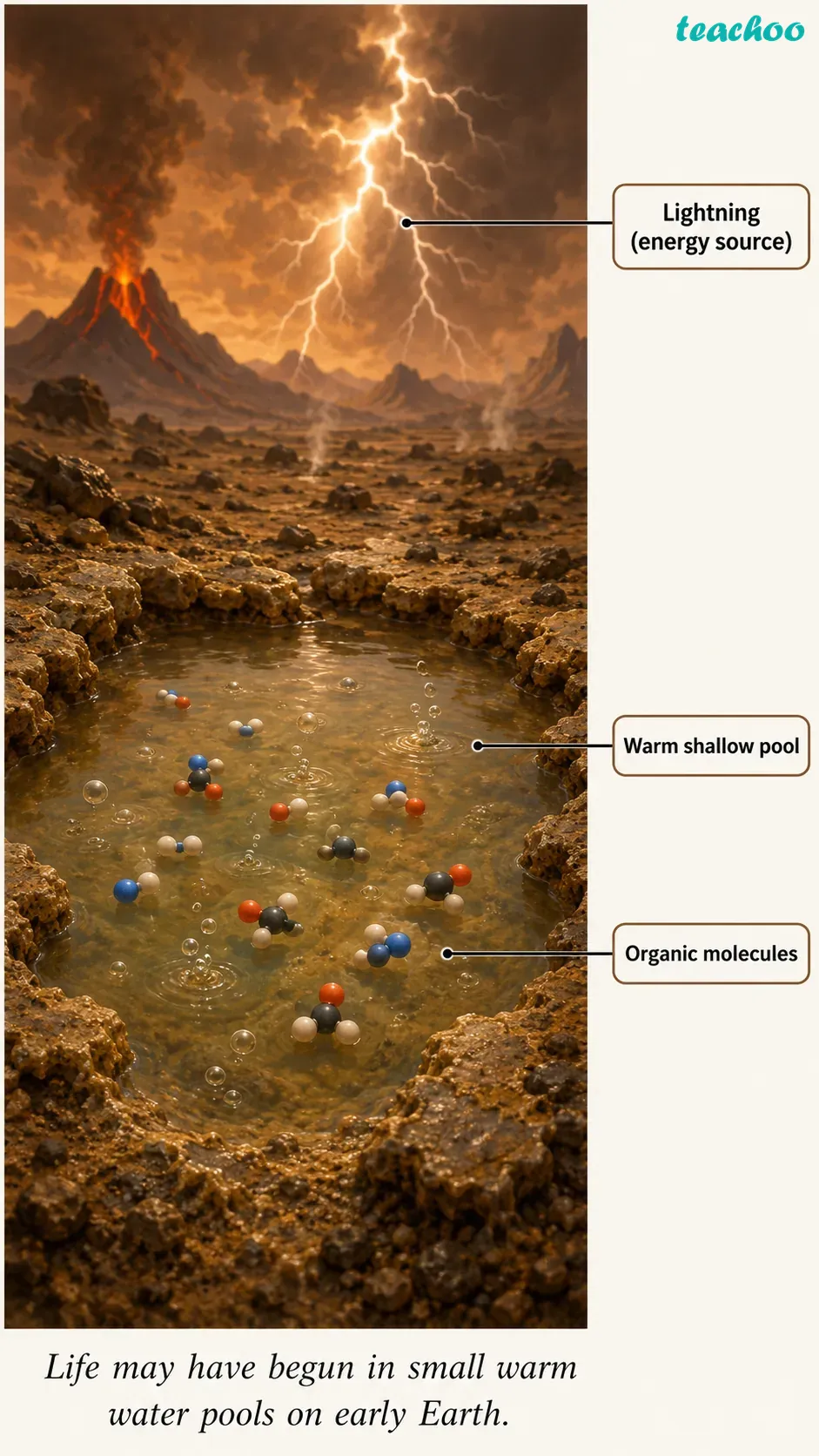
- Most scientists agree life began in water.
- Maybe in small warm water pools, not the open sea.
- These pools had changing conditions, like early Earth.
Example:
The hot springs of Puga Valley in Ladakh stay almost boiling even in cold weather.
What kind of living things live in these hot springs?
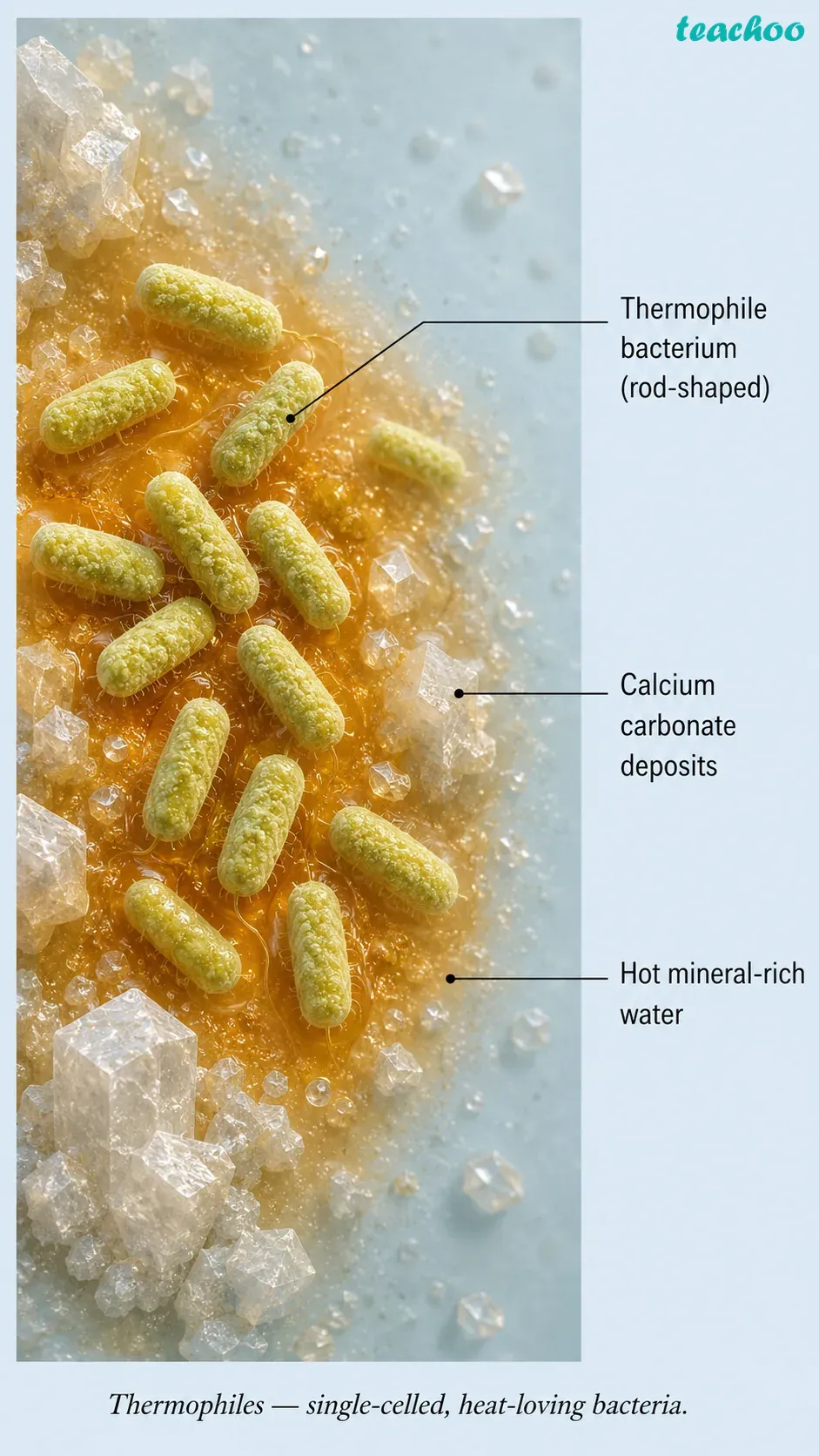
- The heat-loving bacteria are called thermophiles.
- They are unicellular — made of just one cell.
- They are found in places like early Earth, about 3.5 billion years ago.
How may the first cell membrane have formed?
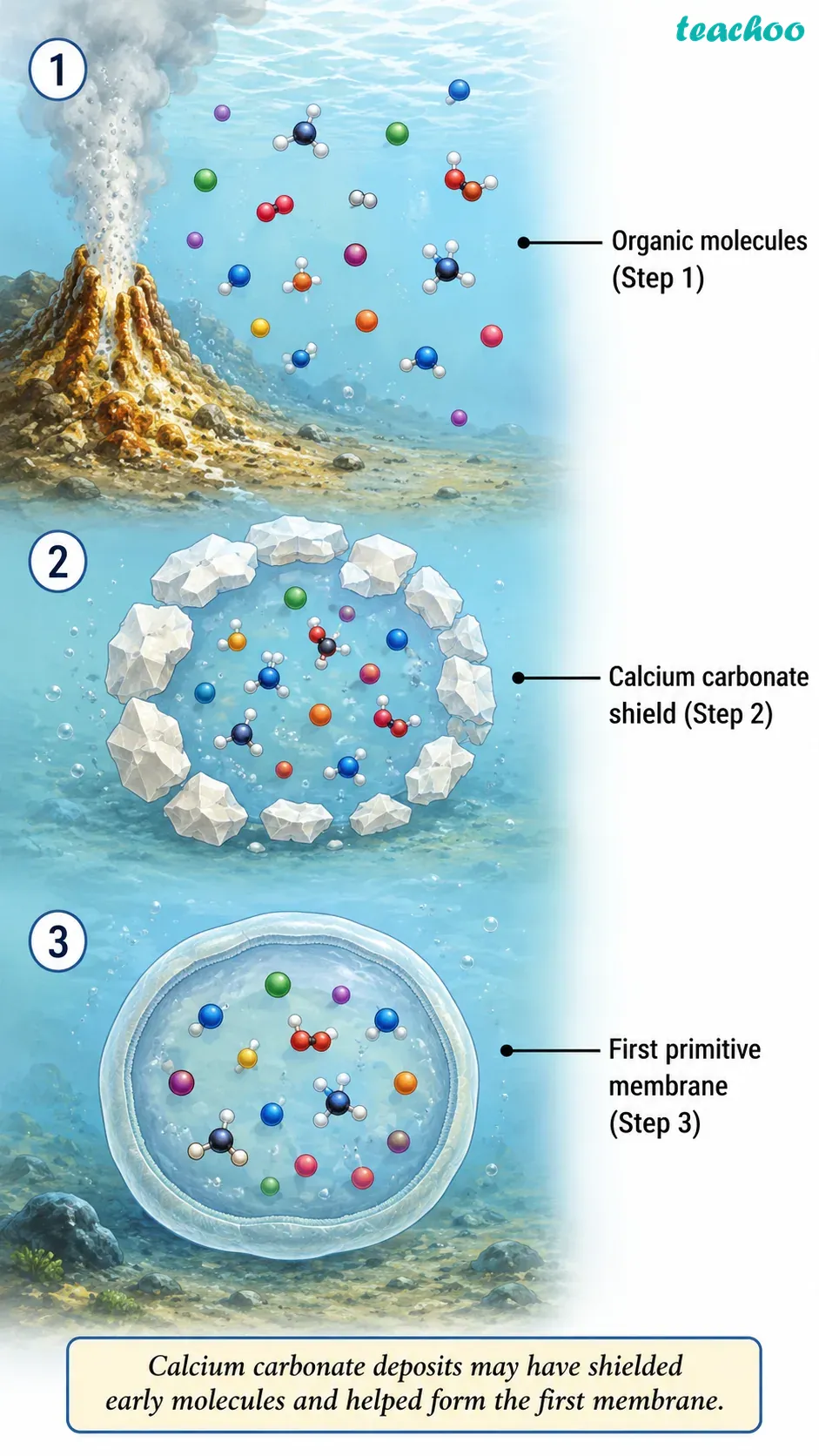
Formation of the First Membrane
Study the springs
Scientists studied hot springs at Birbal Sahni Institute.
↓
Mineral deposits form
Calcium carbonate formed quickly around the springs.
↓
Early molecules shielded
Deposits protected molecules from harmful radiation.
↓
First protective membrane may have formed
- Scientists from Birbal Sahni Institute studied these springs.
- Calcium carbonate formed quickly around the springs.
- These deposits may have protected early molecules from harmful radiation.
- They may have helped form the first protective membrane.
Why is the cell called the basic unit of life?
Cell — The Basic Unit of Life
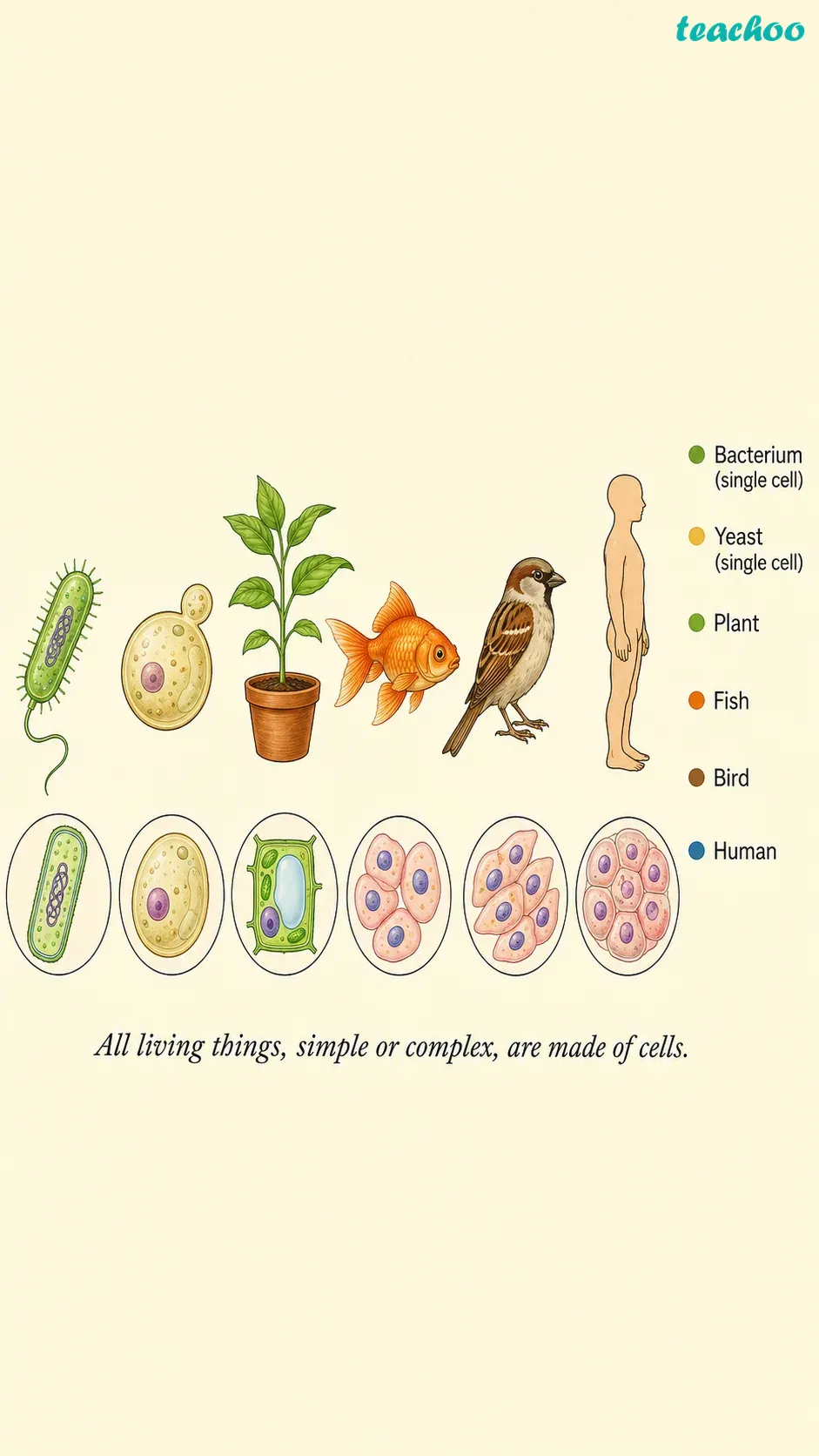
All living things are made of cells; the cell is the smallest level at which life exists.
Example:
Bacteria and yeast are single-celled; plants, fish and humans have millions of cells.
- All living things are made of cells.
- The cell is the smallest level at which life exists.
- Some organisms are one cell. These are called unicellular organisms.
- Others have millions of cells. These are called multicellular organisms.
Example:
Bacteria and yeast are single-celled; plants, fish, birds and humans have millions of cells.
How do cells get organised in our body?
Organisation of Cells in the Body
Cell
The basic unit of structure and function.
↓
Tissue
Similar cells doing similar work join together.
↓
Organ
Different tissues join together to form an organ.
↓
Organ System
Several organs working together form an organ system.
- Similar cells doing similar work form a tissue.
- Different tissues join to form an organ.
- Several organs working together form an organ system.
- The cell still stays the basic unit of structure and function.
From a Cell to an Organ System
Cell
↓
Tissue
Similar cells doing similar work.
↓
Organ
Different tissues joined together.
↓
Organ system
Several organs working together, like the respiratory system.
Important Points
- Life most likely began in water, in small warm pools.
- Thermophiles are single-celled, heat-loving bacteria.
- The cell is the basic unit of structure and function in all living things.
💭 Think It Over

-
Where does a cell come from?
A new cell is formed from an existing cell by cell division. -
How have technological interventions facilitated the creation of new knowledge in understanding the world beyond the naked eye?
Tools like the light and electron microscope let us see cells and their tiny parts that the eye cannot. -
How is the cell structural and functional unit of life?
Every living body is built from cells, and each cell carries out the basic activities of life. -
How does a cell multiply?
A cell multiplies by dividing — by mitosis or meiosis — to form new cells.
Important Definitions
- Cell — the basic unit of structure and function in all living organisms.
- Thermophiles — heat-loving, single-celled bacteria found in hot springs.
- Unicellular — an organism made of only one cell.
- Multicellular — an organism made of millions of cells working together.
- Tissue — a group of similar cells performing a similar function.
