
 You are here

Area of Rectangle and Square
Last updated at August 14, 2026 by Teachoo
Transcript
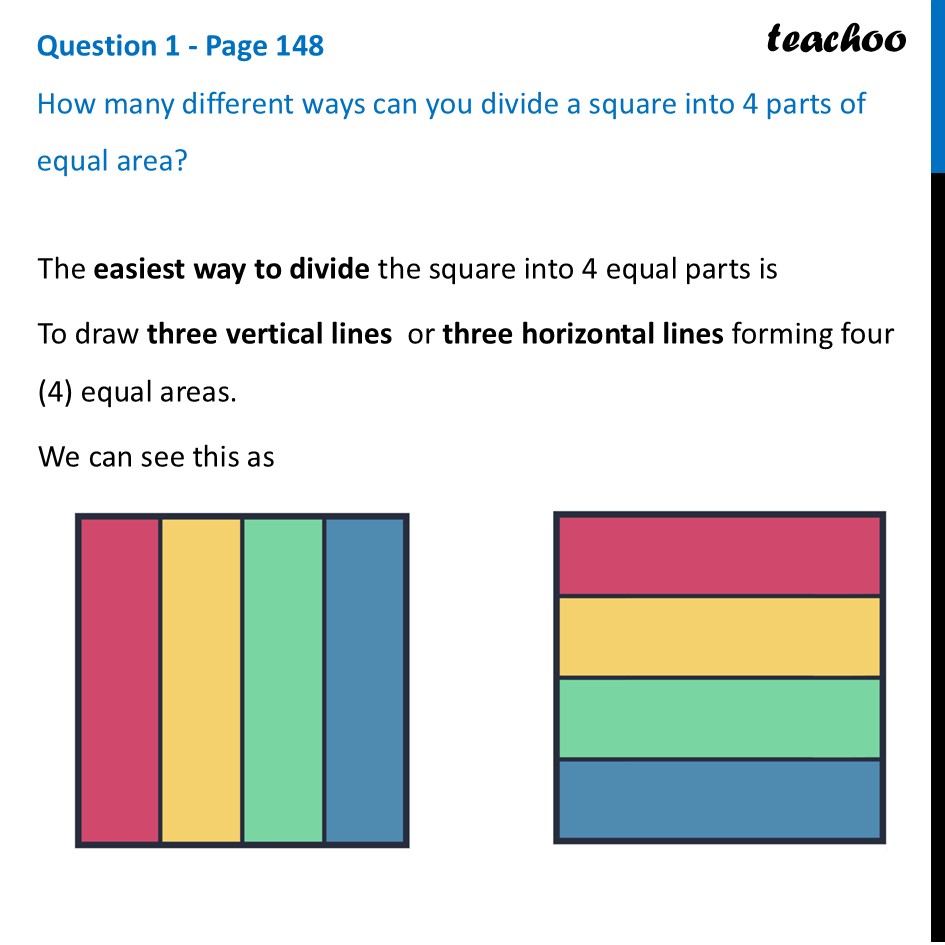
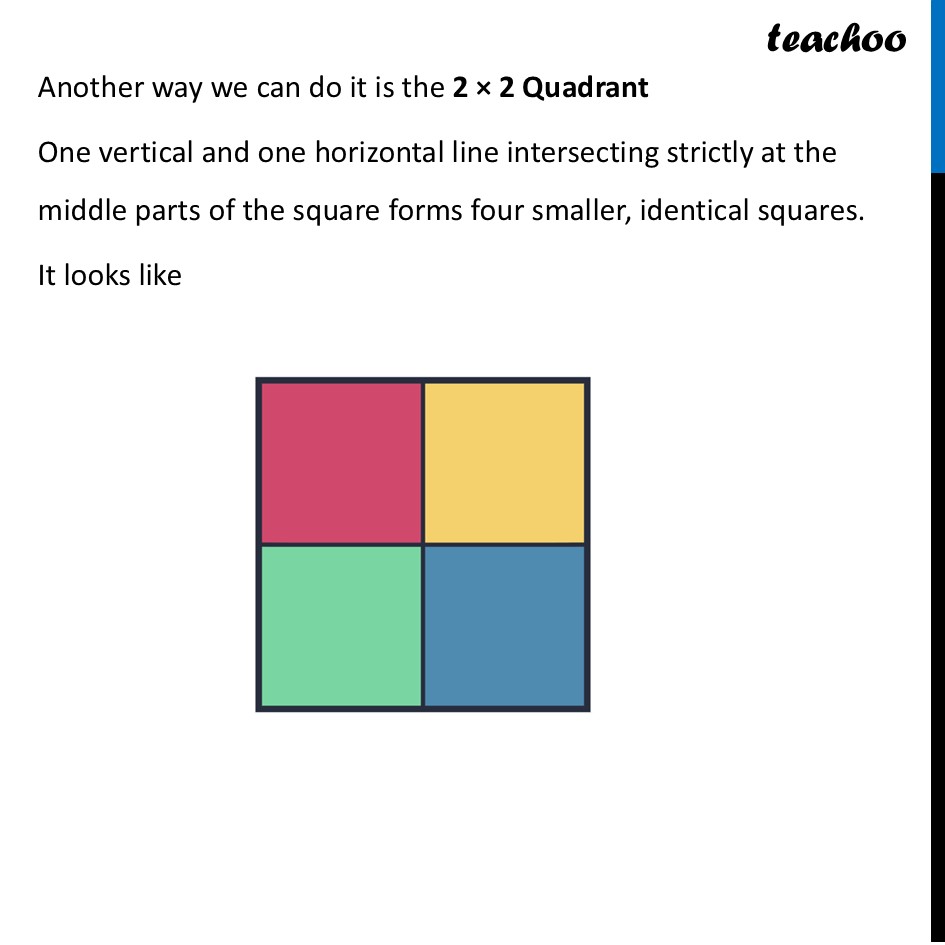
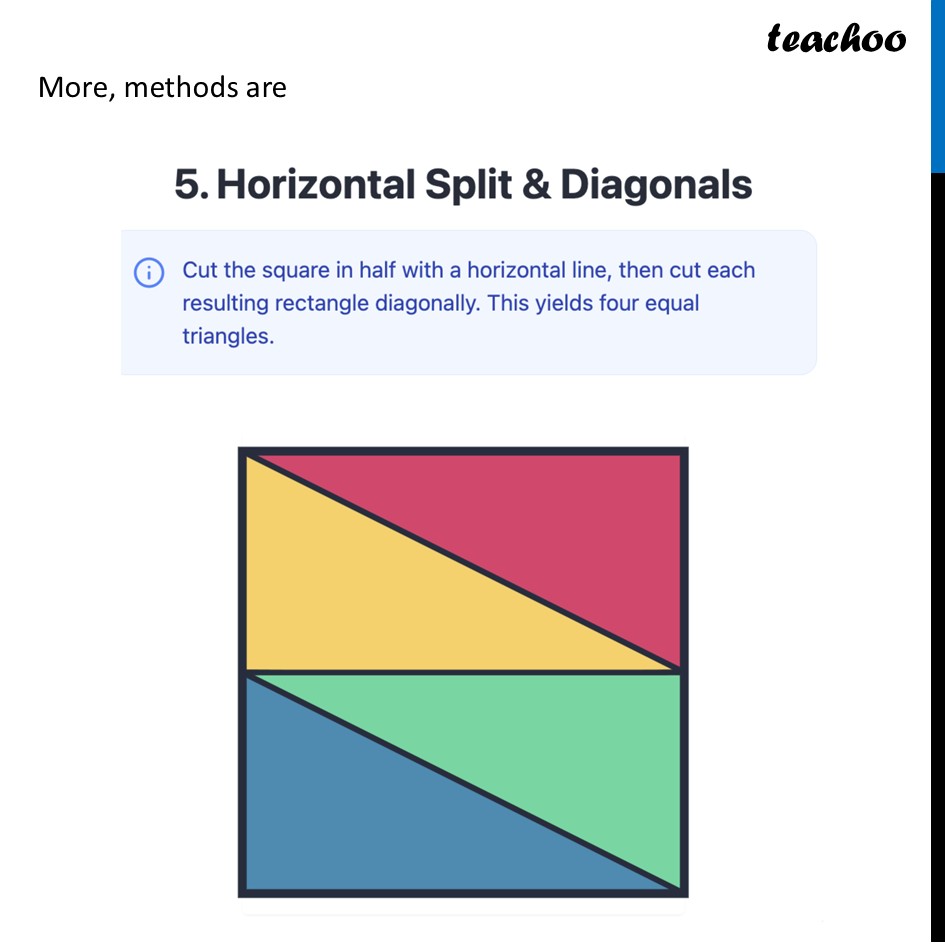
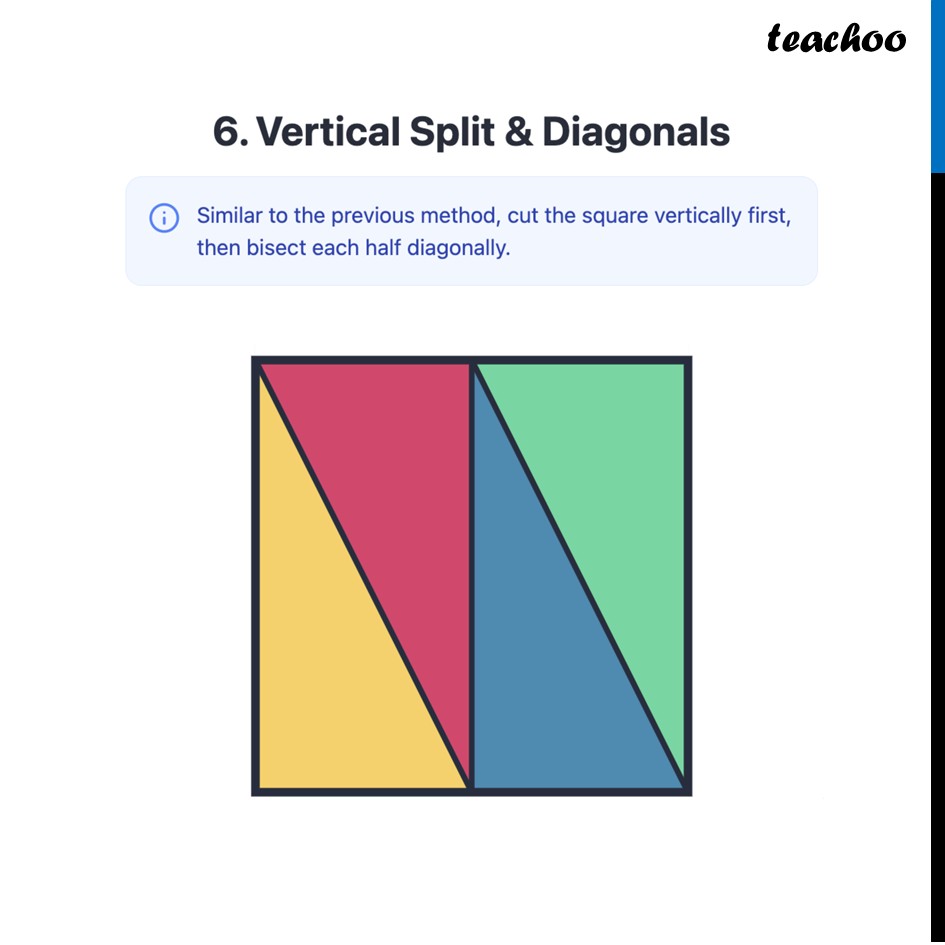
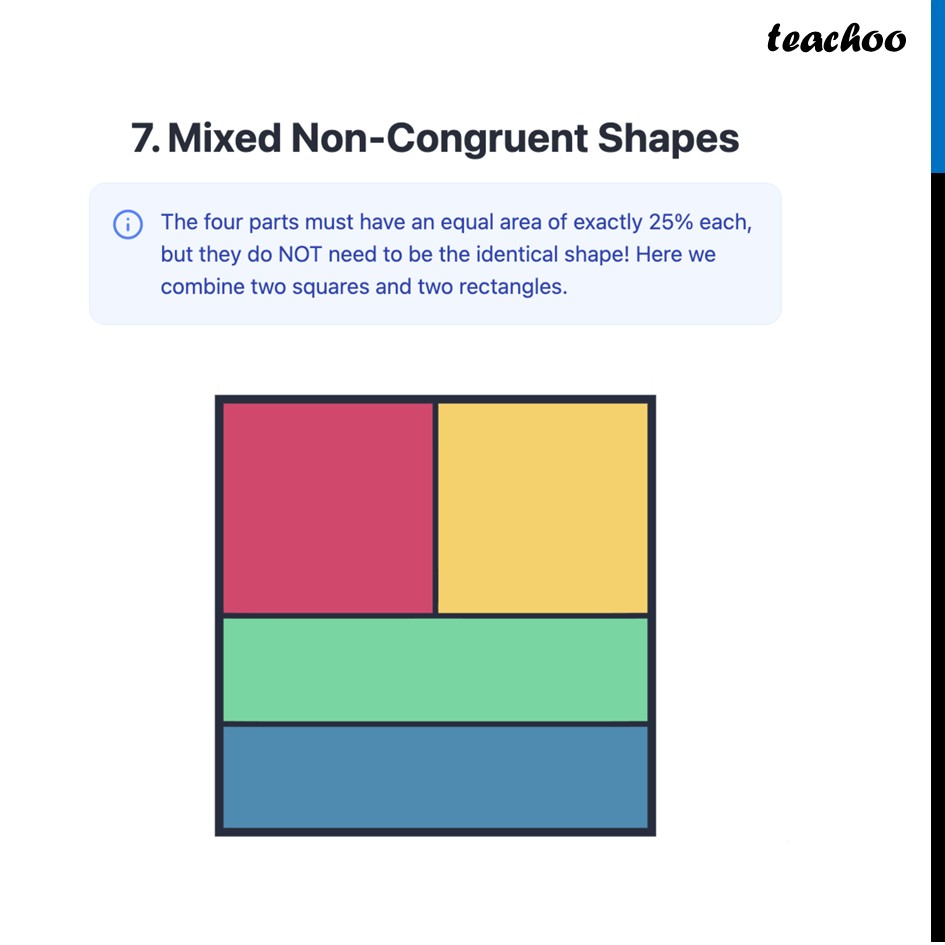
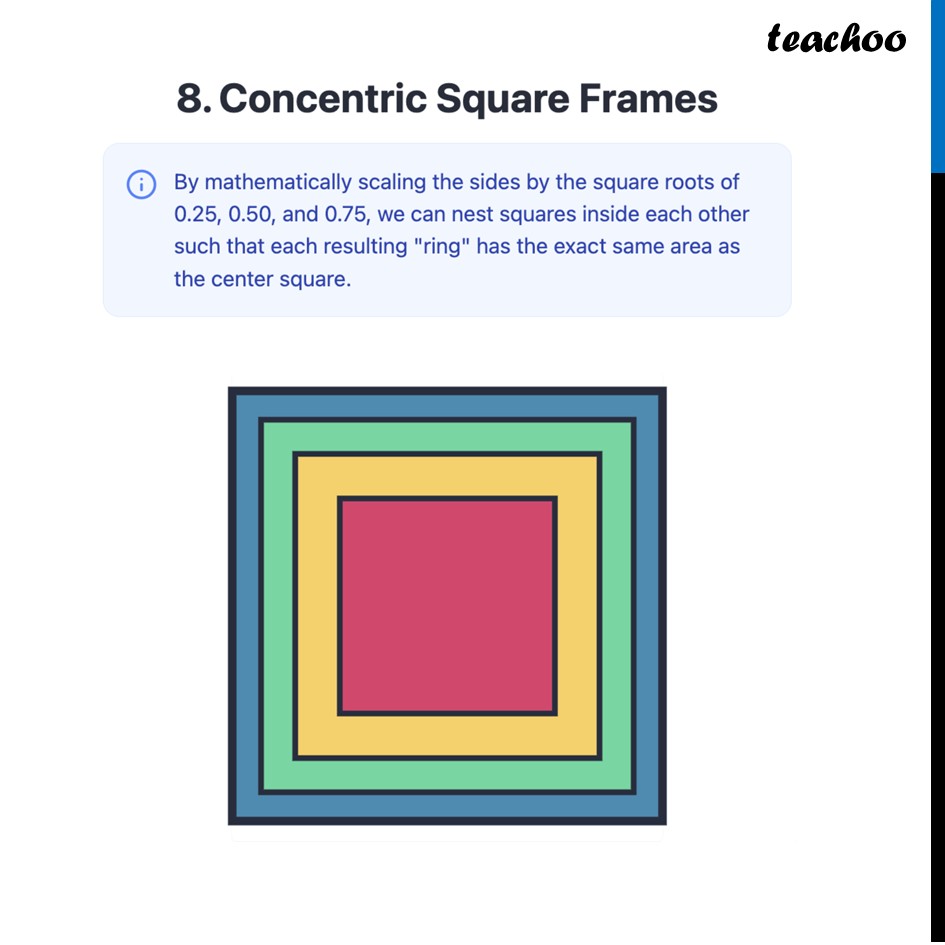
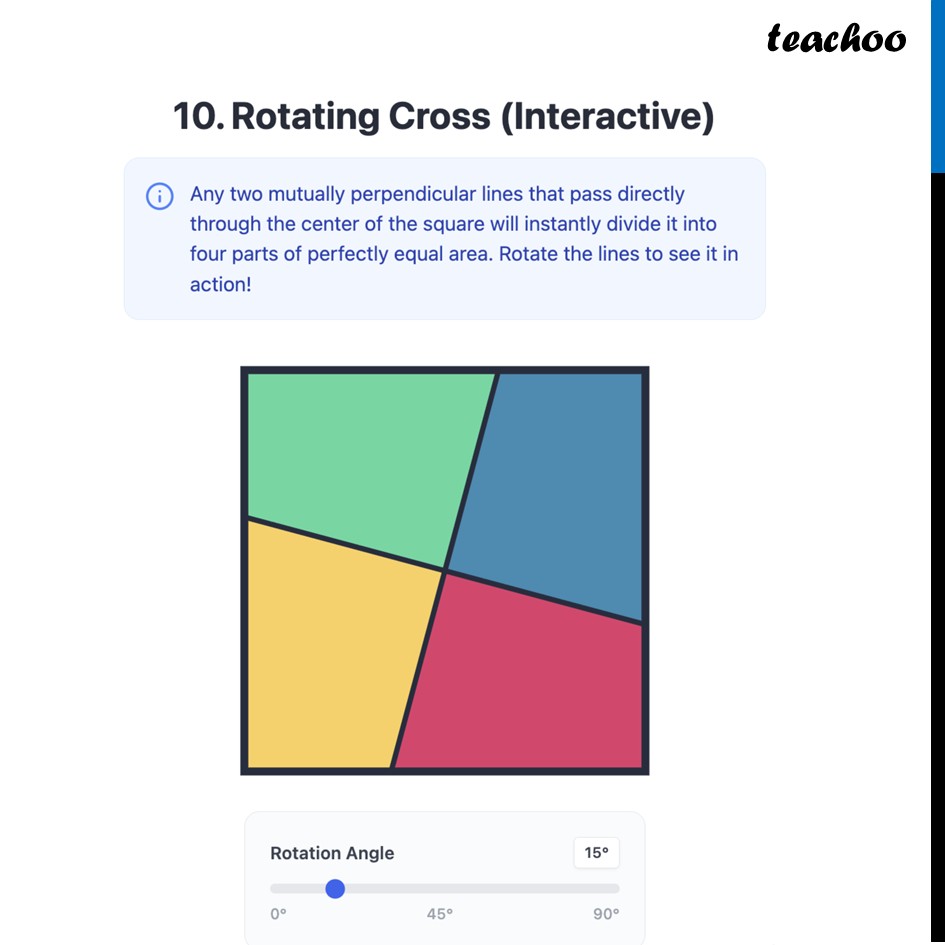
Question 1 - Page 148 How many different ways can you divide a square into 4 parts of equal area?The easiest way to divide the square into 4 equal parts is To draw three vertical lines or three horizontal lines forming four (4) equal areas. We can see this as Another way we can do it is the 2 × 2 Quadrant One vertical and one horizontal line intersecting strictly at the middle parts of the square forms four smaller, identical squares. It looks like More, methods are Horizontal Split & Diagonals Cut the square in half with a horizontal line, then cut each resulting rectangle diagonally. This yields four equal triangles.Vertical Split & Diagonals (i) Similar to the previous method, cut the square vertically first, then bisect each half diagonally.Mixed Non-Congruent Shapes (i) The four parts must have an equal area of exactly each, but they do NOT need to be the identical shape! Here we combine two squares and two rectangles.Concentric Square Frames (i) By mathematically scaling the sides by the square roots of , and 0.75 , we can nest squares inside each other such that each resulting "ring" has the exact same area as the center square.Infinite Pinwheel (Interactive) (i) By shifting a point along the edge and then copying it with 90-degree rotational symmetry around the center, we can create infinite variations of congruent quadrilaterals. Try moving the slider!Rotating Cross (Interactive) (i) Any two mutually perpendicular lines that pass directly through the center of the square will instantly divide it into four parts of perfectly equal area. Rotate the lines to see it in action!

