Construct a square whose area is equal to the difference of the areas - Figure it out - Page 52, 53, 54

part 2 - Question 7 - Figure it out - Page 52, 53, 54 - Chapter 2 Class 8 - The Baudhayana-Pythagoras Theorem (Ganita Part 2) - Class 8 (Ganita Prakash - 1, 2 & Old NCERT)
part 3 - Question 7 - Figure it out - Page 52, 53, 54 - Chapter 2 Class 8 - The Baudhayana-Pythagoras Theorem (Ganita Part 2) - Class 8 (Ganita Prakash - 1, 2 & Old NCERT) part 4 - Question 7 - Figure it out - Page 52, 53, 54 - Chapter 2 Class 8 - The Baudhayana-Pythagoras Theorem (Ganita Part 2) - Class 8 (Ganita Prakash - 1, 2 & Old NCERT) part 5 - Question 7 - Figure it out - Page 52, 53, 54 - Chapter 2 Class 8 - The Baudhayana-Pythagoras Theorem (Ganita Part 2) - Class 8 (Ganita Prakash - 1, 2 & Old NCERT) part 6 - Question 7 - Figure it out - Page 52, 53, 54 - Chapter 2 Class 8 - The Baudhayana-Pythagoras Theorem (Ganita Part 2) - Class 8 (Ganita Prakash - 1, 2 & Old NCERT) part 7 - Question 7 - Figure it out - Page 52, 53, 54 - Chapter 2 Class 8 - The Baudhayana-Pythagoras Theorem (Ganita Part 2) - Class 8 (Ganita Prakash - 1, 2 & Old NCERT) part 8 - Question 7 - Figure it out - Page 52, 53, 54 - Chapter 2 Class 8 - The Baudhayana-Pythagoras Theorem (Ganita Part 2) - Class 8 (Ganita Prakash - 1, 2 & Old NCERT) part 9 - Question 7 - Figure it out - Page 52, 53, 54 - Chapter 2 Class 8 - The Baudhayana-Pythagoras Theorem (Ganita Part 2) - Class 8 (Ganita Prakash - 1, 2 & Old NCERT) part 10 - Question 7 - Figure it out - Page 52, 53, 54 - Chapter 2 Class 8 - The Baudhayana-Pythagoras Theorem (Ganita Part 2) - Class 8 (Ganita Prakash - 1, 2 & Old NCERT) part 11 - Question 7 - Figure it out - Page 52, 53, 54 - Chapter 2 Class 8 - The Baudhayana-Pythagoras Theorem (Ganita Part 2) - Class 8 (Ganita Prakash - 1, 2 & Old NCERT)

Remove Ads Share on WhatsApp

Transcript

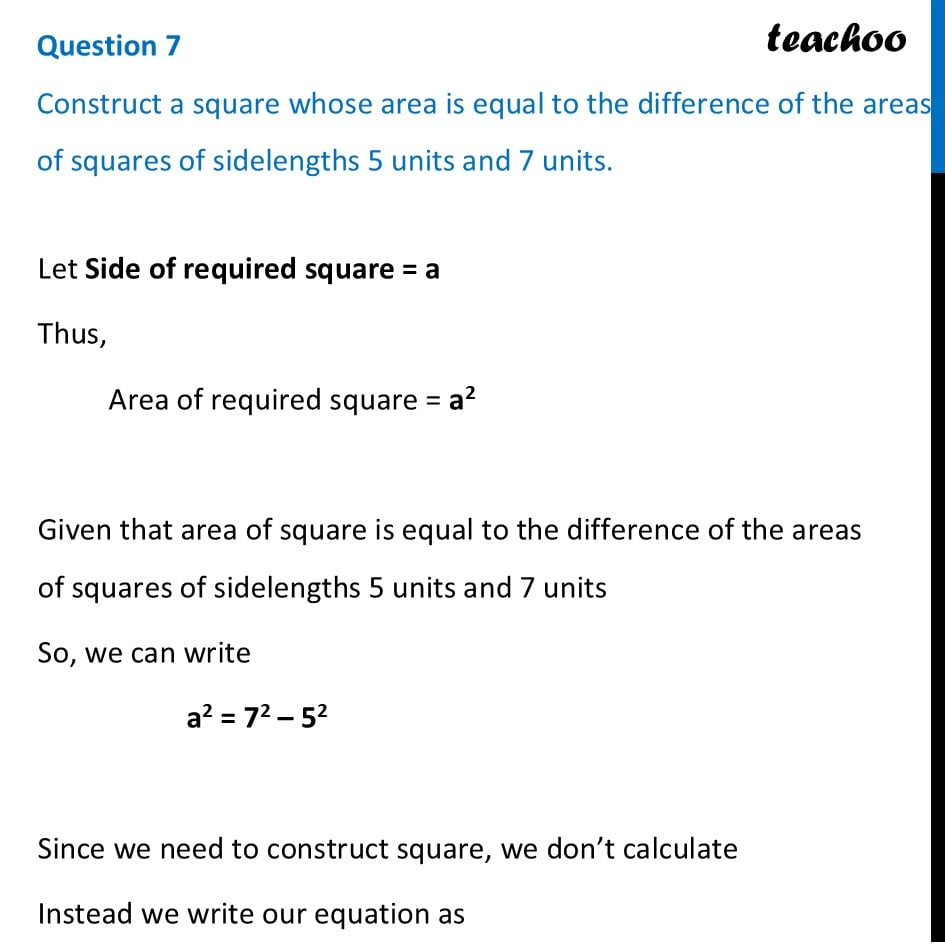
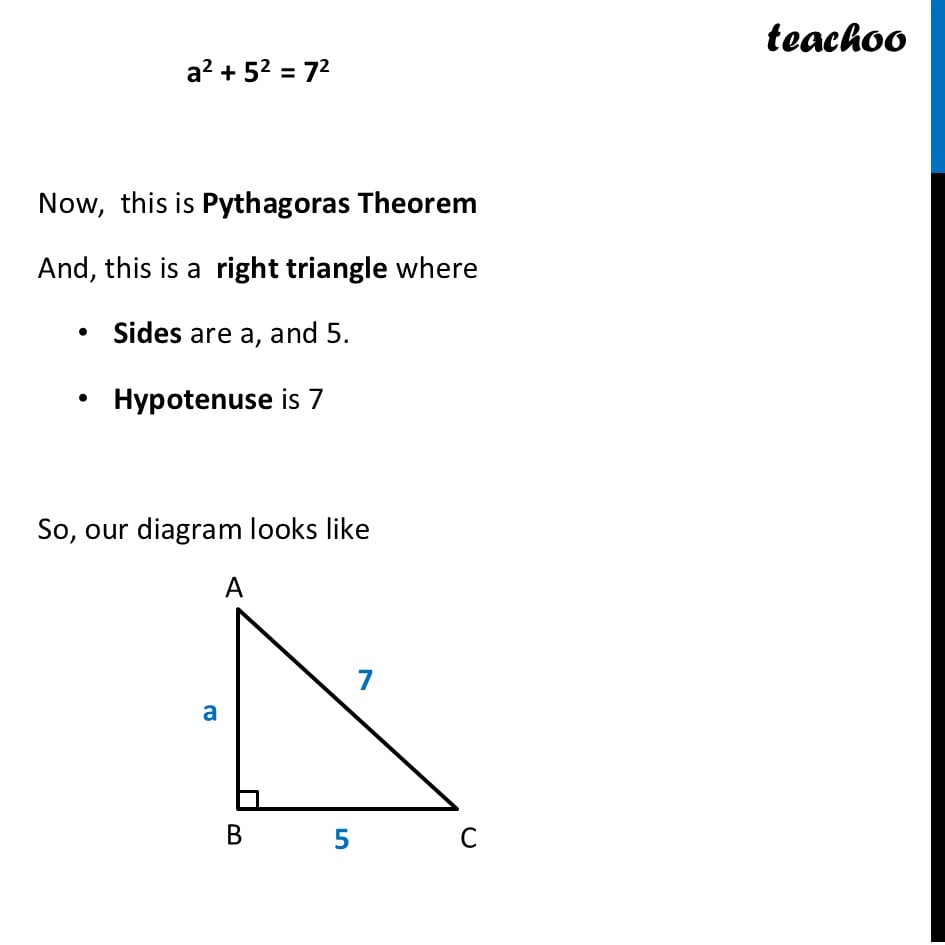
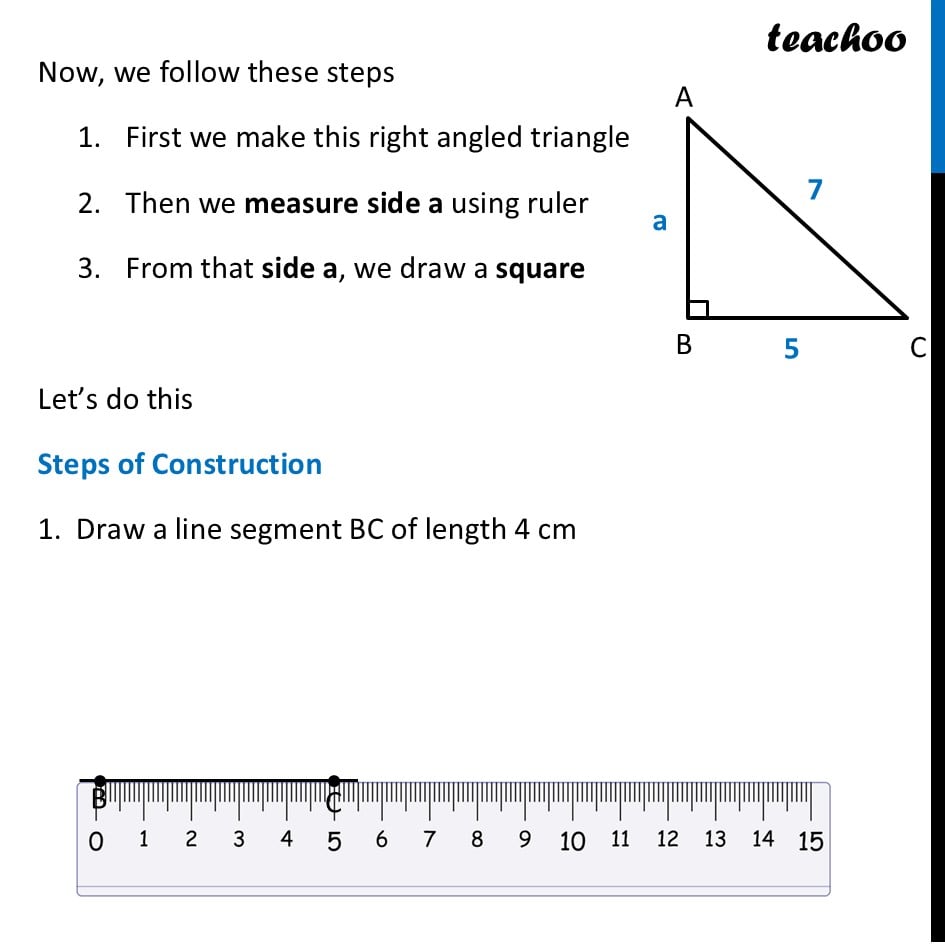
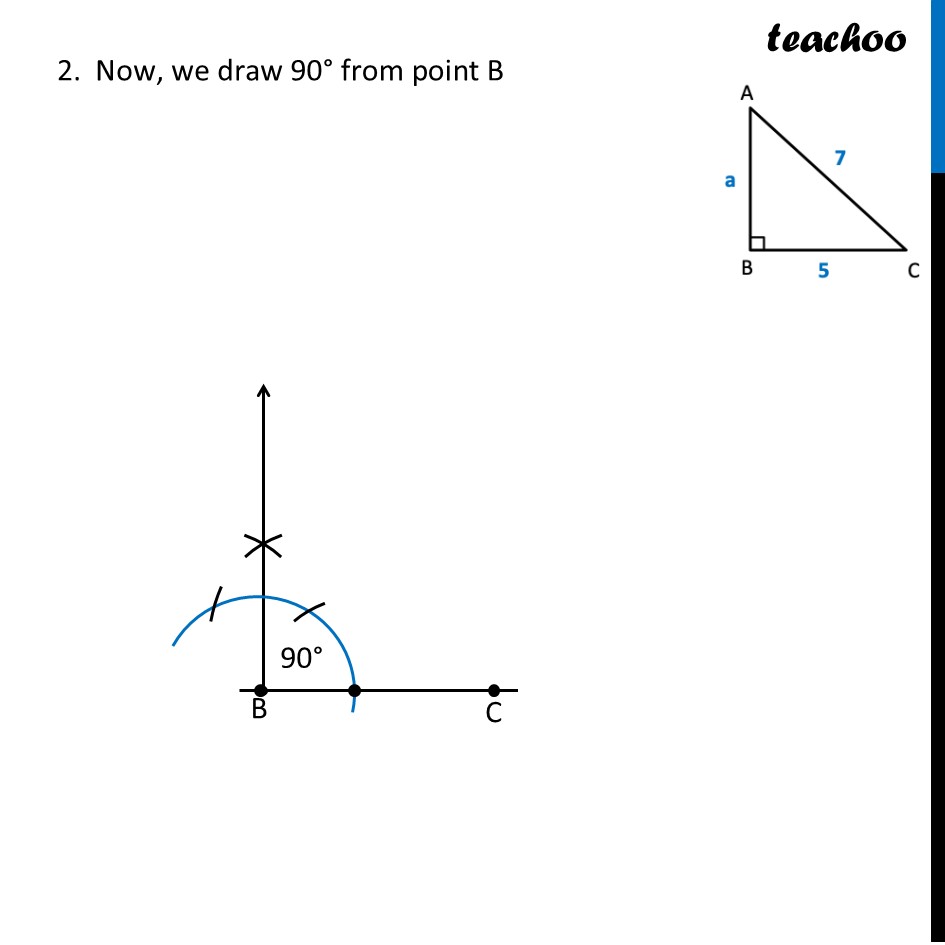
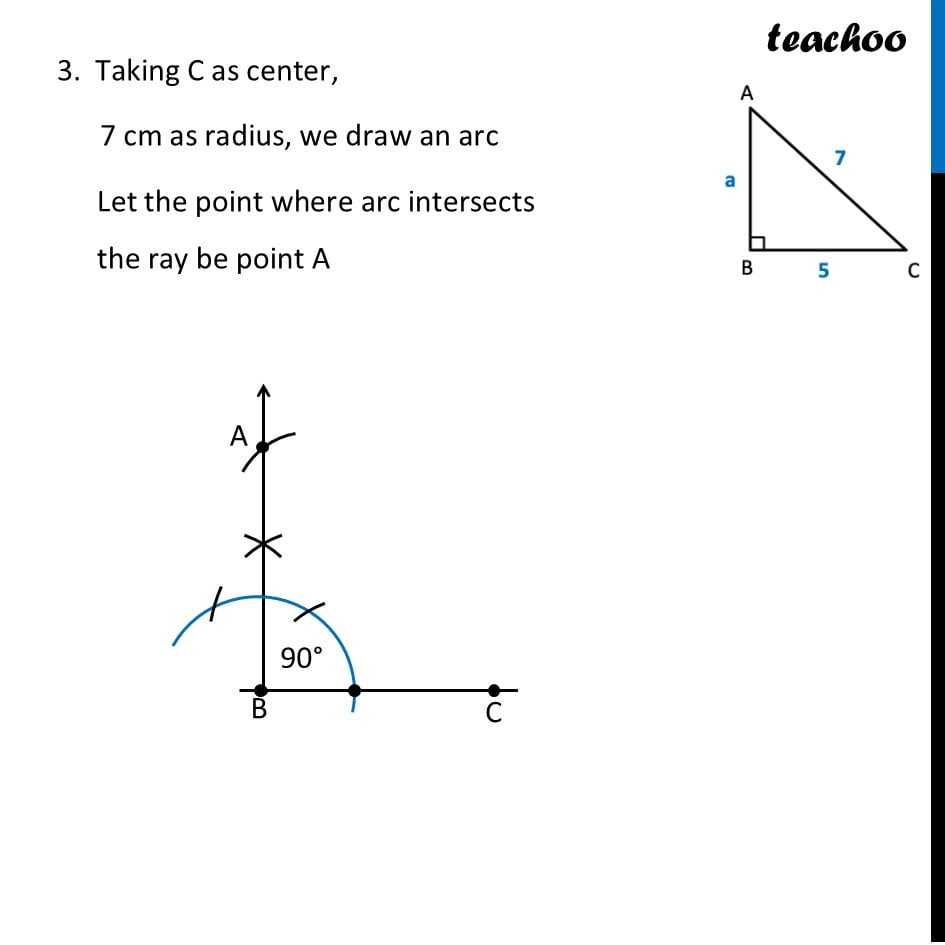
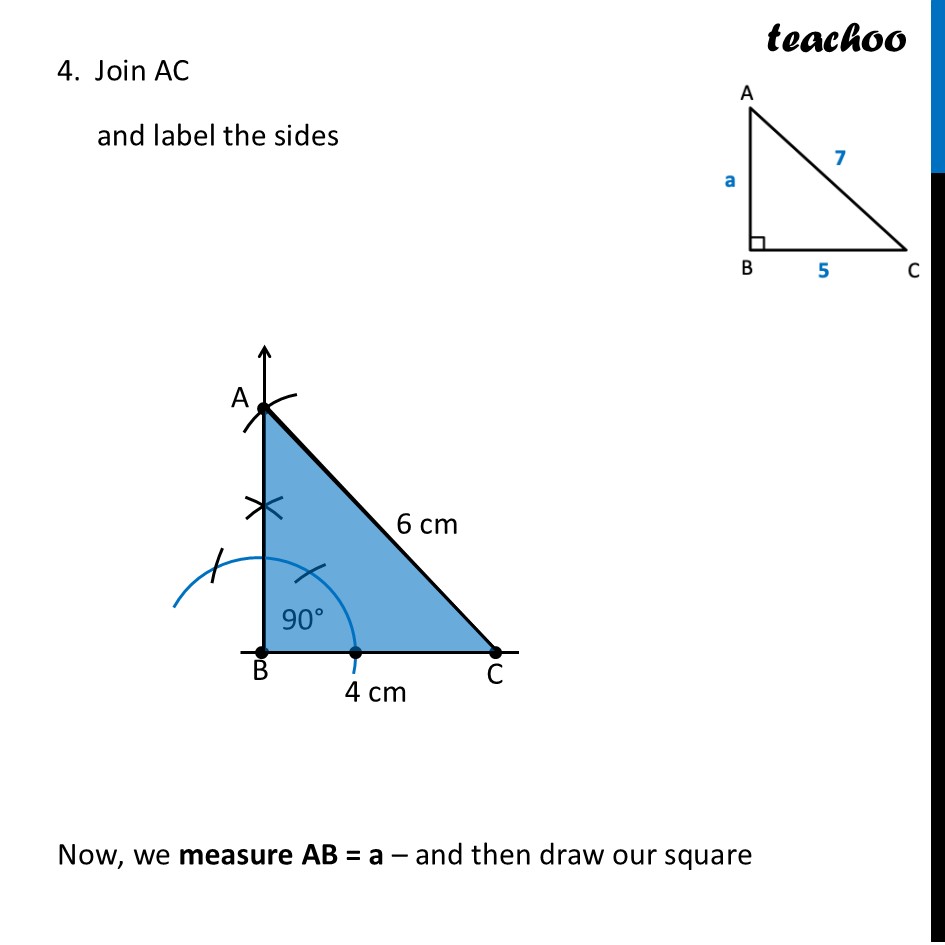
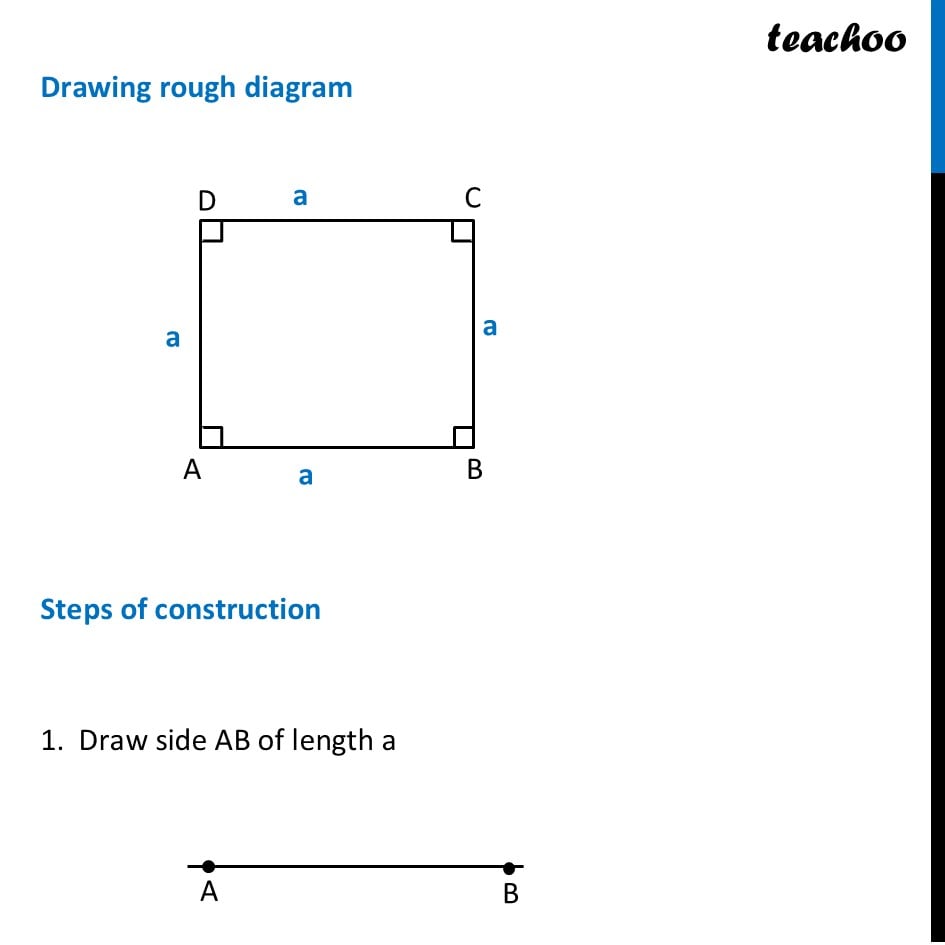
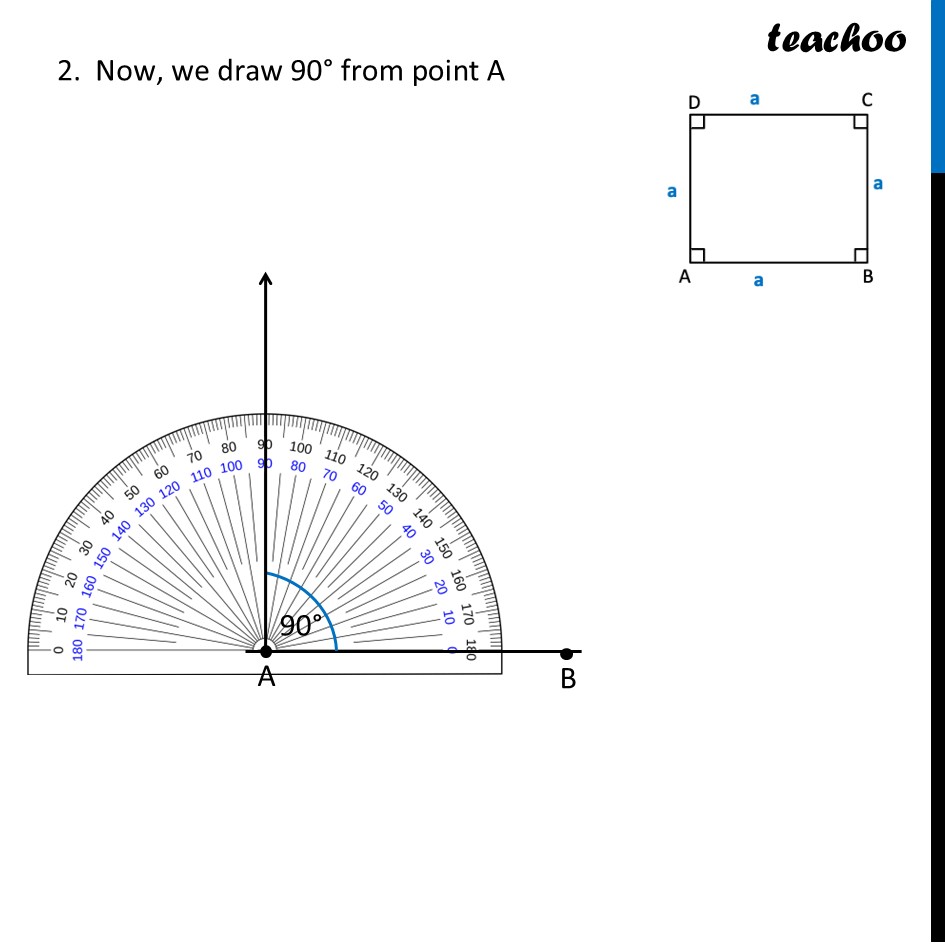
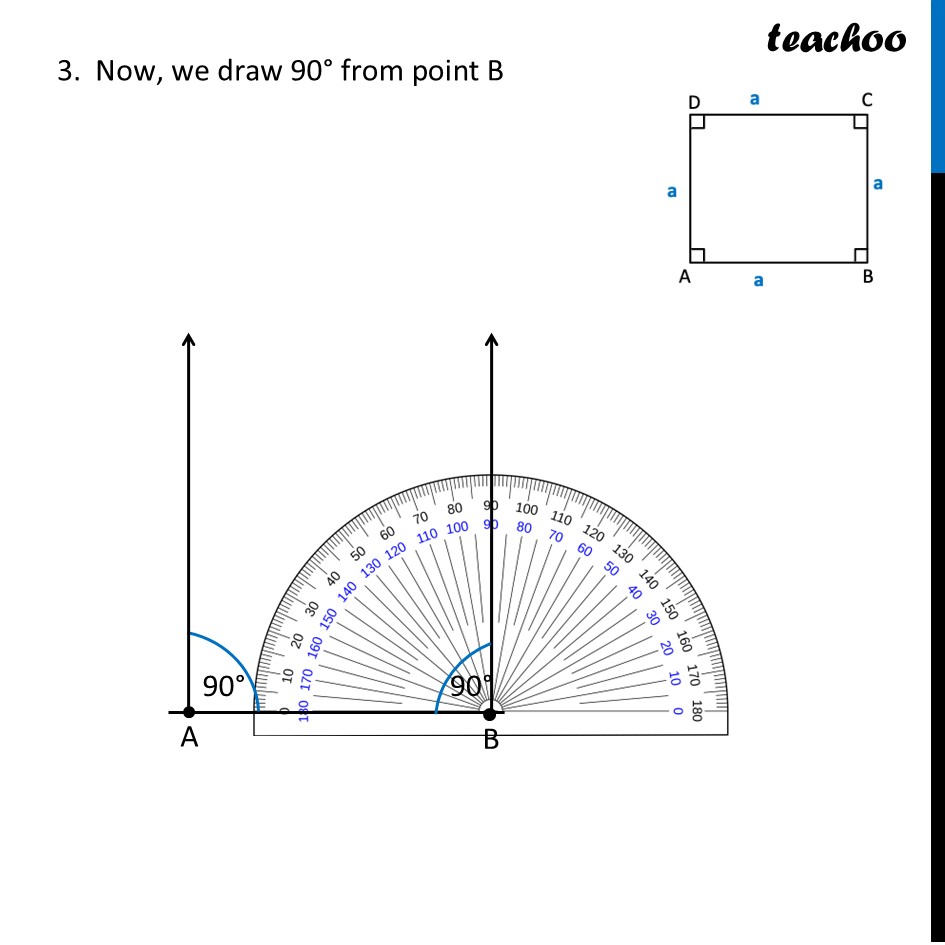
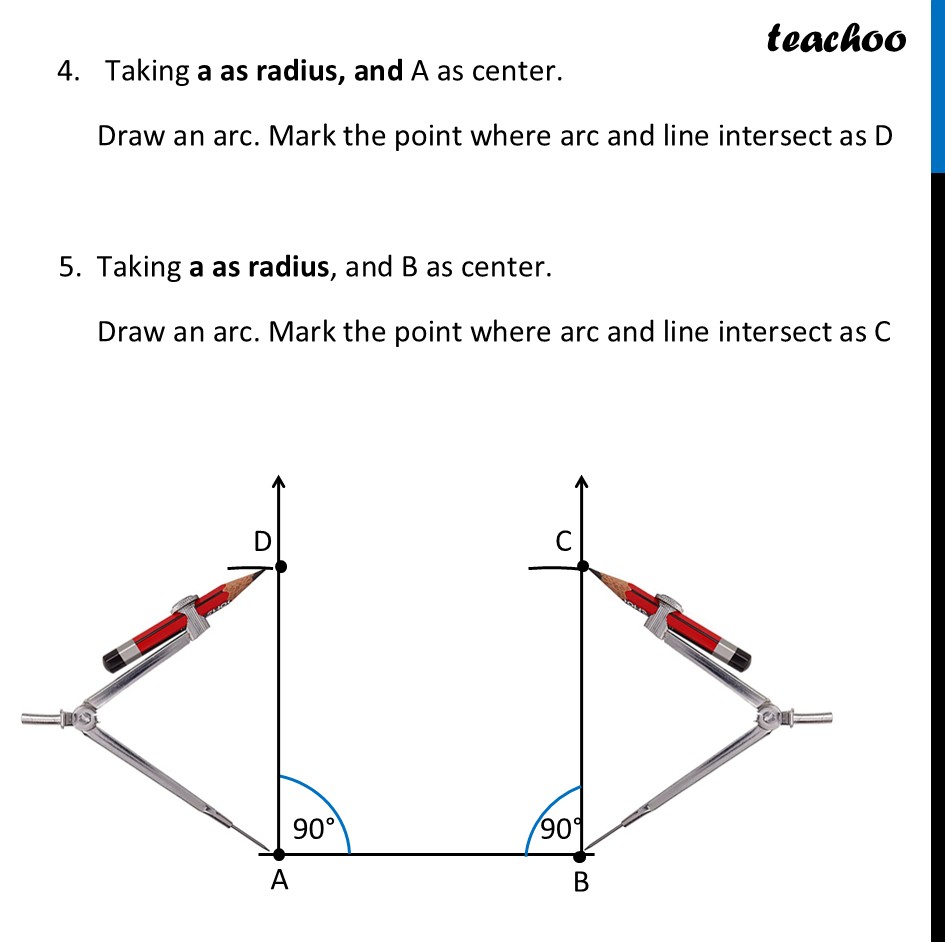
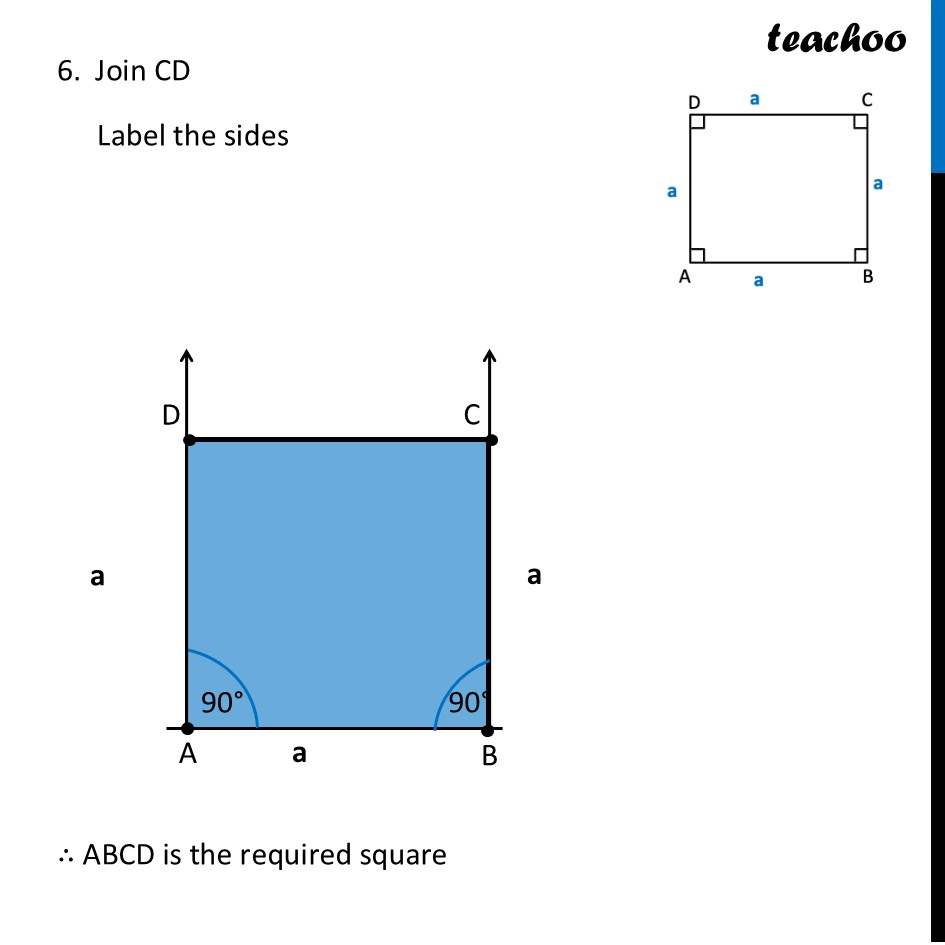
Question 7 Construct a square whose area is equal to the difference of the areas of squares of sidelengths 5 units and 7 units.Let Side of required square = a Thus, Area of required square = a2 Given that area of square is equal to the difference of the areas of squares of sidelengths 5 units and 7 units So, we can write a2 = 72 – 52 Since we need to construct square, we don’t calculate Instead we write our equation as a2 + 52 = 72 Now, this is Pythagoras Theorem And, this is a right triangle where Sides are a, and 5. Hypotenuse is 7 So, our diagram looks like Now, making this a square Let’s construct it Now, we follow these steps First we make this right angled triangle Then we measure side a using ruler From that side a, we draw a square Let’s do this Steps of Construction 1. Draw a line segment BC of length 4 cm 2. Now, we draw 90° from point B 3. Taking C as center, 7 cm as radius, we draw an arc Let the point where arc intersects the ray be point A Join AC and label the sides Now, we measure AB = a – and then draw our square Drawing rough diagram Steps of construction 1. Draw side AB of length a 2. Now, we draw 90° from point A 3. Now, we draw 90° from point B Taking a as radius, and A as center. Draw an arc. Mark the point where arc and line intersect as D 5. Taking a as radius, and B as center. Draw an arc. Mark the point where arc and line intersect as C 6. Join CD Label the sides ∴ ABCD is the required square

CA Maninder Singh's photo - Co-founder, Teachoo

Made by

CA Maninder Singh

CA Maninder Singh is a Chartered Accountant for the past 16 years. He also provides Accounts Tax GST Training in Delhi, Kerala and online.